
Tokyo
Tokyo can be broadly divided into the "23 special wards", "Tama region" and "Islands". This article is about the 23 special wards of Tokyo, which corresponds to what many think of as the "city of Tokyo". For information on Tokyo as a prefecture, Tama region and Islands, see Tokyo Metropolis.
Tokyo (東京 Tōkyō) is the enormous and wealthy capital of Japan, and its main city, overflowing with culture, commerce, and most of all, people. As one of the most populated urban areas in the world, Tokyo is a fascinating and dynamic metropolis that mixes foreign influences, consumer culture and global business along with remnants of the capital of old Japan. From modern electronics and gleaming skyscrapers to cherry blossoms and the Imperial Palace, this city represents the entire sweep of Japanese history and culture. Tokyo truly has something for every traveller.
Most read about in July, least in April. That is when people look it up, which tends to run a month or two ahead of when they go.
Before you book
The Foreign, Commonwealth & Development Office publishes the UK’s official travel advice for Japan. It changes without notice and travelling against it usually invalidates your insurance, so read it at the source rather than anywhere else — including here.
FCDO travel adviceUnderstand

Over 500 years old, the city of Tokyo was once the modest fishing village of Edo (江戸 - literally Gate of the River) due to its location at the mouth of Sumida-gawa. The city only truly began to grow when it became the seat of the Tokugawa Shogunate in 1603, who decided to set up a new seat of power far away from the intrigues of the imperial court in Kyoto. After the Tokugawa Shogunate collapsed in the Meiji Restoration of 1868, the emperor and his court moved here from Kyoto, and the city was renamed to its current name, Tokyo, literally the "Eastern Capital". The metropolitan center of the country, Tokyo is the destination for business, education, modern culture, and government. (That's not to say that rivals such as Osaka won't dispute those claims.)
Culture
Tokyo is vast: it's best thought of not as a single city, but a constellation of cities that have grown together. Tokyo's districts vary wildly by character, from the electronic blare of Akihabara to the Imperial gardens and shrines of Chiyoda, from the hyperactive youth culture hub of Shibuya to the pottery shops and temple markets of Asakusa. If you don't like what you see, hop on the train and head to the next station, and you will find something entirely different. The sheer size and frenetic pace of Tokyo can intimidate the first-time visitor. Much of the city is a jungle of concrete and wires, with a mass of neon and blaring loudspeakers. At rush hour, crowds jostle in packed trains and masses of humanity sweep through enormous and bewilderingly complex stations. Don't get too hung up on ticking tourist sights off your list: for most visitors, the biggest part of the Tokyo experience is just wandering around at random and absorbing the vibe, poking your head into shops selling weird and wonderful things, sampling restaurants where you can't recognize a single thing on the menu (or on your plate), and finding unexpected oases of calm in the tranquil grounds of a neighbourhood Shinto shrine. It's all perfectly safe, and the locals will go to sometimes extraordinary lengths to help you if you just ask.
Expenses
The cost of living in Tokyo is not as astronomical as it once was. Deflation and market pressures have helped to make costs in Tokyo comparable to most other large cities in the developed world. Visitors from San Francisco, Los Angeles, New York, Chicago, London, Paris, Sydney, Toronto and Dublin will not find it any more expensive than back home. Rent will be significantly cheaper than big Western cities like NYC, London, San Francisco, and Los Angeles. Travelers should budget a similar amount of money for their stay in Tokyo as they would for any other great city in Europe, North America or Australia. Locals will know the bargains, but experienced cheapskates from anywhere in the world can get by with a little ingenuity. Tokyo is one of the most popular places to live in Japan. Rent for a single's apartment could range from US$500 to US$1,000 a month. Tokyo is so overwhelmingly crowded that many people live in apartments no bigger than 16 square meters (175 square feet). That being said, with excellent transportation throughout Tokyo and its outskirts, living five minutes further away from central Tokyo could mean hundreds of dollars less for living expenses each month or allow for larger housing. Many parts of Chiba, Saitama, Kanagawa, or even Ibaraki prefectures may allow the feeling of "living in Tokyo". Still, nothing compares to Tokyo itself in regards to waking up and stepping outside instantly into metropolitan life.
What's inside
The capital of Japan is not a city, but is actually Tokyo Metropolis (東京都 Tōkyō-to), which apart from the name is indistinguishable from a prefecture: it's equal in status with the other 46 prefectures, and is about as big (containing large suburban and even rural areas to the west, as well as islands as far as 1,000 km (620 mi) south). Even more strangely, there is no such thing as the "city of Tokyo". What most people, both foreigners and Japanese, are thinking of when they hear "Tokyo" is the special wards of Tokyo (特別区 tokubetsu-ku), sometimes just called the 23 wards (23区 nijūsan-ku). They're somewhat like the boroughs of London or New York, except there's no "city government" banding them together. The wards refer to themselves as "cities" in English (since they behave as such, each having its own mayor and council), but to avoid confusion, most people prefer to call them "wards". This article is about the 23 special wards, while the western suburbs and the islands are covered in Tokyo Metropolis. The geography of central Tokyo is defined by the JR Yamanote Line (see Get around). The center of Tokyo — the former area reserved for the Shogun and his samurai — lies within the loop, while the Edo-era oldtown (下町 shitamachi) is to the north and east. Sprawling around in all directions and blending in seamlessly are Yokohama, Kawasaki and Chiba, Tokyo's suburbs. Together, the entire metropolitan area has a population of over 40 million, making it one of the most populated urban areas in the world.
Getting there

In Japan, all roads, rails, shipping lanes and planes lead to Tokyo.
By plane
Tokyo (TYO IATA for all airports) and the Kanto Region are served by two major airports. Narita International Airport (NRT IATA) is Tokyo's main airport for international flights, but also serves a handful of domestic flights, particularly on low-cost carriers, and is convenient as a transit airport for those travelling between North America to most major East and Southeast Asian cities. Tokyo Haneda Airport (HND IATA), which is much closer to central Tokyo and thus much more convenient and economical for getting into Tokyo and vicinity, is the main airport for domestic flights, but has also become a major hub for international flights as of the 2020s, particularly on routes that see heavy business traffic. There is also Ibaraki Airport (IBR IATA) for some low-cost carriers, and the Chōfu Airfield, serving turboprop flights to the Izu Islands.
1 Narita International Airport (NRT IATA; 成田国際空港 Narita Kokusai Kūkō). Near the town of Narita nearly 70 km (43 mi) east of Tokyo. Serves most international flights into Tokyo as well as limited domestic flights, primarily on low-cost carriers. 2 Tokyo Haneda Airport (HND IATA; 羽田空港 Haneda Kūkō or 東京国際空港 Tōkyō Kokusai Kūkō). The busiest airport in Japan and second busiest in Asia, located in Ōta ward, 14 km (8.7 mi) south of central Tokyo. Serves most domestic flights, and expansions since 2010 have also turned it into a major international hub, primarily on routes with heavy business traffic. 3 Ibaraki Airport (IBR IATA; 茨城空港) (85 km and 1½ hr north of Tokyo). Skymark operates domestic flights to Sapporo, Kobe, Fukuoka and Okinawa. Spring Airlines operates service to Shanghai and Tigerair flies to Taipei. (updated Dec 2023) 4 Chōfu Airfield (no IATA, ICAO: RJTF; 調布飛行場 Chōfu hikōjō) (The nearest railway station is Nishi-Chōfu on the Keiō Line, a 15-minute walk away. Alternatively, you can take a bus from Chofu or Mitaka stations.). Serves only some turboprop flights to the Izu Islands south of Tokyo.
Getting around

Instead of getting a headache from the many options for getting around in Tokyo, try Google Maps for navigation – it will show you various options and fares, so you can choose between the cheapest, the most convenient, or the quickest option, depending on your preferences. If you have a map of all metro and train stations, it might be quicker and cheaper to mainly go through them and ignore taking smallish bus rides to and from them, which will easily cost ¥200 per ride.
By train and subway
Tokyo has one of the most extensive mass transit systems in the world and is the most used subway system in the world in terms of annual passenger rides. It is clean, safe and efficient – and confusing. The confusion arises from the fact that several distinct railway systems operate within Tokyo – the JR East network, the two subway networks, and various private lines – and different route maps show different systems. Avoid rush hours if possible; trains get overcrowded very easily. The defining rail line in Tokyo is the JR Yamanote Line (山手線 Yamanote-sen), which runs in a loop around central Tokyo; being inside the Yamanote loop is synonymous with being in the core of Tokyo. Almost all inter-regional JR lines and private lines start at a station on the Yamanote. JR's lines are color-coded, the Yamanote is light green n . The JR Chuo Line (orange n ', 中央線 Chūō-sen) and Chuo-Sobu Line (yellow n , 中央・総武線 Chūō-Sōbu-sen) run side-by-side, bisecting the Yamanote loop from Shinjuku on the west to Tokyo Station on the east. JR's other commuter lines, the Saikyo and Keihin-Tohoku, run off the rim of the Yamanote loop to the north and south. JR East has a good English information line, 050-2016-1603 or 03-3423-0111.
Tokyo has an extensive subway network, the oldest one in Asia dating back to 1927, with frequent trains, and these are primarily useful for getting around within the Yamanote loop. The Tokyo Metro runs nine lines: Ginza, Marunouchi, Hibiya, Tozai, Chiyoda, Yurakucho, Hanzomon, Namboku and Fukutoshin lines. Toei operates the Asakusa, Mita, Shinjuku, and Oedo lines. While the JR Yamanote Line is not a subway line, due to its importance as a major transportation artery in downtown Tokyo, it is usually featured on subway maps. In addition, there is a largely underground Rinkai Line, a private line which is operated by Tokyo Waterfront Area Rapid Transit (TWR), that passes through the island of Odaiba. The eight main private commuter railways radiate from the Yamanote loop out into the outlying wards and suburbs, and almost all connect through directly to subway lines within the loop (though many services terminate at stations on the Yamanote loop). The private lines are useful for day trips outside the city, and are usually slightly cheaper than JR. In addition, there are a number of smaller private and "third-sector" (public-private partnership) lines - among these, one of the most well-known is the Yurikamome which offers great views on the way to the island of Odaiba. Announcements and signs are usually bilingual in Japanese and English, though in some areas frequented by tourists, signs in Korean and Chinese can also be seen. That said, staff working at the stations rarely speak much, if any English. It is impolite to speak on the phone while aboard the train. Instead, you should send text messages while switching it to silent mode. It used to be a rule of etiquette to "stand on the left so people in a hurry can pass you on the right when using the escalator", however the current etiquette is to stand on both sides of the escalator without walking, because walking on the escalator can cause injuries.
See

Tokyo has a vast array of sights, but the first items on the agenda of most visitors are the temples of Asakusa, the gardens of the Imperial Palace (in Chiyoda) and the Meiji Shrine (明治神宮 Meiji-jingū, in Harajuku). Tokyo has many commercial centres for shopping, eating and simply wandering around for experiencing the modern Japanese urban phenomenon. Each of these areas have unique characteristics, such as dazzling Shinjuku, youthful Shibuya and upmarket Ginza. These areas are bustling throughout the day, but they really come to life in the evenings. If you are looking for a viewing platform, Tokyo has plenty of options:
The Tokyo SkyTree is Tokyo's latest attraction in Sumida, not to mention it's also the third-tallest structure in the world at 634 m above the ground. However, its location away from downtown means the view is a distant jumble of buildings. The more familiar Tokyo Tower in Minato is still around, and it is not as expensive as the latter and newest rival, but neither is the view as good as some alternatives.
For a view that is light on your wallet, head to the Tokyo Metropolitan Government Center (in effect, Tokyo's City Hall) in Shinjuku. Its twin towers have viewing platforms that are absolutely free, and offer a great view over Tokyo and beyond. Another equally light-on-your-wallet option is the Carrot Tower in Setagaya, just 3.2 km west of Shibuya Station. It has a restaurant on the 26th floor with views to the west and south (Yokohama) — the views can be enjoyed without having to eat at the restaurant. Tokyo City View in Roppongi has an observation deck with great views of Tokyo Bay and downtown Tokyo including the nearby Tokyo Tower — admission is a steep ¥1,800-2,300 though, but includes admission to the Mori Art Museum. The Rainbow Bridge linking Tokyo to Odaiba is another good option, if you don't mind traffic noise and smell. The bridge's pedestrian walkways (open until 20:00) are free, and the night-time view across Tokyo Bay is impressive. Odaiba Rainbow Bus starting at Shinagawa and Tamachi stations is a cheap way (\220) to enjoy the view. The Bunkyo Civic Center next to the Tokyo Dome in Bunkyo, dubbed by one newspaper as a "colossal Pez candy dispenser", has a free observation deck on the 25th floor offering an iconic view of Shinjuku against Mount Fuji on a clear day. The city is dotted with museums, large and small, which center on every possible interest from pens to antique clocks to traditional and modern arts. Many of the largest museums are clustered around Ueno. Though, at ¥500–1,000 or more, entrance fees can add up quickly. Yanaka is Tokyo's most traditional and quaint district. It retains its pleasant atmosphere and old town ambience and offers a sightseeing opportunity from different parts of the city's metropolitan area. Riding Sky Bus Tokyo, an open-top double-decker operated by Hinomaru Limousine (hourly 10:00–18:00), is a good option to take a quick tour around the city center. The 45-min bus ride on the "T-01 course" will take you around the Imperial Palace via Ginza and Marunouchi district, showing the highlight of Tokyo's shopping and business center. The fare is ¥1,500 for adults of 12 years old and over, and ¥700 for children between 4 and 11 years old. You can borrow a multi-language voice guide system free of charge upon purchasing a ticket, subject to stock availability. Four other bus courses are offered, including a night trip to Odaiba, but those trips are conducted in Japanese with no foreign language guidance. Tokyo offers some great spots to catch stunning views of Mount Fuji, Japan's highest summit, even though it's about 100 kilometres away from the city.
Do

See the tuna auction at the Toyosu Market and eat a sushi breakfast at the former Tsukiji Fish Market. Take a boat ride on the Sumida River from Asakusa. Lose yourself in the dazzling neon jungle outside major train stations in the evenings. Shibuya and east Shinjuku at night can make Times Square or Piccadilly Circus look rural in comparison — it has to be seen to be believed. Enjoy a soak in a local "sento" or public bath. Or one of the onsen theme parks such as LaQua at the Tokyo Dome (Bunkyo). Go to an amusement park such as Tokyo Disney Resort, which consists of Tokyo Disneyland and Tokyo DisneySea which are Asia's most visited (in Urayasu City Chiba) and second most visited theme parks respectively, or the more Japanese Sanrio Puroland (in Tama), home to more Hello Kitties than you can imagine. Join and bar hop or pub crawl along with events groups in Roppongi, Check out the hip and young crowd at Harajuku's Takeshita-Dori (Takeshita Street) or the more grown up Omotesando. In the spring, take a boatride in Kichijoji's lovely Inokashira Park, and afterwards visit the Ghibli Studios Museum (well known for their amazing movies, like Spirited Away, and Princess Mononoke), but you will need to buy tickets for these in advance at a Lawson convenience store. Take the Yurikamome elevated train across the bay bridge from Shimbashi station to the bayside Odaiba district, and startle at the scenery including a giant Unicorn Gundam robot statue. Watch a baseball game, namely the Yomiuri Giants at the Tokyo Dome, or the Tokyo Yakult Swallows at Jingu Stadium. Nearby Chiba hosts the Chiba Lotte Marines. Take a stroll through the Imperial Palace's East Gardens (open to the public daily at 09:00, except Fridays and Mondays). Have a picnic in a park during the cherry blossom (Sakura). Unfortunately Sakura only lasts for about 10-14 days in Spring. But be warned, parks are usually very crowded during this time. Join a local for a short lunch or dinner homestay with Nagomi Visit's home visit program or participate in their cooking classes. Raising a glass in this colourful nightlife at Shinjuku district. Joining the Harajuku's eccentric fashion tribes as they shop. Losing yourself in the vestiges of the old area Yanesen (Yanaka-Nezu-Sendagi). Akihabara — Venturing into the belly of pop culture beast.
Festivals
Sanja Matsuri (三社祭), third weekend in May. Tokyo's largest festival, held near Sensoji Temple in Asakusa, this three-day extravaganza sees up to 2 million people turn out to watch the parade of portable shrines (mikoshi) with music, dancing and geisha performances. Sumidagawa Fireworks Festival (隅田川花火大会 Sumidagawa Hanabi Taikai), fourth Saturday in July. Huge fireworks competition that sees up to a million people line the banks of the Sumida River.
Shopping

Tokyo is one of the fashion and cosmetic centers in the Eastern world. Items to look for include electronics, funky fashions, antique furniture and kimono, as well as specialty items like Hello Kitty goods, anime and comics and their associated paraphernalia. Credit cards are widely accepted by major retailers, and there is a major government push to move towards cashless means of payment, including subsidies of 2-5% for doing so. "Cashless" here includes credit cards, transport cards like Suica/PASMO, Google/Apple Pay on your phone and a plethora of local apps. That said, cash remains king and many smaller shops and street stalls are still cash only. ATMs usually give out only ¥10,000 notes, but retailers are generally happy to make change. Most major bank ATMs now allow withdrawals from overseas banks with your usual ATM card. Japan Post ATMs are bilingual and will allow you to withdraw money at the day's exchange rate without charging you any special fees. The crime rate is very low, so don't be afraid of carrying around wads of cash as the Japanese do. The average Japanese citizen will carry a month's worth of expenses on them (around ¥40,000 give or take). See Buy under Japan for general caveats regarding electronics and media compatibility. There are numerous convenience stores throughout Tokyo (such as Seven-Eleven, Lawson, and Family-Mart), which are open around the clock and sell not only food and magazines, but also daily necessities such as underwear and toiletries. Supermarkets are usually open until 22:00, while drugstores and department stores usually close at 21:00.
Anime and manga
Akihabara, Tokyo's Electric Town, is now also the unquestioned center of its otaku community, and the stores along Chuo-dori are packed to the rafters with anime (animation) and manga (comics). Another popular district for all things manga/anime is the Nakano ward and its Broadway Shopping arcade. Check out the Mandarake shop for loads of used and rare mangas. There has been an "otaku boom" in Akihabara. A lot of attention in particular was paid to the town thanks to the popular Japanese drama "Densha Otoko", a (true) love story about an otaku who saves a woman from a molester on a train and their subsequent courtship. Girls in maid costumes can be seen standing along the streets in Akihabara handing out advertisement fliers to passers by for maid cafes. If you like a specific anime or character, Tokyo has no shortages of official stores dedicated to a specific character or anime series.
Antiques
Serious collectors should head for the Antique Mall in Ginza or the Antique Market in Omotesando, which are collections of small very specialist shops (samurai armor, ukiyo-e prints, etc). However, the prices tend to be very high. Less wealthy shoppers can venture over to Nishi-Ogikubo, which sells scrolls of calligraphy (and some other similar items) for a few thousand yen. The Antique Festival (全国古民具骨董祭り) is held over the weekend about 5-6 times a year at the Tokyo Ryutsu Center, on the Tokyo Monorail line, and is well worth a visit.
Eat

Visitors from Western countries may be surprised to find that despite its justified reputation for being an expensive city, eating out in Tokyo can be surprisingly affordable. While fine dining establishments in Tokyo can be some of the most expensive in the world, at the budget end of the spectrum, it is fairly easy to find a basic rice or noodle joint serving up meals starting from ¥400; a price that is unmatched even by McDonald's or other fast food chains in the West. Tokyo has a large quantity and variety of food. Department stores have food halls, typically in the basement, with food which is comparable to top delicatessans in other world cities (though mostly Japanese and Japanized foreign food). Some basements of train stations have supermarkets with free taste testers. It's a great way to sample some of the strange dishes they have for free. Tokyo has a large number of restaurants, so see the main Japan guide for the types of food you will encounter and some popular chains. Menus are often posted outside, so you can check the prices. Some shops have the famous plastic food in their front windows. Don't hesitate to drag the waiting staff out to the front to point at what you want. Always carry cash. Many restaurants will not accept credit cards. Tokyo has tens of thousands of restaurants representing many cuisines in the world, though sometimes adjusted for local tastes, but it also offers a few unique local specialties. Within Japan, Tokyo cuisine is best known for 3 dishes: sushi, tempura, and unagi (freshwater eel). Nigirizushi (fish pressed onto rice), known around the world simply as "sushi," in fact originates from Tokyo, and within Japan is known as Edo-mae zushi (Edo-style sushi). Another is monjayaki (もんじゃ焼き), a gooey, cabbage-filled version of okonomiyaki that uses a very thin batter to achieve a sticky, caramelized consistency. It is originally from the Tsukishima area of Chuo and today there are many restaurants near Asakusa offering monjayaki.
Budget
Go to a convenience store (konbini), there is one on every second corner. Really, the options may surprise you. You can get rice balls (onigiri), bread-rolls, salads, prepared foods (like nikuman and oden), and drinks (both hot and cold) for ¥100-150, bentō lunch boxes for around ¥500 and sandwiches for ¥250-350. At most convenience stores, microwaves are available to heat up your food for no additional cost. Supermarkets (sūpā) are usually cheaper and offer a wider choice, but are more difficult to find. (Try Asakusa and the sidestreets of Ueno's Ameyoko market for local—not big chain—supermarkets.). Supermarkets are a good place to buy discount food after 20:00. Also, ¥100 shops (hyaku-en shoppu) have become very common, and most have a selection of convenient, ready to eat items. There are ¥100 shops near most minor train stations, and usually tucked away somewhere within two or three blocks of the big stations. In particular, look for the green and red "Lawson 100" signs; these chains are essentially small grocery stores. Also, look for bentō shops like Hotto-Motto (ほっともっと) and Kitchen Origin (キッチンオリジン) which sell take-out lunch boxes. They range in quality and cost, but most offer good, basic food at a reasonable price. This is what students and office workers often eat. In addition, COVID-19 forced many restaurants to sell takeaway lunchboxes to survive and the custom has stuck, adding more options to choose from. Noodle shops, curry shops, and bakeries are often the best option for people eating on the cheap. They are everywhere. The noodle bars on every corner are great for filling up and are very cheap at ¥300–1000. You buy your meal ticket from a vending machine at the door with pictures of the dishes and hand it to the serving staff. The one question you will typically have to answer for the counterman is whether you want soba (そば) (thin brown buckwheat) or udon (うどん) (thick white wheat) noodles. Some offer standing room only with a counter to place your bowl, while others have limited counter seating. During peak times, you need to be quick as others will be waiting. Pseudo Chinese-style ramen (ラーメン) (yellow wheat and egg noodles) are a little more expensive and typically sold in specialist shops, with prices starting from ¥400, but are typically served in very flavourful pork or chicken broth that has been boiled overnight. Tokyo is generally known among the Japanese for shoyu ramen, in which soy sauce is used to add flavour to the pork broth. Fast food is available just about everywhere, including many American chains like McDonald's, Burger King, Subway and KFC. But if you are visiting Japan from overseas, and wish to sample Japanese fast food, why not try MOS Burger, Freshness Burger, Lotteria, or First Kitchen? If you're looking for something more Japanese, try one of the local fast food giants, Matsuya, Yoshinoya, and Sukiya, which specialize in donburi: a giant bowl of meat, rice, and vegetables, sometimes with egg thrown in for good measure, starting around ¥450 for the flagship gyūdon (beef bowl). Another good option is oyako don (chicken and egg bowl, literally “mother and child bowl”), which the somewhat smaller chain Nakau specializes in. Drinking water or hot ocha (Japanese green tea) is usually available at no extra cost. There are also a number of tempura chains, with some budget options. More upscale but still affordable and rather more interesting, is Ootoya, which serves up a larger variety of home-style cooking for under ¥1000. Yayoi-ken is a chain of eateries serving teishoku, complete set meals: buy a ticket from the machine, and you'll get miso soup, main course (fish or meat, often with vegetables), rice (bottomless, just ask for refills), a small hunk of fresh tofu, pickles and tea, and still be left with some change from your ¥1000. Raw fish enthusiasts are urged to try kaitenzushi (conveyor belt sushi), where the prices can be very reasonable. Prices do depend on the color of the plate, however, and some items are very expensive, so be sure to check before they start to pile up. A great option for a quick bite or for groups is yakitori (grilled chicken) – individual skewers are often below ¥150. Many of the larger train and subway stations have fast, cheap eateries. Around most stations, there will be ample choices of places to eat, including chain coffeeshops (which often serve sandwiches, baked goods, and pasta dishes), yakitori places, and even Italian restaurants.
Mid-range
There are a great many excellent and affordable lunch choices in busier neighborhoods like Shibuya and Shinjuku, especially during the week – expect to spend about ¥1000 (without drinks) for a meal. By tradition the basement of almost any department store, including Mitsukoshi, Matsuzakaya, or Isetan, is devoted to the depachika (デパ地下), a huge array of small shops selling all kinds of prepared take-out food. You can assemble a delicious if slightly pricey picnic here – or, if you're feeling really cheap, just go around eating free samples! The very largest department stores are Tobu and Seibu in Ikebukuro, but Shibuya, Ginza and in fact any major Tokyo district will have their fair share. Shinjuku Station is home to several famous department stores, such as the Keio and Odakyu department stores. Many stores begin discounting their selections at about 19:00 each night. Look for signs and stickers indicating specific yen value or percentage discounts. You will often see half-price stickers which read 半値 (hanne). This discounting is also common at supermarkets at the smaller stations, although the quality may be a notch or two down from the department stores, it's still perfectly edible. The ubiquitous izakaya, a cross between a pub and a casual restaurant, invariably serve a good range of Japanese dishes and can be good places to fill up without breaking the bank: in most, an evening of eating and drinking won't cost more than around ¥3000 per person. See Drink for details. There is a great variety of restaurants serving Tokyo's world-famous sushi at every price point, with fish fresh from Toyosu, the world's largest fish market. It is possible to get sushi for as little as ¥100/piece or less (at chain stores), or spend upwards of ¥10,000 (at elegant Ginza restaurants), but a typical spend is ¥3000–4000, depending on selection (drinks extra). Usually omakase (chef's choice) gives a good deal and selection, to which you can add a piece or two à la carte if desired. A popular choice with tourists is a sushi breakfast at Tsukiji, former home of the fish market, particularly for one's jet-lagged first morning, or after a night out partying. Most sushi shops in the outer market of Tsukiji open at 8 or 9AM, though there are some 24-hour shops, and particularly popular are two small stores in the inner market that open before 6AM and feature market ambience and very long queues; see Chuo: Mid-range dining. The best-known tempura chain is Tsunahachi, where depending on the store you can pay from below ¥1000 for lunch to over ¥6000 for dinner. A classic modern Japanese dish is tonkatsu (“pork cutlet”), and there are good Tokyo options; the fattier loin (ロース “roast”) is generally considered tastier than the leaner fillet (hire ヒレ). The most famous restaurant is Tonki, right by Meguro station (1-1-2 Shimo-Meguro, Meguro-ku, Tokyo), serving a standard meal at about ¥1600, dinner only (from 16:00). While it is an institution with a loyal clientele (and frequent lines), and decidedly has atmosphere (similar to an established New York deli), the food gets mixed reviews, and is less succulent than other options – an interesting experience, however. Next most famous is the chain Maisen (まい泉), which serves delicious if somewhat expensive tonkatsu (various varieties and seasonal options) at many locations in Tokyo, most notably at their flagship shop in Aoyama by Omotesandō station (Jingumae 4-8-5, closing at 19:00). The top-end dish is Okita Kurobuta (Berkshire pork by Mr. Okita), at ¥3,800 for a meal, though they have cheaper options. A modern option is Butagumi, at Nishi-Azabu 2-24-9 (west of Roppongi station), serving a variety of premium pork brands expertly prepared. Tokyo also has a large number of Korean restaurants, generally midrange, and many yakiniku (grilled meat) restaurants are Korean-influenced.
Drink
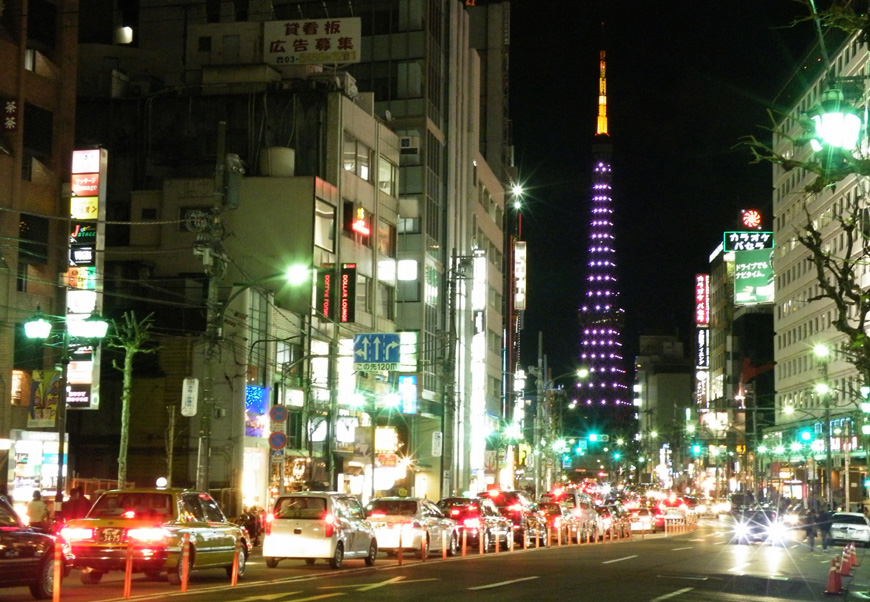
The party never stops in Tokyo (at least in the karaoke bars), and you will find good little bars and restaurants everywhere. The most Japanese way to spend a night out as an individual or in a small group would be at Japanese-style watering holes called izakaya (居酒屋), which offer food and drink in a convivial, pub-like atmosphere (see Japan for details). Cheaper chain izakaya like Tsubohachi (つぼ八) and Shirokiya (白木屋) usually have picture menus, so ordering is simple, even if you don't know Japanese – but don't be surprised if some places have Japanese only touchscreen ordering systems. Another common option, which is often unbelievable to non-Japanese ears, is “all you can drink” (nomihōdai, 飲み放題), where you can drink all you want from a fixed menu for 90 minutes or 120 minutes. This is aimed at group parties, and is generally paired with a meal, often “all you can eat” (tabehōdai, 食べ放題), often in a private room. Receiving the items ordered will depend on how often your servers decide to bring out these items, which means you may be "throttled" to an extent, and may feel less than a true "all you can drink/eat" experience. This depends on the establishment. There are also a number of cheap bars where you can get a drink for ¥300 or even cheaper. Tokyo's most distinctive drink is Hoppy (hoppi, ホッピー), a virtually non-alcoholic beer-flavored drink (0.8% alcohol), which is drunk by mixing with shōchū (at 25%) at a 5:1 ratio, yielding an about 5% alcohol drink, essentially a substitute beer. This is available in older izakaya and has experienced a retro revival of late, though it is not particularly tasty. Another distinctively Tokyo drink is Denki Bran (電気ブラン, “electric brandy”), a herb-flavored brandy available (to drink in or in bottles) at the Kamiya bar (神谷バー) in Asakusa, right at the main intersection by the metro station. The major brands of beer are widely available, typically ¥500–800 per glass or bottle, but microbrews and foreign beer are only rarely available and often very expensive. You're generally better off getting bottles of microbrews at speciality stores. Popeye in Ryōgoku is a rare exception, with 70 beers on tap! Another popular choice is Beer Station at Ebisu, serving a variety of Yebisu beers and matching German food. For a splurge on a beverage or two, Western Shinjuku's Park Hyatt Tokyo houses the New York Bar on level 52. Providing stunning views day and night across Tokyo, it was also the setting for the movie Lost in Translation. Cocktails here start around ¥1400 – single malt whiskies are upwards of ¥2000. Amazing cocktails, served in “tasting flights” of 4 or 6 drinks, are made by Gen Yamamoto at his bar in Azabu-Jūban, at about ¥6000 for 6 drinks (a la carte cocktails are available in larger pours for ¥1600–1800). Visiting clubs and western-style night spots can get expensive, with clubs and live houses enforcing weekend cover charges in the ¥2000–5000 bracket (usually including a drink coupon or two). If you're new in town, Roppongi has establishments which specialize in serving foreigners – but it's also overflowing with foreigners, hostesses, and 'patrons' who will continually hassle you to visit their gentlemen's clubs, where drinks cost ¥5000 and up. Many Japanese and foreigners avoid this area, preferring the clubs and bars in Shibuya instead, or trendy Ginza, Ebisu, Shinjuku or Ikebukuro. HUB and 82 Ale House, a chain of British-style cash-on-delivery pubs, has branches near most major stations and is reasonably priced and popular among foreigners and Japanese alike. Other British/Irish pubs can be found in Roppongi, Shinjuku and Shibuya. Expect to pay around ¥1000 a pint, although happy hours can reduce this by a few hundred yen. In Shibuya, the bar area behind 109 and next to Dogenzaka ("Love Hotel Hill") has a large number of clubs. Unlike those in Roppongi, these clubs have entrance fees, but clubs without entrance fees often hassle you all night to buy drinks which ends up just as expensive and without people who are actually there to enjoy the music. Shinjuku is home to Kabukichō, Japan's largest red-light district. Also in Shinjuku is the gay bar district of Shinjuku-nichome. A little further from the city center are Shimokitazawa, Koenji and Nakano, full of good bars, restaurants and "live houses" offering underground/indie music popular with students and 20/30-somethings. Taito is where Yoshiwara, the infamous red-light district of feudal Edo, was located. However, it is today a shadow of its former self as most of the sex trade has shifted elsewhere, and all that remains is a few soaplands (brothels disguised as bathhouses).
Sleep

There are thousands of hotels in the Tokyo area, ranging from cheap to very expensive. They are distributed throughout the city, with some of the high end and the low end almost everywhere. Many Western-style hotels, especially those affiliated with American hotel chains, have English-speaking staff. Long a great deal by world standards, Tokyo hotel prices have skyrocketed since Japan's post-COVID opening in 2022 due to the ongoing tourist boom plus inflation. Anything under ¥10,000 is cheap (and usually for a reason), cramped business hotels are ¥20,000 and up, and luxury accommodation can easily go over ¥100,000/night. For long-term accommodation, be prepared to splurge as Tokyo's real estate prices are among the highest in the world, and apartments in the area are typically very cramped. Many locals actually live in the neighbouring cities and commute to Tokyo for work every day due to the astronomical rents in Tokyo, and one-way commuting times can often last more than 2 hours.
Budget
Much of Tokyo's budget accommodation can be found in the Taito area, especially Asakusa and Ueno. Beware that many have curfew times around 22:00 to 23:00, so double-check if you plan to party all night. Capsule hotels are generally the cheapest option. They may be reluctant to play host to foreigners as there are quite a few rules of behavior which may be difficult to explain; see the Japan article for the full scoop. Most capsule hotels are men-only. Akihabara Capsule Inn is among the very few to have women-only floors. See Japan#Last resorts for a run-down of emergency options like all night internet cafes (manga kissa), karaoke boxes, camping in parks, etc.
Mid-range
There is a wide range of choices in hotels while at Tokyo, most of the hotels are rated 3 stars or more. In Tokyo, as in most Japanese cities, the most common mid-range option is a business hotel. The rooms are usually tiny, but they are near stations and rates start from around ¥15000. Staff may speak minimal English, but it's not too hard to figure out. These are the best options for solo travelers. Affordable chains found throughout Tokyo include Tokyu Stay, which offers free internet access and breakfast, Toyoko Inn, Chisun and Sunroute. Tokyo has some self-proclaimed ryokan (Japanese inns) that cater largely to foreign tourists, mostly concentrated around Ueno and Asakusa. While not as opulent as the real thing, they offer a sample of Japanese home life at affordable rates. Japan's infamous love hotels can be a reasonable (and interesting) option in Tokyo. Shibuya's Dogenzaka ("Love Hotel Hill") offers the widest selection in the city. If you're really going to spend the night, be sure to check in for a "stay" rather than a "rest". Be warned that some love hotels (at least around Shinjuku) have a 'No Japanese, no stay' policy, presumably to avoid confusion over billing; others lock you into your room until you pay into a slot by the door to leave.
Stay safe

Tokyo is probably one of the safest cities you will ever visit, and Japan in general is one of the safest countries in the world. Most people, including female travellers, would not encounter any problems walking along the streets alone at night. Street crime is extremely rare, even late at night. However, "little crime" does not mean "no crime", and common sense should still be applied as anywhere in the world. Often the biggest risk is travellers taking Japan's visibly apparent lack of crime too close to heart and doing things they would never do back home. The most common crime is sexual harassment on crowded trains, pressed up against each other, hands wander. This is more of a local problem as westerners are considered more aggressive and would stick up for themselves. The best way to deal with any wandering hands is to yell "Chikan!" which is the Japanese term for "pervert". There are railway police offices inside major railway stations in Tokyo, and their locations can be found here. You may alternatively dial the police at ☏ +81-03-3581-4321 to report sexual harassment. Tokyo's main slum area is the San'ya (山谷) area, near Minami-Senju station, with large numbers of mostly male homeless people. It is well off the main tourist trail, but has been gaining popularity among backpackers for its cheap accommodation. However, as many of these hostels are designed for homeless day labourers, the hygiene conditions are often less than satisfactory. While violent crime is still rare, sexual harassment of women is more common than elsewhere in Tokyo, so women might want to avoid travelling there alone. Small police stations, or kōban (交番), can be found every few blocks, and provide community policing. If you get lost or need assistance, by all means go to them; it's their job to help you! They have great maps of the surrounding area, and are happy to give directions. They may, however, have difficulties with English, so some knowledge of the Japanese language helps. Staffing of kōbans is usually limited, and should you need to report a crime, you should lodge them at your nearest police station (警察署), which are marked with a circle with a cross on maps and signs. Take usual precautions against pickpockets in crowded areas and trains. Also, theft is more likely to occur in hangouts and bars popular with travellers and non-residents. The red-light and nightlife districts can be a bit seedy, but are rarely dangerous. Some small, back-street drinking establishments in red-light districts have been known to charge extortionate prices. Similar problems exist in the seedier clubs in Roppongi, where it may be wise to check cover charges and drink prices in advance. Never follow touts, as they are likely to lead you to dodgy establishments that charge extortionate prices. Touting is illegal in Japan, so you can call the police if they get persistent. Smoking on the street is strictly prohibited in many areas. Use designated smoking zones to avoid fines. Still in a jam? Call Tokyo English Life Line, tel. 03-5774-0992, daily 09:00-23:00. If you make it as far out as the Izu Islands, visitors to Miyakejima Island are required to carry a gas mask, due to volcanic gases. Those in poor health are advised against travelling to the island. In addition, Tokyo, like the rest of Japan is at risk for earthquakes.
Go next

From Tokyo, the entire surrounding Kanto region is your oyster. Particularly popular destinations nearby include:
Hakone — for hot springs and views of Mount Fuji, Ashinoko Lake. Kawagoe — Old historical town also called "Little Edo". Its main street and castle can take you back in time. 60 min train ride from Tokyo station. Kamakura — home to dozens of small temples and one Big Buddha, once the seat of the Kamakura shogunate. Nikko — grandiose shrine and burial site of Shogun Tokugawa Iemitsu Odawara — houses the only Japanese castle in greater Tokyo area Yugawara, Manazuru — for hot springs and coastal resort, eating sashimi and mikan, views of Manazuru Peninsula, some festivals (Matsuri). Tokyo Disney Resort — with Tokyo Disneyland (just like the ones everywhere else) and Tokyo Disney Sea (an only-in-Japan theme park which includes some unique rides and some imported rides from Disney parks outside of Japan) Yokohama — Japan's second-largest city and a suburb of Tokyo The Tokyo area also has some less-famous destinations that are easy day trips from central Tokyo:
Ashikaga — historical hometown of a famous shogun clan, first school in Japan, top flower park in Japan, and beautiful nature Kiryu — famous historical silk town with museums and bountiful nature for hiking and cycling lovers looking to get a taste of small town Japan Hachioji — a refreshing climb up Mt. Takao through a forest to a shrine and beer garden Kawasaki — home to the Nihon Minka-En park with 24 ancient farmhouses (more interesting than it sounds), not to mention the annual Festival of the Iron Penis (Kanamara Matsuri) Kinugawa — Onsen town in Nikko, home to Edo Wonderland Nikko Edomura, a theme park set in the Edo period with shows, ninja, samurai, geisha, et al., in a beautiful mountain setting Fujino — a small town popular with locals and foreigners alike who are interested in the arts and enjoy beautiful scenery And don't forget the islands to the south of Tokyo:
More pictures of Tokyo


From this destination's category on Wikimedia Commons. Each photograph is credited to its own author under its own licence.
The guide text on this page is from the Wikivoyage article Tokyo, written by Wikivoyage contributors and published under CC BY-SA 4.0. The authors are listed in the article’s edit history. It has been shortened and re-laid-out for this page; that adapted text is available under the same licence. Nothing else on this page is.
Wikivoyage is written by travellers, not by us. Opening hours, prices and whether a place still exists are exactly the details that go out of date, so check anything you are relying on.
“4,376 readers a month” and the ranking are ours, counted from Wikimedia’s published pageviews (CC0) — the median of twelve complete months. They count people reading about a place, which is not the same as people going there.