
Kyoto
Kyōto (京都) was the capital of Japan for over a millennium, and carries a reputation as the nation's most beautiful city and its cultural capital - even the national government's Agency for Cultural Affairs moved there in 2023. However, visitors may be surprised by how much work they will have to do to see Kyoto's beautiful side. Most first impressions of the city will be of the urban sprawl of central Kyoto, around the ultra-modern glass-and-steel train station, which is itself an example of a city steeped in tradition colliding with the modern world. Nonetheless, the persistent visitor will soon discover Kyoto's hidden beauty in the temples and parks which ring the city center, and find that the city has much more to offer than immediately meets the eye. The city has a multi-lingual Official Travel Guide site.
Most read about in January, least in April. That is when people look it up, which tends to run a month or two ahead of when they go.
Before you book
The Foreign, Commonwealth & Development Office publishes the UK’s official travel advice for Japan. It changes without notice and travelling against it usually invalidates your insurance, so read it at the source rather than anywhere else — including here.
FCDO travel adviceUnderstand
Nestled among the mountains of the Kansai region of Western Honshu, Kyoto was the capital of Japan and the residence of the Emperor from 794 until the Meiji Restoration of 1868, when the capital was moved to Tokyo. During its millennium at the center of Japanese power, culture, tradition, and religion, it accumulated an unparalleled collection of palaces, temples and shrines, built for emperors, shoguns, and monks. Kyoto was among the few Japanese cities that escaped the allied bombings of World War II and so still has an abundance of prewar buildings, such as the traditional townhouses known as machiya. However, the city is continuously undergoing modernization with some of the traditional Kyoto buildings being replaced by newer architecture, such as the Kyoto Station complex. Kyoto is home to Japan's second most prestigious university, Kyoto University.
Orientation
Kyoto's city planners way back in 794 decided to copy the Chinese capital Chang'an (present-day Xi'an) and adopt a grid pattern, which persists to this day in the city core. West-east streets are numbered, with Ichijō-dōri (一条通, "First Street") up north and Jūjō-dōri (十条通, "Tenth Street") down south, but there is no obvious pattern to the names of north-south streets.
Climate
Kyoto truly exhibits the four seasons of spring, summer, fall and winter, with many flowers in spring and changing leaves in the fall attracting hordes of tourists. Kyoto is particularly humid in summer, as the city is flanked by mountains. From about mid-June to the end of July is the rainy season, so most travelers avoid this time. The type of rain ranges from drizzles to off-and-on showers to downpours. There is another typhoon season in late August and September. Winters are generally cold but without snowfall. They usually don't start until the end of December and last until March when the plum blossoms begin to open, followed by cherry blossoms.
What's inside
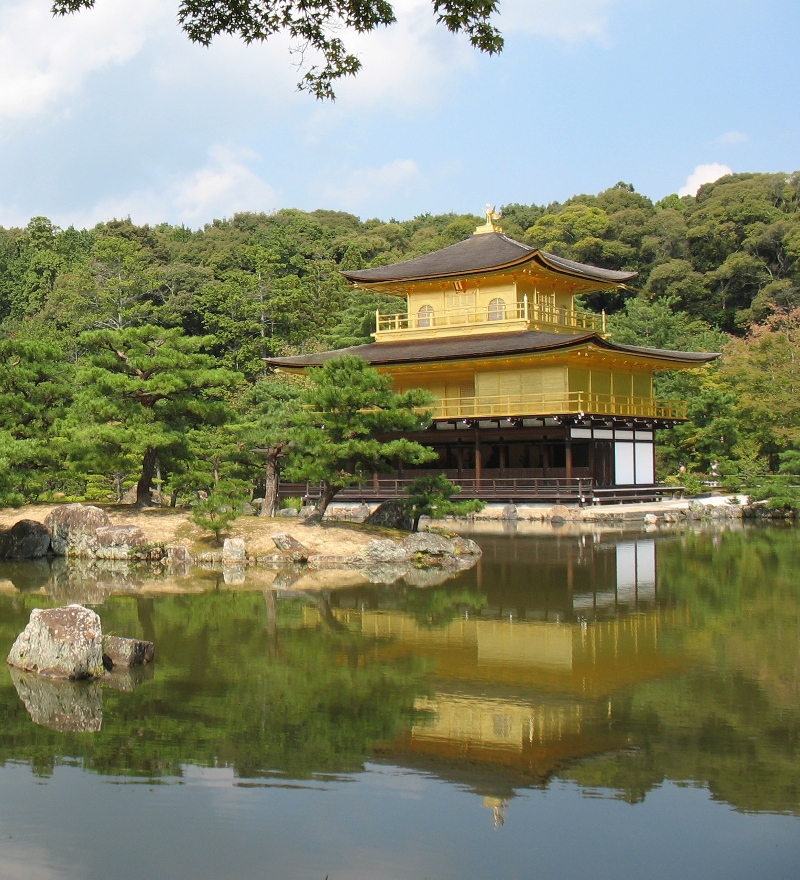
Though dwarfed in size by other major Japanese cities, Kyoto is vast in terms of its rich cultural heritage - the material endowment of over a thousand years as the country's imperial capital. The city's numerous palaces, shrines, temples and other landmarks are spread out over the following districts:
Getting there

By plane
Kyoto does not have its own airport, but is served by Osaka's two airports, Kansai International and Itami. There is an excellent road and railway network between the two cities.
By train
You can fly into Kansai International Airport (KIX IATA) in Osaka Bay and then get a train to Kyoto. Kansai Airport Station is opposite the arrival lobby where the Haruka limited express train, operated by West Japan Railway (JR West), can be caught. The Haruka runs to Kyoto in 75–80 minutes and a one-way ticket costs ¥2,900 for an open (non-reserved) seat or ¥3,430 for a reserved seat. There are a few ways that foreign tourists can use the Haruka at a discount. One way is to buy a one-day Kansai Area Pass. At a cost of only ¥2,400 (¥2,350 if you book online), this pass costs ¥500 less than a regular ticket. You will need to show a passport issued by a foreign country with Japanese temporary visitor visa on it when purchasing a ticket. Note that you are limited to purchasing one pass per trip, so if you return to Kansai Airport on the Haruka you will have to pay the regular fare. The above ticket can be purchased online or at the Kansai Airport train station. Some other, more expensive JR West passes where trips on the Haruka are valid include the Kansai Wide Area Pass and the Sanyo Area Pass. The other train company operating out of Kansai Airport is the Nankai Railway. They offer a discounted ticket if you are interested in traveling to Central Kyoto, called the Kyoto Access Ticket. For ¥1250 this ticket includes a journey on the Nankai Railway Airport service to Tengachaya (天下茶屋) station in Osaka, followed by a trip on the Osaka Sakaisuji Subway Line. With a second transfer at Awaji station you can travel to Kyoto on the Hankyu Main Line. Under this plan you can reach Central Kyoto in approximately 1 hr 45 min. You have the option to upgrade to the fastest Nankai train service, the Rapi:t, for an additional charge.
By bus
Comfortable limousine buses run from the airport to Kyoto Station twice an hour. The ticket costs ¥2,600 one-way or ¥4,260 round-trip. Buses discharge at the south end of Kyoto Station; return tickets are sold from a vending machine on the first floor of the Hotel Keihan Kyoto. The ride from Terminal 1 takes 88 minutes, but can take longer when there is traffic (90 – 135 min).
Getting around

The sheer size of the city of Kyoto, and the distribution of tourist attractions around the periphery of the city, make the city's public transport system invaluable. One of the easiest ways to plan a route is through Navitime. This website contains station-to-station route plans, which reference public and private trains and subways as well as buses throughout Japan. If you are planning to travel beyond city limits you might consider using the tickets from Surutto Kansai. For use in west Japan, including Kyoto, there are some other useful tickets: a rechargeable smart card, ICOCA, can be used on rail, subway and bus networks in the Kansai area and also Okayama, Hiroshima, Nagoya (Kintetsu trains) and Tokyo (JR East trains). These cards are available at vending machines at these rail stations, and cost ¥2000, which includes a ¥500 deposit that will be refunded when the card is returned at JR West Station. For use in Kyoto only there are some other useful tickets:
The Kyoto Sightseeing Card can be purchased as a one-day (adults ¥900/children ¥450) or two-day pass (¥1700/¥850). It can be used for unlimited travel on the subway and city buses as well as a part of the Kyoto bus route. The two-day pass has to be used on two consecutive days. The Traffica Kyo Card is a stored-value card in denominations of ¥1000 or ¥3000. It can be conveniently used up to face value on all subways and buses by simply sliding it through the ticket gate. They offer a 10% bonus value. Check the Kyoto City Bus & Subway Information Guide for more information on how to use these cards.
By train
Kyoto is criss-crossed by several train lines, all of which are clearly sign-posted in English. Although the lines are run independently and prices vary slightly between them, transfers can be purchased at most of the ticket machines. The Keihan train line can be useful for traveling in eastern Kyoto, while the two Keifuku (aka Randen) tram lines are an attractive way of traveling in the northwest. Across the street from the northern terminus of the Keihan Line is the Eiden line, which runs to Mount Hiei and Kurama. The Hankyu Line starts at Shijo-Kawaramachi downtown, and connects to the Karasuma Line one stop later at Karasuma. It's useful for reaching Arashiyama and the Katsura Rikyu; it runs all the way to Osaka and Kobe. JR lines run from Kyoto station to the northwest (JR Sagano line), to the southwest (JR Kyoto line) and to the southeast (JR Nara line). There are local and express trains so check if they stop at your station before you get on.
See

Individual listings can be found in Kyoto's district articles Kyoto offers an incredible number of attractions for tourists, and visitors will probably need to plan an itinerary in advance in order to visit as many as possible. Japan National Tourist Organization's self-guided "Kyoto Walks" pamphlet enables first time visitors to tour the city with ease and with minimum fuss by providing bus numbers, names of bus stops and clearly marked walking routes. There are a variety of self-guided walks in different districts to sample Kyoto's various sites. If you see the browser's dialog box popping up, just click on it till the entire PDF document opens.
World Heritage Sites
In 1994, 17 historic sites were inscribed on the UNESCO World Heritage List under the group designation Historic Monuments of Ancient Kyoto. Fourteen of the listed sites are in Kyoto itself, two are in the neighbouring city of Uji and one is in Ōtsu. Listed by location, the fourteen World Heritage Sites in the city of Kyoto are:
Northern Kyoto: Kinkaku-ji, Ryōan-ji, Ninna-ji, Kōzan-ji, Shimogamo Shrine, Kamigamo Shrine Central Kyoto: Nijō Castle, Nishi Hongan-ji, Tō-ji Eastern Kyoto: Kiyomizu-dera, Ginkaku-ji Western Kyoto: Tenryū-ji, Koke-dera Southern Kyoto: Daigo-ji
Do

Individual listings can be found in Kyoto's district articles
Public baths
Public baths have been a cornerstone of the society for centuries in Kyoto. The first public baths, or sentō (銭湯), were documented in the 13th century. Soon they became one of the few places in society where social status was irrelevant. Noblemen shared baths with commoners and warriors. Today over 140 bath houses remain in Kyoto. Funaoka Onsen is the oldest of these and dubbed "king of sentō", but newer bath houses and super sentō are just as much part of the Japanese bathing culture. If you have the time, make your way to one of the many public bath houses Kyoto has to offer.
1 Funaoka Onsen (船岡温泉), Kyoto, Kita Ward, Murasakino Minamifunaokacho 82-1 (take bus line 206 from Kyoto station), ☏ +81-75-441-3735. 15:00 - 01:00. Funaoka Onsen is one of the oldest public bath houses in Kyoto still in operation. Its classic building is an excellent example of bath house architecture of the beginning of the 20th century. Funaoka Onsen is popular with both locals and visitors and is a must if you have an hour to spare. ¥430.
Shopping
Individual listings can be found in Kyoto's district articles There is a nice selection of reassuringly non-tacky traditional souvenir shops around Arashiyama station in Western Kyoto, selling fans and traditional sweets. More tacky stores can be found in Gion and the approach to Kiyomizu Temple, selling keyrings, cuddly toys, and garish ornaments. Other traditional souvenirs from Kyoto include parasols and carved wooden dolls. More unconventional but colorful (and relatively cheap) souvenirs are the wooden votive tablets produced by Shinto shrines, which bear an image relevant to the shrine on the reverse. Visitors write their prayers on the tablets and hang them up, but there's no rule that says you can't take it with you. Manga and anime enthusiasts should visit Teramachi Street, a covered shopping street off the main Shijo-dori, which boasts a large manga store on two floors, as well as a two-story branch of Gamers (a chain of anime stores), and a small two-story anime and collectables store. Many ATMs in Kyoto do not allow non-domestic credit cards to be used, but ATMs in post offices and Seven-Eleven usually do. So if you find your card rejected or invalid in an ATM then try to get to a post office (郵便局 / yuubinkyoku or JP (in orange letters)) to use their ATMs instead. Look for the PLUS or Cirrus logos, whichever you find printed on the back of your ATM card. Another option is Citibank, which should work, too. There is an old standby international ATM at the top floor of Takashimaya Department Store at Shijo/Kawaramachi in the "Cash Corner." The bank of ATMs in the basement of the Kyoto Tower shopping center (across the street from JR Kyoto Station) also includes one machine where international cards may be used.
Splurge
In the shopping areas adjacent to Kiyomizudera (on the other side of the Kamo River), it is possible to purchase samurai swords and top-of-the-line kimono - though don't be surprised if the prices for either item exceed ¥3,000,000. A brand new kimono can cost as much as a small car - and you may be able to find something just as good at a fraction of the price in one of Kyoto's second-hand kimono stores. Kyoto incense is also famous. It usually has a very delicate yet fragrant bouquet. Incense is relatively agreeable in price (¥400-2000). You will be able to find it between Nishi and Higashi Hongwanji.
Damascene
Damascene, a special metal created by imbedding other metals, originated in Damascus, Syria over 2000 years ago and was introduced to Japan in the 8th century. Since then, it has ceased production worldwide with the exception of Kyoto city, which continues producing it today. The technique used to create Kyoto's damascene is quite complex, as it must be corroded, rusted, and boiled in tea, along with inlaying many layers of metal to produce the final product. Visitors can purchase a variety of jewelry, vases, tea utensils, lighters, and other accessories made using this technique.
Eat

Individual listings can be found in Kyoto's district articles
If you've just stepped off the train and the first thing on your mind is a bite to eat, there are several restaurants on the tenth and eleventh floors of the Isetan department store attached to Kyoto station. Most of the offerings are Japanese, including a veritable Ramen village, and there are a few casual Italian cafes.
Fine dining
If you have a lot of money, Kyoto is considered by most Japanese to be the spiritual home of kaiseki (懐石 or 会席), which is a meal of many small courses and a quintessential type of Japanese fine dining; in Kyoto this will typically entail a private room with traditional Japanese architecture. Unfortunately, most kaiseki establishments do not accept reservations directly from foreigners, and many require new customers to be introduced by one of their regular diners in order to be allowed to dine there. Your hotel concierge may be able to make a reservation for you if you contact them well in advance, though only the most expensive luxury hotels have the necessary clout to do this. As with anywhere else in Japan, most fine dining establishments do not accept credit cards, and you will have to pay for your meal in cash. Consider staying at one of Kyoto's top ryokan; elaborate kaiseki dinners are an essential part of a stay in a ryokan, and there are numerous ryokan that are just as well known for their food as their lodging experience. The downside is that most ryokan only accept reservations by phone, so at least conversational Japanese-language ability is essential for you to be able to do so by yourself.
Drink
Individual listings can be found in Kyoto's district articles Kyoto's night scene is dominated by bars catering for local needs, most of which are located in Central Kyoto around Kiyamachi, between Shijo and Sanjo. This area offers a wide variety of drinking options for all types of people. You'll also have no trouble finding the host and hostess bars, courtesy of the staff pacing around out front trying to entice visitors. There are plenty of options beyond this street in other regions, but with such a large concentration of bars along in the same area, it's easy to find a place where you feel most at home to relax for the night. If you're looking for nightclubs, Kyoto has a few options, but it is not a city known for its thriving dance clubs. Those hoping to experience that part of Japanese nightlife should consider taking a train to Osaka where many of the clubs are hip and wild enough to rival any Tokyo club. (Alternately, instead of staying in Kyoto and making trips to Osaka, it may make more sense to stay in Osaka and make day trips to Kyoto.) The tap water here is potable and safe. You can refill your water bottle at public fountains found throughout the city.
Sake
Some of Kyoto's most famous sake comes from Gekkeikan Brewery in the Fushimi area of Southern Kyoto. A 400-year-old brewery that still produces great sake, Gekkeikan also offers tours of its facilities.
Whisky
Japan's oldest whisky distillery, Yamazaki, is just across the prefectural border in Takatsuki, Osaka. Book ahead for factory and tasting tours.
Sleep
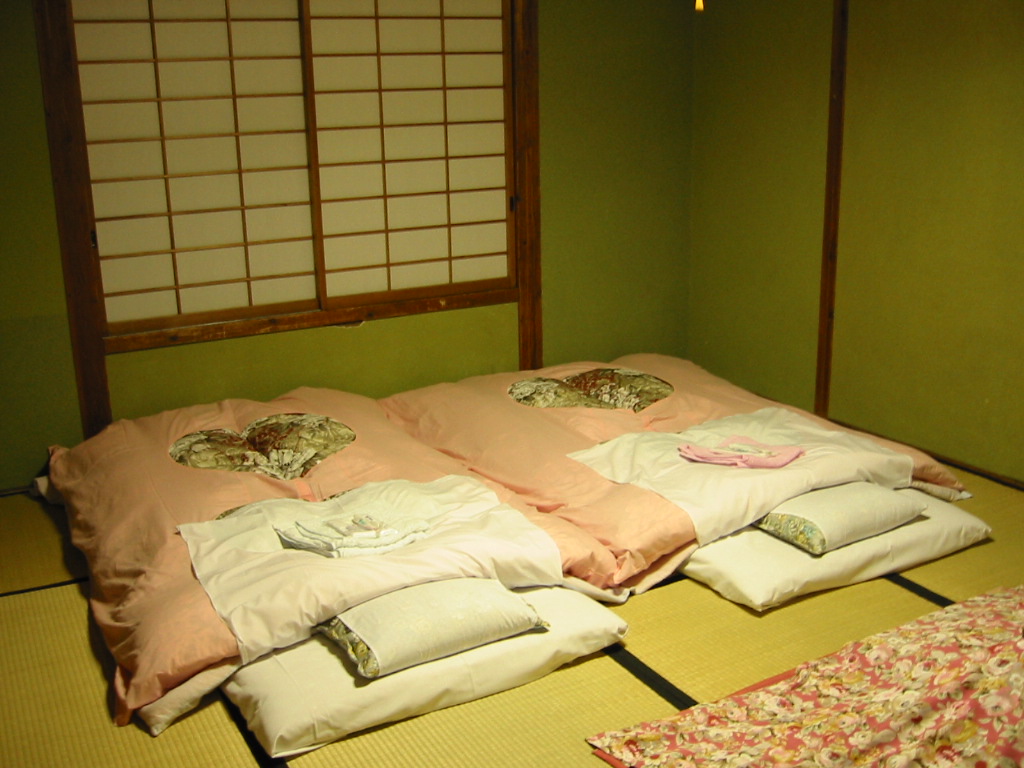
Individual listings can be found in Kyoto's district articles
Kyoto has a wide range of accommodation, much of it geared towards foreign visitors. Since Kyoto is a major tourist destination, demand is high and prices follow suit. During peak seasons, such as the cherry blossoms in April or during Golden Week when accommodation is difficult to get, consider staying in Osaka or satellite towns like Takatsuki and Hirakata. A 30-minute train ride from Kyoto Station to Osaka Station will cost you ¥540 one way. Most of the lodging in the city is clustered near the central city, especially around Kyoto Station and the downtown area near Karasuma-Oike. The outer areas have a scattering of their own, tending towards inexpensive but often much further from train or subway stations. For those who would like to experience traditional Japanese accommodation, Kyoto is home to some of Japan's most luxurious ryokan, though prices are generally very expensive and would make economy-class plane tickets look cheap. The city of Kyoto charges a hotel tax: for lodging that's less than ¥20,000 per night, the tax is ¥200 per night. It may not be included in the listed rates. Starting in March 2026 the tax will be increasing under a multi-tiered system: Rooms under ¥20,000 per night will be taxed at ¥400 per night (¥200 for stays under ¥6,000 per night), while more expensive accommodations will be charged a higher tax (up to ¥10,000 per night for rooms costing at least ¥100,000 per night).
Budget
At the bottom of the price scale, many temples in Kyoto own and run their own lodging complex known as shukubō (宿坊), usually on or near temple grounds. Guests are often invited to participate in morning prayer service (otsutome) held at the temple. Unfortunately, most temple lodgings do not have English-speaking receptions, and curfews and check-in/out times tend to be strict. Most are in the northern region of the city. Hostels are common and popular with students. Inexpensive hotels lack amenities but compensate with prices surprisingly low for Japan; both can be found in all regions of the city, and may be the only options available if you need to stay in an outlying ward. The majority of self-named ryokan in this range are actually minshuku. Most are small family-run operations and accustomed to dealing with foreigners. Be prepared to pay for the full stay in advance.
Go next
Uji - the best tea in Japan, the Byodo-in temple and the Nintendo Museum. Lake Biwa - if the summer humidity has drained your will to sightsee, take a day swimming at the underrated beaches of western Lake Biwa. Popular choices include Omi Maiko and Shiga Beach, each about 40 minutes from Kyoto on the JR Kosei Line. Mount Hiei - an ancient hilltop temple complex that traditionally guarded (and occasionally raided) Kyoto. Otsu - home to some great historical temples, Mount Hiei, and one of Lake Biwa's ports. Koka - home of ninjas, and there is the Miho Museum. Nara - less than an hour's journey by train on the JR Nara line from Kyoto station, Nara is an even older capital than Kyoto and has a stunning collection of temples in a giant landscaped park. Osaka - about half an hour from Kyoto by JR rapid train, this bustling city offers more retail opportunities and a central castle. Amanohashidate - literally "the bridge to heaven", it is considered one of Japan's top three scenic views (along with Matsushima in Miyagi prefecture and Miyajima in Hiroshima prefecture). It forms a thin strip of land straddling the Miyazu Bay in northern Kyoto Prefecture, hence the name. Visitors are asked to turn their backs toward the view, bend over, and look at it between their legs. Himeji - about an hour by Shinkansen west of Kyoto, Himeji boasts a spectacular traditional castle. Sekigahara - about an hour northeast of Kyoto by train, Sekigahara is a small rural town of immense importance to the Japanese history buff, as this was the site of the battle that allowed Tokugawa Ieyasu to consolidate control of Japan and establish the Shogunate.
More pictures of Kyoto


From this destination's category on Wikimedia Commons. Each photograph is credited to its own author under its own licence.
The guide text on this page is from the Wikivoyage article Kyoto, written by Wikivoyage contributors and published under CC BY-SA 4.0. The authors are listed in the article’s edit history. It has been shortened and re-laid-out for this page; that adapted text is available under the same licence. Nothing else on this page is.
Wikivoyage is written by travellers, not by us. Opening hours, prices and whether a place still exists are exactly the details that go out of date, so check anything you are relying on.
“1,719 readers a month” and the ranking are ours, counted from Wikimedia’s published pageviews (CC0) — the median of twelve complete months. They count people reading about a place, which is not the same as people going there.