
Philadelphia
For ancient Philadelphia renowned for its role in early Christianity, see Alaşehir.
Philadelphia, routinely referred to as Philly, is the birthplace of American democracy. In Independence Hall and in taverns and other locations around the city, the nation's founders planned and launched the American Revolution, which gave birth to the nation. Visitors interested in U.S. history will also discover that it is a city of firsts: the first library (1731), first hospital (1751), first medical school (1765), first national capital (1774), first stock exchange (1790), first zoo (1874), and first business school (1881).
Most read about in September, least in May. That is when people look it up, which tends to run a month or two ahead of when they go.
Before you book
The Foreign, Commonwealth & Development Office publishes the UK’s official travel advice for United States. It changes without notice and travelling against it usually invalidates your insurance, so read it at the source rather than anywhere else — including here.
FCDO travel adviceUnderstand

Philadelphia, often called the "Birthplace of America", is the birthplace of the country's modern democracy. Philly was founded by William Penn in 1681, and assumed its present-day shape and size in 1784 when Montgomery County was split off from Philadelphia. The city's name translates to "City of Brotherly Love" and it has been a seat of freedom since its inception; founded by Quakers, the colony promoted religious freedom among its residents in stark contrast to the England of the time. The definition of "Philadelphia" changed in 1854. Prior to that time, the term "Philadelphia" referred to what is today called "Center City", and what we today call "Philadelphia" was referred to as "Philadelphia County" (that term is still used today in legal and administrative contexts). For clarity's sake we will use modern terminology, though many people will refer to Center City as "Philadelphia" when referring to pre-1854 periods. The city is the largest in Pennsylvania, the second-largest in the Northeast megalopolis behind New York City, and the sixth-largest city in the United States. Philadelphia sits adjacent to New Jersey, on the west side of the Delaware River, and is only 15 miles from Delaware. The Philadelphia Region, a metropolitan area known as the Delaware Valley with a population exceeding six million, is the nation's sixth and world's 67th largest metropolitan region. It encompasses counties in Pennsylvania, New Jersey, Delaware, and even Maryland.
History
Known for its role in the American Revolutionary War, Philadelphia saw the convening of the Continental Congress as well as the writing of the Declaration of Independence and the Constitution. Shortly after the nation's inception took place in Philadelphia, Center City was named the nation's capital, a role it filled from 1790 until 1800, when Washington, D.C. took over. Prior to 1854, the city of Philadelphia only consisted roughly of what we now call Center City, extending east to west between the Delaware and Schuylkill Rivers and north to south between Vine and South Streets. Everything else was Philadelphia County and contained thirteen townships, six boroughs, and nine districts. The Act of Consolidation in 1854 consolidated all these areas within the city of Philadelphia, creating the boundaries you see today. Benjamin Franklin, probably Philadelphia's most famous resident, was responsible for the city's alternative title, the "new Athens." While Franklin's most famous experiment dealt with the conducting of electricity, he was also responsible for the country's first insurance company, the city's first public library and the first fire department; Franklin also played a great role in establishing the city's postal system and inventing new conveniences such as bifocal lenses and the Franklin Stove. Philadelphia has seen its skyline and its name in lights throughout the years in such famous films as the Rocky series; the statue from Rocky III still stands prominently atop the "Rocky Steps" outside the Philadelphia Museum of Art. Films like namesake Philadelphia and many of Philadelphia native M. Night Shyamalan's thrillers take place in the city. The Liberty Bell is right in the center of Philadelphia inside of a pavilion near Independence Hall. The Liberty Bell is a major artifact in Philly's history. It was rung for the first reading of the Declaration of Independence in July 1776, to announce the passage of the Catholic Emancipation Act of 1829 in Great Britain, and on other major historic occasions. John Sartain in his book, Reminiscences of a Very Old Man, claims the bell was cracked during the 1829 announcement:
"The final passage of the Emancipation Act by the British Parliament is linked to a bit of Philadelphia history. On receipt of the news in Philadelphia the Liberty Bell in the tower of the State House was rung, and cracked in the ringing. When I was up in the tower in 1830, two years after, viewing the cracked bell for the first time, Downing, who was then the custodian of Independence Hall, told me of it and remarked that the bell refused to ring for a British Act, even when the Act was a good one."
What's inside

For most visitors, the focal point will be Center City and Old City, which comprise the downtown section of Philadelphia. It is bounded by Vine St. to the north, the Delaware River to the east, South St. to the south, and the Schuylkill River to the west. The 2010 Center City residential population of 57,000 makes it the third most populated central business district in America, behind New York City and Chicago. Other popular districts to visit are West Philly and South Philly.
Getting there

By plane
Philadelphia International Airport is the largest airport in the Delaware Valley. Alternatively, you can fly to Newark Liberty International Airport (EWR IATA) or Baltimore-Washington International Airport] (BWI IATA), each of which is connected by Amtrak to 30th Street Station (1 hr from EWR; 80 min from BWI). Other New York and Washington-area airports are less convenient.
1 Philadelphia International Airport (PHL IATA), contactPHL@phl.org. The largest airport in the Delaware Valley, 25 min from the city by train. It is served by taxis and the SEPTA Regional Rail Airport Line. The predominant carrier at PHL is American Airlines, which offers flights from destinations throughout the U.S. and Canada, a handful of European cities, and some Latin American destinations. Southwest has become American Airlines' main domestic competitor at PHL, and the two airlines constantly attempt to outbid each other's fares on many trunk routes. Air charter companies such as Monarch Air Group and Mercury Jets fly a variety of private charter aircraft and jets, from charter luxury Gulfstream's down to economical piston twins for small groups and individuals. (updated Sep 2018) 2 Northeast Philadelphia Airport (PNE IATA). Pennsylvania's sixth busiest airport, but with no scheduled commercial airline service. Available to general aviation. Lehigh Valley International Airport (ABE IATA) in Allentown is the best option for those traveling to the Lehigh Valley, and is located roughly 60 miles north of Philadelphia.
By train
3 30th Street station (William H. Gray III 30th Street station), 2955 Market Street. Philadephia's main train station and a major train hub station. 30th Street Station is also a stop on the Market-Frankford subway line and has a taxi rank and several car rental agencies. (updated Nov 2023) Train operators: Amtrak, ☏ +1 215-856-7924, toll-free: +1-800-872-7245. Operates trains throughout the United States of America. (updated Dec 2020) Tickets on Amtrak with 30th Street Station as the origin or destination are also valid on SEPTA regional rail to/from Suburban and Jefferson (Market East) stations in Philadelphia Center City. In addition to the routes below, Amtrak also provides service to Philadelphia from Virginia, Charlotte, Florida, and New Orleans. Some of its many routes stopping at Philadephia.
Getting around

There are plenty of public transportation options to get around the downtown core of Philadelphia. Buses, trains, and trolleys gather at 30th St. Station and the 69th St. Transportation Center. Most services are operated by SEPTA, see Fares below for their ticket system. Absolutely no smoking is allowed in any SEPTA Transit Station. SEPTA Staff, transit police officers, and even fellow riders will ask you to extinguish/dispose of tobacco before entering. Violators may be subject to fines, arrest, or even community service. Walking or biking are also viable options for getting around.
By foot
Philadelphia is one of America's most walkable cities. This has been taken advantage of and the city is marked extremely well by "Walk! Philadelphia" signs that are placed on each block, sometimes only several feet apart, that guide visitors toward shopping, dining, gallery perusing, cultural enjoyment, local must-sees and public transportation should it need to be taken. The city has two very walkable shopping districts as well as the walkable Benjamin Franklin Parkway, which is home to many museums, including the Franklin Institute and the Museum of Art that was made famous in the "Rocky" movies. Walking between most locations within Center City is possible in 30 minutes or less.
By bicycle
Depending on where you are from, you may find Philadelphia's bicycle infrastructure to be much better, or much worse, than what you are used to. Cycling is made easy by many quiet streets and generally flat terrain, and thus is extremely popular in the city, but some regressive policies regarding bicycle infrastructure have left something to be desired. The Schuylkill River Trail runs along the eastern bank of its namesake river, and is extraordinarily popular among residents and tourists alike. It connects South Philadelphia, Center City, 30th Street Station, the Art Museum, Boathouse Row, and Manayunk, before continuing over 140 miles to the headwaters of the river. Another popular trail is the Delaware River Trail, which is a bit patchwork, but runs in sections through the northeastern part of the city. Cyclists are also permitted on the side walkways of the Benjamin Franklin Bridge, which provides good views of the city. Philadelphia drivers can be aggressive towards cyclists at times, and it's not uncommon for drivers to park illegally in bike lanes, so extreme care must be exercised if riding on major streets, especially in Center City and University City. Although it may be tempting to do so, riding on sidewalks is illegal citywide, except in locations where it is signed otherwise. Bicycles may also be brought on all SEPTA services, except trolleys. Philadelphia also has a bike sharing program, known as Indego. A 24-hour pass is available for $15, but a 30-day pass is just $20 (Aug 2023), so is the better choice for many riders. The majority of Indego bikes are e-bikes, which will get you to your destination faster, but cost an additional $0.20/min. Many bicycle shops around the city also have bikes available for rent at modest rates.
See

Travelers planning to visit multiple attractions may benefit from Philadelphia CityPASS, which grants admission to 6 Philadelphia attractions within 9 days of first use for a much reduced rate and includes expedited entry in some cases. The included attractions are: THE Franklin Institute; Adventure Aquarium; Phila Trolley & the Big Bus Company, 24 hours of on-off privileges; Philadelphia Zoo; Option Ticket One with choice of either the Academy of Natural Sciences or the National Constitution Center and Option Ticket Two with choice of Please Touch Museum or Eastern State Penitentiary. A Weekend in Philly offers a detailed itinerary that includes several of these attractions.
Public art
Thanks to Philadelphia's innovative Mural Arts Program, the city has a truly massive amount of art that can be seen without paying a dime or entering a single building. Originally designed to help stop graffiti and enliven the city's buildings, the Mural Arts Program has led to Philadelphia now having the largest collection of public art in the world, with over 3500 murals completed since its inception. There are tours offered as well, from trolley or train tours to the mural-mile walking tour. Other public art of note includes the many glass mosaics found throughout the city; a sampling of this great public art can be seen on South St. east of Broad. Center city Philadelphia offers many public statue displays. "The Clothespin" is a sculpture by Claes Oldenburg that resembles a clothespin located just across from City Hall on West Market St. LOVE Park, serving as a terminus between City Hall and the museum-laden Benjamin Franklin Pkwy., features a famous LOVE statue that has come to represent the brotherly love that Philadelphia was founded on. The site once was the city's (and perhaps the nation's) most popular skating attraction until new legislation and remodeling efforts outlawed skating in the park. Just across the JFK Blvd. from City Hall at the Municipal Services Building, visitors can find many larger than life game pieces from popular board games as well as a statue of former mayor Frank Rizzo. More statues can be found throughout Fairmount Park along Kelly Dr. on east side of the Schuykill River. Sculptures by Remmington can be found on the path, while several sculptures by Alexander Milne Calder can be found in Laurel Hill Cemetery, which is just off the paved walking path.
Museums
Center City West is home to many important museums. The Philadelphia Museum of Art has one of the world's largest collections of art. The permanent collection is especially strong in Asian and medieval art, impressionist paintings, and furniture. The Barnes Foundation is one of the world's most important collections of post-impressionist and modernist art. The Academy of Natural Sciences includes a 2-story dinosaur exhibit, a butterfly walk-through area, and a children's nature center with live animals. The Franklin Institute Science Museum has special exhibits that change every few months. Be sure to walk through the giant-sized human heart, a favorite with kids. Also features planetarium and an immense IMAX theater. The Mütter Museum of the College of Physicians of Philadelphia has a collection of medical oddities is one of the city's most popular attractions. The Rosenbach is a fine old townhouse owned by a pair of rare-book dealers, which has grown into a museum and archive. The Rodin Museum displays the largest collection of Rodin's work outside of Paris. The Rare Book department of the Free Library of Philadelphia is also worth a visit. Center City East is home to the African American Museum, and Atwater Kent Museum of Philadelphia History. Old City is home to the National Museum of American Jewish History and Independence Seaport Museum. West Philly is home to the Penn Museum (for archaeology) and the Please Touch Museum.
Do
Events
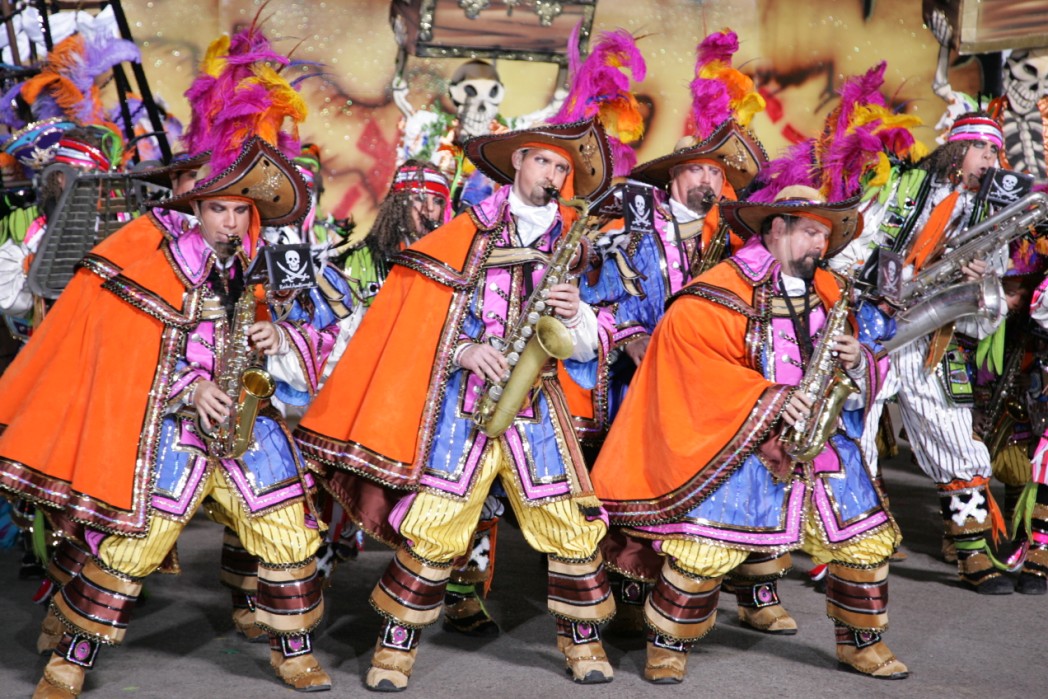
The Philadelphia Marathon is also another annual event. This marathon race is held every 3rd Sunday in November. There are three races: the full marathon, half marathon and the "Rothman Institute 8k". Every year in the beginning of July, an All-You-Can-Eat Ice Cream Festival is held down Penns Landing. $5, children under 6 free. The Philadelphia Flower Show, one of the largest indoor flower shows in the world, is held every spring at the Pennsylvania Convention Center. AIDS Walk Philly occurs every October. It is an 8.2-mi (13-km) walk that begins and ends at Eakins Oval (in front of the stairs of the Philadelphia Art Museum). The first walk started in 1987 and raised $33,000 that year. Since then, the event became annual. The Mummers Parade is held each New Years Day. The first official parade took place on January 1, 1901. Local clubs (usually called New Years Associations) compete in one of four categories (Comics, Fancies, String Bands, and Fancy Brigades). They prepare elaborate costumes and moveable scenery, which take months to complete. The parade of over 10,000 marchers travels approximately 3 miles northward on Broad Street, beginning in South Philadelphia and concluding near City Hall in Center City. The Made In America Festival is an annual music festival taking place during Labor Day weekend on the Benjamin Franklin Parkway. While rappers draw the biggest attention, bands from musical genres as diverse as free-jazz, metalcore, and pop are featured. West Philly Porchfest is a beloved annual do-it-yourself music festival featuring free shows on porches all over West Philadelphia. The Odunde festival takes over a dozen-block radius in the Graduate Hospital neighborhood on one Sunday every year in June. Hundreds of stalls and several musical stages celebrate Africa and the African diaspora.
Theater and music
Philadelphia prides itself on its wide variety of live performances, particularly for music. Venues can be found throughout Center City East and West, Old City, South Philly and the Northern Liberties/Fishtown districts of North Philly. R5 Productions promotes smaller bands and affordable shows at several local venues. The Fringe Festival, held every September, is a 4-week-long, city-wide celebration of innovation and creativity in contemporary performance. Each September, the Festival explodes into every nook and cranny of Philadelphia with more than 1,000 artistically daring performances. Several of the college campuses in the area have theater programs and student-run theaters that often run shows. One such is the Masque of La Salle, which often hosts performances at its Dan Rodden Theatre.
Sports
Philadelphia takes its sports seriously and makes a legitimate claim to being the sports capital of the nation. As one of the largest metro areas in the U.S., Philadelphia has an extensive sport history and culture, being the birthplace of notable athletes like Kobe Bryant. However, whenever the topic of American sports is discussed, one will quickly notice that Philadelphia is seen with disgust and derision. This is the result of two preconceived notions: 1) Philadelphia sports teams have had very little luck competing for, let alone winning, championships, 2) Philadelphia fans have a reputation for being a hard-nosed and passionate bunch who wilfully engage in violent behavior. While these statements are not incorrect, you should not be deterred from enjoying yourself, far from it. In fact, Philly sports fans are often praised for their passion and in-depth knowledge of their teams and league rules, and few cities can boast crowds as electrifying as Philly. Having teams with volatile performances in all major sports will inevitably create fans that stick to their teams through thick and thin.
Shopping

Philadelphia's Old City has always been a center of commerce, and as Philadelphia grew to be a bigger city many shops and department stores were found on Market Street between Old City and City Hall. Two such landmark department stores on Market Street were Gimbels and Strawbridge & Clothiers, which faced increasing difficulty in competing against suburban department chains in the 20th century. In the 1970s, the Gallery at Market East, an urban mall with Gimbels and Strawbridge & Clothiers as major anchors, opened to stem the tide of retailers fleeing the urban core to the regional shopping malls. Despite success in the first decade or so of operation, the Gallery remained unable to compete; Gimbels closed in 1986, while Strawbridge's closed in 2006. The Gallery was replaced by the Fashion District mall located where the Gallery was with a movie theater, other attractions, and stores. Just northwest of the Fashion District is the Reading Terminal Market, a very successful indoor public market that opened in 1893 at the site of the Reading Railroad's headhouse terminal, now part of the Philadelphia Convention Center, after open-air sidewalk markets were closed down in the 1850s due to health and safety concerns. Some of the vendors have been in business for over a century, and sell produce, meats, chocolates, and a variety of other usually handmade foodstuffs and items. There are a lot of small restaurants and a section for Pennsylvania Dutch (or Amish) vendors. The high-end shopping district of Center City did eventually regain its footing in downtown Philadelphia starting in the 1980s and 1990s, and is along Chestnut Streets and Walnut Streets west of Broad Street to Rittenhouse Square, featuring national brands and boutiques, from the high-end Burberry, Tiffany and Diesel to locally-managed corporate Anthropologie and Urban Outfitters. Chestnut Street also has a larger range of mid-range shops as well, with many ma-and-pa outfits in addition to bargain big-leaguers H&M and Daffy's, and extends from as far east as 11th Street to 22nd Streets. The Shoppes at Liberty Place is in Philadelphia's second-tallest building, and The Shops at the Bellevue is in a historic building on Broad Street. For a more unique flavor, there are shopping districts with its own distinct character. 3rd Street Corridor in Old City has the city's best in high-end, independent retailers for fashion, art and design. Landmark Sugarcube should not be missed for the fashion savvy. Beauty-goers will enjoy Moko, an organic beauty studio along the corridor. Antique Row, on Pine Street between 9th and 13th (Center City), is home to a mix of antique stores and local gift and craft boutiques. The Italian Market in South Philly is an open-air street market with fresh produce and food; although it has been a predominantly Italian district, there is now a large infusion of Mexicans. Chinatown (Center City) is similar to many other similar Chinatowns in various U.S. cities, as an ethnic enclave of Asian American immigrants and residents.
Eat

See the Districts articles for specific listings.
Cheesesteaks
No trip to Philadelphia is complete without trying the cheesesteak, Philly's most famous homegrown food, a sandwich made of a fresh roll filled with grilled shaved beef and cheese (as well as onions, mushrooms, and other optional sides). The spiritual homes of the cheesesteak are Pat's King of Steaks, where the cheesesteak was invented, and Geno's Steaks, where they claim to have improved on Pat's version. They are across from each other in South Philly at the intersection of 9th Street and Passyunk Avenue. There are many ways to order a cheesesteak. Some cheesesteaks are made with chopped steak (Pat's and Geno's), while others are made with sliced top-round (Steve's). While Cheez-Wiz is a local favorite, many people also enjoy American or Provolone cheese on their cheesesteaks. The way the cheese is served makes a huge difference. Some cheesesteak joints simply place the cheese on top to melt (Pat's and Geno's), while others, such as Steve's, ladle hot melted cheese on top, adding to the delicious grease from the meat. Any local will tell you as well that the most important part of the cheesesteak (or hoagie, for that matter) is the roll, which is why many have found it difficult to replicate the cheesesteak outside of the Philadelphia region. Many displaced Philadelphians who have started their own restaurants elsewhere have encountered trouble making authentic cheesesteaks, and import their rolls from the Philly area. Although Pat's and Geno's are the most famous cheesesteak joints, they are far from the best. There are many others to choose from, particularly in South Philadelphia—John's Roast Pork at Snyder and alley-street Weccacoe is considered by many locals to offer a standout. John's offers what sports radio 610 WIP's Cheesesteak Challenge called the best cheesesteak in the city, and an outstanding roast pork sandwich. It is common for people visiting John's to bring a friend and split a cheesesteak and a roast pork sandwich. Placing at #2 on the 610 cheesesteak list is Steve's Prince of Steaks in Northeast Philadelphia, which has 2 great locations. They also serve a delicious side of cheese fries, which can be had with wiz, American, or provolone. Many enjoy Jim's Steaks or Tony Luke's. 'The Great Northeast' is also home to Joe's Steaks + Soda Shop, a delightful drug-store throwback on Torresdale Avenue near the Delaware River. No cheesesteak aficionado can call himself such without a visit to Dalessandro's Steaks or Chubby's on Henry Avenue in the Roxborough section of Northwest Philadelphia (north of Manayunk and East Falls). One of this region's better steaks is found at takeout-only Sorrentino's on Cresson in Manayunk. Sonny's in Old City, on Market St between 3rd and 4th, also serves an excellent cheesesteak in a location close to Independence Hall. Philadelphia's other notable sandwich is roast pork which can be found at DiNic's in the Reading Terminal Market, Tony Luke's, John's, or a Latin version at Porky's Point. Lastly, the city's best roast beef sandwich served on a locally baked Sarcone's roll is at caffe chicco. A caveat before ordering a cheesesteak, particularly at the often crowded Pat's and Geno's—know how to order. There is somewhat of a 'no soup for you' attitude at these busy and fast-service oriented establishments which can really make a tourist stand out. The way to order is as follows: It is assumed that you are going to order a cheesesteak, so unless you are not, don't specify this. First, say the type of cheese—only American, provolone, and whiz are generally available. Ask for Swiss at your own risk. The only condiment that is not available in a jar outside the stand will be fried onions; with (or "wit" in Philly parlance) or without ("witout") will specify your preference on the matter. So 'Whiz "Wit", Provolone "Witout",' etc. Not too complicated, and a straightforward way to have a nice local moment on your travels.
Local and street food
You can also find cheesesteaks at Reading Terminal Market at 12th and Arch Sts. Here visitors will find many stands selling produce, meats, flowers, and baked goods. Reading Terminal Market is a good place to get lunch if you are in the area. The multitude of vendors and low prices provide plenty of options for a quick meal. It's also home to one of the city's best pretzels (Miller's). Philadelphia's most famous snack is the salted soft pretzel, which, while shaped with the three holes like soft pretzels everywhere else, are distinctive in that they are flattened into a wide rectangle and are made in long chains in which the wide sides of the pretzels are attached. A person may typically buy two, three, or more attached pretzels at a convenience store or from a street vendor. The price is low, especially compared to national vendor brands sold in other cities and in malls. Unlike pretzels served in many other cities, Philly pretzels are not served hot, but at room temperature and often eaten with mustard. The most famous sweet snack is from the Tastykake brand. Their main factory is in the Navy Yard in far south Philly, so every flavor and type of TastyKake is sold in Philadelphia, and they are usually extra fresh, since they do not have to travel far to the retail outlet. Also unique to the area are Goldenberg's Peanut Chews, a bit-sized chocolate bar with a chewy peanut center. Originally developed as a high-energy ration bar during World War I, but still popular today! Scrapple is a favorite comfort food of native Philadelphians. Best described as a seasoned breakfast pork product, scrapple is of Pennsylvania Dutch origin and is made from pork by-products (you're better off not knowing exactly what's in it) and cornmeal, cooked into a thick pudding, formed into a loaf, sliced, and fried. You'll find it on the breakfast menu of many neighborhood diners in Philly. Ask for it very crispy. Some other Philly foods include Philadelphia Cream Cheese, water ice, and hoagies. The Kraft/Nabisco factory is in the far Northeast of Philadelphia at Byberry and Roosevelt Blvd. Drive by with your windows down and take a whiff! Wawa is a chain of local convenience stores similar to 7-Eleven. They are most famous for their deli ordering terminals, which allow you to specify via a touch-screen monitor exactly what you want on a sandwich. Although locals refuse to consider Wawa's cheesesteaks as authentic, due to its use of ground beef rather than sliced or diced beef, the Wawa option is still delicious and you get to customize it with a wide range of options. Many stores also carry a respectably thick and doughy fresh soft pretzel at their counter.
Drink

Because of the state of Pennsylvania's complicated liquor laws, most supermarkets are not able to sell beer or spirits, although some neighborhood stores might and certain locations of grocery stores sell beer and have limited-selections of wine. State-run liquor stores called Fine Wine and Good Spirits are all over the place but don't sell beer, and beer distributors sell beer only in bulk and are scattered in inconvenient locations, and neither will be open late. In part because of this complicated setup, Philadelphia has a visibly strong, public beer culture, celebrated in events such as the annual summertime Philly Beer Week or the Philly Craft Beer Festival in March. Local beers include Yuengling, Yards, or Troegs. Many bars will have a varied selection of beers you already know and love alongside ones you've never heard of. If you're ever stuck on a choice but don't want to look out of place, just ask for a "lager", which in Philly specifically means the Yuengling Traditional Lager, a pre-Prohibition style amber lager rather different from the mass-market pale lager you find elsewhere. You can also order a "Citywide Special", which is a shot of house whiskey with a can or bottle of light lager usually Pabst Blue Ribbon or Miller Lite. Primarily, most of the nightlife scene takes place in Center City (West and East) and in Old City. The areas around Rittenhouse Square in Center City, and Headhouse Square and Penn's Landing in Old City, are popular destinations that have a large concentration of bars and clubs, many of them attracting the hip, young, pretty people of the suburbs or the universities. Slightly further out, the rapidly-gentrifying Northern Liberties district is another solid nightlife destination with more of a "yuppie" or "hipster" vibe. Yet another area that has a vibrant nightlife is the Manayunk neighborhood . However, bars can be found in just about every corner of Philadelphia, and nothing is more characteristic of Philly than the local bar as a default place for social gathering; every neighborhood's got one or two just around the corner, even if it's a dark, run-down dive without proper signage and a crowd of blue-collar regulars, or a new-but-looks-old pub attracting the yuppies with outdoor seating and live music. Any major street or well-known district is going to have its own selection of watering holes, and each of these establishments will cater to a crowd, whether it's students, sports fans, hipsters or clubbers. In particular, streets and neighborhoods with a notable collection of drinking locales, not including Center City, Old City or Northern Liberties, include University City and West Philly; South Street and Passyunk Ave in South Philly; and the Art Museum District. In the summer, the Center City District sponsors Center City Sips, a downtown-wide Happy Hour every Wednesday from 5PM-7PM where many bars and restaurants all participate in drink specials: $4 beers, $5 wines and $6 cocktails, and usually some selection of food specials.
Quizzo
It's been said that Philadelphia invented, or at least popularized, the popular pub trivia event that is known here as Quizzo, which are called by other various names such as "quiz nights" by the time they expanded to other parts of the United States. Philadelphia native Patrick Hines first began running Quizzo games at the New Deck Tavern in University City in 1993 (though he spelled it with one 'z', as in "Quizo"), and began a second one at Fergie's Pub in Center City in 1995; there are now plenty of other bars running their own Quizzo nights throughout Philadelphia, and while Hines has moved to Ireland, he still writes the questions for several local bars. If you're able to find yourself in a game (you'll have to have a team and needlessly long and/or hilarious team name, or see if you can join one as a free agent) it's a fun way to spend a night, but be prepared to be completely left in the dust by trivia buffs who play regularly.
Breweries
Philadelphia Brewing Company produces a variety of beers. If you can't make it to the brewery (or find it in a bar) you can pick up a sampler pack (24 bottles) for around $30 at a beer distributor. Yard's Brewing. Produces a variety of beers, though notably Philadelphia Pale Ale, ESA (especially if you find this in cask format), and the ales of the revolution. Historically certified beers from recipes tied to Ben Franklin, Jefferson, and a porter named after Gen. Washington. Accessible via the Spring Garden Station on the Market Frankford el.
Sleep
Hostels
Philadelphia is home to two hostels within the city limits, both are affiliated with Hostelling International USA: Apple Hostels in the Old City is less than 3 blocks from the Liberty Bell and Independence Hall; and HI — Chamounix Mansion Hostel in West Philly, which sits on a scenic bluff above the Schuylkill River and is 45 minutes to downtown Philadelphia's cultural and historic attractions.
Hotels
There is a wide variety of hotels located in Philadelphia. Prices usually range from $100 to $200 a night, excluding weeks with major trade conventions. Center City is home to a wide variety of moderate and high end hotel chains that can be found in five main areas:
Convention Center: Loew's, Marriott, Courtyard by Marriott, Residences at the Marriott, Four Points, Hampton Inn, Le Meridien, Hilton Garden, Travelodge, Clarion Suites Rittenhouse/West Market-Palomar, Latham, Rittenhouse hotel, Bellevue at Stratford, Ritz Carlton, Embassy Suites, Four Seasons, Crowne Plaza, Sofitel, Club Quarters, Windsor Suites, Westin East of Broad/Washington Sq West-Doubletree, Alexander Inn, Independent Hotel, Holiday Inn, Rodeway Inn, Parker Spruce Old City (near Independence Hall)-Sheraton Society hill, Penn's View, Comfort Inn, Hyatt, Omni, Holiday Inn, Best Western Philadelphia International Airport in South Philadelphia
Stay safe
Philadelphia has a major crime problem. As early as the late 1980s it was bestowed the notorious moniker of 'Killadelphia'. Even to this day the city suffers from some of the worst crime rates in the USA. However, as a rule of thumb, the places visitors are likely to spend time in are safe and well policed, so be informed about places that are popular with tourists.
Neighborhoods
Center City and surrounding neighborhoods have very low crime rates (some of the lowest in the country). Wealthier neighborhoods like Rittenhouse Square, Old City, and Society Hill, are safe, as are Northeast Philadelphia (for the most part), Northwest Philadelphia, the Art Museum Area, Chinatown, the Parkway, and Bella Vista. Some petty crimes (mostly pickpocketing) happen but much less often than the media suggest. South Philadelphia is generally safe, though certain parts should be avoided at night (especially those near I-95). On the flip side, other parts of the city struggle with rampant crime. The city's criminal activities are overwhelmingly concentrated in North Philadelphia (with the very notable exception of Temple University), far West Philadelphia (though this area has seen improvements), and Southwest Philadelphia. These areas are of little interest to tourists, but do be careful if you do end up venturing there.
Philadelphia's suburbs
While Philadelphia has a history of crime, the rest of the Delaware Valley is one of the safest metropolitan areas in the U.S., though certain locations like Camden (across the Delaware river in New Jersey), Reading, Tinicum Township, and Chester have very high crime rates, so visitors should exercise caution when visiting these regions.
Go next

Pennsylvania
Allentown, Pennsylvania's third-largest city, is rich in history, contributing to both the American Revolution and the nation's industrialization, and home of Dorney Park. Doylestown - browse world-class museums, including the renowned James A. Michener Art Museum, the Moravian Pottery & Tile Works, the Mercer Museum and Fonthill, a 44-room mansion featured on A&Es “America’s Castles.” Gettysburg, the historic site of the American Civil War's bloodiest and most important battle that turned the war in the Union's favor. Lincoln later delivered his Gettysburg Address here. Harrisburg, Pennsylvania's state capital. Hershey, home of Hershey Park. Kennett Square, the site of the beautiful Longwood Gardens, featuring over a thousand acres of manicured landscapes and fountains. King of Prussia, edge city northwest of Philadelphia that is home to the King of Prussia Mall, which is the largest mall in the United States in terms of leasable retail space, with more than 400 stores. Lancaster, home of Pennsylvania Amish. Langhorne, home of Sesame Place, a one of a kind theme park aimed towards toddlers, preschool, and grade school children; approximately 30-45 minutes outside Philadelphia. Lehigh Valley, a region of eastern Pennsylvania roughly equidistant from Philadelphia and New York City with a rich history, including as an epicenter of the Industrial Revolution. New Hope, a major shopping center north of Philadelphia. Poconos and Endless Mountains, home to some ski and other mountain resorts. Valley Forge, the historic site where Washington and the Continental Army encamped over the brutal 1777-78 winter after the fall of Philadelphia during the American Revolutionary War. Washington Crossing, the historic Revolutionary War site where Washington launched one of the war's most complex and daring raids, crossing the Delaware River covertly the night of December 25, 1776, prior to prevailing in a surprise attack in the Battle of Trenton. York, a historic site during the Revolutionary War.
New Jersey
Jersey Shore, including Atlantic City, Cape May, Ocean City, and Wildwood. Visiting the Jersey shore is referred to locally as "going down the shore." Atlantic City is home to the Borgata, Caesar's, and several other casinos. Cape May offers historical tours (and haunted tours!) of the town. And hey, it's a great way to cool off and unwind—and perhaps work off that cheesesteak! Princeton, New Jersey, home to Princeton University, is a wealthy, pretty, tree-lined town.
Delaware
New Castle, south of Philadelphia, is a quiet, charming town.
More pictures of Philadelphia



From this destination's category on Wikimedia Commons. Each photograph is credited to its own author under its own licence.
The guide text on this page is from the Wikivoyage article Philadelphia, written by Wikivoyage contributors and published under CC BY-SA 4.0. The authors are listed in the article’s edit history. It has been shortened and re-laid-out for this page; that adapted text is available under the same licence. Nothing else on this page is.
Wikivoyage is written by travellers, not by us. Opening hours, prices and whether a place still exists are exactly the details that go out of date, so check anything you are relying on.
“1,893 readers a month” and the ranking are ours, counted from Wikimedia’s published pageviews (CC0) — the median of twelve complete months. They count people reading about a place, which is not the same as people going there.