
Seattle
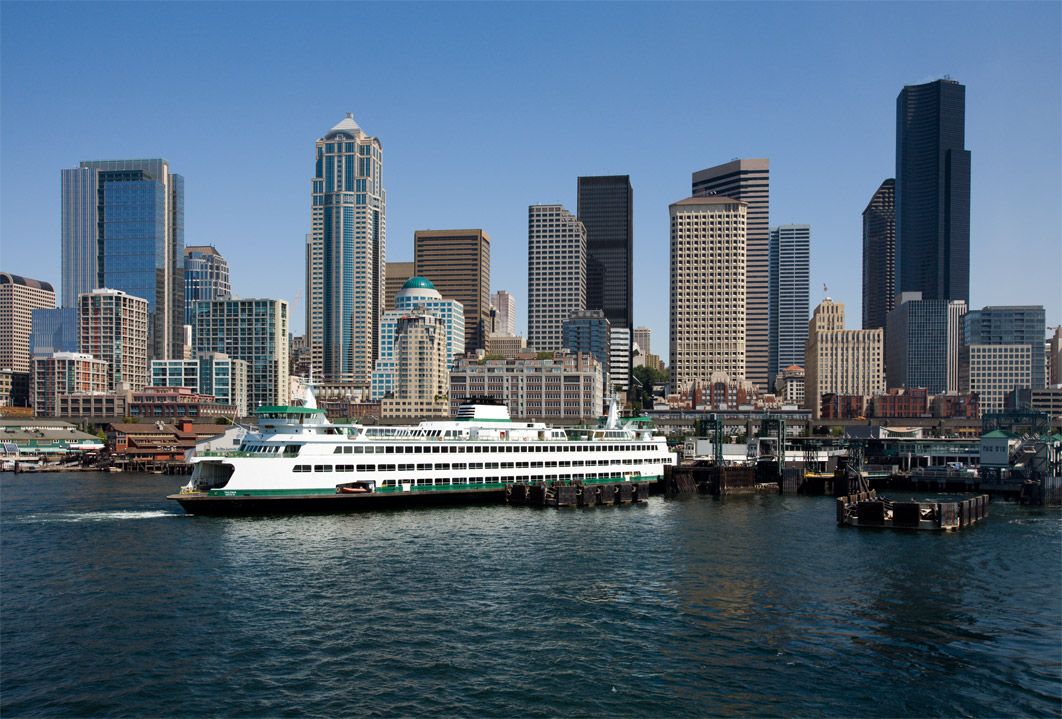
Seattle, Washington sits at one of the most beautiful spots in the United States. Occupying a narrow isthmus between the Puget Sound and Lake Washington, it is the biggest city in the Pacific Northwest, with 780,000 people in Seattle and over four million people in the metro area. Seen from above, carpets of evergreen trees, pristine blue waters, and snowy white mountains surround the downtown's metallic skyscrapers, earning the city its nickname The Emerald City. On the ground, you will find a vibrant and cosmopolitan city. Next to the progressive downtown and the freewheeling feel of Capitol Hill, you can find a laid-back atmosphere in the districts to the north and ethnically diverse neighborhoods to the south. The many restaurants, coffee shops and microbreweries are worth indulging in after a day spent strolling through the city's many parks and beaches or admiring the arts and architecture. At the same time, around the shores of Lake Union and out east in Bellevue, are some of the most competitive megacorporations in modern American Society, as the city is home to Amazon, Microsoft, and Boeing. And just outside the hectic city are snow-covered mountains, evergreen forests, and stunning coastline to explore. Even for the bold and the adventurous, it's hard to get enough of Seattle.
Most read about in August, least in April. That is when people look it up, which tends to run a month or two ahead of when they go.
Before you book
The Foreign, Commonwealth & Development Office publishes the UK’s official travel advice for United States. It changes without notice and travelling against it usually invalidates your insurance, so read it at the source rather than anywhere else — including here.
FCDO travel adviceUnderstand
History
The first humans are believed to have entered the region nearly 4,000 years ago. Englishman George Vancouver mapped the area in the 1790s, but the first white settlers didn't arrive until 1851. Luther Collins led a party of settlers to the mouth of the Duwamish River (in what is today southern Seattle), followed shortly by a party led by the more notable Arthur A. Denny of Chicago, who settled at Alki Point in West Seattle. Confrontations between the original settlers initially flared, only to die out as the groups settled together on the Elliott Bay. The area was then named Seattle by David Maynard, in honor of Chief Si'ahl of the Duwamish & Suquamish tribes, and later officially established as a city in 1869. By the 1880s, development of a modern city came to life with the erection of buildings, a streetcar system, and a lumber mill at the end of a timber skid row (what is now Yesler Way), only to be destroyed by fire in 1889. The city came alive again in 1897 during the Klondike Gold Rush, when Seattle served as the departure city for miners bound for Alaska and the Yukon. Entire hills were sluiced into Elliott Bay to make flat land for development, and the Lake Washington Ship Canal was dug to connect Lake Washington to the Puget Sound. Beyond the gold rush alone, Seattle became a transshipment point in this era, for instance for the Alaskan salmon trade, a role it still plays to this day. The city's economy slowed down again during the Great Depression, but experienced a renewed fervor starting in World War II, as the Boeing aircraft company emerged as a major manufacturer and largest employer in the region. Seattle hosted the 1962 World's Fair, which opened the gates for modernization of the city. By then, Seattle had practically become a company town for Boeing, leaving it vulnerable to its cyclical downturns, particularly during the 1970s oil crisis. The software industry was about to make a big impact on the city, foreshadowed by Microsoft's move from Albuquerque to the Seattle area in the early 1980s. Soon, Amazon, Nintendo of America, T-Mobile, Starbucks, and numerous biotech companies established themselves, bringing an influx of population growth and money into the area. Today, the Seattle metropolitan area's wealth and its four million inhabitants (more than half of the population of Washington State) make it the economic powerhouse of the Pacific Northwest and one of the world's largest technology hubs.
Culture
Multiculturalism is seen as a virtue. White people make up about 70% of the population, while more than a tenth of Seattlelites are of Asian descent. English is spoken virtually everywhere in the city but there are ethnic areas in South Seattle where Vietnamese and Tagalog are also commonly spoken, as well as Chinese and Japanese in the International District. In particular, Seattle has long been known for its large Taiwanese community. The ZIP code 98118 in South Seattle is one of the most ethnically diverse neighborhoods in the entire United States! Being a very politically left-wing part of the country, Seattle has one of the most sprawling LGBTQ+ communities in the U.S., second only to San Francisco. While the vast majority of Seattle businesses are LGBTQ+-friendly, the Capitol Hill area, east of downtown, is the main place for LGBTQ+-focused business and bars, as well as a resource center. A large PrideFest takes place annually at the Seattle Center, along with preceding events such as a Pride Parade. The city is also home to a number of other annual Pride events, including the Seattle Dyke March and Capitol Hill Pride. Locals and visitors alike have long remarked of the Seattle Freeze, referring to the cold politeness of residents. While they are polite and welcoming on first interaction, they are actually reserved, and interactions rarely lead to deeper acts of friendship (an invitation to dinner, personal conversations, etc.). The origin is obscure, but it is mostly attributed to Scandinavian immigrants that brought their home country's customs here, including this form of introversion. Expect to have to make all the "first moves" to meet people here. This shyness also extends to anger and annoyance. Locals often make fun of themselves for their passive-aggressive culture, where they will retain their polite nature even in the most upsetting circumstances.
Climate
The stereotype of Seattle weather is that it is Rain City, where the sky is always grey, rainy, and depressing. Despite the reputation, the main challenge of Seattle's weather is more the overcast skies than the rain, and in fact Seattle has less annual rainfall than most cities east of the Rocky Mountains. Seattle's rain usually comes in a drizzle that lingers for days, which only occasionally strengthens to a full-blown torrent that rarely lasts long. Many residents call this period of overcast "the season of grey" as it lasts from late October to early March every year. The season is also accompanied by the short daylight hours of the winter, where its only light out from 7:45AM to 4:30PM. It may surprise you that rain is virtually absent from July through September, making Seattle an excellent place to spend summer. It's warm and comfortable a decent amount of the time, with little to moderate humidity, with average summer highs of 79 °F (26 °C) and lows of 59 °F (15 °C). However, there are sometimes occasional days of high heat where temperatures and heat indices can climb up to or even exceed 89 °F (32 °C) and not go below 64 °F (18 °C) at night. Furthermore, because of Seattle's high latitude, there is daylight from around 5:15AM to 9PM during the summer months, giving you ample daylight for outdoor activities. Despite its location as the northernmost big city in the U.S., winters in Seattle are mild compared to most other places in the northern half of the country. Marine air from the Puget Sound and the Pacific Ocean moderates Seattle's climate, so that freezes are uncommon and most precipitation falls as rain instead of snow. The city typically sees only one or two snowfalls a year. The area's complex topography creates substantial microclimates. It can be raining in the city itself but sunny five miles north or snowing in heaps fifteen miles inland to the Cascade foothills, often puzzling weather forecasters.
What's inside

Seattle does not have official neighborhood boundaries, because Seattle does not have any officially-designated neighborhoods! However, most of the informally defined neighborhoods are widely known and agreed upon amongst Seattleites. Many are defined by a proud feature or a prominent street. Many visitors to Seattle do not venture beyond Downtown, the International District, and the Seattle Center. That's a shame, since neighborhoods like Capitol Hill, West Seattle, and those north of the ship canal are where much of the fun actually is!
South of Downtown and I-90
While in Seattle you will likely hear reference to the "Eastside", which refers to the region east of Lake Washington comprising the suburbs of Bellevue, Kirkland, and Redmond.
Getting there

By plane
1 Seattle-Tacoma International Airport (SEA IATA), 17801 International Blvd, SeaTac, ☏ +1 206-787-5388, toll-free: +1-800-544-1965. Nicknamed "Sea-Tac", is in the city's southern suburbs 14 mi (23 km) south of downtown Seattle. It's a major domestic hub for Alaska, Northwest and West Coast destinations, and also handles many international trans-Pacific routes, as well as some flights to major European and Middle East airports. In addition, the airport is well-connected to virtually every part of the US, with multiple daily flights to many major US cities, as well as to Alaska and Hawaii. (updated Oct 2023) Alaska Airlines uses this airport as its primary hub and is by far the biggest carrier here, with Delta catching up with an international hub here and an increasing number of domestic destinations. The reliable Link light rail 1 Line (see § Get around) connects Sea-Tac to many points north, including South Seattle, Downtown, Capitol Hill, University of Washington, Northgate, Shoreline, Mountlake Terrace, and Lynnwood. Sound Transit bus route 560 provides direct service from Sea-Tac to West Seattle.
Alternative airports
Paine Field (PAE IATA), also known as Snohomish County Airport, about 30 mi (48 km) north of Seattle in Everett, serves limited commercial flights from Alaska Airlines from the western half of the continental US. The much-smaller Bellingham International Airport (BLI IATA), 94 mi (151 km) (about 90 minutes drive) north of Seattle in Bellingham, can be used as an alternative to fly into Seattle, despite the scarcity of flights. Low-cost carrier Allegiant Air flies to Bellingham from Las Vegas, Los Angeles, Oakland, Palm Springs, Phoenix-Mesa and Oakland. They do not fly into or out of Seattle-Tacoma International Airport. Alaska Airlines flies up, only from Seattle-Tacoma only. On the ground Quickcoach offers connections to/from Vancouver, BC while Bel Air Airporter goes to/from Seattle-Tacoma International Airport via downtown Seattle (Convention Center). This airport also serves as a gateway point to travel to the San Juan Islands by air with San Juan Airlines Portland International Airport (PDX IATA), 160 mi (260 km) (about 3 hours drive) south of Seattle in Portland, is a major airport, but smaller than Sea-Tac, and is another alternative to fly into Seattle, especially with low-cost carriers Allegiant Air and Volaris (flights from Mexico). There are no direct shuttle services from Portland International Airport to Seattle, but there are Greyhound and Amtrak services from downtown Portland to downtown Seattle. In addition Alaska Airlines, SeaPort Airlines (to Boeing Field (BFI)), and Delta Connection offer frequent daily direct flights between Portland and Seattle. Vancouver International Airport (YVR IATA), 140 mi (230 km) (about 2 hr 30 min drive) north of Seattle across the border in Canada, is another major airport, and well-served by flights from East Asia. The downside is that you will have to go through customs and immigration twice, and if required for your nationality, you will also need to obtain a visa for Canada. Alaska Airlines, Air Canada and Delta Connection offer frequent daily direct flights between Vancouver and Seattle.
Private aircraft and seaplane
Private aircraft can use 2 King County International Airport (BFI IATA), universally known as Boeing Field. It's also south of the city, but much closer to town than Sea-Tac airport. There is limited commercial passenger service with Kenmore Air in its small passenger terminal at 7277 Perimeter Rd (location of marker). Customs and immigration available for international arrivals with prior arrangement. The aforementioned Paine Field in Everett is another popular option for general aviation. Seaplane service is available between Seattle and various island destinations throughout Washington state and British Columbia. Kenmore Air operates year-round scheduled floatplane services from 3 South Lake Union Airport (LKE IATA) to the San Juan Islands and Victoria, and summer flights from their base at Kenmore on Lake Washington's north end to Nanaimo, Campbell River and many other destinations in northern British Columbia. Harbour Air also operates flights from Lake Union to Victoria (55 mins; $385). Wheeled plane service is also offered from Boeing Field to Friday Harbor and Eastsound airports. A ground shuttle service is available from the Lake Union and Boeing Field terminals to Sea-Tac. Renton Municipal Airport (RNT IATA), farther from downtown than Boeing Field but still closer than Sea-Tac Airport, is another option for general aviation, with a sea plane dock at the north end of the airport on Lake Washington known as Wiley Post Memorial Seaplane Base. This airport only has basic facilities and no terminal building, but customs and immigration facilities are available for international arrivals with prior arrangement. Air charter companies fly a variety of private charter aircraft and jets for small groups and individuals.
Getting around

Seattle's public transportation system, while no rival for Chicago or New York City, is the most convenient and simple way to get around most of the city. While public transportation is also good in suburbs such as Bothell and Everett, if you plan on visiting those areas you may wish to use a car. Driving a car in Seattle is possible, but the frequent and awful traffic congestion can leave you frustrated. Parking for free in Downtown and many of the adjacent neighborhoods, such as Capitol Hill, is all but impossible. Seattle is also one of the most bicycle-friendly cities in the country, although you should be aware of the hilly terrain of the city that often makes cycling difficult. Carsharing services such as Zipcar, and ridesharing services such as Lyft and Uber, are also convenient and safe transportation options.
Orientation
Seattle's street designations are generally easy to remember once you understand them. Most of the city is laid out in a grid, with north-south roads called Avenues and east-west roads being Streets. There are occasional irregularities: Ways are long roads that don't always conform to the grid, Drives are long, circuitous routes, and there's the occasional very short Place or Court. Seattle has a somewhat convoluted address system that can be confusing to the uninitiated. Outside the downtown area, the city is divided into 7 compass directional sectors (N, NE, NW, W, E, S, SW; no SE section), with the name of the sector applied to every road that passes through that sector. Streets are written with the sector before the name (e.g. NE 45th Street or NE 45th) while avenues are written with the sector after the name (e.g. 45th Avenue NE or 45th NE). Roads within the downtown area (as well as some avenues east of Downtown and some streets north of Downtown) have no directional designation. Within a neighborhood, locals often omit the directionals when describing places, but mapping websites and apps require them, and may send you miles out of your way if you don't specify them. Take this into consideration when looking for directions to a specific address. When locals give you directions, they may refer to an intersection (especially in the case of a bus stop). The first road mentioned is the street it is at, followed by the crossing street adjacent to the stop, but sometimes they neglect to specify whether it's an "avenue" or a "street," so inquire to be sure and you'll avoid the risk of winding up in the wrong part of the city!
On foot
Walking is highly encouraged for short trips, especially if your destination is within Downtown or Capitol Hill. While the streets and drivers are generally friendly for pedestrians, do keep your street smarts and avoid walking alone in the southern part of Downtown, International District, or the SoDo neighborhood at night. For more information about street safety, look at the "Stay Safe" section. Seattle pedestrians are noted for their unusual refusal to jaywalk. Unlike many other large American cities (particularly those on the East Coast), in Seattle, you'll see groups of pedestrians patiently wait for the light to change before stepping off the curb, even when there isn't a car in sight. The reasons for it are unclear, though it's often suggested that the local police are particularly strict about enforcing the jaywalking law. The block layout in the downtown area is pretty compact; a walk from Denny Way to Yesler Way should take roughly half an hour. Walking from the Waterfront towards I-5 in Downtown (particularly between Seneca St and Yesler Way) is steep and will leave you gasping for breath at every intersection! Outside the downtown area, especially Capitol Hill or the northern and western parts of the city, there are many hills (albeit less hilly and steep than San Francisco). In fact, walking is a great form of exercise in Seattle, with abundant jogging tracks in the parks and longer trails like the Burke-Gilman Trail, which runs along the northern side of the ship canal and the western rim of Lake Washington.
See
Individual listings can be found in Seattle's district articles Seattle has a lot to see, be it prominent sights or attractions tucked away in quiet neighborhoods. For more information, look at each district's individual articles.
Seattle CityPASS. A discount pass that includes admission to five attractions for half the normal fee combined. You are entitled to up to two visits (within 24 hours) to the Space Needle and a visit to the Seattle Aquarium. You also get three choices of an Argosy Cruises Harbor Tour, admission to the Museum of Pop Culture, the Woodland Park Zoo, the Pacific Science Center the Museum of Flight, or Chihuly Garden & Glass. A CityPASS is valid for 9 consecutive days starting with the use of your first ticket. Transportation and parking are not included. $127 for adult, $97 for children (ages 5-12), plus tax and a $2 processing fee per ticket. (updated Jul 2024)
Landmarks
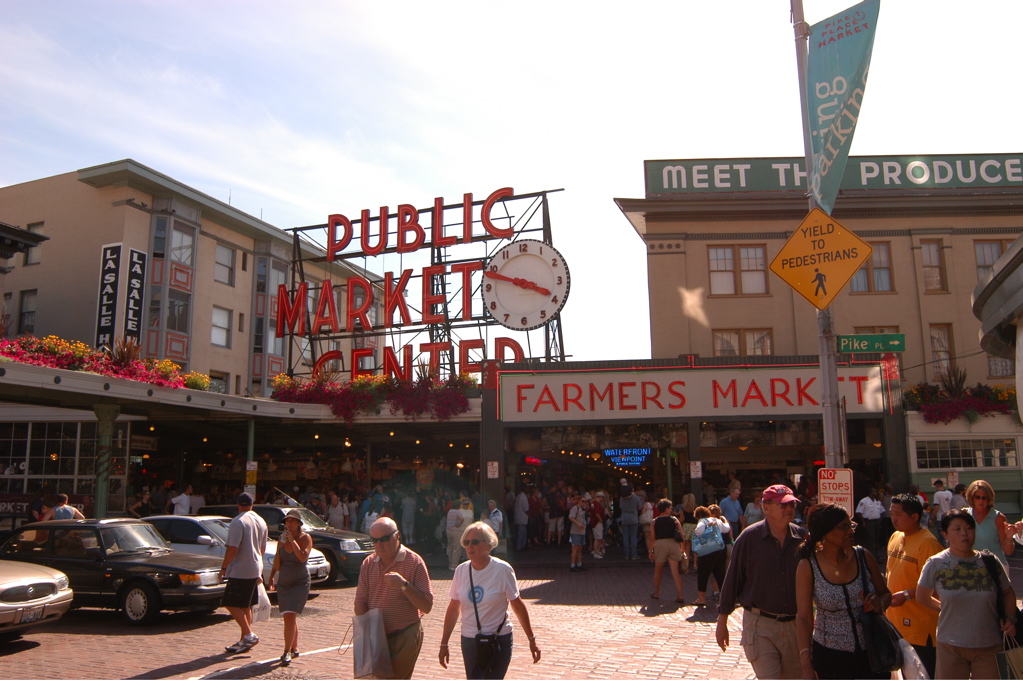
The first thing that pops into most people's minds when they think of Seattle is the Space Needle, north of Downtown in the Seattle Center. Although it's not the tallest building in Seattle, it still has a wonderful 360-degree view of both the city and the surrounding landscape. It is best to visit at sunset, when the mountains and sky will be lit up in beautiful colors. For a cheaper and less crowded option, head to the observatory at the Columbia Center building, which is higher than the Space Needle! For a better view of the waterfront and the downtown area, go aboard the Seattle Great Wheel. Downtown, the Pike Place Market is Seattle's largest tourist area. Home to the famous fish market, the original Starbucks Coffee shop, produce stands, and a dedicated lane each for florists and foods. Don't forget to visit Post Alley, just a block away from Pike Place as you walk away from the shore, as there are some excellent food and souvenir places tucked away.
Do

Individual listings can be found in Seattle's district articles
Tours
Kenmore Air, 950 Westlake Ave N, ☏ +1-866-435-9524. 20 minute plane tours over Seattle that are narrated by the pilot, with spectacular views of the city. Tours begin and end at the west side of Lake Union. Reservations required. $99.50 per person. Pioneer Square has a variety of tours of the Seattle Underground, the below-street-level corridors that were created when the district was raised by one floor during rebuilding after a massive fire in 1889. These informative tours are a great way to learn about Seattle's early history.
Water tours and cruises
Argosy Cruises, 1101 Alaskan Way, Pier 55. Cruise schedule varies by season. Ticket booth: Daily 10AM-4:05PM. Boat tour company with special dinner and sightseeing cruises. The most common tour is the hour-long Harbor Cruise on Elliott Bay, which offers excellent views of the Space Needle, Downtown skyline, freight harbor, and usually some sea lions, with a barrage of informative commentary about local history or interesting ships or cargo passing through that day. The Locks Cruise is a 2-hour one-way trip (in alternating directions) through the locks separating Elliot Bay and Lake Union, with an optional bus ride if you prefer a round trip. Seasonal cruises include the Summer Views Cruise with a sunset on Puget Sound, and Husky Football Cruises on Lake Washington before the games. Most cruises offer a decent full-service bar with large drinks and some snacks. Harbor cruise $30.50. Locks cruise $42.50, bus connection $5 additional. Discounts for kids 4-12 and seniors. (updated Mar 2018) 1 Waterways Cruises, 901 Fairview Ave N Suite A100, ☏ +1 206-223 2060. Cruises on Sa-Su and sometimes F; see schedule online. Office: M-F 9AM-5PM. Luxury dining cruises touring Lake Union and Lake Washington. Regular cruises include 2-hour weekend brunch and Sunday supper buffets, and a 2½-hour four-course dinner (business casual attire). Brunch $65, Sunday supper $60, dinner $85. (updated Feb 2018) There are a number of smaller operations offering private charter cruises, for more niche interests like old steamer ships, sailboats, or just a more personal experience with a friendly captain-and-bartender. These are best searched for online. The ferries are a cheaper way to experience a boat ride. The 35-minute trip to Bainbridge Island, with its quaint harbor village, is scenic and easy to board from downtown. See § Ferries under Go next.
Shopping

Individual listings can be found in Seattle's district articles If you want it, you can most likely get it in Seattle. Residents joke about "shopping local" or "supporting local business" at Amazon, Costco, and Starbucks, headquartered in or near the city. Despite the presence of these corporate giants (or as a reaction to them), Seattleites take pride in the many small, locally-owned businesses also operating here. Major chains and box stores do not tend to thrive in the city or its inner suburbs (with the notable exception of Starbucks, which has eighty-nine locations in the city). A sales tax of 10.25% applies for most purchases, except for groceries, newspapers, and prescription drugs, which are tax-free. Purchases of hard liquor, soft drinks, cannabis, rental cars, and hotel rooms are subject to higher taxes.
Downtown
The Pike Place Market, Seattle's most popular attraction, is well-known for its seafood and produce stands. At the main entrance to the market is Pike Place Fish, famous for its handlers who throw fish to each other, but there are plenty of other seafood stands as well. In the main market complex are several levels of restaurants and shops selling antiques, arts and crafts, and souvenirs, and as the weather gets warmer, artisans sell their wares in the upper open-air level as well. Although it is flush with tourists, especially in the summer months, area residents and Downtown workers regularly shop at the market as well, which minimizes the "tourist trap" feel. It is also believed by many that the lower floors of the market are haunted. The Westlake retail corridors on Pike, Pine, and Union Street between 3rd and 7th Avenues are also a great place to shop, with stores by big fashion and activewear brands. Belltown, just north of the downtown area, has a plethora of designer art galleries, fashion, and accessory workshops. Pioneer Square, just south of downtown, is the cheaper counterpart to Belltown, with more eclectic accessories.
Other districts
Ballard: Most shopping options here are on Ballard Avenue NW between 20th & 22nd Avenue NW. If big brands don't interest you, head here for stylish urban and hip fashion. Capitol Hill: Most shops here are in the western part of the neighborhood near I-5 (E Pike & Pine Street, Broadway and Melrose Ave), where the streets are filled with mid-range fashion options and a little bit of everything, befitting the hippest district of Seattle. Here you'll also find two of Seattle's most well-known bookstores, the sprawling Elliott Bay Book Company and used bookstore/cat sanctuary Twice Sold Tales. Fremont: Mainly vintage fashion wear and not as eccentric as its neighbor, Ballard. It is also a center for antiques and accessories. The shopping district is centered around Fremont Place N and N 35th Street. International District: Groceries, herbal medicines, and plenty of Asian-style wares. You can also buy handy Japanese kitchenware and other items at the widely-known Uwajimaya or by the back door of the dollar shop Daiso. North Seattle: Thrift stores scattered throughout the area, bulk grocery shopping at Aurora Avenue N, and big apparel stores at Northgate. South Lake Union: A long retail strip is on Westlake Ave, catering mostly to tech workers. Outdoor gear chain REI houses its flagship store on Stewart St. University District: Clothing and thrift stores catering to the local student population are along "The Ave", University Way. Upscale options are available at the open-air University Village Mall at 25th Ave NE. West Seattle: Head to California Ave SW for more laid back and contemporary clothing options.
Eat

Individual listings can be found in Seattle's district articles Typical of a big city, Seattle has a diverse range of fare representative of cuisines from around the world. Local chains and hole-in-the-wall restaurants dominate the city's dining atmosphere, and hearty. Prices are expensive by American standards; expect a counter-service lunch to set you back about $20, and a full service restaurant meal to cost a minimum of $30 after tax and tip.
Local specialties
Seattle's proximity to Alaska and the waters of the Pacific Ocean make it an excellent place to enjoy seafood. Look for salmon during the late summer months as options are abundant and the prices are among the cheapest on the West Coast, especially the red (sockeye) salmon. Shellfish are a prized resource of the Puget Sound, where the cool, clean waters provide an optimal habitat. Clams, mussels and oysters can be found easily, but other specialties like geoducks (pronounced GOO-ey-ducks) are sometimes available for the more adventurous. The Dungeness crab, named for a nearby town on the Sound, is a popular seafood prized for its sweet, tender flesh and high ratio of meat. The Dungeness is a commercially important crab in Washington's waters but other crab species are also common. The Alaskan king crab, caught from the deep cold waters of the Pacific Ocean near Alaska, has a more frequent presence here than the rest of the lower 48. The mild climate also supports many types of fresh produce. Farmers' markets are a normal occurrence on the weekends, especially in residential areas, and they usually have better quality produce than what you can get at supermarkets. They're an excellent opportunity to taste local delicacies and experience the local culture. Apples, which are exported from Washington and shipped all over the world, are in season around September or October. Delicious Rainier cherries are in season June through early August. Seattle boasts a wide variety of Asian cuisine, from East Asia to the South. For several decades the ubiquitous comfort food of choice was the Japanese-inspired teriyaki, a generous portion of grilled chicken in a sweet-savory sauce served over white rice. The family-run hole-in-the-wall shops offering this cheap and filling fast food are increasingly being displaced by more upmarket fare, giving way to the poke and ramen shops popping up across the city. Sushi is widely available, in quality (and price) ranging from pedestrian to exquisite. Thai cuisine is ubiquitous, Chinese restaurants are present in most neighborhoods, and more recent waves of immigrants have added Vietnamese pho and Korean influence to the landscape. The Cuban pork sandwich, a non-traditional heap of roasted pork, grilled onions, and aioli dressing in an undersized crusty roll, is offered by several casual restaurants throughout the city. There are also a fair number of Ethiopian restaurants, with a large concentration in the Central District and South Seattle. Donut shops and bakeries are virtually everywhere, with some offering warm in-house brewed coffee, making them an excellent delight in the cold weather or as a snack.
Eating options by district
Downtown and Pioneer Square feature high end restaurants and lounges, catering to office workers and event attendees. Belltown is home to most options for downtown dining, with restaurants in every price range and some of the city's best-reviewed restaurants. Pike Place Market and Post Alley are littered with street food, upscale cafes, and trendy dining. The Waterfront, naturally, has a selection of seafood restaurants. Food carts can be found at Westlake Park and South Lake Union, catering to workers wanting a quick and easy lunch.
Drink
Individual listings can be found in Seattle's district articles Few, if any, American cities can challenge Seattleites' love of coffee. This is perhaps best signified by the Seattle-based international chain Starbucks, but locals aren't satisfied by recognized chains alone, as evidenced by the hundreds of good locally owned coffeehouses. The best places to look for coffee are in Capitol Hill or Queen Anne Hill, where they take matters of coffee very seriously. Local favorites include Cafe Ladro, Vivace, Victrola, Caffe Vita, and Zoka, all of whom do their own roasting. Seattle coffee shops have their own slang: drip-brewed coffee is called simply "drip", two shots of espresso in a cup is a "doppio", and a "shot in the dark" is a shot of espresso poured into a cup of coffee, for a boost of extra caffeine. Some independent shops offer free cupping (tasting) classes, to educate customers about specialty beans. If you prefer tea, many coffee shops offer a selection of teas, and specialty tea shops offer a large catalog and can help you with recommendations. Like any other city with a large Asian population, bubble tea or boba milk tea shops exist, and are popular among young people. Bubble tea is basically milk tea with various flavors and tapioca balls. Many of these shops also offer Asian snacks and delicacies. If you are thirsty and hungry, and budget is your main concern, this can be a good option. Most of these can be found in the University District as well as a few in the International District. Craft beer is a Northwest specialty. Washington State is one of the largest growers of hops in the world, and local brewers like to highlight this locally-sourced ingredient. Fresh hop season runs from mid-September to mid-October, when many breweries utilize fresh (not dried) hops for a uniquely local flavor. The larger brewers distribute their products regionally or nationally, while other brews can only be found in local stores or bars; some beers are only available on draft, not in cans or bottles. Elysian (now owned by AB InBev), with three pubs, and the Pike Brewing Company in Pike Place Market, are popular local brewers. Brewery tasting rooms or taprooms, especially around Ballard but also in South Seattle and elsewhere, sell their beers directly to customers by the tasting glass, pint, 64-ounce (about 2 liter) growler, can, and keg. Taprooms are a particularly great option for families and on good weather days: many of them have enormous outdoor seating areas, most have no age restrictions, dogs are allowed, non-alcoholic beverages are also sold, and outside food is permitted. Many have menus for getting food delivered, and many have a rotating list of food trucks that sell food right outside. In Washington, bars have a full liquor license, while taverns (which have become uncommon) are restricted to beer, wine and cider. Many Seattle bars have a world-class beer selection featuring local Northwest style micros, many of them crafted in Seattle. Bars and taverns are restricted to patrons 21 and older, and especially in Capitol Hill and the University District, all patrons may be asked to show ID, even if they are not drinking. Wine is another Northwest specialty, and there are over 130 wineries just thirty miles from Seattle proper in Woodinville, though their vineyards are elsewhere in the state. Many more can be found a 2-3 hour drive away on the other side of the Cascades in Washington Wine Country, around Yakima and Walla Walla. You can find local vintages in grocery stores, wine shops, restaurants, and wine bars such as Bottlehouse and Purple. Spirits are distilled in a few Seattle neighborhoods, including downtown, Georgetown, and Fremont. Distillery tasting rooms offer modestly-priced trials of whiskey, vodka, gin, and other spirits, either neat or in cocktails. Washington state allows all alcoholic drinks to be sold at large supermarkets, so liquor is readily available even if you don't want to go to a bar. Drinking alcohol in public, including in parks and on public transportation, is illegal. Bars will not allow a drink, or even an empty container, to leave the premises. Tasting rooms that sell beer "to go" in cans, bottles, and growlers will not allow customers to consume that beer on site.
Sleep
Individual listings can be found in Seattle's district articles
For such a large city, there is a surprising lack of accommodation options available, thus rooms in Seattle are more on the expensive side. Most sleeping options are in Downtown and consist mostly of mid-range or high-end hotels. Other options, especially budget hotels and hostels can be found near the Seattle Center, the University District, the International District, and in North Seattle. There are also bed and breakfast options in Fremont, Ballard, and Capitol Hill. Some low-priced motels along Aurora Ave N are notoriously associated with prostitution, drug dealing, and other crimes; travelers primarily interested in sightseeing should look elsewhere. Alternatives to Seattle accommodations are a train ride away south in Tukwila and SeaTac, especially the areas surrounding the airport. Because of their proximity to light rail stations that offer a direct ride to major stadiums and arenas, airport-area hotels offer a frugal, traffic-free alternative for tourists in town for a sports or entertainment event. By SouthCenter Mall in Tukwila, there are more hotels to choose from with a wide range of rates. You can also find more options for hotels across the I-90 bridge in Bellevue or other towns on the other side of Lake Washington, such as Kirkland, Issaquah, or Renton.
Stay safe
Statistically, the crime in Seattle is similar to what you would expect in any major city in the United States. As long as you use some common sense, you are unlikely to be the target of a crime. Auto break-ins and theft are a notable problem, so never leave your valuables visible in a car and always lock your car doors. Downtown Seattle has a sizable population of homeless people (many neighborhoods have forced their homeless into Seattle's downtown core). While many beg for change or seem unstable, only a few are actually dangerous. Some places to be careful near major tourist areas include 3rd Ave downtown (especially between Pine St. and Pike St.), around Pioneer Square, and the International District (especially near 12th Ave and Jackson St). The rough parts of Seattle are fairly safe compared to the worst parts of other American cities, and you are unlikely to get into trouble by being in the wrong neighborhood during the day. However, there are areas to avoid walking around at night, including along Aurora Ave and Lake City Way in North Seattle, the International District, and parts of South Seattle. On Friday and Saturday nights, take caution in the bar districts, including Belltown and the Pike/Pine corridor of Capitol Hill. You should be safe as long as you are not looking for trouble, but drunken and unruly behavior, in very rare cases, can lead to assault or shooting. Drivers in Seattle are typically nice but indecisive. As long as you're careful as a pedestrian, you don't run a high risk of getting hit. Cyclists should be extra wary of traffic and opening doors of parked cars, especially Downtown.
Cannabis
Recreational cannabis (marijuana) is legal to buy and consume in Washington state for persons 21 and older. There are plenty of dispensaries in Seattle to buy from.
Purchasers are limited to one ounce of usable marijuana (the harvested flowers or "bud"), 16 ounces of marijuana-infused edibles in solid form, 72 ounces in liquid form, or 7 grams of marijuana concentrates. It is illegal to consume marijuana in public, including on public transportation and at street festivals. This law is not often enforced, although tourists may want to ask a local for advice before they attempt to consume. It is illegal to drive under the influence of THC. The DUI limit is 5.00 nanograms of THC per milliliter of blood. People may not transport marijuana out of the state or country, even if their destination has legalized it, may not take it on flights, and may not give it to a minor for consumption. This includes the Canadian border and Vancouver where cannabis is also legal, and includes neighboring Idaho where possession is highly illegal (punishable by a year in jail) and police target Washington cars in hopes of making a bust. Smoking and vaping of any substance, even tobacco, must be done at least 25 feet (about 8 meters) away from doors, windows, or ventilation shafts, and is prohibited in public parks. Regulations for alcohol often apply to marijuana as well. Some of these rules are enforced more strictly than others. You are most likely to get in trouble for passing marijuana to someone under 21, or for driving under the influence. Businesses, including bars, generally do not tolerate use on their premises, and are very likely to eject you, because you are putting their license at risk. Take your cues from the locals as to where smoking is informally accepted, and be polite about not lighting up in front of strangers who might object.
Go next

Suburbs
Seattle offers a variety of scenic and leafy suburbs that offer a relaxed pace and outlying cultural communities.
Edmonds — a few miles north, the lively waterfront town that travel legend Rick Steves calls home. Everett in the North Sound — about 25 miles north, home to a massive Boeing factory, where many of its wide-bodied aircraft are assembled. Tacoma in the South Sound — one hour south, where you can find one of the largest zoos in the country, as well as history and art museums. Bellevue — across Lake Washington, Seattle's largest suburb features posh shops and restaurants. Redmond — across Lake Washington, the home of Microsoft and Nintendo of America.
Across the water
Take a scenic ferry ride to the communities across the Puget Sound:
More pictures of Seattle


From this destination's category on Wikimedia Commons. Each photograph is credited to its own author under its own licence.
The guide text on this page is from the Wikivoyage article Seattle, written by Wikivoyage contributors and published under CC BY-SA 4.0. The authors are listed in the article’s edit history. It has been shortened and re-laid-out for this page; that adapted text is available under the same licence. Nothing else on this page is.
Wikivoyage is written by travellers, not by us. Opening hours, prices and whether a place still exists are exactly the details that go out of date, so check anything you are relying on.
“2,854 readers a month” and the ranking are ours, counted from Wikimedia’s published pageviews (CC0) — the median of twelve complete months. They count people reading about a place, which is not the same as people going there.