
Johannesburg
Johannesburg (also Jo'burg, Egoli or Jozi) is a large metropolis and South Africa's largest city. Once regarded as South Africa's crime capital in the turbulent nineties, the city has shaken off that reputation led by its youthful exuberant population and a growing black middle class, not to mention the omnipresent soundtrack of Amapiano and house music. With a wealth of historic sights and neighbourhoods to explore, there's enough to fill a visit of days, weeks, or even months before getting a true feel for the city. Jo'burg is a city on the move where the most ambitious of South Africans (and Africans more broadly) come to seek opportunity in the big city.
Most read about in August, least in April. That is when people look it up, which tends to run a month or two ahead of when they go.
Before you book
The Foreign, Commonwealth & Development Office publishes the UK’s official travel advice for South Africa. It changes without notice and travelling against it usually invalidates your insurance, so read it at the source rather than anywhere else — including here.
FCDO travel adviceUnderstand
Johannesburg has a population of about 5.6 million people in the urban area (2023), half of whom live in Soweto and adjacent suburbs. Three quarters of the population is formed by South Africa's black residents who mostly live in Soweto, while white residents amount to about 12% (2019). The remaining 11% are of other descent, including Africa's largest ethnic Chinese community. The city is home to two Chinatowns; the original one on Commissioner Street has shrunk dramatically since its heyday, but still has a few shops and business run by the small community of South African Chinese, while a newer and larger Chinatown in the suburb of Cyrildene is largely populated by immigrants and expatriates from China. Unlike other South African cities, no language group dominates, although English is the established lingua franca. The city is the economic hub of South Africa, and to some extent, the rest of Africa. Yet the city's wealth is unequally distributed among its inhabitants, causing the city to have living conditions varying from first world to third world conditions. The contrast between rich and poor has led to one of the highest crime rates in the world. The more affluent tend to live in houses with high security by western standards, whilst the less affluent live in less desirable housing conditions. That said, crime rarely deters from daily life, especially for visitors who have little reason to visit the city's rough areas. Many South Africans choose to live here over other, safer parts of the country. There are many things that are unique to Johannesburg. It features a distinct street entrepreneurship, and motorists can buy things from vendors selling goods at traffic lights, as in many other developing-world cities. This includes food, umbrellas, soccer balls, cellular phone accessories and many other goods. Barber shops consisting of nothing but a chair and an enthusiastic barber can be found on the sides of roads, although they tend to specialize in African rather than Caucasian hair. Mine dumps can also be seen throughout the city and are a reminder of the city's legacy of gold mining. These dumps are fast disappearing as new gold extraction techniques have made it profitable for mining companies to reprocess them. With around 6 million trees, Johannesburg is most likely the world's largest man-made urban forest. The city is certainly one of the greenest in the world, considering that the natural landscape is savannah.
Climate
The weather is generally regarded as excellent; temperatures reach the mid-30s Celsius (95°F) in the summer months (Dec-Feb) with little to no wind and with occasional, spectacular afternoon thunderstorms. Temperatures in winter can drop below freezing but snow is extremely rare. The city is at an altitude of 1750 metres above sea level so newcomers can easily get out of breath.
Tourist information
Explore Johannesburg website
What's inside
Johannesburg is split into eight administrative regions. These exclude the city of Ekurhuleni which traditionally was considered part of Johannesburg but has been split for administrative purposes. Although this list is not exhaustive, the main areas in Joburg are:
Inner City (which encompasses the tourist areas of Braamfontein, Maboneng, Newtown and Fordsburg) Old Joburg (which encompasses Melville, Greenside, Killarney, Emmarentia, Parktown, Houghton and others) Sandton (the new city centre including Rivonia, Fourways and Sunninghill) Randburg (which encompasses Northcliff, Linden, Weltevreden Park, Bordeaux, Greymont) Soweto — home of the Nelson Mandela National Museum Alexandra Midrand (which encompasses Waterfall City and Kyalami) Roodepoort (the West, which encompasses the Cradle of Humankind, Muldersdrift and Lanseria Airport) South Johannesburg — Alberton, Rosettenville, Brackendowns, Turfontein, etc.
Getting there
By car
A number of highways from everywhere in South Africa go to Johannesburg, the N1 from Cape Town and Bloemfontein or the N3 from Durban making it an easy to reach destination, including:
N1 from Cape Town and Harare in Zimbabwe N3 from Durban N4 from Mbombela and the Kruger National Park, as well as Botswana N12 from Kimberley and Potchefstroom N14 from Upington and Namibia Traffic can be particularly bad during peak hours (M-F 06:30-09:00 and 15:30–18:30) so plan your journey accordingly. Accidents are frequent and can cause delays at any time of the day and night. Take extra care if you are taking a car to OR Tambo airport as accidents are frequent on at the Gillooly's Interchange and on the R24 towards the airport. Traffic has been getting worse, and traffic jams may delay your journey. As the city is large and spread out, getting around may require covering large distances e.g. from Midrand to Soweto is over 45 km (28 mi).
By plane
1 O.R. Tambo International Airport (JNB IATA) (formerly called Johannesburg International and before that Jan Smuts Airport, these old names are still commonly used), ☏ +27 11 921-6911. The main airport for Johannesburg. It is the busiest airport in Africa and is the connecting hub for flights to other cities in Southern Africa. There are many flights to Johannesburg from international hubs, especially London. Most flights from Europe are overnight and arrive in the early morning. If you arrive on one of these flights be prepared for very long waits at immigration. Remember your yellow fever certificate if you are flying from a high risk area. (updated Mar 2018) Terminal A is for international flights, and B domestic. When flying out some international flights may have their check-in in Terminal B, but will still leave from Terminal A. The two terminals are adjacent to each other and a 5-minute indoor walk apart. The airport is 24 km (15 mi) east from the city centre. There is a highspeed train to Sandton and Pretoria (see below) from the airport. If you are taking a taxi, keep walking straight until you exit the building and then turn left until you see a long line of taxis (mainly Mercedes) with yellow taxi signs on their roof. These are licensed taxis with meters (tell the driver the address and insist on using the meter before you get in the car). Do not go with anyone who approaches you offering a taxi while you are inside the airport building, these are unlicensed touts, and you'll end up paying more. If you are staying in a hotel, try to get the hotel to send a shuttle to pick you up. For getting money try to avoid the many banks and money changers on the left of the arrivals door: They display the exchange rates but don't indicate their excessive "commissions" that can reduce what you actually get by 10% or more — this is the case at all banks and bureaux de change in South Africa. Better to use the ATMs to withdraw cash. The ATMs are located one floor higher up in the airport, in the retail mall where there are many shops and restaurants.
Getting around
Johannesburg was a city built for the car and so public transport is in the development process. The Gautrain (a speed train not part of the metro system) is a good, clean and safe way to jump fast between the airport, Malboro, Midrand, Rosebank, Pretoria and Centurion. There are buses and minicabs on the streets, but there tends to be no designated stops, so buses may be flagged down on main roads such as Oxford street and Jan Smuts. They can be unsafe, but larger double decker metro bus are easy to use all along Oxford, starting in Gandhi Square, going through Killarney, Rosebank, Illovo, Sandton, Rivonia and Sunninghill (bus no. 5C and 5D). Generally, it is a bad idea to make use of minibus taxis unless accompanied by locals. The other bus alternatives, are orange putco buses, coming more regularly than the metro buses and it's slightly more expensive. Lastly there are the Gautrain feeder buses connected to the Gautrain, these have quite extensive routes from each station - these can be found easily on the gautrain website or mobi site. The problem is that buses are quite problematic on weekends and public holidays, Gautrain buses do not run, Metro buses have two route runs, and putco buses are at a complete halt. This is when the train would be a good alternative, or rent a car. Renting a car will give you the best flexibility and opportunity to tour the city, however driving is fast paced, but by no means difficult as long as you stay alert. Heavy traffic into Sandton in the morning (06:30 to 09:00) from all directions leading towards Sandton and in the afternoon all routes leading out of Sandton (15:30 to 18:30) in all directions could delay your journey by up to 2 hours, so plan accordingly.
Car rental
Renting a car is your best option if you are a confident driver, as the city's public transport is very, very limited. It is worth buying a good road map of Johannesburg, using a GPS (available when you rent a car) and planning your trips carefully before setting out. The city is large and somewhat poorly signposted. Make sure to be exceptionally clear with your rental agency what types of things are covered by their insurance plans. The phrase "full coverage" doesn't necessarily mean full coverage. Traffic can be aggressive, and minibus taxis in particular often defy the rules of the road. Like any big city, there are some areas of Johannesburg that you don't want to stray into if you look like a tourist or don't have enough fuel to get out of. Many areas have high rates of violent crime, and carjacking is a real risk; it is therefore often advised that you should not stop at traffic lights after dark. Ask advice. Local numberplates start with "GP" (Gauteng Province). If your car has any other numberplate, then you will advertise yourself as being from "out-of-area". If in doubt, stop at a police station and ask them for directions. From the airport: stay on the freeway between the airport and Sandton, and don't divert through the townships and Alexandra on Vincent Tshabalala Road. A GPS following the fastest route will usually divert around the townships, but it pays to know where you are going. (If you are coming from the airport and you are afraid of getting this wrong, carry on past Marlboro Drive with the N3 (which becomes the N1) until you reach Rivonia road. Then turn left/south and this will take you straight into Sandton, bypassing any townships.)
Europcar Car Hire, ☏ +27 11 883-4352, info@europcar.co.za. Car rentals in Johannesburg and Johannesburg Airport. Pace Car Rental, ☏ +27 11 262-5500, info@pacecarrental.co.za.co.za. Long-term car rental in Johannesburg and Sandton; cars, bakkies and minibuses. Rent a Wreck, ☏ +27 11 402-5150, info@rentawreck.co.za. Very cheap car rental. The cars are old but are reliable. Exeque Car Rental, ☏ +27 10 235-0898, info@exequecarrental.co.za. Long-term rentals only. Xtreme Car Rental, 18 Herman Road, Meadowdale, ☏ +27 11 394-0771, info@xtremecarrental.co.za. 06:00-18:00. Cash car rental near Johannesburg Airport. Parking (on the roadside) is often free in the sense that there is no meters, however there is often a local car guard that well keep an eye on your car for a few rand. Try to park in a well-lit space and always plan ahead, it's not a good idea to park far away from your destination. When available, use a secure parking area. All Gautrain stations have safe and secure parking, although a tad expensive.
See
Inner City
The poor reputation of the Central Business District (CBD) is no longer deserved. There are numerous galleries and art spaces popping up across the CBD. The city centre is the most-visited part of Johannesburg for African tourists, particularly the traders who come to shop at Johannesburg's wholesale outlets. Newtown and the Market Theatre area (the city's cultural precinct) is now easily accessible from the highway and Mandela Bridge and very fun; here you will find live music venues and bars too. Braamfontein, the university area, has a great Saturday market, lively night life, is very artsy. By day there's nothing here. On the east side of the city, Main Street Life, Maboneng Precinct and Arts on Main (especially the Sunday market and The Bioscope independent cinema). The Maboneng area has 24-hr security so you can freely walk around the streets, just be sure not to stray away too far. Troyeville has a fantastic restaurant at the Troyeville Hotel, an art centre and all the main sport stadiums (football, tennis, athletics, rugby). On the west side, Fordsburg is the formerly-Indian now known as “little Somalia” and “ Ethiopia Town” part of central Joburg and has some Indian and Pakistani restaurants as well as African street food, shops and markets. Good food is to be found in this neighbourhood, which, by Johannesburg's standards, shows signs of street life in the evenings, and more so on Friday and Saturday. Most places are halal, and so no alcohol is served. The Oriental Plaza shopping mall is here and has good bargains. In the centre of town, between Jeppe St and Bree Street at Delvers Street, look up and see the Amharic script which denotes that you are in the Ethiopian/Somali part of town. There are Ethiopian restaurants and coffee shops in the Africa Mall and Johannesburg Mall. Best to arrive before 14:00. To the north east, Yeoville is known as Le Petit Kinshasa and is home to many of the Francophone African diaspora in Johannesburg. Lots of Cameroonian restaurants and Congolese bars. Hillbrow has a bad reputation for drug dealing, sex bars, crime, etc., but is slowly improving. If you visit Constitution Hill, or Johannesburg Art Gallery, Hillbrow is right across the street, not that scary. Empty your pockets and go for a walk to the base of the Hillbrow Tower on a Sunday morning. Stay on the main streets and keep your wits about you, and don't carry anything that is worth stealing. It is certainly an interesting experience. Worth watching Louis Theroux's Law and Disorder in Johannesburg before your visit.
Points of interest
The Top of Africa on the 50th floor of the Carlton Centre, gives you a panoramic view of the city from the top of Africa's tallest building. The Johannesburg Art Gallery is the biggest gallery on the African continent. It has a good collection of local and international work on display. Standard Bank Gallery is a corporate-owned gallery that hosts South African and international exhibitions. The Sci-Bono Discovery Centre offers dynamic learning experiences in maths, science and technology. Origins Centre has an excellent multimedia display of the rock art and the origins of humankind. WITS Anglo American Digital Dome, formerly Johannesburg Planetarium, uses high-resolution projectors and surround-sound technology create an immersive environment for educational experiences about the wonders of the universe and the richness of human creativity.
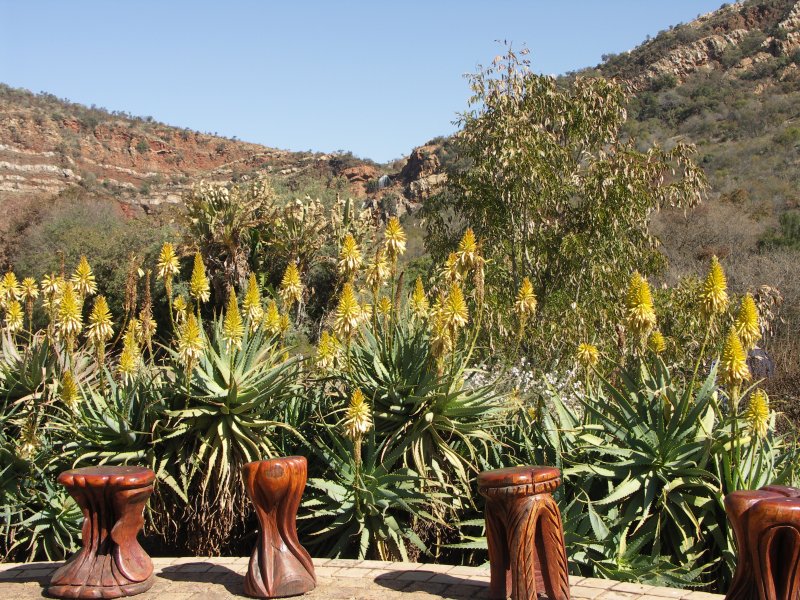
Walter Sisulu Botanical Gardens in Roodepoort is one of the last green areas remaining within Johannesburg. Constitution Hill is the site of the notorious Old Fort prison complex. It is a fascinating place well worth a visit: part courtroom, part museum and part art gallery. The Workers Museum tells the story of Migrant Labourers who came to Johannesburg to find work. Having left their homes and families, black migrant workers faced slave-like conditions shown by the original dormitories, concrete bunks and punishment room at the old compound building.
Do
City Sightseeing, in the pedestrian mall at the "Zone Shopping center" in Oxford road, Rosebank (next to Hamley's Toys with the main bus stop nearby). Its red buses operate in Johannesburg. A very safe and convenient way to see the inner city. Hop-on hop-off city tour R299, plus Soweto tour R679. (updated Dec 2024) Soweto is a popular destination for travellers from around the world. Take a tour or drive in yourself using GPS set to Vilakazi Street: the road infrastructure and signs are excellent. You can stop off at Maponya Mall and join the Sowetan middle classes as they entertain themselves with retail and movies. A township tour that will take you around the densely populated but vibrant town. Use only official operators, and do not go on your own. Gold Reef City in South Johannesburg is an amusement park with a casino. The visitor can also learn about gold mining and go into a mine here. Cricket: Wanderers Stadium in Illovo near Sandton hosts international and domestic matches. Golf: the premier course is Glendower in Edenvale to the east. It often hosts the South African Open.
Shopping
There are many craft markets in Johannesburg and the surrounding areas. You will also find plenty of beautifully crafted beadwork and wirework being sold on the roadside and at intersections. Though you will be able to bargain with the locals, give a thought to the crafters who are often unemployed and rely on sales to support themselves and their family. Craftsmen and women from all over Africa sell their goods at the Rosebank flea market on Sundays and in a bazaar type shop in the Rosebank mall on week days. Johannesburg has no specific artwork, which you can't get in other parts of the country. But you will find very good quality shops for this. Don't forget to buy the 2 ft giraffe which you get all over and at the airport.
Shopping malls
Shopping malls are very popular in Johannesburg, due to their convenience, safety and the fact that there are few alternatives. Although, thankfully, Jozi is one of the few cities in the country that still has some street life. A typical shopping mall has all the usual chain stores (for clothes, books, music, chemists, etc.), a food hall (KFC, Mugg & Bean), and a big western-style supermarket in the basement. Many also have a multiplex cinema. They can be comfortable but soulless refuges that can trap the tourist with their familiar, air conditioned surrounds, so beware. There are many shopping malls throughout Johannesburg. Most have free secure parking, although you have to pay for parking in the more popular malls (Rosebank & Sandton). You will also find many smaller shopping malls close to residential areas. Usually with one or two of the larger retail stores, a number of smaller chain stores, fast food and possibly a restaurant or coffee shop.
Eat
Johannesburg has a wide variety of places to eat and you'll be sure to find something to suit your taste buds, be it local delicacies or international cuisines. In addition to standard South African shopping mall restaurants Johannesburg is one of the few cities with various 'restaurant streets' scattered around the suburbs offering a more European dining experience. Restaurant streets
7th Street, Melville - Traditionally Melville has been where most people head to for an evening meal - however, it now caters to students more than the moneyed middle classes. Melville offers a small pocket of culture, with street vendors often selling their own artworks, and charity shops abound. Gleneagles Road, Greenside makes a good destination (north of Melville - head to where the M71 crosses the M20, Green Way) and there is a good collection of cafes and restaurants which won't be full of tourists. Grant Avenue, Norwood is becoming more popular since Melville started catering more to students. A collection of uncomplicated restaurants, including numerous sushi places and simple pizza and pasta Italian restaurants. Pick of the crop is probably Sharwarma, with serves South African flavored Lebanese food, and also serves good steak and fish. Tyrone Avenue, Parkview has a collection of coffee shops and restaurants 4th Avenue, Parkhurst boosts a handful of restaurants and shops along the street. The area is very safe so you can walk the street without any problems. Queen's Street, Kensington to the east of the CBD has a handful of restaurants near the crossing with Northumberland. Derrick Avenue, Cyrildene near Eastgate is a local Chinatown, and has numerous excellent Asian restaurants. Don't ignore the CBD either, there are a handful of nice restaurants near the Market Theatre, and they are cheaper than their northern suburb cousins. Of course the northern suburb shopping malls are brimming with South African chain restaurants, of which the more expensive ones are also quite good, if a little soulless. South African cuisine features many varieties of sauces, and your food may be drowned in said sauce if you don't ask for it on the side
Melville is a neighbourhood where you can find many bars and mediocre restaurants. It is close to the national broadcaster (SABC) headquarters, all the universities and many artists, academics and students live in this community. Fordsburg has many Indian restaurants with authentic Indian cuisine as well as conventional franchise stores (Wimpy, Nandos, Fishmonger, Nescafe, etc.). Fordsburg is close to the Oriental Plaza and can be combined with your shopping expedition. Fordsburg is one of the few (if any) areas of Johannesburg that has a thriving outdoor street market and pedestrian traffic at night, in a relative sense. It's a small area and pedestrian traffic is light, but at least present. The area is more busy on Friday, Saturday and Sunday nights.
Drink
Good pubs and clubs are available in the Melville student district, Braamfontein, Rosebank and the Newtown cultural precinct. Posh and upmarket clubbing happens in the Rivonia and Sandton area.
Sleep
Sandton and the northern suburbs offer a wide range of accommodation. For accommodations near O.R. Tambo International Airport, see the sleep sections for Kempton Park and Benoni.
Stay safe
Johannesburg has stubbornly high crime levels. Armed security guards (not necessarily the police) are a common sight in the city. Ask local people, such as your hotel staff, on what to do and when to do it. Johannesburg earned its lawless reputation during the 1980s when the apartheid regime was collapsing. However things have improved enormously since those days with in large part all communities residing peacefully and in unity, although the advice you may receive from some Johannesburg residents may not match today’s reality. Nevertheless you should keep security in mind and tourists must remain alert at all times when in unfamiliar surroundings. When on the street (this doesn’t apply to shopping malls and other secure environments) best general advice is to try your best to look like a local and to avoid displaying any form of wealth. Keep your cellphone hidden, leave your jewellery at the hotel and avoid carrying backpacks, daypacks, cameras or purses. Use a cheap plastic bag, keep your valuables at the hotel and take only the amount of money that you really need. Never use a purse, but put loose coins or notes in your pockets. Limit the credit and debit cards you carry to ones with low limits/balances and set appropriate withdrawal limits in case you are robbed at gunpoint at ATMs. Be mindful of your shoes - you may be able to dress down, but if you only have a new pair of sneakers, don't be surprised if you're still a target. Should you be a victim of robbery, it is best to cooperate with your assailants, surrender your valuables, do not attempt to negotiate, do not look them in the eye. More importantly, do not resist, as the assailants may be armed. You should then report the robbery to the police immediately. Above all, use your common sense! If someone insists that you follow them to get somewhere or do something, approach with extreme caution. Don't pay someone for something unless you have the goods in hand. When approached by beggars, it is generally a good idea to politely but firmly deny them. Finally, keep things in perspective. Johannesburg has a partly-deserved bad reputation for crime, but most victims are local residents living in the townships. The overwhelming majority of visitors have a trouble-free stay.
Shopping malls
Shopping malls in Johannesburg are as safe as shopping malls anywhere else in the world, with pick-pocketing being the only risk, though a small one.
Central Business District
The central business district is busy during the day, and parts of it are pretty scruffy, but there are lots of police and private security around. The area is largely deserted at night, during weekends, and on holidays. There are many interesting things to do in the CBD; just plan where you are going to park and what you are going to visit beforehand, and never wander around aimlessly.
Go next
Pretoria is only a short while away from Johannesburg and has a lot to offer visitors with historic architecture and a more laidback atmosphere than its bigger sister Sun City is a two-hour drive away and offers world class golf courses and entertainment. The Pilanesberg Game Reserve is adjacent to Sun City and offers visitors a taste of an African Game Reserve. However it is no comparison to the world famous Kruger Park which is about 350 km from Johannesburg. Mpumalanga Escarpment in a weekend Rietvlei Nature Reserve next to the R21 in Tshwane gives one the opportunity to forget about the city for a while. Cradle of Humankind is a World Heritage Site comprising a number of attractions including the Sterkfontein Caves, the Wonder Caves and Maropeng visitor education centre. Explore fossil-filled caves where important palaeoanthropologist discoveries such as Mrs Ples and Little Foot were found. +27 14 577-9000 Thaba Ya Batswana is a rare and valuable jewel surrounded by the southern Johannesburg metropolis, which captures the spirit of the African renaissance. It is situated in the Klipriversberg Nature Reserve area and has an abundance of indigenous trees, plants, birds and wildlife. Gaborone is the capital city of Botswana, has a very low crime rate but is much more relaxed than Johannesburg. It is just an hour away by plane and about five hours away by car. The drive there is quite scenic. Limpopo is a four hour drive from Johannesburg and has some of the most beautiful game reserves in South Africa.
More pictures of Johannesburg


From this destination's category on Wikimedia Commons. Each photograph is credited to its own author under its own licence.
The guide text on this page is from the Wikivoyage article Johannesburg, written by Wikivoyage contributors and published under CC BY-SA 4.0. The authors are listed in the article’s edit history. It has been shortened and re-laid-out for this page; that adapted text is available under the same licence. Nothing else on this page is.
Wikivoyage is written by travellers, not by us. Opening hours, prices and whether a place still exists are exactly the details that go out of date, so check anything you are relying on.
“1,703 readers a month” and the ranking are ours, counted from Wikimedia’s published pageviews (CC0) — the median of twelve complete months. They count people reading about a place, which is not the same as people going there.