
Glasgow
Glasgow (Gaelic: Glaschu) is the largest city in Scotland on Clydeside in the Central Belt. Glasgow reinvented itself from the 1990s, one of the most successful examples in Britain, with a range of developments in industry, culture, cuisine and architecture. It's now a lively destination meriting several days to explore, and with excellent visitor amenities in all price brackets. Its deep-red sandstone buildings have been scrubbed free of grime and the city is glorious in the sunshine, but it's a year-round place with plenty to occupy the dreich days.
Most read about in August, least in February. That is when people look it up, which tends to run a month or two ahead of when they go.
Before you book
The Foreign, Commonwealth & Development Office publishes the UK’s official travel advice for United Kingdom. It changes without notice and travelling against it usually invalidates your insurance, so read it at the source rather than anywhere else — including here.
FCDO travel adviceUnderstand
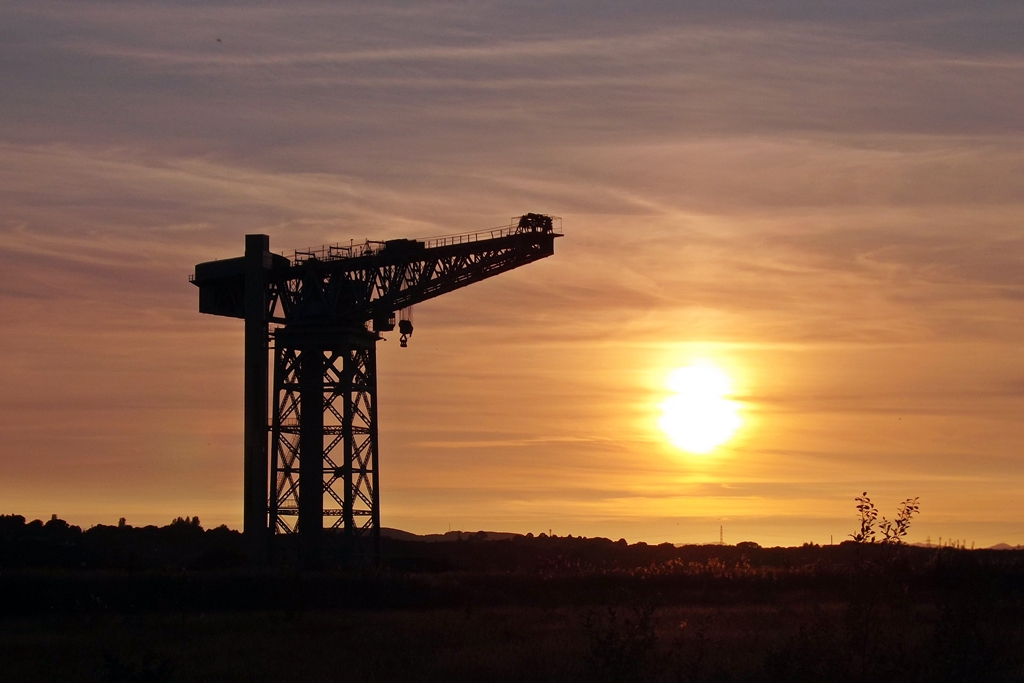
In 2024 the city had a population of 650,000, with a total of 1.2 million in the Greater Glasgow area, Scotland's largest conurbation. The name derives from ancient Brittonic glas cöü, a green hollow, which you will struggle to find. What you do encounter is a lively year-round destination with lots to see and do.
History
Glasgow was a small market town until the 18th century, focused on the cathedral, so its "High Street" is a modest thoroughfare a mile east of the present centre. It grew rapidly when the 1707 Act of Union allowed Scotland to trade with English overseas colonies, flourishing with the transatlantic trade in tobacco, sugar and slaves. Glasgow's mills and foundries also drew in labour from the west Highlands and Donegal, as those regions lost their traditional smallholding ways of life. But the River Clyde was shallow, so the ports and shipyards grew up 25 miles downstream at Greenock, while a ramshackle flotilla of Cluthas and "Clyde Puffers" plied the city river. In the 1880s a deep channel was blasted, so shipyards and other metal-bashing industry developed at Govan. Their wealth created an elegant Victorian West End of mansions and parks, while the inner city earned a reputation as a dirty, rough place of teeming tenements, sectarian tensions, drunken brawls and poor life expectancy. In the 1960s, industry and employment collapsed, ill-designed new housing schemes were built, and drug misuse grew.
Orientation
City Centre has the transport hubs, most visitor attractions, shopping and entertainment, and the commercial sector. It's an elegant grid of Victorian streets, several pedestrianised, bounded to the south by the Clyde and to north and west by M8. Principal thoroughfares are Argyle Street and Sauchiehall Street running east-west, and Buchanan Street south to north. East side of the centre is marketed as Merchant City, focussed on Glasgow Cross. East End: the medieval small town was around the cathedral, then it expanded west around Glasgow Cross. But property development means that the likes of Trongate, Saltmarket, High Street, Gallowgate and London Road now feel instead like the eastern expansion of Merchant City. West End is the prosperous district with the University of Glasgow, Hunterian and Kelvingrove Museums, and Botanics, with the small River Kelvin running through. The main thoroughfare is A82 Great Western Road, the traditional road to Loch Lomond and the Highlands, though now you do better to follow M8 then Erskine Bridge. Byres Road is its main north-south route. It's a boho area of cafés, restaurants and quirky independent stores. South of the Clyde has the football stadiums and Bellahouston Park. Clydebank west of the centre is the former ship-building area, now regenerated with event venues such as the Armadillo, and the Science Centre and Riverside Museum. North of the M8 has little to interest visitors.
Getting there

By plane
1 Glasgow Airport (GLA IATA), Paisley PA3 2ST (8 miles west of city centre, near Paisley), ☏ +44 344 481 5555. This is the city's principal airport, and a major portal of entry into Scotland. It has a wide range of European flights by traditional airlines, budget carriers and package/charters. Long-haul routes are from Toronto with Air Transat and Dubai with Emirates; other direct routes lapsed with covid. Flights from London by BA are frequent from Heathrow, less often from London City. Easyjet flies from Gatwick, Luton, Stansted, Belfast and Bristol. Flights within Scotland, including the Hebrides, Orkneys and Shetland, are by Loganair. The single terminal has the usual facilities, including car hire, cafes, and prayer rooms. (updated Apr 2023) Airport hotels: see Paisley, as the airport is a couple of miles north of that town. Several are within walking distance, others are reached by shuttle bus or taxi. Parking: Pick-up and drop-off costs £5 for 15 min. Use Short Stay for up to 90 minutes. There's a range of long-stay parks off-site, with transfer minibuses. Transport from GLA is usually by bus, there's no railway station.
Glasgow Airport Express takes 15 min from the terminal via Dundas St (for Queen Street Station) to Buchanan Bus Station. It's every 10-15 minutes from 8AM to 11PM and hourly through the night. Tickets cost £10 for a single adult, £16 for an open return (within 28 days), and can be paid in cash (change is given) or by card, a little cheaper if booked online. Single tickets (but not returns) include an onward transfer to any other First Glasgow bus in the city centre. First Glasgow Bus 77 takes an hour via Renfrew, Braehead, Govan (for QE Hospitals), Partick and Kelvingrove to Buchanan Bus Station. It's every 30 min 5:20AM to 9PM and while it's slow, it may be more convenient for the West End, and cheaper at £5.40 for a Dayrider single. (The airport is in "Local" zone, so the "City" zone fare isn't enough.) McGill's Bus 757 trundles every 30 min to Paisley Gilmour Street railway station, which has very frequent trains to Glasgow Central, and outbound to Gourock (for Dunoon ferry), Wemyss Bay (for Bute ferry), Ardrossan (for Arran ferry) and Ayr. The bus takes 15 min by a zigzag route and you could almost walk it in that time; northbound it continues from the airport to Inchinnan, Erskine and Clydebank bus station. The west: Bus 926 calls once a day at the airport on the way to Dumbarton, Inverary, Tarbert and Campbeltown. Others on that route, and all buses to Oban, Fort William and Skye, go north of the Clyde, so join them either at Buchanan Station or at Dumbarton. Ember [1] electric buses offer Glasgow Airport as a request stop on their E5 (Fort William <> Glasgow) and E16 (Oban <> Glasgow) services, taking around 25 minutes to reach Buchanan Bus Station in the city centre and costing £4.35 for a single as of May 2026. Tickets must be pre-booked online, so check the timetable or live map for options. Taxis to the city centre take 20 min, and in 2023 are about £40. 2 Glasgow Prestwick Airport (PIK IATA) is on the Ayrshire coast 32 miles southwest of Glasgow. Its heyday was over 50 years ago when its long fog-free runway served transatlantic flights, but they now land elsewhere. Ryanair is nowadays the only operator, with routes to the Mediterranean and the Canaries, many seasonal. This means Prestwick takes Glaswegians on their holidays but is seldom a route to get into Scotland. See Prestwick#Get in for details of the trains to Glasgow Central (with half-price fares for air passengers), Bus X77, and motorway routes. Edinburgh Airport (EDI IATA) has several routes not available from Glasgow, such as Istanbul, and is easily accessible from Glasgow since it's west edge of Edinburgh, only 35 miles away. See Edinburgh#Get in for the direct bus to Glasgow Buchanan Station, and trams/buses to Edinburgh Haymarket for trains and buses onward. Manchester Airport (MAN IATA) has global connections to rival the London airports. Hourly train services from the airport take five hours to Glasgow Central with a change.
By train
Wikivoyage has a guide to Rail travel in Great Britain 3 Glasgow Central. It has trains from London Euston and Manchester Piccadilly via Preston and Carlisle, from the south of Scotland, slower services from Edinburgh, and from the city's southern districts. It's mostly a terminus station, but some through services reverse out (eg Ayr-Edinburgh) while the low-level platforms have regional through-trains (eg Motherwell-Milngavie). Opened in 1879, it's a grand Victorian structure and you can take a guided tour, see below. A glass-sided bridge spans Argyle Street, once known as "The Hielanman's Umbrella" as it was a common place for the city's Highland exiles to meet up. The station has left-luggage lockers, eating places and an upscale hotel. There is level access to all platforms. The nearest Subway, 300 yards south, is St Enoch. (updated Mar 2024) 4 Glasgow Queen Street. This is the terminus for fast trains from Edinburgh via Falkirk, and for all northern cities such as Aberdeen, Dundee, Inverness and Oban. Its low-level platform has through-trains for nearby places such as Dumbarton. It has left luggage lockers. There is level access to all platforms. The nearest Subway, 100 yards west, is Buchanan Street, and the city's main bus station is a quarter mile north. (updated Mar 2024) The stations are an easy 10-minute walk apart and the route is well signposted, don't take the Subway. Link Bus 389 plies from Central to Queen Street (6 min) and the bus station then back to Central. It's every 15 min M-Sa, 20 min on Sunday, and free if you are holding a through railway ticket. Most trains within Scotland are run by ScotRail, but for comprehensive times, fares and tickets see National Rail. From Edinburgh all trains start from Waverley and stop at Haymarket then fan out, with four routes to Glasgow.
Getting around

Strathclyde Partnership for Transport (SPT) is the local agency which operates the Subway, a few specialist bus services and co-ordinates public transport in the Greater Glasgow area. Glasgow's public transport system is one of the most extensive in the UK outside of London.
On foot
This is the best way to see city centre and the East End. Many streets (eg Sauchiehall St) are pedestrianised, and all areas have proper pavements, with pedestrian crossings at major junctions. The River Clyde also has road and foot bridges. The main impediment as you head north or west is the M8, with dingy underpasses and bridges. Kelvingrove is two miles west, and Glasgow University campus even further, so you might prefer Subway or bus.
By Subway
The Subway is a loop around city centre, West End and inner suburbs. It's the third oldest subway system in the world, after London and Budapest, and at times has smelled that way. It's now modern and pleasant enough to use, but has never expanded beyond its original loop. Always call it simply the Subway, rather than the "underground, "metro", or "tube" (a Scottish insult), and never "the clockwork orange", which is a myth created for tourists. The gauge is only 4 ft (1219 mm), so be mindful of any other passengers as you step aboard the coaches. Glasgow Subway underwent several periods of underinvestment and its never-expanded 1896-infrastructure can make for a bumpy ride, but new trains made by Swiss company Stadler Rail replaced the aging rolling stock in the 2020s. The trains are walkthrough but the 11 feet (3.4 m) tunnel diameter still limits height and width of the trains. It's described as an inner and outer circle but that just means the direction of travel, with the outer circle running clockwise. Going anti-clockwise on the inner circle, the Subway runs from the city centre to West End and Glasgow University, south under the Clyde to Ibrox Stadium then back into the city, with each orbit taking 24 min. Use St Enoch for Central and Argyle St stations, and Buchanan St for the bus station and Queen Street station. No bikes are carried, and wheeled access to platforms is limited. The system runs M-Sa 6:30AM-11:30PM and Sunday 10AM-6PM, with trains every 4-8 minutes. There's a flat fare regardless of distance, just use contactless when entering the subway (£1.80 single, £3.40 day ticket). Smartcards are cheaper if you're doing a lot of travel but are unlikely to benefit short-stay visitors. They're free if ordered in advance to a UK address, or £3 if bought at the station for immediate use, and can be topped up with any amount from £5. See below for the SPT ZoneCard & Roundabout ticket. The Plusbus rail ticket add-on does not include the Subway.
See

East End
This was the medieval centre of Glasgow until the 18th century, when the city grew rapidly along the Clyde.
1 Glasgow Cathedral, Castle Street G4 0QZ, ☏ +44 141 552-6891. M-Sa 10AM-noon, 1-4PM; Su 1-4PM. This was built in 1197 but much modified in the 13th century and is a fine example of medieval Gothic. It's dedicated to St Mungo, the city's patron saint, who is buried in the crypt. The Church of Scotland doesn't have bishops so it actually only a parish church. Free. (updated Jan 2022) St Mungo's Museum of Religious Life and Art, 2 Castle Street G4 0RH (next to Cathedral), ☏ +44 141 276-1625. M-Th, Sa 10AM-5PM, F, Su 11AM-5PM. This depicts Glasgow's patron saint and the growth of Christianity in the city, and of other faiths practised locally and worldwide. Free. (updated Jan 2023) Provand's Lordship, 3 Castle Street G4 0RH (opposite Cathedral), ☏ +44 141 276-1625. Closed until late 2023. Glasgow's oldest remaining house, built in 1471, has been renovated to illustrate city life circa 1700. Free. (updated Aug 2023) 2 Glasgow Necropolis (on the hill east of the cathedral, easiest reached by the footbridge). Dominated by the statue of John Knox, it's a pharaonic “City of the Dead”, with its grand monuments to merchants and baillies who would be as prestigious in the next world as they were in this. One fellow was so renowned that there was no need to inscribe his name: wonder who he was, and how we've coped without him? (updated Feb 2022) 3 Glasgow Vintage Vehicle Trust (Bridgeton Bus Garage), 76 Fordneuk Street, Bridgeton, G40 3AH (East End; 10-minute walk from Bridgeton railway station. Open-day visitor entrance at 171-185 Broad Street), ☏ +44 141 554 0544, info@gvvt.org. Open to the public on event days only, usually the first Sunday of the month spring to autumn, plus an Annual Open Weekend in October. Guided tours by advance booking. A volunteer-run charity caring for a large collection of historic buses, coaches and commercial vehicles in a working bus garage. Many of the vehicles still run, and on open days visitors can board them and take short rides. Check the website before travelling, as it is not open daily. Entry costs varies by age.
City centre
Called Merchant City in tourist material, this is the confident Victorian heart of the city, bounded by M8 and the Clyde.
Do

Music
Glasgow has a big music scene in all genres.
1 Nice'N'Sleazy, 421 Sauchiehall Street G2 4LG (nearest railway: Charing Cross), ☏ +44 141 333-0900. M-F 6PM-3AM, Sa Su 5PM-3AM. A student favourite, Sleazy's is a cross between a bar and a nightclub. Live bands most nights downstairs, and the bar upstairs also has small acts. Over 18s only. (updated Apr 2023) 2 Barrowland Ballroom, 244 Gallowgate G4 0TS, ☏ +44 141 552-4601. Opened in 1934, but rebuilt in ever-so-Sixties style after a fire, this is a popular live venue with 1900 standing capacity. It's renowned for its sprung dance floor and excellent acoustics. (updated Apr 2023) 3 King Tut's Wah Wah Hut, 272a St Vincent Street G2 5RL, ☏ +44 141 846-4034. Venue for up-and-coming bands, where Oasis and Glasvegas were discovered. (updated Apr 2023) The Cathouse, 15 Union St G1 3RB (east side of Central Station), ☏ +44 141 248-6606. W-Su 11PM-3AM. Rock club founded in 1990. (updated Apr 2023) 4 O2 Academy, 121 Eglinton Street G5 9NT (Subway: Bridge Street), ☏ +44 141 418-3000. Opened in 2003, this venue in Gorbals hosts rock, indie and comedy, and has a capacity of 2500. (updated Apr 2023)
Classic Grand, 18 Jamaica Street G1 4QD (east side of Central Station), ☏ +44 141 847-0820. Su-F 9AM-1AM, Sa 9AM-3AM. Alternative music venue in a former tacky "adult" cinema. (updated Apr 2023) Sub Club is a basement nightclub and music venue within Classic Grand, open F Sa 11PM-4AM. 5 SEC Centre, Exhibition Way G3 8YW (train: Exhibition Centre). Large events and exhibition venue, the main theatre (Hall 4) seats 10,000. Opened in 1985, it was that first of what's grown into an "Event Campus", with the Armadillo and the Hydro following. (updated Apr 2023) 6 SEC Armadillo (formerly Clyde Auditorium), Exhibition Way G3 8YW (train: Exhibition Centre), ☏ +44 141 248-3000, +44 141 576-3230 (Box Office). Box office M–F 9AM-2PM. They've capitulated, and re-named this shiny metal venue what Glaswegians have called it since it opened in 1997. It has a 3000-seater auditorium and is part of the "Scottish Event Campus" alongside the SEC Centre and OVO Hydro. They're at pains to point out that it wasn't inspired by Sydney Opera House, it's supposed to represent ship's hulls. If so, they're bottom-up like The Poseidon Adventure. (updated Apr 2023) OVO Hydro the third on the Event Campus was completed in 2013. It has an all-seater capacity of 12,300 and 14,500 with standing.
Shopping

Scotland's largest city of course has the largest choice of retail, in all sectors: standard chains, independent and specialty shops, and markets. The principal area is west of George Square and the bus station, along the pedestrianised malls of Argyle Street, Buchanan Street and Sauchiehall Street. There are more independents a block or two back on Bath Street and Hope Street. Glasgow is not immune to the hollowing-out of the traditional "High Street", but its centre is less blighted than most by empty retail lots, charity shops and vape stores. Byres Road in the West End has quirky independents, such as De Courcy's Arcade (a block back on Cresswell Lane) with craft shops and cafes. There are large retail parks on the city outskirts at Braehead, Silverburn and Glasgow Fort.
Barras Market, Gallowgate. Sa Su 10AM-4PM. "Oh ra Barras, oh ra Barras, ye can keep yer Rome or Paris . . . " goes the song. This market occupies the East End blocks between Gallowgate and London Road at the edge of Glasgow Green. It's an essential tourist experience, but think twice before buying, or any other action that betrays the position of your wallet / purse. However it's well-policed, as mingling in the crowd are officers on the lookout for the counterfeit, stolen, or downright dangerous. There are gems and bargains here, but the ratio of gems to trash is much the same as on the internet: "They've got tickets tae the moon, priced at only half-a-croon . . ." Nothing to see when it's closed, just a drab array of units with their metal rollers down. (updated Apr 2023) St Enoch Centre (200 yards southeast of Central station), ☏ +44 141 204-3900. M-F 9AM-7PM, Sa 9AM-6PM, Su 10AM-6PM (check individual shop hours). Large 3-story mall on St Enoch Square between Argyle Street and Buchanan Street. Stores include a TJ Hughes discount department store, a TESCO and many cafes. St Enoch does not refer to the Enoch of the bible, but instead to the mother of St Mungo ("St. Teneu" which has been corrupted to "St. Enoch"), the patron saint of Glasgow. (updated Aug 2025) Argyle Arcade (Between St Enoch Centre and Princes Square), ☏ +44 141 248-5257. M-Sa 9AM-5:30PM, Su 10AM-5PM. This is the city's jewellery quarter, with 30 stores along an L-shaped arcade between Buchanan Street and Argyle Street. (updated Apr 2023) Princes Square is a mall off Buchanan St 100 yards east of Central Station. The stores close at 6PM but the food court stays open daily to 10PM. Buchanan Galleries, 220 Buchanan St G1 2FF (block north of Queen St Station), ☏ +44 141 333-9898. M-Sa 9AM-6PM, Su 10AM-6PM. A large central mall with the usual high street stores, including John Lewis. (updated Apr 2023)
Eat

Tis beautiful to see the ships passing to and fro, Laden with goods for the high and the low; So let the beautiful city of Glasgow flourish, And may the inhabitants always find food their bodies to nourish. - William McGonagall, who else
Budget
Fish & chips: There are dozens and dozens of mostly takeaways with only a few sit-in cafes. Along with "fish suppers" they offer burgers, haggis, pakoras, pizzas and kebabs, and some daunting combinations that would be called "fusion" if they were ten times more expensive. A Munchy Box is a bit of everything and is woozy post-pub fare. The deep-fried Mars Bar is also available: see Stonehaven#Eat for its oily social history.
City centre
1 The Merchant, 134-136 W George St G2 2HG, ☏ +44 141 353-3926. Su-Th 11AM-11PM, F Sa 11AM-midnight. Trad pub serving main dishes. (updated May 2022) Romans Pizzeria, 44 Howard St G1 4EE (east side of Leonardo Hotel), ☏ +44 141 243-2640. M-Th noon-8:30PM, F-Su noon-9:30PM. Industrial looking, relaxed venue. (updated Apr 2023) 2 BLOC+, 117 Bath St G2 2SZ, ☏ +44 141 574-6066. Innovative bar with unusual dishes. Separate Vegan/Veggie menu. Live music after 9PM. (updated Apr 2023) 3 China Sea, 12 Renfield St G2 5AL, ☏ +44 141 221-2719. Su-F noon–10PM, Sa noon–11PM. Sound trad Chinese. (updated May 2022) 4 Guido's Coronation Restaurant, 55 Gallowgate G1 5AP (beneath the railway bridge), ☏ +44 141 552-3994. Daily 9:30AM–8PM. A Glasgow institution by the gateway to Barrowlands, good reviews for healthy serving and competitive price. (updated May 2022) Purrple Cat at 2 Trongate (foot of Gallowgate) rescues cat and the cafe is swarming with them. It's open daily 9:30AM-8PM.
Drink
Pubs were the traditional meeting rooms of the city, where the world was put to rights over a pint and dram or three, be that fitba', weather, politics or the holidays. They were grand welcoming places so long as you were male, white, and of the pub-appropriate religion. They catered to a tribal, tightly-knit society that worked together, lived close together, went to the match together, and in "The Trades" went en masse to the same beach resorts. There was stupid violence, but also camaraderie and quixotic generosity - "It's ma round!" Their wives waited at home with their hair in a tight bun and their faces pinched even tighter, clutching rolling pins not for vengeance but to defend themselves and the weans. A counter-charge was led from the prosperous West End by a troupe of formidable women all called Margot, who preferred wine and spirits. But the big changes in drinking culture from the 1990s were those at large in British society, allied to Glasgow's civic renaissance. Workplaces were smaller and folk lived out in the suburbs. Trad pub culture declined, and proprietors realised they'd make more money by offering decent meals, and even more from tapas. Pubs became female-friendly and family-friendly, and the growth of university education brought in a cosmopolitan student clientele. And the weather improved - let's hear it for climate change! Summer evenings with the wine-of-the-day on blackboards, strappy dresses and smell of garlic, Glasgow is nowadays on the Med. Pubs are wary of anything that looks like a "lads' outing" even if not football-related - stag groups are notorious and often "pre-loaded" with supermarket spirits.
City centre
The trad drinking stretch is along Sauchiehall Street between Queen Street Station and Charing Cross. Merchant City, towards Strathclyde University campus, is more upmarket but with lots of student dives. The west part of Merchant City is also the "pink triangle". Lots of pubs claim to be LGBTQ+ friendly, they want the income, but the attitude of the clientele or on nearby streets may be something else.
The Counting House, 2 St Vincent Place G1 2DH (off George Square), ☏ +44 141 225-0160. Daily 7AM-midnight. Formerly a flagship branch of the Bank of Scotland, you drink in the splendour of its Victorian hall, or even snuggle in the vaults. Converted into an open plan bar by JD Wetherspoon chain, it’s popular with tourists and locals alike. (updated Apr 2023) Crystal Palace, 36 Jamaica Street G1 4QD (east side of Central Station), ☏ +44 141 221-2624. Daily 8AM-midnight. A JD Wetherspoon, good for food, football and rendezvous. (updated Apr 2023) Solid Rock Cafe, 19 Hope Street G2 6AB (west side of Central Station), ☏ +44 141 221-1105. M-Sa 11AM-midnight, Su noon-midnight. Rock and metal-themed pub. (updated Feb 2022) 1 Waxy O'Connors, 44 West George Street G2 1DH (within Carlton George Hotel, next to Queen Street station), ☏ +44 141 354-5154. Su-Th noon-11PM, F Sa noon-midnight. Eclectically-decorated Irish venue with six bars, nine rooms and three floors and a maze of stairs. (updated Apr 2023) 2 The Ark, North Frederick Street G1 2BS (100 yards east of Queen St Station), ☏ +44 141 559-4331. Daily 11AM-midnight. Artfully refurbished in 2022, this is a friendly sports bar with a big beer garden, popular with the two nearby universities. (updated Apr 2023)
Sleep

See Paisley for the hotels around Glasgow Airport. All short-term accommodation in Scotland must be registered, otherwise it's illegal and probably a flea-pit or fire-trap. The law (which does not apply to England) came into force in 2024, so don't trust a proprietor who says their registration is still being processed.
Budget
1 Holiday Inn Express, 122 Stockwell Street G1 4LW, ☏ +44 371 902 1613. Central on river bank, a budget modern chain hotel with 128 air-conditioned rooms, bar and WiFi. They have another on West Nile St. B&B double £150. (updated Feb 2026) 2 Glasgow Youth Hostel (SYHA), 8 Park Terrace G3 6BY (Bus 4 / 4A bus to Woodlands Road), ☏ +44 141 332 3004. 150 beds in dorms and private en-suite rooms. A little way out, but lovely building and location. Dog-friendly. Bed £26 ppn. (updated Feb 2026) 3 Clyde Hostel, 65 Berkeley St G3 7DX, ☏ +44 141 248 5207. Hostel with dorm, guests must be 18-35. It's only as clean as the previous occupants. Dorm £25 ppn. (updated Feb 2026) 4 Red Deer Village Camping and Caravan Park, Clay House Road, Stepps G33 6FQ, ☏ +44 141 779 4159. Open all year, this is out east at Stepps, a 20 min train ride from Queen Street, but the closest camping and caravan site to the city. Tent £30, caravan £40. (updated Feb 2026)
Mid-range
5 Hotel ibis Glasgow City Centre, 220 West Regent Street G2 4DQ, ☏ +44 141 619 9000. City centre branch of this popular chain. (updated Feb 2026) Ibis also have "Styles" branches at 116 Waterloo St and Miller St, and a "Budget" at Springfield Quay off Paisley Road. Leonardo Hotel, 80 Jamaica Street G1 4QG (southeast side of Central station), ☏ +44 141 314 4800. Popular chain hotel in great location. They have another branch on Great Western Road. B&B double £220. (updated Feb 2026) 6 DoubleTree by Hilton Glasgow Central, 36 Cambridge St G2 3HN, ☏ +44 141 332 3311. Great slab of a building, but central, clean and comfy. B&B double £250. (updated Feb 2026) Travelodge is round the corner from the Hilton at 5 Hill St. 7 Best Western (formerly Devoncove), 927 Sauchiehall St G3 7TQ, ☏ +44 141 334 4000. Good mid-range choice at the Kelvingrove end of the street. B&B double £200. (updated Feb 2026) 8 15Glasgow, 15 Woodside Place G3 7QL, ☏ +44 141 332 1263. Stylish Victorian townhouse in leafy Kelvinside. B&B double £200. (updated Feb 2026) 9 Hilton Garden Inn, Finnieston Quay G3 8HN, ☏ +44 141 240 1002. Riverside business hotel with restaurant, bar and meeting venue. B&B double £190. (updated Feb 2026) 10 House of Gods, 65 Glassford St G1 1UP. They're aiming for opulent. B&B double £250. (updated Feb 2026)
Stay safe
Glasgow's rough reputation is a thing of the past and you are unlikely to encounter problems unless you're drunk, stupid or very unlucky. The city centre, drinking areas and transport hubs are well-policed especially around match days and pub closing times. Further out are tatty estates (Possilpark, Easterhouse, Drumchapel, Castlemilk, Pollok) with drug-related violence; you have simply no reason to be there. Govanhill (south side) also gets a bad rep. Exercise caution around the 'Four Corners' area (where Argyle Street, Union Street and Jamaica Street intersect); even in daytime, the fast food places at each corner attract a fair number of 'neds' (= non-educated delinquents). The area going from the Citizens Theatre in the Gorbals towards Bridge Street Subway station can seem unsettling at night-time. Also, taxi queues in the city centre after the pubs have shut can get a bit lairy. Wearing a football shirt, especially Celtic or Rangers, marks you as a member of a tribe. There's safety in numbers, but as an individual you risk being targeted — watch any TV nature documentary about wolves and deer for what might happen. Many bars ban all football colours, as if Grimsby Town ever did them any harm. It is illegal to "kerb-crawl" looking for paid sex, or to solicit custom. The police keep a close watch on likely areas, such as the draughty fringes of the M8: payment for sex is not illegal, but the girls and boys are often funding a drug habit or other abuse that needs to be curbed. That leggy blonde in the alley may be a plain-clothes female PC, who will take you back to hers for a chat about your eventful trip to Glasgow, and whether your permission to visit the UK is at an end. Call 999 in an emergency, but for lesser incidents call the police on 101. Police Scotland the national force has a "Safe Nights Out" guide. 999 is also the way to reach Scotland's Fire & Rescue Service - the "and Rescue" is a major part of their work, such as cutting people out of mangled cars, or inland water rescue. Until 2005 the Glasgow Humane Society, founded in 1790, was the doughty group that fished you out of the Clyde. But mustachio'd derring-do was no match for fast-flowing waters with hidden obstructions, and a solitary volunteer rescuer was a recipe for making a bad situation worse.
In a medical emergency, dial 999 or 112, free. For anything less than emergency, dial 111, free. This connects you to NHS24 who can advise, and direct you to assistance such as late-night pharmacies. Glasgow does not have an NHS walk-in centre. The two closest hospitals with Accident & Emergency (A&E) departments are:
1 Glasgow Royal Infirmary, 84 Castle Street G4 0SF, ☏ +44 141 211-4000. A&E 24 hours. This is just north of Glasgow Cathedral, by Junction 15 of M8. (updated Apr 2023) 2 Queen Elizabeth University Hospital, 1345 Govan Road, Govan G51 4TF, ☏ +44 141 201-1100. A&E 24 hours. Large acute hospital off Junction 25 of M8. (updated Apr 2023) The rules on access by overseas visitors to NHS care apply nationwide, see Scotland#Stay healthy. In brief, the NHS always provides lifesaving immediate care free. Anything beyond is free to residents of the UK or Ireland, and residents of the EEA or Switzerland with an EHIC card to prove it. This includes maternity care and treatment for pre-existing conditions.
Go next

Loch Lomond: the west shore is a busy main road, with trucks and buses pounding to and from the Highlands. Be on the east shore to reach Ben Lomond or the Trossachs. Edinburgh: Scotland's elegant capital is reached within an hour by train or bus. Stirling is a miniature Edinburgh, with its castle teetering on a crag. Ayrshire coast: Largs, Saltcoats and Troon are typical old-fashioned holiday seaside resorts. The standout is Ayr, with Robert Burns' birthplace at Alloway. Isle of Arran is reached by ferry from Ardrossan. See Brodick Castle, standing stones at Machrie, and climb Goat Fell. Isle of Bute is a short ferry ride from Wemyss Bay. Mount Stuart is the big attraction, but gentlemen only can enjoy the world's finest loo at Rothesay. Ride the West Highland Line, a wonderful scenic journey to Fort William and Mallaig, where ferries sail to Skye. Summer excursions are steam-hauled. Hike the West Highland Way from Milngavie all the way to Fort William. The early stages are relatively low, but scenic along Loch Lomond. Then comes Rannoch Moor and the epic stuff through Glencoe.
More pictures of Glasgow


From this destination's category on Wikimedia Commons. Each photograph is credited to its own author under its own licence.
The guide text on this page is from the Wikivoyage article Glasgow, written by Wikivoyage contributors and published under CC BY-SA 4.0. The authors are listed in the article’s edit history. It has been shortened and re-laid-out for this page; that adapted text is available under the same licence. Nothing else on this page is.
Wikivoyage is written by travellers, not by us. Opening hours, prices and whether a place still exists are exactly the details that go out of date, so check anything you are relying on.
“3,189 readers a month” and the ranking are ours, counted from Wikimedia’s published pageviews (CC0) — the median of twelve complete months. They count people reading about a place, which is not the same as people going there.