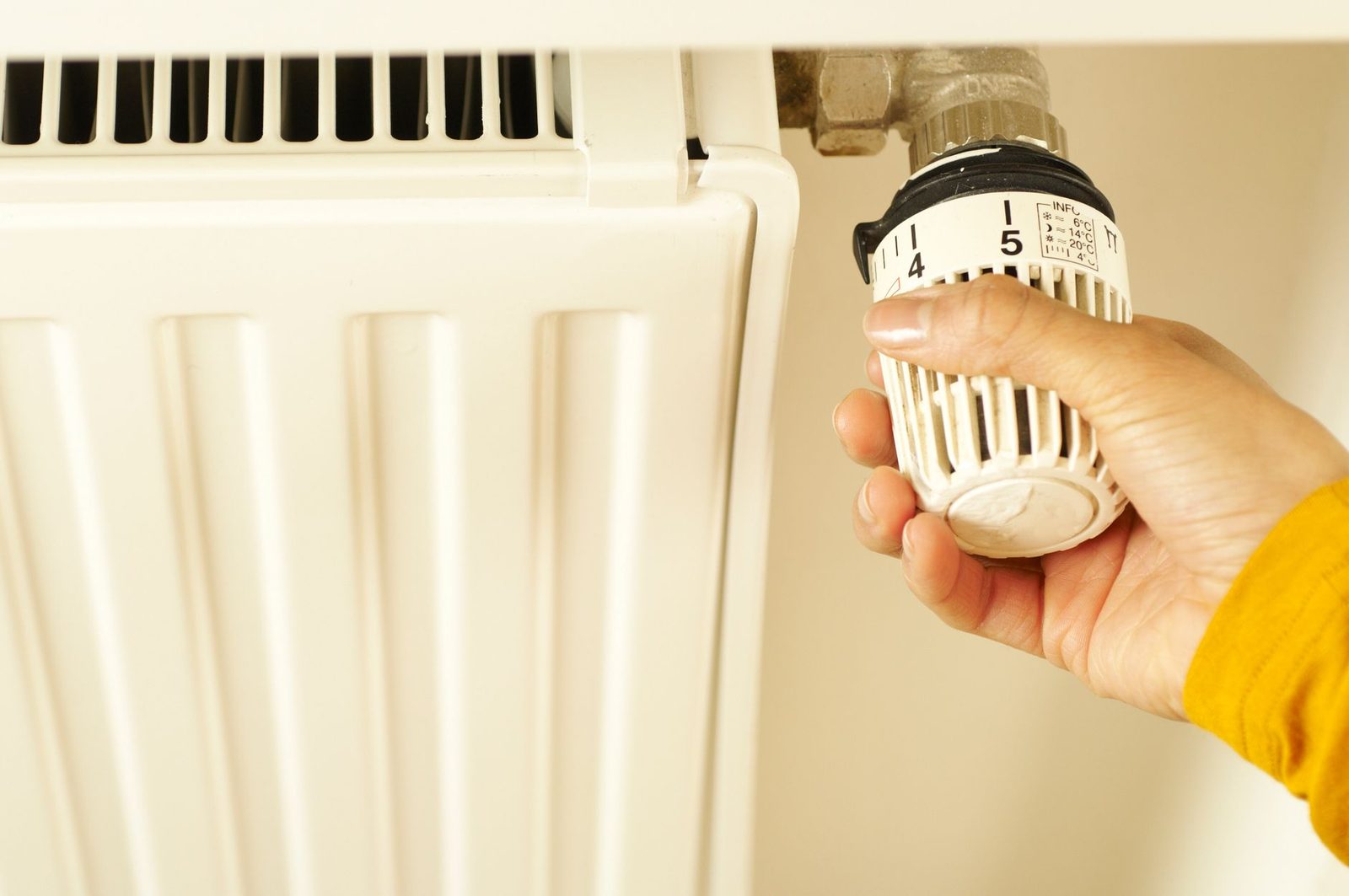
Your boiler is running hotter than it needs to
The October cap sets what you pay per unit of gas. Your boiler's flow temperature decides how many units you burn. A modest tweak can shift the bill.
The cap is a rate, not a ceiling on your bill
From 1 October to 31 December 2026, the Ofgem price cap sets the typical annual bill at £1,723 for a dual-fuel household paying by direct debit. This is up 3.6% on the £1,663 cap that applied in the July to September 2026 period. Crucially, this figure is not a maximum limit on your total expenditure. The cap only determines the unit rate and the standing charge. If you use more energy, your bill will rise accordingly. Ofgem attributes 47% of that £1,723 to the wholesale cost of gas and electricity, roughly £810. Because the cap fixes the price per unit rather than the total sum, every extra kilowatt-hour your boiler burns is charged at that capped rate. Reducing your usage is the only lever that lowers what you actually pay.
With wholesale gas averaging 6.18p per kilowatt-hour, up 136% on a year ago, each kilowatt-hour you avoid is worth noticeably more than it was in the spring. The previous quarter saw a wholesale share of 44%, but the current period reflects higher costs. Since the cap sets the price per unit, your total bill depends entirely on how many units you consume. If your boiler runs hotter than it needs to, you are burning more units at that higher rate. By adjusting your flow temperature, you can reduce the number of kilowatt-hours used. This direct reduction in usage means you pay less, regardless of the cap level. The cap ensures you do not pay more per unit than the specified rate, but it does not protect you from high consumption. Therefore, managing how much energy you use is just as critical as knowing what the cap is set at.
Worked example: the same gas, two very different prices
A typical household uses 9,500 kWh of gas a year on Ofgem's measure. This means the volume you consume matters as much as the price per unit. To illustrate the impact of your boiler settings, consider a home where the flow temperature is currently set to 65°C. If you lower this to 55°C in a well-insulated home, you could reduce annual gas use by roughly 1,400 kWh. This is an assumption based on typical efficiency gains, not a measured figure for your specific property.
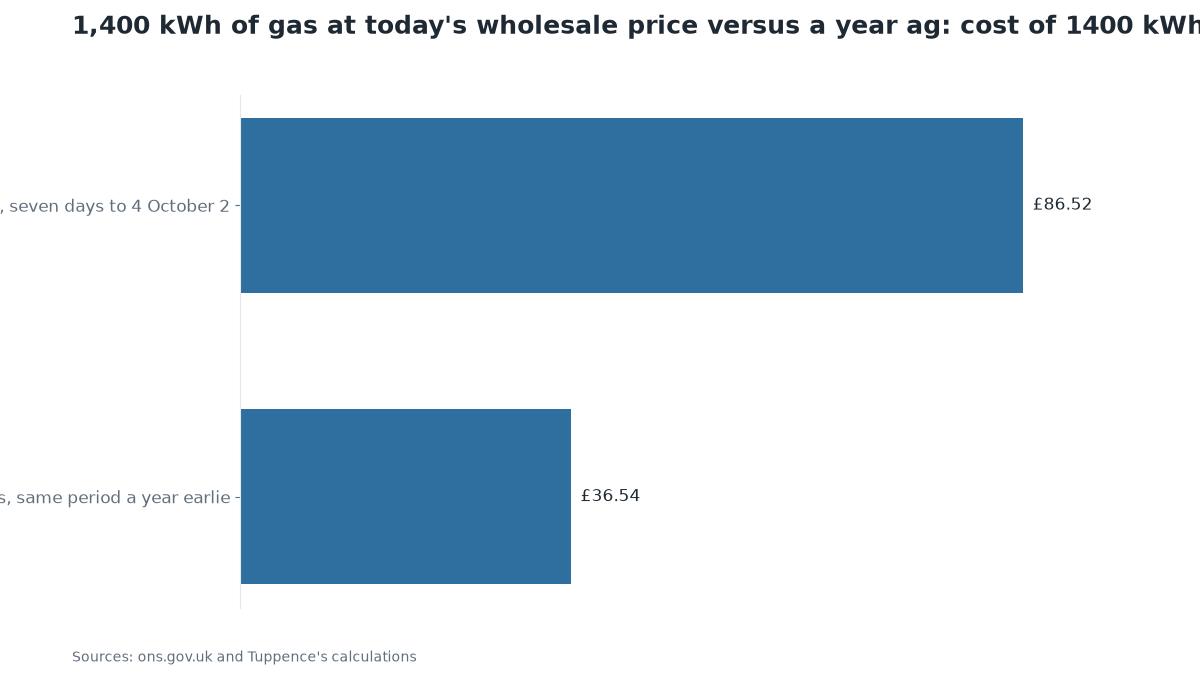
At the current wholesale gas price of 6.18p per kWh, that 1,400 kWh of avoided gas is worth £86.52 before VAT. A year ago, when wholesale gas was 2.61p per kWh, the same 1,400 kWh would have been worth only £36.54. The difference is £49.98. This shows that the value of saving energy has shifted significantly. Wholesale gas for the seven days to 4 October 2026 costs 136.78% more than the same period a year earlier.
However, remember that the full retail rate per kWh is higher than the wholesale price. Therefore, the real saving on your bill will be somewhat more than these wholesale-based figures suggest. This calculation is an illustration using the current wholesale figure. Your actual saving depends on your home's insulation, boiler type and how cold your winters are. The key point is that a modest adjustment to your flow temperature can shift your bill by a meaningful amount, especially when energy prices are high.
How to check and adjust your flow temperature
Start by locating the flow-temperature setting on your boiler. This is usually a dial on the front panel or a menu option on a digital display, often labelled 'flow temp' or 'heating output'. Note the current setting, then lower it to the 55°C target. If your boiler is a condensing type and your home is well insulated, you can try a little lower than that.
Leave the new setting in place for a full week, including at least one cold night, before judging whether it is working. If your rooms reach the thermostat set point comfortably, leave it there. If they fall short, nudge the flow temperature up a touch and wait another few days. This gradual approach prevents over-correction and allows the system to stabilise.
Finally, check your smart meter display or your next gas bill to see whether your kilowatt-hour usage has dropped compared with the same period last year. This direct comparison helps confirm whether the adjustment is saving energy or if further tweaks are needed. Remember, the goal is to use less gas, not just to change a number on a dial.
- extra gas used at 65°C versus 55°C flow (assumed): 1,400 kWh
- assumed current flow temperature: 65 degrees C
- assumed target flow temperature: 55 degrees C
- Find the flow-temperature setting on your boiler's control panel or digital menu and note what it is currently set to
- Lower the flow temperature to your 55°C target (assumed target setting), or a touch lower if you have a condensing boiler and good insulation
- Leave the new setting for a full week, including at least one cold night, before judging the result
- If your rooms reach the thermostat set point, leave it there; if they fall short, nudge the flow up a touch and wait a few more days
- Check your smart meter or next gas bill for a change in kilowatt-hour usage compared with the same period last year
Sources
- Energy: Ofgem energy price cap, typical dual-fuel household paying by direct debit, 2026-10-01 to 2026-12-31 (Ofgem, via StreetOwl)
- Gas to energy bill: Wholesale gas, Great Britain, seven-day average, seven days to 4 October 2026 (Office for National Statistics (source: National Gas Transmission), via StreetOwl)
- Gas to energy bill: Energy price cap, typical dual-fuel household, direct debit, 1 October 2026 to 31 December 2026 (Ofgem, via StreetOwl)
- Gas to energy bill: What 1p a kWh on wholesale gas is worth a year, seven days to 4 October 2026 (StreetOwl arithmetic, via StreetOwl)
This digest was drafted by StreetOwl’s own model from published figures and the sources listed, then read and approved by Michael Rossi on 14 October 2026 before it went up. It is general information, not financial advice: your circumstances are yours, and for a decision that matters, MoneyHelper (free, government-backed) or a regulated adviser is the place to go. General information, not personal financial advice. Figures checked on the dates shown.
← Back to StreetOwl