
Sydney
Sydney is the Harbour City, and is the oldest and most cosmopolitan city in Australia with an enviable reputation as one of the world's most beautiful and livable cities. Brimming with history, nature, culture, art, fashion, cuisine and design, it is set next to miles of ocean coastline and sandy surf beaches. The city is also home to the Sydney Opera House and the Sydney Harbour Bridge, two of the most iconic structures on the planet. The gateway to Australia, it lies on the deepest natural harbour in the world and stretches for 140 kilometres. Sydney is a major global city and an important finance centre in the Asia-Pacific region. The city is surrounded by nature and national parks, which extend through the suburbs and right to the shores of the harbour.
Most read about in July, least in March. That is when people look it up, which tends to run a month or two ahead of when they go.
Before you book
The Foreign, Commonwealth & Development Office publishes the UK’s official travel advice. It changes without notice and travelling against it usually invalidates your insurance, so read it at the source rather than anywhere else — including here.
FCDO travel adviceUnderstand
History
While originally settled 60,000 years ago, Sydney is the oldest European settlement in Australia, having been established as a British penal colony on 26 January 1788 by Arthur Phillip. This day is now celebrated as Australia Day to mark the establishment of a new nation, although also regarded by many as Invasion Day that marked the beginning of the British appropriation of Aboriginal land. The settlement was named "Sydney" after Thomas Townshend, 1st Viscount Sydney, who was the British Home Secretary at that time.
People
Sydney is one of the most cosmopolitan cities on the planet, with a bit less than one third of its population born overseas. European settlement rapidly displaced the Aboriginal people of the Sydney area with colonists largely coming from England, Ireland and Scotland. The Australian gold rush attracted more immigrants, including a significant number of Chinese, with about one in six Australians with convict descent also having some Chinese ancestry. In the early 20th century, Sydney continued to attract immigrants - mostly from the UK and Ireland, with the White Australia Policy preventing non-European peoples (and even Southern Europeans) from settling. Australia's immigration patterns, and consequently, that of Sydney, changed significantly after World War II, when migrants began to arrive from countries as diverse as Italy, Greece, Germany, the Netherlands, China, New Zealand, India, the Philippines, Poland, Lebanon, Iraq, Vietnam, Thailand, South Africa and the Pacific Islands. Sydney's culture, food and general outlook well reflect these contributions to the majority Anglo-Celtic institutions and social establishment. Sydney is recognised worldwide for its vibrant LGBT community. Every year, the Sydney Gay and Lesbian Mardi Gras is celebrated on the first weekend in March, drawing people from all over Australia and the world for the celebrations. Sydney was the centre of the world's attention in September 2000 when the city hosted the Summer Olympics - announced by the IOC Chairman at the closing ceremony to be "the best games ever". The Olympics saw a major building and renovation program take hold of Sydney, positioning it as one of the great world cities of the 21st century.
Climate
Sydney enjoys over 300 sunny days each year, and it's a year-round destination. Avoid the hottest days for energetic outside activities.
What's inside

Sydney has a compact city core surrounded by sprawling suburbs, forming a vast metropolitan area. The city central is shaped roughly like a stubby palm-up left hand: the heel of the thumb as City South, the thumb as the district Darling Harbour, the first finger as The Rocks, the palm with the second and third fingers as City Centre - CBD and the rest as City East.
Greater Sydney
Greater Sydney, the sprawling suburbs in the vast city metropolitan area surrounding Central Sydney spread for up to 150 km westward from the CBD. The traveller visiting the suburbs will find less crowded beaches, parks, cheaper shopping, commercial centres, cultural festivals, hidden gems and the many national parks within the metropolitan area.
Getting there

By plane
Main article: Sydney Airport Sydney Airport (SYD IATA) is Australia's busiest airport and the main gateway to eastern Australia. It is 9 km from the City centre in Southern Sydney on the northern shores of Botany Bay. Sydney Airport is the oldest continually operated commercial airport anywhere in the world. There are direct flights to Sydney from all the other inhabited continents, as well as some sight-seeing flights over Antarctica. The main ways to get into the city are by train (about $17 one-way on the Airport & East Hills line), or by taxi ($40-50 to the Rocks). Western Sydney International Airport (WSI IATA) will open in October 2026. As the name suggests, it's in western Sydney, about 20 km from Penrith and 50 km from the city (a solid hour's drive in good traffic). Buses to key railway stations like Leppington, Liverpool and St Marys will be available, running every 30 minutes from 5AM to 10PM daily (the St Marys shuttle will be free). The M2 metro line is scheduled to open in 2027, connecting the airport and St Marys, with onward connections to the city by train. For general aviation, it is advised to use Bankstown Airport (BWU IATA) or Camden Airport (CDU IATA), as they are less congested and far more accommodating to private planes than Sydney Airport.
By train
Taking long-distance trains from any other major city in Australia to Sydney is not a popular option, with flying or driving often being preferred for being faster and cheaper. Nevertheless, Australia does have a functioning, albeit slow, network that may be worth considering if you are not in a hurry or want to get to some remote locations, and taking the NSW TrainLink sleeper services linking Sydney with Melbourne and Casino/Brisbane can be cost- and time-effective, by avoiding an extra hotel stay, and making the most of your days at either end. Unlike the Indian Pacific, these are not luxury trains, but part of the regular state-run network, so fares are generally competitive with flying once taxes/fees and getting to and from the airport are factored in. NSW TrainLink Regional runs at least daily services to Sydney from Brisbane, Melbourne, Canberra and many regions of New South Wales including the Mid-North Coast, New England, the Central West and the Southern Highlands. It also services Broken Hill weekly. Travelling time from Melbourne and Brisbane is around 12 hours. Fares range between $50 and $120 for standard class seats and tickets should be purchased in advance either online or by phone. Tickets are only available from larger stations, though it's advisable to book online. The tracks in NSW are often slow and twisty, and generally travel by road is faster, though invariably more stressful, particularly on the Pacific Highway during the summer holidays, when Sydneysiders head up the coast in vast herds of SUVs and caravans. One way to make efficient use of travel time is to use the NSW TrainLink sleeper services between Sydney, Brisbane and Melbourne. These leave every evening and allow you to save on a hotel stay at the other end, along with losing no days to travel. Sleeper cabins have two berths in a bunk layout (full bedding is included), and each has a hot shower, sink and toilet (shared between two adjacent cabins), as well as a buffet car with hot meals and a continental breakfast (which can be ordered to your cabin). Food is "no nonsense", affordable and perfectly fine, if not a gastronomic adventure. Regular seating cars are also available on overnight services, but are not recommended if you actually want a good nights sleep and arrive ready for a day of activities. Sleeper berths cost $234 (adult full fare - there are numerous concessions available so check when booking) and need to be booked by phone on 13 22 32 within Australia. Single occupancy is available if you purchase the second bunk. The Indian Pacific (13 21 47 within Australia or +61 8 8213 4592 internationally) is a luxury train service run by private company Journey Beyond (formerly Great Southern) and runs from Perth to Sydney via Adelaide. Adult fares from Perth start from around $2,100 p.p. during the low season. Children get 20% off when travelling with an adult. Note that Journey Beyond has partnered with the Qantas frequent flyer program, and it's possible to redeem Qantas points for reward seats on Journey Beyond trains. The train departs from Perth on Wednesdays and arrives at Sydney on Saturdays. The train is more expensive than flights from Perth or Adelaide, and takes longer than driving yourself, so this journey is really for rail enthusiasts who want to see the interior of Australia at a leisurely pace while travelling in luxury. See Across Australia by train for more information. All long distance (NSW TrainLink and Great Southern Railway) trains to Sydney terminate at Sydney's Central Station in the south of the CBD area. Travellers can transfer to Sydney Trains, light rail, city buses, and taxis. It is also easy to transfer to other long distance trains and coaches. There is short term metered parking so you can meet the trains on the platform. There are ATMs, a small choice of food outlets, cafes open until late, and a railway heritage society display and bookshop in the terminal. NSW TrainLink Intercity run fairly frequent services throughout the day from close regional areas: Newcastle and the Hunter Valley via the Central Coast, Goulburn via the Southern Highlands, Bomaderry via the Illawarra and Bathurst via the Blue Mountains. Intercity trains do not require a reservation, and the opal card is still valid. The core routes as far as Lithgow (Blue Mountains line), Newcastle (Central Coast line) and Kiama (South Coast / Illawarra line) run hourly or half hourly late into the night, and start early morning. Fares are very competitive, but onward bus connections from smaller stations are often very poor, especially in the Blue Mountains and parts of the Illawarra. Bikes are accepted on trains (but be considerate, especially around peak times and busy weekends), and can be a good solution to the onward travel problem. Core routes are all operated using double decker electric trains. Travel onto some of the outer lines requires a transfer to a (rather cramped) diesel railcar service. This is true for the Southern Highlands line (change at Campelltown), on the Illawarra/South Coast line for all stops south of Kiama, and for the Hunter Line (change at either Hamilton or Newcastle Interchange). The timetables are usually lined up fairly well to allow for easy interchange. Trains through to Bathurst are extremely irregular (2–3 a day), and most journeys require a change at Lithgow to a connecting bus service. There is no catering whatsoever on Intercity services, and that journeys can be up to three hours, even though the distance might seem short on the map, so bring food and drink with you.
By boat
Cruise ships visiting Sydney generally dock at the Overseas Passenger Terminal at Circular Quay or at the White Bay Cruise Terminal. Circular Quay is a spectacular place to dock, right by the Harbour Bridge and across Sydney Cove from the Opera House, and you can walk off the ship into the city at The Rocks and then to the City Centre. White Bay in the Inner West is not easy walking distance to anywhere. On cruise days there is a ferry operating to Darling Harbour, as well as taxis and transfer services organised by the cruise companies (usually to the city and airport). Cruisers embarking from White Bay have a spectacular sail away, first going under the Harbour Bridge and then passing by the Opera House. At peak times some cruises can be anchored off Taronga Zoo (Athol Buoy, west of Bradleys Head). If this happens to you, you will be tendered to Circular Quay passenger terminal to complete immigration, etc.
Getting around

By public transport
The public transport system consists of train, metro, light rail, ferry, and bus services, and can get you virtually anywhere in the city as well as the outer regions. Public transportation in Sydney can be complicated, even when travelling solely in the CBD and inner suburbs. For short distances in the CBD it can be faster to walk than taking public transport. Smartphone applications such as Google Maps, Citymapper, and TripView use live transit information for all modes of transport are very useful for public transport trips within the Sydney region. Tripview is best for a known route that you want the latest times. Moovit or Google Maps are best if you don't know the route, and need timing and stop-by-stop information. These apps are available on iOS and Android. At all of Sydney's public transport stations/stops, you will see a lollipop sign with a single capitalised letter and a coloured background that indicates the type of transport service available. The sign "T" in orange means train, "M" in teal means metro, "L" in red means light rail, "F" in green means ferry, "B" in blue means bus, and "C" in purple means coach. Some bus stops also might say "T-way", referring to a name for bus rapid transit (BRT) lines. Many train stations are easy access, with lifts to all platforms and ramps operated by station staff to allow wheelchair access to trains. All metro stations are fully accessible with lifts and level access between platforms and trains. All light rail stops are wheelchair accessible via an on-board ramp. Some ferries and buses have disabled access. Wheelchair friendly buses, stations, and routes are indicated on the timetable, and in the real time apps.
Fares
Sydney's public transport fare system is called Opal. The fare system covers all train, metro, light rail, ferry and bus services in Sydney, Newcastle, Wollongong and the surrounding regions. There are three ways to pay for your journey:
Contactless credit or debit card. Visa, Mastercard or American Express is accepted, including those in a digital wallet like Apple Pay or Google Pay. All the same benefits apply to using a contactless card as apply to using an Opal card. Opal card. A reloadable travel card that can be obtained at most newsagents and convenience stores or wherever you see the logo. The card costs $20 for adults and $10 for children, the value of which can be used for travel. The card cannot be purchased at public transport stops (except the airport stations) unless the stop includes a retail outlet. Adding credit to an Opal card is known as 'topping up'. All Opal retailers provide top-up facilities. Top-up machines are available at most railway stations, some light rail stops, and all ferry wharves. All machines accept credit and debit cards (Visa/Mastercard with PIN), some also accept cash. You can also top up with a credit card on the web, or with the Opal app, but you must allow an hour before you travel to allow the top-up to reach the Opal card reader. The card can only be refunded to an Australian bank account. No refunds can be made by cash or credit card. Single trip tickets. You can obtain a single trip ticket at some top-up machines in train stations and ferry wharves. Tickets are 20% more expensive than a free reloadable Opal or contactless card and you get none of the caps and discounts that are on offer. You need to buy a ticket for every trip you make (i.e. you need to buy a second ticket at the start of a return journey), so these are best avoided unless you are making a limited number of trips. To travel, simply hold your card up to a reader to tap-on at the start of your trip, and tap-off at the end of your trip. This applies to all transport except for the Manly ferry, whereby you only need to tap-on. You must tap on before you board a train, metro, light rail, or ferry. Not all stations, stops and wharves have ticket barriers, so you'll need to remember to tap on or off at the readers or you'll be charged the maximum fare for your route. For buses, the readers are by the entry and exit doors. The readers on buses activate as you are approaching the stop, or soon after the bus has halted. You can check how much credit is remaining on your card every time you tap on or off, just look at the screens attached to the ticket barriers or readers. If you're using a contactless card you can check your fares online the following day. Daily fares are capped at $18.70 from Monday to Thursdays and $8.90 on Fridays, Saturdays and Sundays (June 2025). There is no need to worry about zone boundaries or having the right fare because the system will automatically calculate the fare for each trip. Other benefits include weekly caps, and off-peak discounts for trains, buses, and light rail (on Fridays, weekends, and between 10AM and 3PM/after 7PM on weekdays). No off-peak discounts apply for ferries. Any trip made within 1 hour of the previous trip is considered a continuation of a journey. No matter how much you travel, you will never be charged more than $50 in any Monday to Sunday week (not including the Airport Station access fees, and other OpalPay services). If you change modes of transport during your journey (e.g. from train to bus) the system will provide a $2 discount on the fare of the second and subsequent trips. Children aged 15 years and under are entitled to a discount on most public transport. Children 3 years and under travel free.
See

Most of the Sydney landmarks can be seen in the City Centre with the iconic Sydney Opera House as well as visiting the Art Gallery of New South Wales, Sydney Tower, St Mary's Cathedral, Royal Botanic Gardens and the State Library of New South Wales.
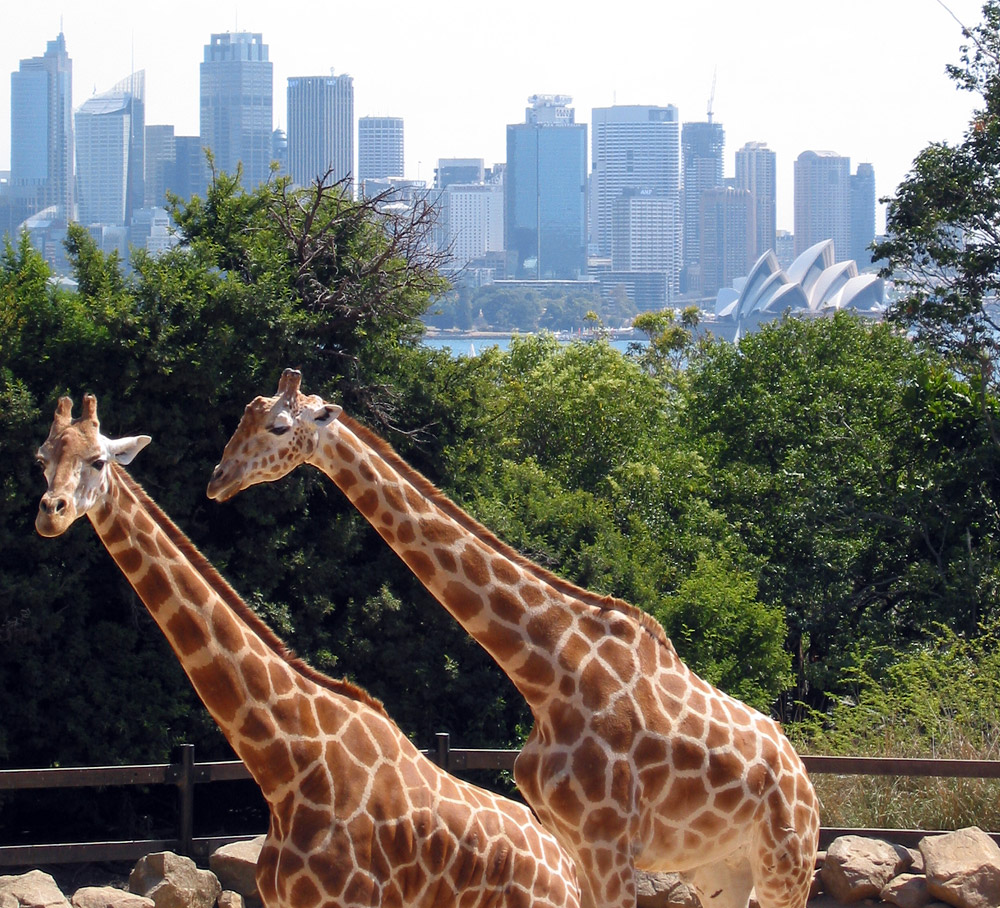
Right next to the centre is the historic district of The Rocks where you see Sydney's heritage as well as walk across the Sydney Harbour Bridge. Darling Harbour is west of the City Centre and offers plenty of attractions such as the National Maritime Museum, Sydney Fish Market, Sydney Wildlife World, Sydney Aquarium and the Powerhouse Museum. Cross the Harbour Bridge to reach the Lower North Shore where you can visit Luna Park. Taronga Zoo can be reached by a dedicated ferry from Circular Quay. Take the ferry further out to Manly where you can visit the famous beach and walk to Middle Head passes many coastal artillery fortifications built into the cliffs of Sydney Harbour during the late nineteenth century.
Head out in the sun to visit the Eastern Suburbs where you can find the world famous Bondi beach, as well as many other beaches and La Perouse. Sydney offers many opportunities to discover indigenous heritage, with rock carvings, dancing and art galleries to explore. Sydney is known for its dozens of vibrant suburbs, which reflect upon the beauty and diversity of the city all because of its character.
Do

Beaches
Sydney's beaches are the perfect place to spend a warm summer day, where you can swim or lie on the sands to your heart's content. The most popular are Bondi, Manly, Cronulla and Coogee, although many others have their own charms. They might not be miles of golden beaches like Queensland, but there's a great variety, ranging from ocean beaches nestled between towering headlands in the Eastern Suburbs to quiet bays facing the harbour in Mosman. Bondi and Coogee are backpacker haunts while Manly and Cronulla feel like separate seaside towns. Soak in the crowded atmosphere amongst the other sunseekers in the eastern beaches, or be one of the few enjoying the solitude in the Northern Beaches and the Royal National Park. Brave the ocean waves, or splash about in the shallower rock pools. Even in winter, you can join the hardy souls keeping to their exercise regime in the cold waters. Surf at one of Sydney's many surf beaches, a quintessentially Australian experience. The major beaches (Bondi, Manly, Cronulla) have surf schools and places where you can rent surfboards. Locals have their own secret favourites in the Northern Beaches and Maroubra, and can be fiercely territorial.
Kayak and canoe
Sydney's waterways offer great canoeing and kayaking, and you can explore Sydney's bushland, history, and exclusive waterfront properties. There are lots of places to hire them from, or to even go on a guided tour.
The Spit or Manly to kayak the harbour. Lane Cove National Park and the Royal National Park have canoes and kayaks by the hour - see turtles and birdlife as you paddle You can paddle on the Georges River from Woronora, or the Port Hacking river from Bundeena. You can hire canoes at Rose Bay, a little bit east of the city. You can also hire a canoe and have a BBQ at Lake Parramatta; 15-30 minutes by car from Parramatta.
Shopping

See the Sydney District Pages for things to buy in the CBD, and other Sydney districts. Most stores will accept VISA/Mastercard credit cards, and only a few take only cash. American Express is generally accepted only at larger stores.
Currency exchange
As with the rest of Australia, currency exchange offices operate in a free market, and the small convenient exchange booth you pass on George Street, by the Opera House or at the airport can charge 15% or more over the best rate you can obtain elsewhere. As always, check rates and commission carefully. Know today's rate and be prepared to walk away if the amount of money they calculate isn't what you would expect. Banks typically offer much better rates, but are only open business hours on weekdays. You may find it better to pay by credit card and use ATM withdrawals and have the certainty of getting the rate and fees provided by your bank.
1 KVB Kunlun, 18F, Citigroup Centre, 2 Park St, ☏ +61 2 8263 0188, info@kvbkunlun.com. This large trading company mainly deals with businesses and big amounts but they also exchange money for individuals with smaller amounts. They charge you $10 if you exchange under $2,000 but their rate is so competitive that it's still worth going there for changing a few hundreds. They have by far the best rate in Sydney. Be prepared to wait as some travellers have been reporting to be there for over an hour. (updated Oct 2016)
Eat

Prices in Sydney's restaurants vary. Breakfast at a standard cafe (food plus a coffee or juice) can cost anywhere up to $20 for a full English breakfast or other substantial meal. A main meal in a mid-range restaurant is around $25 - $35. Upper mid-range averages around $35 - $45. At the real top-end places a dinner for two with wine can run up to $400-500 and beyond. For the more budget-conscious, Sydney's multicultural demography means plenty of quality ethnic cuisine for cheap eats, particularly Asian restaurants in Chinatown where rock bottom priced food (but no less tasty) can be found. Plonk down at a laminate table shoulder to shoulder with hungry locals for some bubble tea and a sizzling plate of delicious Asian food. Many restaurants in the city will also offer "lunch specials". For example, a good Korean "set lunch" can be found for less than $15. A bowl of noodles in Chinatown will run you $8 or $9. Some Thai curry with rice at any of the many restaurants all over Sydney will cost about $10. Newtown in Sydney's inner-west (approx 4km from the CBD) is renowned for its inexpensive cafes and restaurants on King St, in particular Thai food. It is highly popular among students from the nearby University of Sydney.
Fine dining
Sydney is also home to some of the world's best restaurants and their chefs. But if you want to try Sydney's finest rated restaurants during your visit, a booking must usually be made well in advance. There's Est in the City Centre, Marque in the City East and Flying Fish Restaurant & Bar in Pyrmont. Another famous Sydney celebrity chef is Neil Perry, who runs Rockpool at The Rocks, as well as the Rockpool Bar and Grill in the city, not far from Circular Quay, with Spice Temple downstairs. If you want to splurge on the location, try Quay in The Rocks or Matt Moran's Aria, both of which have harbour and bridge views. For fine dining away from central Sydney, try Jonah's in the far Northern Beaches - go for lunch, the view is stunning.
Takeaway
Takeaway (takeout) food in Sydney can be as cheap as buying the ingredients and making it yourself, and many stores specialise in take-away food. There will usually be a picnic table, park or beach nearby to eat whatever you can select. Quintessential Aussie takeaways include the meat pie (minced beef with gravy sauce in a crusty pastry shell), sausage roll (sausage mince in a puff pastry casing), usually topped generously with tomato sauce/ketchup, and fish and chips (inherited from the British to be sure but loved by all Australians). Most restaurants will do take-away food as well, but almost certainly at a premium to the cost of buying food from a take-away. Outside of the city an occasional restaurant may offer a 10% discount for take-away. There are a few online services like Menulog that allow users to order food online from the variety of restaurants and take away in a particular area.
Drink

Sydney has an enormous number of places to drink and party. There is a burgeoning scene for quirky and unique small bars, and the city's cultural life has enjoyed a refreshing growth in night-time choices. There's a litany of clubs and venues for entertainment, and as with most Australian cities, Sydney has a strong live music scene. The majority of pubs and smaller clubs close before 3AM and some as early as midnight, particularly if there are nearby residents. A limited number of venues have 24-hour licenses. Busy venues will have door staff checking photo identification to determine that you are over 18. Admission is also commonly refused to those who seem visibly drunk. More popular venues have discriminatory door practices, the most common of which is refusing entry to groups of men who are not accompanied by women. Some pubs and most clubs will admit children accompanied by adults as long as they don't approach the bar or enter an area where there is gambling, particularly earlier in the evening. Check with staff at the venue. Some pubs don't provide a nice environment for children some nights. Many places have at least a basic dress code, enforced all hours in the city, and usually after 7PM in the suburbs. For most generic pubs, men should wear closed toe shoes (not running sneakers), full-length pants, and a shirt with sleeves (not a singlet). For clubs, men should don neat business-style shoes. In almost all cases, women can dress more freely, but a small number of places require closed shoes or dressy sandals or high heels. Many pubs are called hotels, but only very few can ever offer you a place to sleep. Hotel pubs are usually found on a street corner with at least one ground-floor bar, and are usually a few floors high (though not all floors may be open to the public). Entry charges for live music or DJs are usual and range from $5 to $30 depending on clientèle. Entry charges are rare if you're going into a pub for a drink. There is a taxi shift change at 3AM, and it is notoriously difficult to catch a taxi anywhere between 2:30AM and 3:30AM, but Ubers are out in force at this time of night. Some types of nightlife are concentrated in particular areas:
Backpackers drink near the hostels, and will find a lot of fellow budget travellers in pubs in the Eastern Suburbs Beaches like Bondi Beach and Kings Cross in the City East In some ways Irish pubs are a global phenomenon, but they've certainly taken Sydney by storm. Irish pubs are concentrated in both The Rocks area and the southern area of the city. They are outrageously popular on the 17th March for St Patrick's Day. Sydney's large gay scene is concentrated on Oxford Street in City East although it still has a large range of pubs and clubs for all ranges of sexuality and is a prominent nightspot for many party-goers. Sydney's queer community also can often be found on King Street in Newtown which offers a more relaxed place to gather and far fewer yobs. Sydney's bohemians, artists, and students mostly hang about in the Inner West. King Street in Newtown is littered with great joints. Try the Midnight Shift or Corridor for awesome music and a low key vibe. Bloodwood is a must for killer Bloody Marys. The Courthouse is everyone's local, either that or the Town Hall Hotel, which is open the latest on the strip. Hook round to Erskineville Rd. for even more choice of unique places. A meal at The Rose on a sunny afternoon is a must. Opposite the Hive Bar will have eccentric DJs spinning rare dub 45's. Surry Hills is also a hot spot, with many of the larger venues that host bigger events. The Oxford Arts Factory and The Standard, both on Oxford St., are two great venues where you'll catch larger touring bands and other acts. Yulli's on Crown St have excellent drinks. The Flinders host local bands and has an American dive bar flavour. Try student bars Manning at Sydney Uni, the Roundhouse at UNSW and the Loft at UTS which all offer pleasant, hassle free environments, and no one checks if you're a student. Manning Bar is also great for a meal as they have their Manning BBQ. The Clare opposite UTS on Broadway, though very ratty looking, is a similarly popular place for students. There are many great bars and pubs on Broadway, such as the Lansdowne Hotel which also offers cheap lunch meals for $5-6 on some days of the week. Nightclubs are mostly found in the Kings Cross area. This is the central party district for late club nights. There are also clubs in the CBD, Surry Hills (along Oxford St.), and Darling Harbour. Try The Kings Cross Hotel for many levels of local bands and DJs. Nearby the World Bar is a must for more great entertainment. Frankie's Pizza in the CBD absolutely has the best vibe and music in town. Sydney has a big scene for microbreweries, including The Lord Nelson (The Rocks), The Schwartz Brewery (City), Young Henry's (Newtown) and the Local Taphouse (Surry Hills). Business pubs also cater to the city crowd: lawyers, financiers and brokers and are very busy Friday nights when the city workers are let loose for the week. There are many great nightclubs in Sydney, but they are very spread out so it would be a good idea to get an idea of where you want to go. Check guides in Friday's newspapers, or the free guides available in music stores and youth clothing stores.
Sleep

Sydney has hundreds of accommodation options in the central Sydney area to consider, from backpackers hotels to five star hotels with harbour and Opera House views. However, there are options out of the CBD too. If you are travelling on business, there may be business style accommodation near to where you are working, and there is usually no need to stay in the city. There are options around the commercial areas at the airport in Southern Sydney, around Macquarie Park in the North West, and at Parramatta. If you are travelling with a car, then finding a place to park, and getting into and out of the city can be a hassle. The Hume Highway in Sydney's South West has the standard roadside motels where you can park by your room, with the service station or fast food outlet next door. If you are into camping, the closest camping to the CBD is on the Cockatoo Island in the harbour. You can pitch a tent in Lane Cove National Park, less than 10 km from the CBD, around 750m from the train station at North Ryde. If you are into the beach, Manly and Bondi are the two obvious places to consider. From Manly 25 minutes on the ferry has you right in the centre of Sydney. Some of the lesser known suburbs have accommodation options. Cronulla has beachfront accommodation, facilities and is the only beachside suburb of Sydney with a train station (45 minutes from downtown).
Budget
Sydney has a wide range of backpackers' hostels - popular districts for these include the southern half of the CBD and Haymarket, Glebe and Kings Cross, the Eastern Suburbs (Bondi, Coogee) and the Northern Beaches (Manly).
Mid-range
You find many mid-range accommodation providers within the CBD (mostly in the southern Haymarket end), and within a short distance of the city by public transport, including in North Sydney, the Inner West and the North Shore. Sometimes cheaper motel style accommodation can be obtained on the roads leading into Sydney, particularly in South Western Sydney
Stay safe

See also staying safe in Australia The Australia-wide emergency number is 000, with the ambulance service, fire department and police being available through this number.
Theft
Be on the lookout for the usual big city petty crime problems. Lock your car, and keep valuables safe or hidden. People begging may ask for money or cigarettes, but they are generally harmless. They will often make up the usual stories about needing a train fare etc. Simply say "Sorry mate" and they will usually leave you alone.
Violent crime
Sydney has some of the violent crime issues that plague major cities. However, in general, no special precautions are required visiting the typical tourist areas during the day. Most assaults in Sydney take place in or near pubs and nightclubs at night, and involve alcohol. Most involve young males as perpetrators and victims. Most robberies occur in nearby quiet laneways, or parks close to pubs and nightclubs at night. The most common perpetrators of robberies are drug addicts. For this reason, take care around Kings Cross, The Rocks, Oxford St, and in George St between Town Hall and Central Station, especially late at night on Fridays and Saturday nights. Avoid Redfern station late at night. Even changing trains late at night is best done at Central rather than Redfern. Women should take extra care at bars and keep an alert companion at hand, especially in the central hostel area, and take precautions against spiked drinks. Some areas of south-western and western Sydney have a reputation, generally gained by news reports of motorcycle and other gang related violence. However, if you want to venture out into these areas during the day, there is no exceptional risk. If you're planning to head way off the tourist trail to some suburban pub or nightclub for a night out, seek some local advice. It may be a nice pub, but it pays to be informed. Areas around railway stations tend to be hang-outs for youth gangs in Western Sydney, particularly on Friday and Saturday nights. Stay in company, and don't engage.
Go next
There are a number of good one or two day trips from Sydney:
Drive across the B59 Bells Line of Road over the Blue Mountains to the Western Plains. Buy produce (apples, pears, chestnuts and berries) from the orchard vendors at the side of the road if driving over in autumn. A few of these orchards also offer pick-your-own. Towns to stop by include Lithgow, which is at the foot of the mountains; Bathurst, home to the Mount Panorama motor racetrack, and Orange (3 hours from Sydney), a beautiful rustic town with a great (cold climate) wine district and several fantastic restaurants by eminent chefs, and which is fast becoming a wine-and-foodie region of New South Wales to upstage the Hunter Valley. Travel up into the wilderness area of the Blue Mountains. There are a number of good day walks in the Katoomba area, or you could tour Jenolan Caves. Royal National Park, in the south of Sydney and accessible by train has nice 1 to 2 day walks. Newnes Glen in Wollemi National Park. Kanangra Boyd National Park. Take a tour of the Hunter Valley wineries. Wollongong is a lovely small city south of Sydney, accessible by driving south down the A1/M1 (Princes Mwy) or taking an hourly train. Head up to Gosford or Woy Woy for some quieter, but picturesque beaches. Both of these towns are accessible by the Central Coast and Newcastle train. Head up to the regional city of Newcastle by train and take in some of the Victorian architecture and fantastic city beaches. Or if you are moving on:
Melbourne - Australia's cultural and sporting capital. See also: Sydney to Melbourne by car for itinerary information. Auckland - It's 1,000 km closer and often cheaper to get to Auckland than it is to get to Perth. Alice Springs - 3,000-km drive. At least a 3 night trip, stopping at Hay, Adelaide & Coober Pedy.
More pictures of Sydney


From this destination's category on Wikimedia Commons. Each photograph is credited to its own author under its own licence.
The guide text on this page is from the Wikivoyage article Sydney, written by Wikivoyage contributors and published under CC BY-SA 4.0. The authors are listed in the article’s edit history. It has been shortened and re-laid-out for this page; that adapted text is available under the same licence. Nothing else on this page is.
Wikivoyage is written by travellers, not by us. Opening hours, prices and whether a place still exists are exactly the details that go out of date, so check anything you are relying on.
“3,010 readers a month” and the ranking are ours, counted from Wikimedia’s published pageviews (CC0) — the median of twelve complete months. They count people reading about a place, which is not the same as people going there.