
Stockholm
Stockholm is Sweden's capital and largest city, with nearly a million inhabitants in the city, and 2.4 million within Stockholm County (as of 2021). The inner city is made up of 14 islands across Lake Mälaren and three streams into the brackish Baltic Sea, with the Stockholm archipelago with some 24,000 islands, islets and skerries. Over 30% of the city area is made up of waterways, and another 30% is made up of green areas. Air and water are said to be the freshest of any European capital. Stockholm hosts the Nobel Prize ceremony and has around 70 museums. Stockholm is the hub of most Swedish rail and bus traffic and has two of the country's busiest airports nearby, so it is a good starting point for visiting other parts of Sweden.
Most read about in August, least in December. That is when people look it up, which tends to run a month or two ahead of when they go.
Before you book
The Foreign, Commonwealth & Development Office publishes the UK’s official travel advice for Sweden. It changes without notice and travelling against it usually invalidates your insurance, so read it at the source rather than anywhere else — including here.
FCDO travel adviceUnderstand

Due to the post-glacial rebound, Stockholm is slowly rising from the sea. Mälaren was a bay of the Baltic Sea throughout the Viking Age of the 9th and 10th centuries; today's Stockholm was the waterway for the first Swedish cities; Birka, Uppsala, and Sigtuna. As Sigtuna was sacked by pirates in AD 1187, the Swedes needed to fortify the strait. As the rising land cut off Mälaren from the sea in the 13th century, Stockholm became an important trading post. The city is said to be founded by Birger jarl (jarl is a title corresponding to British earl), who had a fortress built on an island later known as Gamla Stan. The first known written records that mention Stockholm date from 1252; this is the considered year of foundation. In the 15th century Stockholm replaced Uppsala as the effective capital. Stockholm was an associate of the Hanseatic League, and since its liberation from Denmark by King Gustav Vasa in 1523, Stockholm has remained Sweden's most important center of commerce, although Gothenburg later became the largest international port. During the 17th century, Stockholm was the base of the Swedish Empire, with a land area twice the country's current size, nearly encircling the Baltic Sea. Much of the inner city plan was laid out in the 19th century, and the inner city still contains buildings from all ages since the 15th century. Like the rest of Sweden, Stockholm was largely untouched by the World Wars, but, particularly between 1955 and 1975, hundreds of old buildings in Norrmalm were demolished in a large-scale modernization process, emulating similar projects in other European cities. Since 1901, Stockholm has hosted the annual Nobel Prize ceremony for all categories except the peace prize, which is handed out in Oslo. In the 20th century, metropolitan Stockholm sprawled out across most of Stockholm County, with the development of the Stockholm Metro, famous for its contemporary art. 1950s suburbs such as Vällingby became a model for suburban development in other cities. While most of the attractions are in the inner city, a majority of the citizens live in the suburbs. Otherwise a safe and calm city, Stockholm is also known for the term Stockholm Syndrome, which was coined to describe a hostage's sympathy for a captor during a bank robbery in Norrmalm in 1973.
Sustainable technology
As of 2023, Stockholm is striving to become a world-leading city in sustainable engineering, including waste management, clean air and water, carbon-free public transportation, and energy efficiency. Lake water is safe for bathing, and in practice for drinking (though not recommended). Some new neighbourhoods with state-of-the-art technology in this field are Hammarby Sjöstad, Norra Djurgårdsstaden and Hagastaden. See Stockholm environmentalist tour.
Climate
Despite its northern location, Stockholm has fairly mild temperatures throughout the year. The city sees a dramatic seasonal variation in sunlight, from more than 18 hours of daylight around Midsummer (03:30–22:00), to around 6 hours of daylight around Christmas (08:45–14:45). Stockholm has an average of nearly 2,000 hours of sunshine a year. Average yearly precipitation is 539 mm (21.2"), with July and August slightly the wettest months. Snowfall can occur from late November to early April, but the amount of snowfall and snow on the ground varies greatly from year to year, and through the winter. No date is a safe bet for snow in Stockholm; for real Scandinavian winter, visit Dalarna or Norrland. In other words, May to September tend to have the most comfortable weather. From Midsummer to the end of July, most inhabitants leave the city, and some venues close for summer, making the city more dominated by tourists. Summer temperatures average around 13 °C (55 °F) for lows and 22 °C (72 °F) for highs. Some warmer and hotter days can see temperatures rise to above 27 °C (81 °F) during the day.
What's inside

Stockholm's suburbs sprawl out across most of Stockholm County. Stockholm's administrative division may be perplexing - municipal borders might cut right through neighbourhoods. This article describes areas that are geographically close and easy to visit together as districts; the administrative borders of districts and municipalities may differ. The outer parts of the county consist of Norrtälje, Sigtuna, Norrort, Stockholm Archipelago, Södertörn and Södertälje.
Getting there

By plane
Stockholm (STO IATA) is served by several international airports; Stockholm-Arlanda Airport (ARN IATA; near Sigtuna) being the dominant one. Stockholm-Bromma (BMA IATA) is the only airport within the city. The airports in Skavsta (NYO IATA; near Nyköping) and Västerås (VST IATA) also receive some international flights.
Arlanda Airport
1 Arlanda Airport (ARN IATA) 40 km north of the city is Sweden's largest airport, and the destination for most flights to Sweden.
There is a dedicated train every 15 minutes from the Arlanda terminals to Stockholm Central Station (20 min; 175–350 kr/person depending on group size, youth 160 kr). Also regular trains (270 kr; much cheaper fares can be had in advance) and SL commuter trains (180/90 kr) serve the airport. The cheapest ride – unless you have an SL day card and don't use the airport's train stations – is by the FlixBus buses (45 min; 79–99 kr, cheaper in advance). With SL, you can take the commuter train or a bus to a station with more frequent services to the city. There are also airport coaches (45 min). Taxis and rental cars are available.
Getting around

Stockholm is easy to access by public transport, and on bicycle during the warm season. Travelling by car is suitable outside built-up areas.
By public transport
SL (Storstockholms Lokaltrafik) runs an extensive metro, commuter train and bus system, as well as some light rail and ferry services. They serve Stockholm County, with Sigtuna and Norrtälje in the north, and Södertälje and Nynäshamn in the south, with extensions to Uppsala, Gnesta and Bålsta for an extra fee (see below). The SL website has up-to-date detailed ticket and price information in English, and a journey planner.
Tickets
The simplest way to pay for tickets is to simply use your credit card to pay for tickets, by tapping at entry gates and electronic readers. Tickets cannot be bought on buses by cash. As you board a public transport vehicle (most prominently this applies to buses), you will be required to validate your trip every time by swiping the payment card at the rectangular validators in the vehicle (you should hear a beep and see a green light). The same principle goes for the underground and commuter rail, with the main difference being that this procedure is done as you're entering the platform part of the station. For light rail, there are validators on the platforms. All SL services use an integrated ticket system with an RFID card (SL-kortet), which triggers entry gates and other electronic readers. As of July 2026 the card costs 50 kr to purchase and can hold all types of SL tickets. There are two forms of ticketing, passes and coupons. Passes and coupons can be bought at any metro or commuter rail station, at SL Center (located at Sergels torg, close to the central station/T-centralen), at all convenience stores (such as Pressbyrån or 7-11), most supermarkets and some smaller kiosks. Passes are available for 24 hours, 72 hours, 7 days, and 30 days, and allow unrestricted rides on all buses, trams, metro, and commuter trains (outside of Arlanda Central and stations north of it), as well as the Djurgården ferry. A coupon ticket allows unlimited travel for 75 minutes including changes. As of July 2026, adult fares are: coupon (single) ticket 43 kr; 24-hour pass 180 kr; 72-hour pass 360 kr; 7-day pass 470 kr; 30-day pass 530 kr. Discounted fares (roughly 60% of the adult price) apply to seniors over 65, students with a valid SL/Mecenat student card, and young people under 20; check SL's current fares before you travel. A discount is offered if tickets are purchased for two or more passengers travelling together. There is an SL app which can be used to buy single tickets and passes, which must be validated before use in the app (once validated the ticket appears as a large QR code). Alternatively coupons can be downloaded to the SL Access card, reskassa., as well as paper tickets from vending machines, ticket booths and rail conductors. Children under 12 travelling with adults travel free from mid-day Friday to midnight Sunday. Children under 7 ride for free with a paying adult. SL tickets are not valid on airport coaches, Arlanda Express and regional trains. For the SL commuter train to/from Arlanda specifically, buy the special SL + Arlanda single ticket, which covers 120 minutes of SL travel plus one gate passage at the airport station; as of July 2026 this costs 200 kr (183 kr discounted), while travellers under 18 pay no airport supplement at all and can use a normal ticket.
See
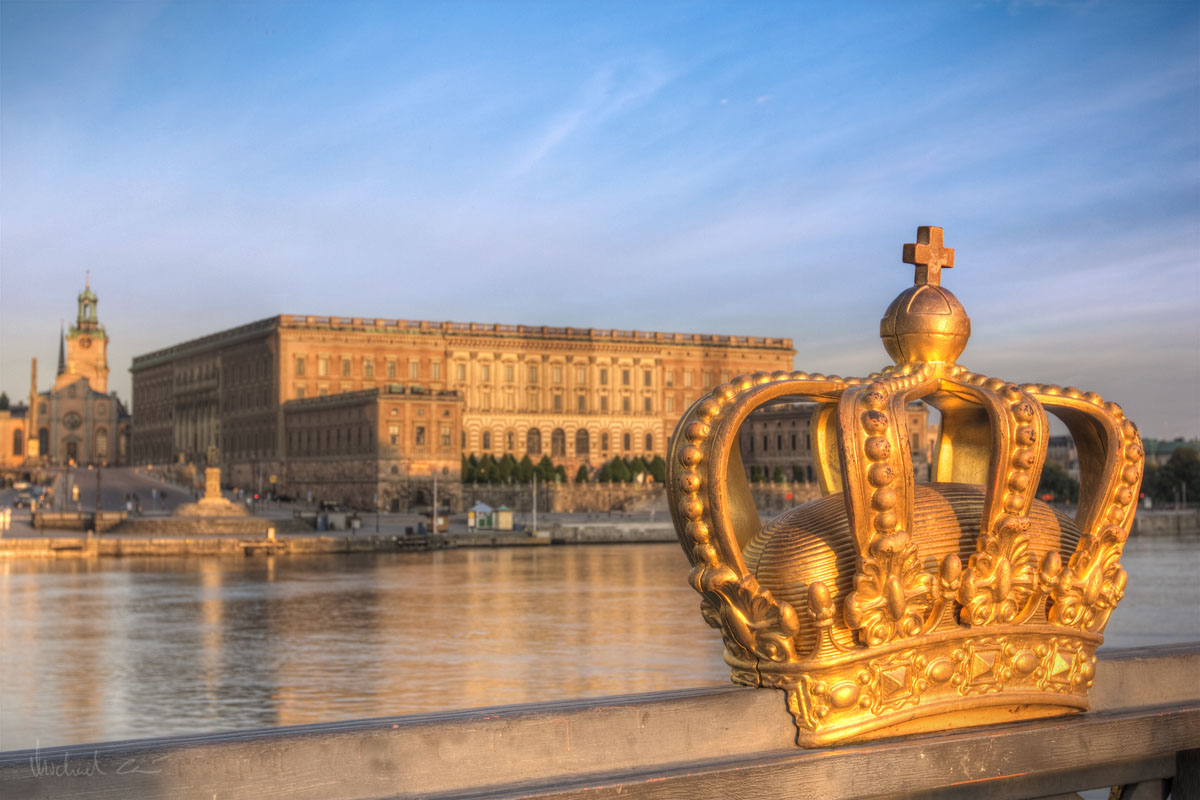
Individual listings can be found in Stockholm's district articles
Buildings and structures
Untouched by wars for a long time, Stockholm has some great old architecture to see. The exception would be Norrmalm, where much was demolished in the 1950s and 1960s to give place to what was then more modern buildings. Looking at it the other way around, if interested in this kind of architecture this is the place to go. Stockholm's Old Town (Gamla Stan), is the beautifully preserved historical center, best covered on foot, dominated by the Stockholm Palace (Stockholms slott). Other highlights include Storkyrkan, the cathedral of Stockholm, which has been used for many royal coronations, weddings and funerals, and Riddarholmskyrkan, a beautifully preserved medieval church, which hosts the tombs of many Swedish kings and royals, surrounded by former mansions.
As a matter of fact, there's not only one royal palace in and around Stockholm but several others, Drottningholm (on Ekerö) and Haga (in Solna) being the most famous. Here visitors can get in close contact with traditions of the Swedish monarchy. The Drottningholm palace, a UNESCO World Heritage Site, is where the royal family lives; still much of it is open to the public. The surroundings are well worth a walk as well. In summer, there is a regular boat service from Stadshuskajen (the City Hall Quay) to Drottningholm. Stockholm has several interesting churches, from medieval times to the 20th century. Most of them are in active use by the Church of Sweden. There is also a synagogue in Östermalm and a mosque on Södermalm. The Woodland cemetery, Skogskyrkogården, in Söderort is one of few UNESCO World Heritage sites from the 20th century. Also in Söderort is Avicii Arena, known as Globen ("Globe"), a white spherical building used for hockey games and as a concert venue. Occasionally, at least at game nights, it is lit by coloured lights. The Globe is the heart of the Sweden Solar System, the world's largest scale model of any kind. With the Globe as the Sun, models of the planets are displayed at Slussen (Mercury), the Royal Institute of Technology (Venus), the Natural History Museum (Earth and Moon), Mörby Centrum (Mars), Arlanda Airport (Jupiter) and Uppsala (Saturn).
Do

Individual listings can be found in Stockholm's district articles
Tours
There is a wide selection of guided tours available, by boat, by bus and on foot.
By boat
Hop On - Hop Off Boat. daily 10:00-16:00. Audio track in 11 languages. Two of the most frequented stops are at the Palace, and at the Gamla Stan, right across the canal from T Slussen. The recordings on this loop service are reasonably informative. 24-hr ticket from 180 kr. (updated Sep 2017) Under the bridges of Stockholm. Departing from Strömkajen by Grand Hôtel and opposite the Royal Castle (T Kungsträdgården), this tour on both the sea and on lake Mälaren passes under 15 bridges and through two locks. Several departures every day, depending on the time of year. 1 hour 50 min. From 260 kr. (updated Sep 2017) Royal Canal Tour. Departs from Strömkajen and takes you around the eastern parts of the city, passing through the lush Djurgården canal. 50 min. From 200 kr. (updated Sep 2017) Historical Canal Tour. Departs from Stadshusbron next to the City Hall (T T-Centralen), and passes Kungsholmen and other western islands of the city. 50 min. From 275 kr. (updated Sep 2017) Stockholm Grand Tour. Combines a boat and a bus tour. 3 hours 30 min, 450 kr. From 432 kr. (updated Sep 2017)
Shopping

Individual listings can be found in Stockholm's district articles As in the rest of Sweden, VISA and MasterCard are accepted by nearly all stores, and ATMs are readily available. Stockholm, like the rest of Sweden, is very much a card-oriented place and quite a few smaller venues do not accept cash. Even fewer accept foreign currencies, such as euros or US dollars. In contrast to many other European cities, most shops in Stockholm (except the small independent ones) are open all week, including Sundays; only closed down for a few major holidays a year. Closing time tends to be rigid, though.
Fashion
Popular Swedish clothing brands that you can find in several major stores include Acne Jeans, WESC, Cheap Monday, J Lindeberg, Whyred, Tiger and Filippa K. There has been an explosion of young designers starting their own small labels. Many of these can be found in the small shops in the SoFo area on Södermalm (see below). Examples are Nakkna, Jenny Hellström, Fifth Avenue Shoe Repair and The Stray Boys.
Glassware
The large department stores Åhléns and NK in Norrmalm all have a wide selection of glassware. Duka, several locations: Västerlånggatan 78 (Gamla stan), Sveavägen 24-26 and Kungsgatan 41, (Norrmalm). Duka is a Swedish chain selling both cheaper household items and a limited selection of glassware in several stores in central Stockholm. Nordiska Kristall, several locations: Kungsgatan 9 (Norrmalm), Österlånggatan 1 (Gamla stan), also in Strand Hotel, Grand Hotel and City Hotel. Nordiska Kristall is a high-end shop for crystal design glass. The Kungsgatan store has an art-glass gallery.
Eat

Individual listings can be found in Stockholm's district articles
Stockholm features a large variety of restaurants, and the dining scene has markedly improved since the turn of the century, both in terms of quality and variety. However, dining in Stockholm can be expensive if you aim for something else than the fast food bars, the run-of-the-mill British-style pubs or the ethnic restaurants that dominate the budget bracket. Be prepared to pay around 175–250 kr or more for most main courses at quality restaurants. If you are on a tight budget, self-catering is a good option. Most hotels and hostels have a good breakfast buffet, in many cases included with the room. A lot of restaurants have "dagens rätt" – a lunch offer, normally including a lower- or non-alcoholic drink, bread, butter, salad and coffee – usually M–F 11:00–14:00. Expect to pay around 100–150 kr, generally more in the centre and less in the suburbs. Many Asian, Indian and fast food restaurants offer rather cheap "all you can eat" lunch buffets. Many restaurants' kitchens close at 22:00 even on weekends, so don't get out too late. A glass of house wine costs in the range 60– kr, 400–700 kr for a bottle. Sweden has enforced non-smoking in all bars, pubs, restaurants and enclosed areas. Quite a few restaurants are closed for vacation for a few weeks in July or early August. In December, many restaurants offer a Christmas buffet (julbord), a variation of the classic Swedish smörgåsbord with traditional Christmas dishes, including Christmas ham, pickled herring and stockfish from cod or ling, prepared with lye (lutfisk). This is a great way to sample a traditional Swedish festive meal for about 300–600 kr; you need to book in advance. In this cosmopolitan city, traditional Swedish cuisine, known as husmanskost ("every man's food"), can be hard to get by. Many fine diners have a not-too-expensive husmanskost course: some other places to eat Swedish are the Nystekt strömming wagon on Kornhamnstorg (Gamla stan), Ät gott (S:t Göransgatan 74, (Kungsholmen)) and Tennstopet (Dalagatan 50, (Vasastan)). Guide Michelin recognizes ten Stockholm restaurants: three-star Frantzén, two-star Oaxen Krog, Ekstedt, Gastrologik, Operakällaren, Sushi Sho, Restaurang Volt , Aloë and Agrikultur. Large supermarkets and restaurants have a good range of fresh seafood. While the traditional Nordic cuisine is heavy on meat and fish, Stockholm has a strong vegetarian and vegan community. For vegan food, look for Indian, Thai and Vietnamese restaurants. The convenience chains Pressbyrån and 7-Eleven dotted around the city centre stock vegan sandwiches. As of the 2020s, food trucks are mostly restricted to festivals and public events.
Cafés
Taking a break for coffee and a biscuit is a Swedish tradition, commonly called fika in Swedish, and there are many coffee-bars around the city. You also have a great number of the more traditional pasttiseries. Traditional Swedish filter coffee is relatively strong when compared to American, but a far cry from the Italian espresso. Espresso, caffè latte, cappuccino and other varieties of Italian coffee are generally available. If you prefer tea, many cafés only offer a few flavours, but generally some black, red and green teas. Don't miss the traditional Swedish cinnamon bun with your coffee. If you visit in January–March you also will have the possibility to try a semla, a popular local pastry with wheat bread, almond paste and cream. In November–December you can try one of the saffron buns, known as lussebulle. While Espresso House is a dominant café chain, the small local cafés offer a more personal experience, and often better coffee. Expect to pay 35 kr and upwards for a cup of regular black coffee. Don't hesitate to ask for a refill (påtår) at self-service cafeterias, as it is often free.
Drink

Individual listings can be found in Stockholm's district articles
Retail drinks
Drinking retail alcohol is allowed in most public areas. Among the exceptions are schools, playgrounds, indoor malls, some city squares, and public transport areas. In some parks, drinking is prohibited from 22:00 or midnight. Map of dry areas
Systembolaget. Generally open M-W 10:00-18:00, Th-F 10:00-19:00, Sa 10:00-15:00, all stores closed Su. Systembolaget is the government monopoly chain for selling alcohol. The stores have a wide assortment and helpful, knowledgeable staff. Tax makes beer and hard liquor expensive. Surprisingly, high-end wines can be a bargain. Central locations include: Drottninggatan (T T-Centralen), Drottninggatan 22. M-F 10:00-19:00, Sa 10:00-15:00, Su closed. Klarabergsgatan (T T-Centralen), Klarabergsgatan 62. Extra late hours: Closes 20:00 all weekdays. Regeringsgatan (T T-Centralen), Regeringsgatan 44. The largest Systembolaget store in Stockholm, with a special selection of exclusive wines Vasagatan (T T-Centralen), Vasagatan 25. Nybrogatan (T Östermalmstorg), Nybrogatan 47. Folkungagatan (T Medborgarplatsen), Folkungagatan 56.
Sleep
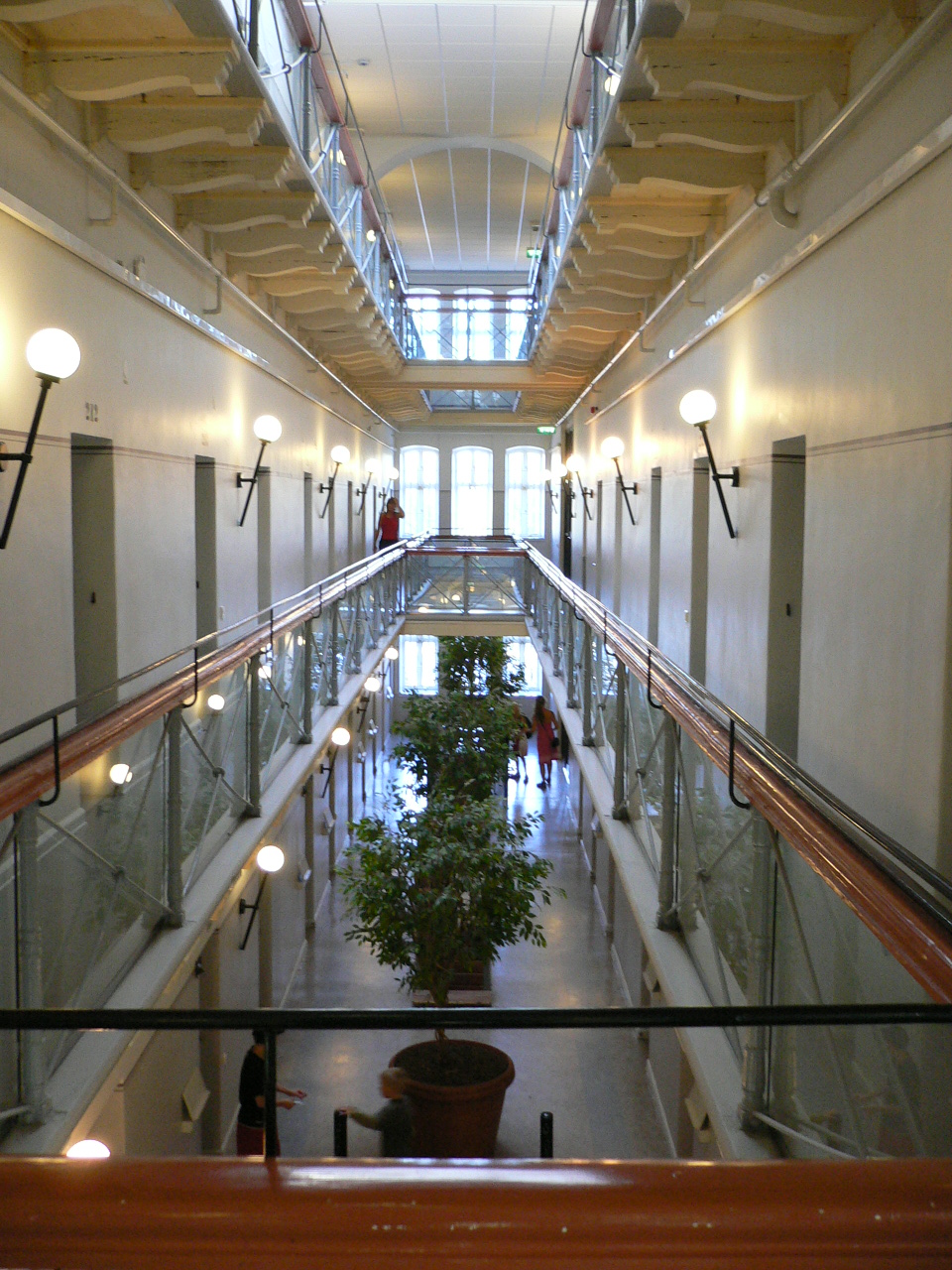
Individual listings can be found in Stockholm's district articles
Stockholm is primarily a business city, so beside the Grand Hôtel (Norrmalm) and a few other luxury venues, Stockholm has several business (typically 4-star) hotels, which charge 900-1200 kr for a single room. They usually have vacancies during weekends and summers, and might give special offers for tourists. Many hotels have basement rooms without windows, often smaller and more austere than the regular rooms, and significantly cheaper, especially the singles. The hotels make no secret of the fact that this room category has no window, but do make sure to read the description of your room carefully before you book to avoid unpleasant surprises. The cheap bunks are in short supply. Look for hostels at Svenska Turistföreningen and SVIF. Advance booking is usually needed, especially in summer, and for those in the inner city. Stockholm has some spectacular hostels, such as af Chapman (Skeppsholmen), Långholmen (Södermalm) and Jumbostay at Arlanda. The lowest cost per bed can be found on the Baltic Sea ferries. Hospitality exchange and home exchange options can be useful for Stockholm. The apartment rental market is strictly regulated, with waiting times over a decade. When it comes to long-time accommodation, Stockholm has a harsh housing situation, with several years' waiting time for a rental apartment. Newcomers are dependent on the unreliable second-hand rental market. For consultants and other business visitors, a long-time hotel stay might be the most practical option.
Local customs
When using escalators, stand on the right and reserve the left side for walking. Standing still on the left side might annoy people. On train and metro platforms, passengers should be allowed to leave the car before passengers who want to board. When waiting in lines, be patient and polite. Swedes never jump queues - but make sure you actually stand in the line. If unsure, ask. Avoid walking in the cycle lane. Dedicated cycle paths are clearly marked, but sometimes run directly next to the sidewalk. Stockholm cyclists are subject to a comparatively hilly landscape and are unwilling to slow down and lose momentum. As most other Nordic people, Swedes value privacy and usually do not start unprompted conversations in public, especially in public transport. This means people are unlikely to approach a confused tourist to offer help on their own, but most will gladly help you if you ask for assistance or directions. If you are lucky enough to be invited to someone's home, you will discover that Swedes behave very differently and will be very social.
Stay safe
For its size, Stockholm is a safe city by international standards. Still, travellers should use common sense to avoid crime. While police officers can be spread thin, Stockholm has patrolling security guards (ordningsvakt) in central neighbourhoods. These are usually helpful to visitors. Security staff at nightclubs might be more harsh, especially at intoxicated patrons. Drunkenness is less accepted in bars and clubs than in smaller towns, and could lead to the security staff forcibly ejecting the trouble-maker. Bouncers in Stockholm are stricter than in other European cities, and you may be kicked out for no reason. Most crimes against travellers are crimes of opportunity, such as pickpockets, bicycle theft, auto theft, and auto vandalism. As always, do not leave valuable items in your car, and watch your bag in crowded places. Most shops and all major taxi companies accept credit and debit cards, so there is no need to carry a lot of cash. Stockholm's road traffic is not too dangerous. Use common sense, and beware of slippery roads when temperature is around zero (which can happen from November to March). Animal collisions are a risk factor even in the inner suburbs; watch out for deer in particular. Taxis are required to post pricing information in the rear side window. The comparison price is for a 15 km ride and not the maximum price, which could be a lot more when venturing outside the inner city. While some independent driver charge the maximum allowed (499 kr), major cab companies (Taxi Stockholm, Taxi Kurir, Taxi 020/Sverigetaxi and Topcab) are around 300 kr. With these cabs, you also have a better chance of having belongings lost in the car returned to you. During summer, groups of street gamblers try to scam their audience in other touristed areas, by planting a few of their own in the crowd. Don't play, you will lose. Though Sweden has an extensive welfare system, and Stockholm has far fewer homeless and impoverished people than other cities of similar size, homeless people can be seen begging around the city; several of them from other parts of the European Union. A responsible way to address their situation is to buy the street paper, Situation Sthlm, for 50 kr. Buying food or water for someone begging is also a good way of helping. While organized crime does exist, lawful visitors are unlikely to be affected. Stockholm is friendly to sexual minorities. Homophobic and transphobic attitudes will be met with outright hostility from many Swedes. Same-sex couples will have no trouble living openly in Stockholm, which includes holding hands or kissing in public around the city.
Go next

Stockholm County
Outside the metropolitan area, Stockholm County contains cultural heritage as well as great nature, all within reach of the SL public transport network; most in less than an hour.
Stockholm archipelago consists of thousands of islands scattered into the Baltic Sea. While many of them can be reached by road, others need a ferry. Many of those ferries call at central Stockholm. Ekerö is a less-known freshwater archipelago in Lake Mälaren, with two World Heritage Sites: Drottningholm Palace (the residence of the Royal Family) and Viking Age settlement Birka. Drottningholm is 10 km from central Stockholm, and can be reached by public transportation within 30 minutes, or a 1-hour ferry trip. Sigtuna is Sweden's first capital, a quaint town near Arlanda Airport, 40 km north of Stockholm. Norrtälje contains the northern part of the archipelago, and vast forests. Stockholm's northern suburbs have many opportunities for outdoor life, including three slopes for downhill skiing, and Viking Age heritage. Södertörn contains forests and lakes, especially the Tyresta National Park, and the Nynäshamn port city. Södertälje is a quaint port city.
Uppsala County
Uppsala, the seat of Uppsala County, was the political, cultural and religious centre of Viking era Sweden. Uppsala also hosts Sweden's first university and Uppsala Cathedral is the largest in the Nordic countries, and the seat of the Church of Sweden. 80 km north of Stockholm, it is a gratifying day trip destination, where many historic sites dating even farther back than some in Stockholm are within walking distance from the central station. To get there, there are two rail options:
More pictures of Stockholm


From this destination's category on Wikimedia Commons. Each photograph is credited to its own author under its own licence.
The guide text on this page is from the Wikivoyage article Stockholm, written by Wikivoyage contributors and published under CC BY-SA 4.0. The authors are listed in the article’s edit history. It has been shortened and re-laid-out for this page; that adapted text is available under the same licence. Nothing else on this page is.
Wikivoyage is written by travellers, not by us. Opening hours, prices and whether a place still exists are exactly the details that go out of date, so check anything you are relying on.
“2,032 readers a month” and the ranking are ours, counted from Wikimedia’s published pageviews (CC0) — the median of twelve complete months. They count people reading about a place, which is not the same as people going there.