
Phuket
Phuket (ภูเก็ต), pronounced (roughly) "puh-KET", is Thailand's largest island. It is 48 km in length, 21 km at its widest, and is in Southern Thailand, on the west-facing Andaman Sea coastline, suspended from the southern tip of Phang Nga province by a pair of short but substantial road bridges.
Most read about in July, least in May. That is when people look it up, which tends to run a month or two ahead of when they go.
Before you book
The Foreign, Commonwealth & Development Office publishes the UK’s official travel advice for Thailand. It changes without notice and travelling against it usually invalidates your insurance, so read it at the source rather than anywhere else — including here.
FCDO travel adviceUnderstand
Phuket lies in balmy Andaman Sea waters on Thailand's Indian Ocean coastline, 862 km south of Bangkok. The island-province enjoys great popularity as a travel destination. Most beaches are on the west coast, with Phuket Town to the southeast and the airport in the north. Its geography is suggested by its name, which is a Thai version of the Malay word bukit, which means "hill". Phuket used to derive its wealth from tin and rubber, and enjoys a rich and colourful history. The island was on one of the major trading routes between India and China, and was frequently mentioned in foreign traders' ship's logs. Phuket's top earner now is tourism, which has transformed the island into Thailand's wealthiest province. Expect prices to be a bit higher than on the mainland. The west coast of Phuket was hit severely by the Indian Ocean tsunami of December 2004, but almost no evidence of the damage remains.
Climate
Phuket is hot and humid throughout the year. The hot season is generally considered to be from Mar to early May. During the summer monsoon season from May-Oct, mornings and afternoons are sunny and clear, but it tends to rain in the evenings and water clarity goes down. Locals consider Nov-Feb the "cool" season, and the weather is quite tolerable. It's comparable to Florida's summer weather in temperature and intensity of rain storms: 25-33 degrees Celsius, scudding clouds, short and thunderous rainfalls in the afternoons and evenings. Surfing is possible off the western beaches.
Culture
Phuket is a melange of Buddhists, Thai-Chinese, Muslims, and Moken people. The majority of the population in the rural areas are Muslim. Outside of the provincial towns, the rural folk speak with a thick Southern dialect which is difficult for even other Thais to understand. The booming tourist economy over the past decade has led to many young people leading lives similar to those in Bangkok. Altogether, the lifestyle of the urban Thai-Chinese resembles that of their Bangkok brethren.
What's inside
1 Phuket Town — the administrative centre of the province with the cheapest accommodation 2 Cape Panwa — home to Phuket Aquarium 3 Chalong Bay — home to Phuket's most popular yacht anchorage and the primary gateway to the islands off Phuket 4 Karon — the second most-developed beach after Patong, split into Karon Yai and Karon Noi Beaches 5 Mai Khao — many posh resorts, Thai villages, and restaurants, very quiet and far away from it all 6 Patong — the largest and most popular beach resort known for its nightlife 7 Rawai — jumping off point for lots of local islands, popular with locals for eating on the beach 8 Surin — an up-and-coming upmarket destination
1 Ko Bon — 10 minutes from Rawai, an ideal island for a day of snorkelling and relaxing 2 Ko Hae — 15 minutes by speedboat from Chalong Bay, accessible all year 3 Ko Maphrao — fishery villages, walking along nature trails, fishing and biking 4 Ko Lon — quiet, mostly Muslim island with a few bungalows 5 Ko Mai Thon — gorgeous little island with only one (expensive) place to stay 6 Ko Racha — two islands (Yai and Noi), popular with scuba divers and a relaxing snorkelling destination 7 Ko Sire — sea Gypsy colony, connected to the mainland by a causeway Phra Taew National Park — Phuket's last significant virgin rain forest
Getting there

By plane
1 Phuket International Airport (HKT IATA) (is in the northwest of the island). This compact airport is Thailand's second largest hub, second only to Bangkok. There are very frequent flights from Bangkok and direct flights to many other airports in the region. A wide variety of airlines have year-round direct flights to Phuket from elsewhere in Asia, as well as the Middle East, India, and Australia. Other destinations (mostly in Europe) have seasonal charter flights. The airport is notionally divided into Terminals 1 and 2, with some charter and low-cost operators using the second, but these are only a short distance apart and connected by an air-conditioned walkway.
International flights
Australia - Jetstar flies from Melbourne and Sydney. Cambodia - Thai AirAsia flies from Siem Reap China - Lots of flights including from Beijing, Zhengzhou, Shenzhen, Xi'an, and Kunming. Hong Kong - Cathay Pacific and HK Express India - IndiGo flies from Bangalore, Delhi and Mumbai. Go First flies from all those locations and Kolkata too. Israel - ELAL flies from Tel Aviv. Malaysia - FireFly flies from Penang, using small ATR turboprop aircraft. AirAsia, Batik Air Malaysia and Malaysia Airlines have flights from Kuala Lumpur. Qatar Airways also operates daily flights from Kuala Lumpur. Qatar - Qatar Airways operates direct daily flights from Doha Russia - Aeroflot and few other airlines fly from Moscow, St. Petersburg, Khabarovsk, Krasnoyarsk, Novosibirsk, Vladivostok, Yekaterinburg and few other cities. Singapore - Thai AirAsia, Singapore Airlines and their low-cost brand, Scoot fly there Taiwan - EVA Air operates non-stop flights from Taipei to Phuket. Switzerland - Edelweiss Air operates seasonal direct flights from Zurich. South Korea - Asiana Airlines flies non-stop from Seoul with connections from New York. Jin Air and Korean Airways also fly direct from Seoul. Vietnam - VietJet Air and Vietnam Airlines fly from Ho Chi Minh City.
Charter flights
There are many charter flights in high season from European and Asian countries.
Getting around
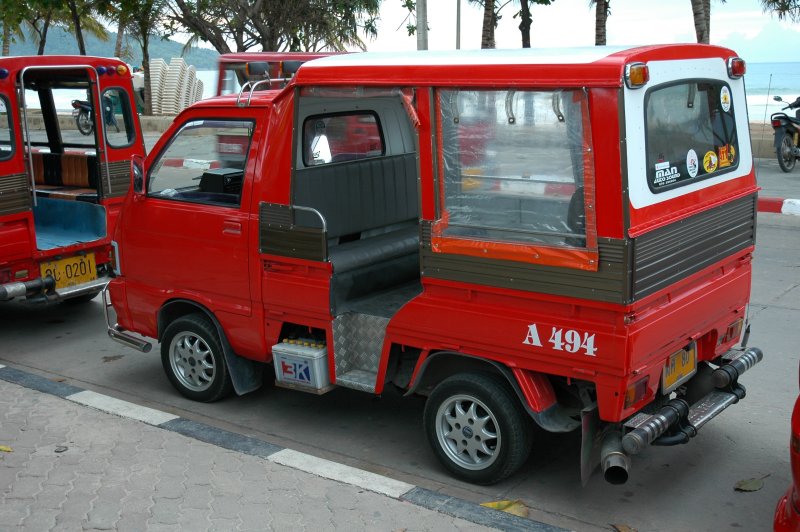
Phuket is a large island and you need some form of transport to get around. Luckily, there are a variety of transport options for various budgets. Hotels generally offer shuttle bus services into Phuket Town, and also have taxi and car hire facilities.
Songthaew
This is the cheapest public transport in Phuket. Within Phuket Town buses run pink, and beyond, to other beaches and areas, go blue. Almost all buses display their destination in English. Pink - fare 15 baht. The bus runs from 6:30 to 20:30. The route number is indicated on the windshield on the left side
Route Blue - ticket Price depends on the distance and route: 20-50 baht. The bus runs from 7:00 to 18:00. On the windshield (or above it) is written the name of the final stop of this route Since the bus has no actual stops, you need to "catch" it with your hand raised up. You can exit at any point of the route-you will need to press the button on the ceiling.
See
Individual listings can be found in Phuket's district articles Phuket is known the world over for its beaches. There is a wide variety of beaches, some calm, some totally ruined by millions of visitors each year. But you can explore the interior of Phuket, a fertile hilly expanse that consists of mangrove forests, fishing villages, rubber and pineapple plantations, small Muslim communities and shrimp farms.
Do

Swimming, snorkeling, diving, yachting, sailing, jet-skiing and parasailing are among the more popular activities on the island. Other activities include freediving, windsurfing, kite surfing, wakeboarding, and deep sea fishing. Popular kite surfing locations include Nai Yang in summer and Chalong Bay in winter season. Sea canoeing is a popular activity in Phang Nga Bay, as many grottoes are only accessible by canoe. Sailing Regattas include the Kings Cup in December, Pangna Bay Regatta normally in February and Phuket Raceweek in July.
Diving
Phuket has some decent dive sites. Most dive sites are off nearby islands, but distances are fairly short and there are dozens of dive shops and boats to cater to your needs, most based near Chalong Bay. The reefs in the area are in a healthy condition with both solid hard corals and colourful soft corals. There is also an abundance of marine life. Most of the dive locations are suitable for all levels of divers, but there are also some that are quite deep. The most well-known dive site in the Phuket area is Racha Yai with its sloping rocky reefs and its abundance of solid coral forests. It is home to Ter Bay where there is an exciting wreck in the depths of 25–35 m. The island south of Racha Yai, Racha Noi, is a haven for experienced divers as the depths are greater and the currents stronger. The overall topography is strikingly different from Racha Yai with huge granite boulders. The diving in Racha Noi compared to Racha Yai is definitely more challenging but the rewards are greater. Just off Phuket, is the limestone island of Ko Doc Mai that soars vertically from the seabed. It is home to a diverse fish and offers the opportunity to view leopard sharks, moray eels, octopus, and turtles. Phuket can also function as a base for dives further afield, such as Ko Phi Phi. Diving in Phuket's warm clear blue waters is best from mid-Oct-May, when the calm seas and rain-free days make Phuket diving great. Snuba Diving is the safest and easiest way to try diving on holiday in Phuket. The word Snuba is a portmanteau of "snorkel" and "scuba". The swimmer uses swim fins, a diving mask, weights, and diving regulator as in scuba diving. The air, however, instead of coming from tanks strapped to the diver's back, comes through a long hose from tanks on pontoon rafts on the surface. No certification required, children 8+, just like SCUBA diving except easier. Snuba trips go to most Phuket dive sites. No heavy equipment to wear, no long classes, maximum depth of 7 m. Professional dive guides accompany each group.
Freediving
Phuket is a leading dive centre in Thailand and has become a freediving hotspot. It is the home of the area's only AIDA instructor training centre. Most freediving trips go out with scuba dive boats to well-trafficked dive sites, but some freediving off the beach is also possible. The local operators are usually very happy to find like-minded divers and will happily give pointers.
Shopping
Phuket Town is a source of cultured pearls, niello ware, pewter ware, ornaments and dried seafood. Specialist shops dealing in souvenir products can be found on Ratsada, Phang Nga, Montri, Yaowarat, and Tilok-U-Thit Rd, in Phuket Town, Thepkasattri Rd, north of town and at the beach centres of Patong, Kata, Karon, and Rawai. Phuket's larger beaches are ravaged by ravenous hordes of tailors, who are certainly cheap, but will screw you over if they can. For example, suits done in 24 hours are usually just glued together and will fall apart the first time you take them to a dry cleaner. Choose your own fabrics (you can buy them on Thalang Rd in Phuket Town), insist on multiple fittings and check the quality of work carefully. It makes little difference which tailor shop you choose, since they're all just sales fronts for a few central sweatshops. There are two giant shopping malls in Phuket: Central Festival, at the northwest edge of Phuket Town, and Jungceylon, in Patong. There is a night market that opens from Th-Su, a couple of traffic lights past the Central Festival shopping mall. You can buy many things from clothes to jewellery to sunglasses. A great place to visit during your stay. A small store without a name in Latin letters can be found on Ranong street opposite the market hall and 7-Eleven West of the small roundabout. Standard commodities can be bought there in large quantities (e.g. 12 pack of mosquito repellent, 3 pack of SPF50 sun screen, 5 pack of shower gel) for a discount.
Eat

Individual listings can be found in Phuket's district articles
Food in Phuket is surprisingly cosmopolitan, especially in Patong, as many foreigners have set up shop to cater to their fellow travellers. All the usual Thai favourites are of course still available, with a particular emphasis on seafood. See the individual town articles for detailed listings. Phuket has its own style of preparation and cooking. Some interesting local dishes include:
Fried or boiled noodle dishes (หมี่ผัดหรือหมี่น้ำแบบต่าง ๆ), usually with pork or chicken, are available at many noodle shops in Phuket Town such as Mi Ton Pho, Mi Sapam, Mi Ao Ke, Mi Hun Pa Chang. Khanom Jin (ขนมจีน), a version of noodles eaten at breakfast, usually served with a spicy curry sauce and fresh vegetables. Nam Phrik Kung Siap (น้ำพริกกุ้งเสียบ) is a mixture of dried chili and smoked shrimp eaten with various fresh vegetables. Cashew nuts and pineapples are grown in Phuket and available all year round. The nuts are available dried, fried, or coated. Phuket pineapples are some of the most delectable, sweet and firm available.
Drink

Individual listings can be found in Phuket's district articles Phuket has a vibrant nightlife, second only to Pattaya among Thailand's beach resorts. Patong's is by far the busiest of the lot. There are plenty of other bars, discos, clubs and activities catering to every taste, from pastor to sex-tourist.
Sleep
Individual listings can be found in Phuket's district articles There are lots of options available in Phuket. But for the more popular hotels and resorts in the better locations you should book at least a couple months in advance during high season (Nov-May). The best rates are usually found on-line and many hotels offer best rate guarantees when you book direct. Most of the time you will pay more if you walk in and take the rack-rate. There are 5 main areas for tourists to stay in Phuket. Patong is the most popular due to its active nightlife, street markets and calm water beaches however this area isn’t for everyone (especially people with families). The quieter areas include Kata, Karon, Rawai and Nai Yang, all with great markets and quieter beach areas.
Stay safe

Particularly in the summer monsoon season, there are strong currents on many of the beaches and drownings are a depressingly common occurrence. Four tourists died during a single 3-day stretch in June 2009. Heed the warning flags on popular beaches and play it safe if off the beaten track. Crime has increased in the Phuket area, and visitors should stay vigilant. Be wary of strangers who approach you unsolicited, particularly anyone trying to befriend you quickly or lure you into gambling (which is illegal) or other suspicious schemes. Pick-pocketing and muggings occur regularly in tourist areas, especially at night. Avoid walking down unlit side streets and stick to main roads. If something seems too good to be true, it probably is.
Tourist police can be contacted locally by dialing 1155. They have a good basic understanding of English (many are farangs), so if you're in trouble these people should be contacted first. Thai police speak hardly any English and normally take the side of the locals even if at fault. Always insist on the Tourist Police if you have any run-in with the Thai Police. Use only metered taxis and ask hotels to call, take down driver license plate and taxi license number before you get in. You can use the receipt from a taxi to complain to police or find lost property, so take a receipt and license numbers. Don't overstay your visa! Two offices in Phuket can extend your visa: one in Phuket Town and one in Patong. The extension is valid for extra 30 days of the departure date stamped in your passport. The cost is 1900 baht. You'll need to provide a passport-sized photo. The Immigration Office in Phuket Town is at the end of Phuket Road near the pier. Possession and use of e-cigarettes (vapes) are illegal here. Violators can face heavy fines or even imprisonment.
Jet ski rental
Jet ski rental is a bad idea. Besides the noise and the dangers to others in the crowded space near the beach, there are scams involving jet skis. When you return the jet ski, they will find "damage", and will try to get as much money out of you to pay for the damage. The damage might be hidden under the waterline, and may not even be real damage. This is a long running scam, which involves "helpful" people urging you to pay. The police might not help you, if they are in on it. This is a well-planned scam that is hard to counter if you end up in it. It is best to avoid it by not renting any jet skies in the first place. If you can't help it and want to get on one of these fuel-to-noise converters, don't give your passport as colleteral. Avoid giving your hotel name and room number. Inspect and photograph the whole thing. It must be pulled out of the water to do this.
Go next
Ao Nang — 3 hours by ferry, the top beach destination in Krabi province Ao Phang Nga National Park — famous for its limestone cliffs, caves, mangroves, fishing villages and James Bond Island Khao Lak — family-oriented resort region for those looking for peace, quiet, and nature Khao Sok National Park — one of the most beautiful wildlife reserves in Thailand Ko Phi Phi — parts of The Beach were filmed at this stunningly beautiful location Ko Lanta — another laid-back island destination that is gaining more popularity Ko Phayam — one of Thailand's most beautiful small islands, 20 min by boat from Ranong Ko Yao — one of the last islands in the region that is not over-developed Similan Islands — national park consisting of nine small islands, hugely popular among divers due to its outstanding beauty. Dive trips leave from Khao Lak.
More pictures of Phuket

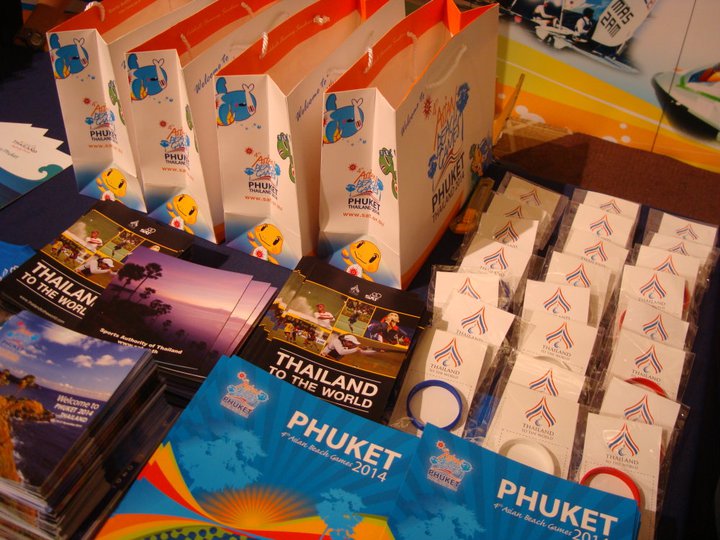


From this destination's category on Wikimedia Commons. Each photograph is credited to its own author under its own licence.
The guide text on this page is from the Wikivoyage article Phuket, written by Wikivoyage contributors and published under CC BY-SA 4.0. The authors are listed in the article’s edit history. It has been shortened and re-laid-out for this page; that adapted text is available under the same licence. Nothing else on this page is.
Wikivoyage is written by travellers, not by us. Opening hours, prices and whether a place still exists are exactly the details that go out of date, so check anything you are relying on.
“1,366 readers a month” and the ranking are ours, counted from Wikimedia’s published pageviews (CC0) — the median of twelve complete months. They count people reading about a place, which is not the same as people going there.