
Luxor
Luxor (Arabic: الأقصر, pronounced in Egyptian Arabic: lo’Sor) is the premier travel destination in Upper (southern) Egypt and the Nile Valley.
Most read about in July, least in April. That is when people look it up, which tends to run a month or two ahead of when they go.
Before you book
The Foreign, Commonwealth & Development Office publishes the UK’s official travel advice for Egypt. It changes without notice and travelling against it usually invalidates your insurance, so read it at the source rather than anywhere else — including here.
FCDO travel adviceUnderstand

The dynastic and religious capital of Middle Kingdom (circa 2050-1710 BCE) and New Kingdom (circa 1550-1080 BCE) Egypt, Luxor has much to offer the visitor, from vast temples, to ancient royal tombs, via spectacular desert and river scenery and a bustling modern life. Thebes, the world heritage listed old capital of Egypt, was on the west bank of the Nile at Luxor. Most of Luxor's ruins and tombs are there. The modern city of Luxor is on the east bank. This area has the train and bus stations, most of the hotels and restaurants, some museums, tourist shops and so on. Most visitors (and almost all tour groups) stay on the east bank and travel across for the tourist sites.There are also some small hotels on the west bank, which has a more relaxed vibe, and many independent travellers stay there. However, Luxor is also known as the hassle capital of Egypt (and therefore a good candidate for the world). You should expect to be on the receiving end of behaviour that would be considered harassment in most countries, including being followed when you leave the hotel by men shouting at you. Instead, Aswan further south is quite the opposite and much more relaxed. It is a good alternative in case you want to skip the Luxor experience altogether but not miss the beauty of the Nile and the nearby attractive sights.
Climate
See also: Egypt#Climate The weather is generally extremely hot in summer, while in winter it is generally warm, but may get cool at night. The climate is very dry with almost no rain at all and very few cloudy days. The best time to visit is in winter, from November to the beginning of March. The transition from winter to summer is abrupt, so there is no real spring or autumn. The prevailing wind is quite weak, but is persistently northerly. As a result the weather is predictable. By and large, there is little variation day to day. More basic accommodation often will not have reversible air conditioning, nor much insulation. As a result, accommodation can feel decidedly cold in winter, even though outdoors, the daytime temperature might be quite pleasant.
What's inside
Although a relatively small city by Egyptian population standards, Luxor is quite extensive. It divides naturally into the areas on each side of the river Nile.
Getting there
By plane
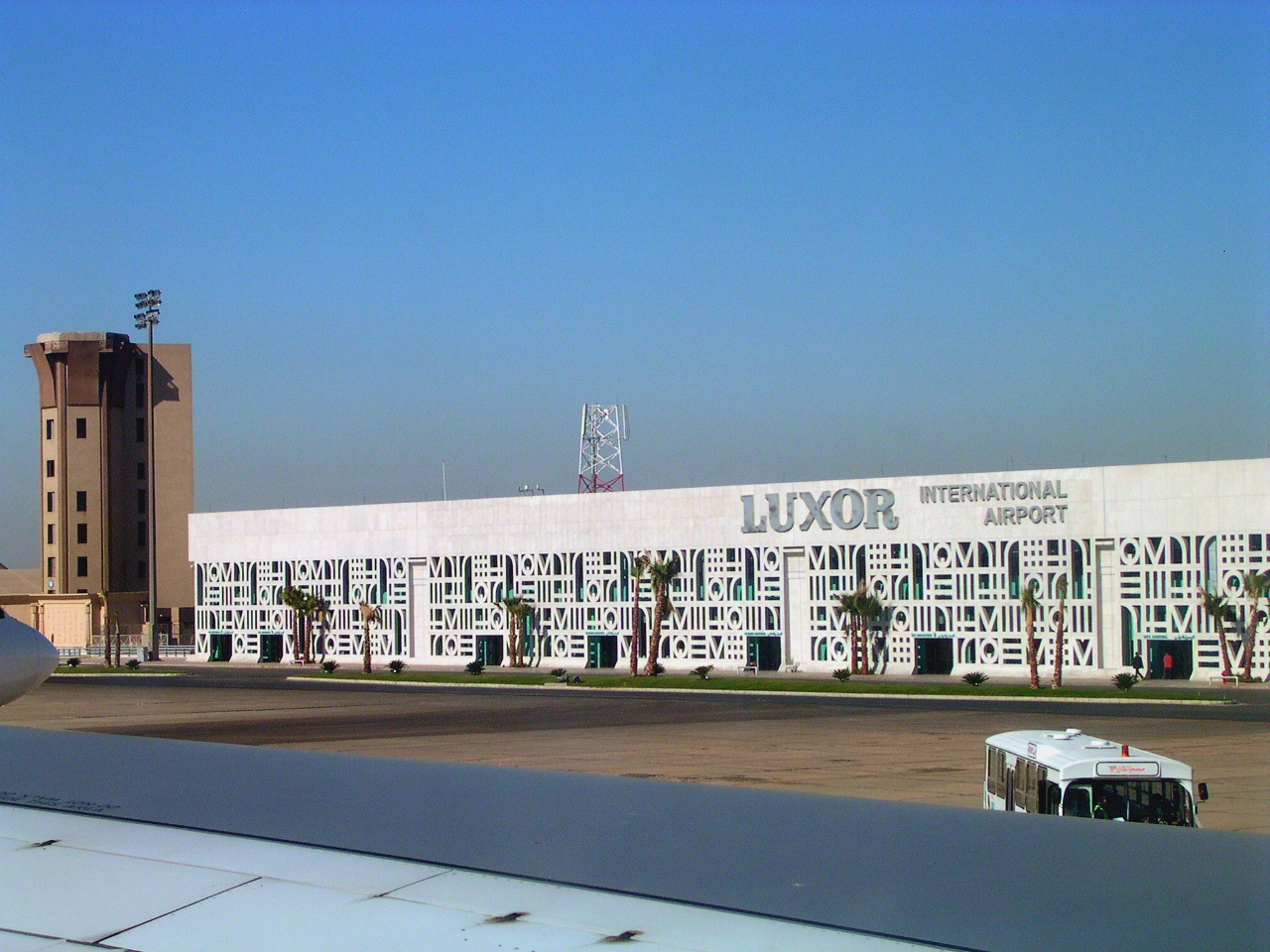
1 Luxor International Airport (LXR IATA) (6 km east of the city). The terminal is divided into two parts for domestic and international flights. Facilities for passengers include a post office, a bank, ATM, cafeterias, a VIP Lounge, a duty-free shop, a newsagent/tobacconist, a chemist shop, a gift shop, a travel agency, car rental. (updated Dec 2018) Luxor airport receives direct flights from several European cities, with most being inclusive package holidays, but they are often available to book flight only. There are also direct flights from Istanbul Sabiha Gökçen Airport (SAW IATA) (Pegasus Airlines) and the Gulf states. Egyptair and competitors fly frequently and direct from Cairo (1 hr), with day-trips feasible both ways, and good connections to Europe. Reaching Luxor from Alexandria or Sharm el-Sheik usually involves changing in Cairo, sometimes with lengthy stopovers. Most of the Airlines in Egypt including: Nile Air, ALMasria Universal Airlines, Air Arabia and Petroleum Air Services (PAS), which charter services flights to Cairo or Egyptian destinations, including Hurghada etc. Behind international arrival security check you can find a stand of Egypt Telecom to buy a SIM card; in arrival hall there are two ATMs (one does not charge any fees for withdrawal). Currency exchange is available only in front of the immigration control.
Getting there
There are no public buses between the airport and the city centre. If you do not have a shuttle provided by your hotel, take a taxi, which should cost no more than LE 300 (Jan 2026). Ignore the picket of taxi drivers and touts just outside the airport doors charging US$10 - 20. Keep walking until you find a taxi driver in his car and then negotiate. Keep a firm grip on your luggage as people will helpfully wrench it from you, carry it most of 5 m to the taxi & bus stand, then demand a fee. "Lah shukran, lah shukran...": you will be saying that a lot in Luxor.
Visa
If coming in from another country, visas on arrival are available to many foreign nationals, ignore the stand just after you enter the terminal building leaving the bus transporting you from the plane (charging US$45 in Jan 2026). It costs US$25 (cash or card; euros are not accepted) when purchased 20 meters further at the bank counter (where you can also exchange money). The visa is a sticker which is to be stuck into your passport before proceeding to the immigration control. Also, see Egypt#Get in.
Getting around
By e-hailing
Uber doesn't work in Luxor, but its sister app Careem does. It takes card payments, and saves you having to explain your destination or negotiate with the driver. InDrive also works in Luxor.
By bicycle
Luxor is brimming with rental shops for bikes and a great many hotels also hire out bicycles. Rental rates are about maximum 5USD (June 2025), depending on your bargaining skills, the relative demand on bikes that day and the quality of the bike in question. Check the tires and be wary of last minute inflating as they may deflate just as fast. It is normal to be asked to leave behind your passport, drivers licence or student ID card as a deposit. Bikes can be rented on both the East and West Banks of Luxor (the latter near the local ferry landing), though prices can be a little over-inflated on the more isolated West. If you look for high quality bicycles, you can find Dutch bikes (gazelle/batavus) at the Dutch Rental Agency in Sheraton Street (East Bank) and, on the West Bank, at Mohammed Setohe bicycle (5 min walk from the ferry) which has quite good and almost brand new mountains bikes. Bikes can be taken on board the local ferry (be considerate though), so perhaps hire on the East, then transport your bike over yourself. Watch Egyptian traffic before deciding if you want to ride a bike through it. The East Bank is the metropolitan side, so consider the traffic and crowds while deciding whether to bike on that side. The West bank in contrast is much more rural, and many tourists opt to bicycle among the fields here while getting themselves between the tourist sites. At the sites, guards will try to convince you to avoid locking your bicycle as they will watch it. Which they will do very well, and then demand a tip for having done so. Lock your bike yourself to avoid this unnecessary expense.
By motorcycle
For the even more brave, Luxor is brimming with Chinese motorcycles around 150cc. With the right bargaining skills you can net one for LE50 per hour, or less for the day or evening. In the summer, the roads around the West Bank are relatively empty, and motorcycling around the ruins and mountains is easy and efficient. In a slow season, many are willing to rent you their own motorcycle for the right price. Ask for a helmet -- you won't get one otherwise.
See

East Bank of Luxor:
The temple complex of Luxor The temple complex of Karnak Luxor and Mummification museums West Bank of Luxor:
The Valley of the Kings Medinet Habu The Tombs of the Nobles The Ramesseum Temple Deir el-Bahari of Queen Hatshepsut Colossi of Memnon Malkata Hot Air Balloon Rides
Do

The Valley of the Kings is one of the most famous archaeological sites in Egypt and a major attraction in Luxor. The valley contains the tombs of many New Kingdom pharaohs, including Tutankhamun, Seti I, and Ramses VI. Most tombs feature colorful wall paintings and hieroglyphic inscriptions that have survived for thousands of years. Visitors are advised to arrive early in the morning, especially during summer, as temperatures can become extremely high by midday. A standard entrance ticket usually includes access to several tombs, while some special tombs require additional tickets. Photography policies may vary, so checking current regulations before entering is recommended.
Hire a bicycle and ride around Ancient Thebes, which takes less than 15 minutes.
A local felucca ride just before sunset; shouldn't cost you more than about LE30 (for one person) per hour. Take a felucca cruise on the Nile for a 2-day trip to Aswan (the reverse trip is recommended, however, due to river currents). Book a cruise ship for 2-3 nights between Luxor and Aswan by tracking down one or several of them along the pier before noon. Most cruise ships have a reception at their entrance and you can just walk in. Do not mind the guards or barriers, they are just there for protection. According to some, prices can start at US$40 per night, and this will be cheaper than when going through an agent or booking online. Hire a donkey, horse or camel to ride around Luxor's West Bank. Pharaoh's Stables (just a short walk from the ferry terminal). +20 10 6324961. They will take you to places where the big coaches can't go. They have horses for beginners to experienced riders. The sunset ride and Nile ride seems like a must do. Swim in a hotel’s pool after a dusty day of tombs and temples: Iberotel: LE75 Sonesta: LE50 Lotus: LE50 One next to St Joseph Hotel on Khaled Ebn El-Waled Street: LE25 Hot air balloon rides. A tour in the morning for sunrise or evening for sunset. Also, be sure to know what is included and what not. Sunset tours do generally not include the sunset, supposedly depending on the wind, which is what they are used to say every day. It is still an impressive and inexpensive ride, even without sunrise. Each flight lasts at least 45 minutes, weather permitting.Nevertheless, pay attention to the safety record mentioned on Wikipedia, which is bad supposedly. This is not a romantic ride with only a few people: they often cramp 21 people into the basket. LE950-1,900, ask around (accommodation and travel offices) for the best deal. (updated Nov 2019)
Shopping
There are at least two different markets in Luxor. One is located in an air-conditioned hall, with shops located on either side of the hall. This market hall connects two major streets. The older market takes up several streets near the Luxor temple. It is a joy to walk through, as it is mostly pedestrian and is a welcome respite from the horse and carriages on the main streets. This market really feels like an old souk and the visitor is taken back in time. It is covered with a wooden trellis, shading people from the sun. Many of the shops offer the same items, so the wise buyer shops around and looks for the best price. One can often bargain better after going to several stores. Once you find a merchant you like, sit down, have some tea and begin the game of bargaining. It can feel like you are becoming a part of the family. Buying something as simple as a cotton galabeya can take hours, as you try on almost every single galabeya in the store, and then move on to items that they think you may want for the rest of your family. Buying anything may be very frustrating due to constant bargaining if you are not used to it. This trick has proven to work well: usually their first offer for the price can be ten or even a hundred times bigger than a reasonable price. First decide what you are actually willing to pay. Let us say that in this example it is LE20. If you ask for the price, you may get a reply "LE120". Now you offer LE22. You may then be offered something like LE110. Then instead of going up, you start going down with the price, your new offer will be only LE20 (your predefined price limit). If the bargaining continues you continue dropping your offer. Pretty soon he will understand where the bargaining is going and you get a comfortable price, or you get rid of the vendor. The touting in the main Souq in Luxor is so bad that it is an absolute nightmare walking through it. Any desire you had to buy anything will quickly disappear as dozens of men try every possible catch they have on you. These include: "You look lucky", "you look Egyptian", "come see my shop, no hassle," and guessing your nationality. But if you continue straight forward, you will come to the real Souq, where the locals go shopping, and the atmosphere changes completely.
Eat
Luxor is a vegetarian's paradise with lots of fresh seasonal vegetables such as tomato and cucumber. A meal often begins with pita-bread and mezze such as baba ganoush or taboulé. Your main course may include meat or poultry, or regional dishes such as pigeon or rabbit. (To avoid an upset stomach, you may prefer to stick with the beef.) As with any heavily touristed area in Egypt, it is never hard to find reasonably well-executed Western food. Dairy products, such as yoghurt or gibna bayda cheese (like feta but creamier), might accompany your main meal. Finally, many good vegetarian desserts are available, though some might seem overly sweet to western tastes. (If you can, specify low or medium sweetness.) While the evening meal is often filling, you may find this does not meet the energy requirements of a busy tourist. It is advisable to eat a hearty breakfast, drink lots of water and snack frequently during the day. For restaurants by district, see:
Luxor, East Bank Luxor, West Bank
Drink
There is something of a social stigma attached to public drunkenness. Although Egyptians themselves sometimes choose to ignore this, for a foreigner to be drunk in public can give a bad impression. Most local pubs tend to be testosterone-filled hard-drinking dens where lone foreigners and especially lone women may feel uncomfortable. However, there are numerous places in Luxor to buy alcohol. Many restaurants, above the basic on the street places, sell lager and wine. They are generally made obvious by Stella signs outside or by having people drinking inside them. There are two open-air restaurants opposite the temple about 200 m south of the main entrance which serve Stella lager for LE14 including tax (as of September 2011) and other local beer and wine for fairly reasonable prices. The huge Stella signs outside give them away. If you can not find somewhere convenient serving alcohol, it may be an idea to ask the staff in your hotel for directions. 'Cafeteria' can be the euphemistic name for a pub in Egypt, and pubs can be quite hard to find if you do not know exactly where to go. There is a duty-free shop close to the north end of the Luxor Temple, slightly to the right across the busy junction. It has plastic see-through shutters at its windows and a guard outside. If you take your passport and go within two days of arriving in Egypt, up to three bottles of main-name spirits and beer, etc. at reduced prices, per person, can be bought. After the two days you can only buy the Egyptian equivalent. They also sell electrical products, and close at 10PM. Drinking in the street or in parks, although fairly widely done by locals, is not recommended for foreigners as it is illegal and alcohol is generally cheap enough in restaurants anyway.
Sleep
Luxor has an extremely wide variety of accommodation options, from camping and hostels, right up to 5-star luxury hotels like the Old Winter Palace Hotel which is of extreme opulence and has played host to both movie stars and heads of state. Luxor probably has the greatest seasonal variation in hotel rates in Egypt, with some hotels being up to 50% cheaper (or more) in the low season (summer). Others do not change their prices. Whilst the vast majority of accommodation options are to be found on the East Bank, an increasing number are to be found (and are being developed), however, on the more laid-back and isolated West Bank, close to the tombs and the Valley of the Kings. A lengthy stay in the area might benefit from staying on both sides of the river for some time. If you are arriving in Luxor by train or bus, beware the over-friendly and sometimes pushy hotel touts, especially at the station (these guys are a symptom of the sometimes fierce competition between rival hotels, especially at quiet times). Remember you do not owe them anything, but that they get 25-40% commission for convincing you to stay at their "cousin's" or "brother's" hotel, which is then added to your final bill. It is usually best to pre-book accommodation. Also, use a map or a taxi to find your hotel and discourage attempts to guide you to your hotel, as you may end up somewhere else altogether, in the expectation that you will give in and stay where your "guide" has led you after all. Women travelling without company should exercise extreme caution whilst seeking budget accommodation in Luxor. Several reports have been made of sexual assault after women were given spiked drinks by hotel touts and staff. On your first morning in Luxor, you may be woken at dawn by the adhan, or Muslim call to prayer. This normally lasts 5–10 minutes, and after a few days you will find yourself sleeping through it.
Stay safe

Stay alert – For those not on fully organised tours, touts can make sight seeing very frustrating. (Although they tend not to stray into the actual temples.) However within temples, one must contend with the government tour guides. The guides are legitimate government workers, but also extremely aggressive about "guiding you" and then demanding a tip. Rule of thumb: If anyone shows you anything, for any amount of time, they will want a tip. It may be worthwhile to give a small tip upfront while asking to "self tour". It is wise to know which accommodation you are heading to and where, or just pre-book accommodation. Otherwise, you will have to deal with the touts at the station. As tourism is the main source of income in Luxor, and has been for centuries, many people have made scamming into an art form. You should assume that any statement from someone who comes up to you out of nowhere is a lie. Some of the older tricks in the book: The "I need a letter translated" opener, used to draw you into a shop The "I need a letter writing to my friend in your country" opener (they show you an address that is in your country), again used to draw you into a shop The alabaster factory. A large percentage of alabaster is imported, and is hardly made on site. The vast majority of other stones such as jade are imported from China and India. "The temple is closed"- Check opening times before you arrive. Find out on your own whether something is open or closed, whether you are walking the right way or not. Ask a local, not taxi or caleche driver. The main temples all maintain the same basic hours and rarely, if ever, have closures, as conservation/excavation work is almost always done while they are open, with just one area sealed off. The tombs in the Valley of the Kings are a different matter, but the main ticket office at the entrance has a sign showing which individual tombs are open and closed on any given day. Papyrus Museum - it is just a papyrus shop, some are good but some are cheap imitations. Scarf seller - person selling usually just one scarf will attempt to use it to hide their hand movements while they pick pocket you. The "I know you from the cruise ship." opener. The "Excuse me, where are you from?" opener. Women travelling without company should exercise extreme caution whilst seeking budget accommodation. There have been several reports of sexual assault after women were given spiked drinks by hotel touts and staff. Always check your room to make sure the door has a secure lock that can't be opened from the outside, and check for spy holes (this is actually a thing in some places). Staff in some shops will also on occasion harass or grope women who aren't with a male travel companion. If you are travelling with a male travel companion, consider pretending to be husband and wife, even if you aren't. This will avoid some of these problems. Merchants in Luxor are notoriously aggressive and manipulative. If you do not want to be talked into buying anything, it is wise to completely ignore any attempt by a local to strike up conversation, no matter how benign it may seem. In shops and the market, the phrase "No Hassle" can often be used to avoid unwanted attention. If you would like to be polite, it is also appropriate to say "Laa shukran", meaning ‘no thanks’ in Arabic. Being polite will make your life easier, as people will remember you if you were rude and may hassle more later. If problems persist, threaten to call the tourist police with the phrase "You're a hustler!" On the streets, you may find it easier to feign ignorance of English: "Non Speakee Engleezee" and/or "Non Parlee Arabee" seems to be the most reliable way to show you are not interested in their offers. This technique can however backfire quite spectacularly as most Egyptians speak several languages, so if pressed claim to speak something obscure like Azerbaijani or Ossetic. If you do speak an uncommon language such as Persian or Albanian or an Eastern European language, make sure you start talking to them in that language. If you do not, practice faking it and do so in their presence. This is the fastest and easiest way to get rid of the touts. Otherwise, just don't engage at all. Depending upon the perception your profile creates, you may be asked, sometimes within minutes of exiting your hotel, if you would like to purchase drugs or sex. Remember, prostitution and drug use are not taken lightly by government authorities. For gay visitors, extreme care should be taken when propositioned by a sex worker. Egypt has a well documented record of gay men being caught in entrapment schemes.
Go next
Dendera — Luxor is a good base to visit this site of a fantastically well-preserved Ptolemaic temple of Hathor. A number of hotels organise day-trips, and you don't need to be staying with them to use these services. However, it can also easily be reached by taxi or, even cheaper, by (local) train to Qena and local taxi from there. For those with more time on their hands you can add a visit to the Temple of Seti I at Abydos, featuring some of the best relief work in Egypt. This is a lengthy road trip from Luxor, but can be combined with a day trip to Dendera. The city is also a good staging post for onward travel through Upper Egypt and on to Aswan and Abu Simbel.
More pictures of Luxor


From this destination's category on Wikimedia Commons. Each photograph is credited to its own author under its own licence.
The guide text on this page is from the Wikivoyage article Luxor, written by Wikivoyage contributors and published under CC BY-SA 4.0. The authors are listed in the article’s edit history. It has been shortened and re-laid-out for this page; that adapted text is available under the same licence. Nothing else on this page is.
Wikivoyage is written by travellers, not by us. Opening hours, prices and whether a place still exists are exactly the details that go out of date, so check anything you are relying on.
“626 readers a month” and the ranking are ours, counted from Wikimedia’s published pageviews (CC0) — the median of twelve complete months. They count people reading about a place, which is not the same as people going there.