
Jakarta
Jakarta is Indonesia's capital and largest city, with about 10 million inhabitants, and a total 41.9 million in Greater Jakarta on the Java island, making it the largest city in Southeast Asia and, by some measures, the largest city in the world. Dubbed The Big Durian, an equivalent to New York's Big Apple, its concrete jungle, traffic frenzy, and hot polluted air may tempt you to skip the city as fast as possible, but what awaits inside will change your perspective! One of the most bustling and cosmopolitan cities in Asia, the J-Town has cheerful nightlife, vibrant shopping malls, a variety of foods, refreshing greenery, cultural diversity and a rich history, that caters to all levels of budget and how much fun you want to have.
Most read about in August, least in April. That is when people look it up, which tends to run a month or two ahead of when they go.
Before you book
The Foreign, Commonwealth & Development Office publishes the UK’s official travel advice for Indonesia. It changes without notice and travelling against it usually invalidates your insurance, so read it at the source rather than anywhere else — including here.
FCDO travel adviceUnderstand
Jakarta's nickname among expats is the Big Durian, and like the fruit itself, it's a shock at first sight (and smell): a sweltering, steaming, heaving mass of some 30 million people packed into a vast urban sprawl. The metropolitan area is a magnet for Indonesians, both as a business and a government centre, and the most developed city in the country. But all of this comes at a cost: the city has been struggling very hard to keep up with the urban growth. Major roads are packed up during rush hours and weekends, sometimes all day during rainy season due to motorcyclists sheltering under the fly-over or the tunnel when it's raining heavily, thus causing additional congestion, while the growth of the public transportation system has been unable to keep up. All that said, while initially a bit overwhelming, if you can withstand the pollution and can afford to indulge in Jakarta's charms, you can discover what is also one of Asia's most exciting, most lively global cities. There is plenty to do in Jakarta, from green parks and historical centres, to cosmopolitan shopping, diverse gourmet choices, and some of the hippest nightlife in Southeast Asia!
History
The port of 1 Sunda Kelapa dates to the 12th century, when it served the Sundanese kingdom of Pajajaran near present-day Bogor. The first Europeans to arrive were the Portuguese, who were given permission by the Hindu Kingdom of Pakuan Pajajaran to erect a godown (warehouse) in 1522. Control was still firmly in local hands, and in 1527 the city was conquered by Prince Fatahillah, a Muslim prince from Cirebon, who changed the name to Jayakarta. By the early 17th century, however, the Dutch had pretty much taken over the port city, and the razing of a competing English fort in 1619 secured their hold on the island. Under the name Batavia, the new Dutch town became the capital of the Dutch East Indies and was known as the Queen of the East. However, the Dutch made the mistake of attempting to replicate Holland by digging canals throughout the malarial swamps in the area, resulting in shockingly high death rates and earning the town the epithet White Man's Graveyard. In the early 1800s most canals were filled in, the town was shifted 4 km inland and the Pearl of the Orient flourished once again. In 1740, Chinese residents rebelled against the Dutch. The rebellion was put down harshly with the massacre of tens of thousands of Chinese people. The survivors were exiled to Sri Lanka. In 1795, the Netherlands were invaded and occupied by France, and on March 17, 1798, the Batavian Republic, a satellite state of France, took over the VOC's debts and assets. But on August 26, 1811, a British expedition led by Lord Minto defeated the French/Dutch troops in Jakarta, leading to a brief liberation and subsequent administration of Indonesia by the British (led by Sir Stamford Raffles of Singapore fame) in 1811-1816. In 1815, after the Congress of Vienna, Indonesia was handed over from the British to the Dutch government. The name Jakarta was adopted as a short form of Jayakarta when the city was conquered by the Japanese in 1942. After the war, the Indonesian war of independence followed, with the capital briefly shifted to Yogyakarta after the Dutch attacked. The war lasted until 1949, four years after Indonesian Independence, when the Dutch accepted the independence and handed back the town, which became Indonesia's capital again. Since independence, Jakarta's population has skyrocketed, thanks to migrants coming to the city from across the Indonesian archipelago. The entire Jabodetabek (Jakarta-Bogor-Depok-Tangerang-Bekasi) metropolitan region is estimated to have a population of about 30 million. In 2019, President Joko Widodo announced that the Indonesian capital will be moved to a new purpose-built city in Kalimantan known as Nusantara, though Jakarta will remain Indonesia's main commercial and financial hub.
Climate
Jakarta, like the rest of Indonesia, is under the tropical climate classification. It has two distinct seasons, rainy and dry. It is hot and usually humid with little fluctuation in temperature throughout the year. The average temperature is about 28°C (82°F), hot compared to other cities across Indonesia, especially because of the absence of trees in many areas. November to March is the peak of the rainy season, and floods and traffic chaos on many of the streets usually occur. At its worst, floods can result in standstill on the prone spots and takes a few days to subside; canal-widening and cleanings have mitigated the effect substantially and for most major roads, a couple hours is all it takes for the standing water to be wiped out. Even in rainy seasons, the sun usually appears for hours each day. During the transition from rainy to dry season or vice versa (April-May & September-October), there is occasional rain. Sometimes it pours; other times it's not a washout. The good thing is that it cools down the air after a sweltering hot day. The rain is almost always absent from June through August.
What's inside
Administratively, Jakarta is a province called the Jakarta Special Capital Region (Daerah Khusus Ibukota Jakarta). It is administratively divided into 5 municipalities and 1 regency (the Thousand Islands in the Jakarta Bay):
Satellite cities: The Jakarta megalopolis of 30 million inhabitants includes Jakarta and the following satellite cities:
Bogor - One of the primary destinations to escape from Jakarta, with well-kept natural habitats, world class botany garden, resorts, and multiple golf courses Tangerang - The airport, many large commercial centres and clustered homes Bekasi - Mostly industrial parks Depok - Home to the University of Indonesia A common abbreviation to describe the megalopolitan area is Jabodetabek (Jakarta, Bogor, Depok, Tangerang, Bekasi).
Getting there

By plane
Jakarta (JKT IATA) has two airports with scheduled flights: 2 Soekarno-Hatta International Airport (CGK IATA) is 20 km northwest of the city in the neighboring city of Tangerang, and handles most commercial flights. This airport, along with transportation options to and from the airport, is covered in a separate article. KAI Commuter's Soekarno–Hatta Airport Commuter Line runs between the airport and downtown for Rp70,000. DAMRI operates bus services to various major transportation hubs (trains & other buses) routinely, while the JAConnexion buses serves a number of hotels and shopping malls within the metro area for up to Rp50,000. Many hotels are generous enough to offer shuttles from the airport. There is a dedicated tollway that takes you to the city, which should take 45 to 90 minutes. Avoid taking conventional or online taxi in rush hour as it may charge you more than Rp300.000. 3 Halim Perdanakusuma Airport (HLP IATA) is smaller and much closer to the city (in East Jakarta), is served by a range of domestic scheduled flights, in addition to its use by the military, VIP flights, charter flights, helicopter leasing companies, and private jets. DAMRI operates bus services to Rawamangun Bus Terminal; to Pulogebang, Gambir Station, and Bekasi; and to Depok, Bogor's Botany Square, and Soekarno Hatta Airport. There are also taxi services operating here, but avoid taking them inside the airport area. Previously, flying into Bandung (130 km away) was occasionally a reasonable alternative, but the relocation of Bandung's airport to distant Kertajati in 2023 makes this quite impractical now.
By train
Jakarta is well-served by trains from all over Java. National operator Kereta Api runs multiple daily trains from other cities such as Bandung, Surabaya and Yogyakarta. A newly-built high-speed train called Whoosh serves Jakarta and Bandung, which runs every hour and takes 35-40 minutes. Commuter trains connects with outlying suburbs and cities in Greater Jakarta such as Bekasi, Depok, Tangerang as well as some more remote cities such as Bogor and Rangkasbitung. There are several major railway stations in Jakarta, with Gambir and Pasar Senen being the main stations for long-distance passenger service. Both are located in Central Jakarta and are well connected with public transport including the TransJakarta system. The historic Jakarta Kota terminus station in heart of old colonial Batavia is now mainly served by local and regional trains. High-speed trains terminate at Halim in East Jakarta from where it's possible to continue by Jabodebek LRT trains to the city centre. Notice that commuter trains generally don't call at neither Gambir nor Pasar Senen. If travelling from Eastern Java it might be better to get off at Jatinegara in East Jakarta and change to a commuter train to Jakarta Kota railway station.
4 Gambir railway station. (updated Aug 2023) 5 Pasar Senen railway station. (updated Aug 2023) 6 Kota railway station. The historic terminus station, first built in 1887. Current building dates back to 1929. (updated Aug 2023) 7 Halim railway station. Terminus for high-speed trains. (updated Aug 2023) 8 Jatinegara railway station. (updated Aug 2023)
Getting around

Getting around Jakarta can be a challenge: traffic slows to a crawl for most of the day, the heat and chaotic streets make walking long distances impractical, and the public transport system has not kept up with the city's explosive growth.
Fares
Jakarta's public transport network features integrated ticketing. This means you only need to use one payment method to travel on all trains and buses. Fares range from Rp2,000 to Rp20,000 depending on mode and distance. There are three ways to pay for your journey:
Kartu Multi Trip, issued by KAI Commuter. The card can be purchased and topped up at KAI Commuter ticket counters and ticket machines. The card costs Rp30,000, including an initial balance of Rp10,000. Contactless prepaid card, such as Bank Mandiri's e-money, BCA's Flazz, BNI's tap-cash, BRI's BRIZZI, or Bank DKI's JakCard. The cards can be purchased and topped up at the respective banks, convenience stores such as Alfamart and Indomaret, and Transjakarta ticket counters and ticket machines. The cards cost Rp40,000, all of which is credited toward purchases. The cards can also be used for payment at major retailers, convenience stores, toll roads and parking lots. Contactless credit or debit card, such as Mastercard or Visa. The cards are accepted for travel on Jakarta MRT. Simply tap your card on the fare gates and away you go, no ticket required. The cards are not yet accepted for travel on any other trains or buses as of 2026. Ensure you tap in at your origin and tap out at your destination to calculate the correct fare. Transferring between lines owned by the same company is free, but be careful not to exit the network until your journey is completed. If your balance is not high enough to tap out at your destination, you can pay the remaining balance at ticket counters and ticket machines. You will be charged Rp50,000 if you lose your card.
See

Individual listings can be found in Jakarta's district articles
The heart of tourist attractions is to the north and centre of Jakarta. Visitors typically start exploring Jakarta from this part of the town, called the Kota Tua, where the old buildings of Jakarta are preserved within a dedicated walking area. Jakarta has 47 museums, which are spread across the city. The Jakarta History Museum, formerly a city hall (Stadhuis), covers Jakarta's history from 400 AD to the present day, with photos, replicas, and maps. Do not miss the Jagur cannon in the back yard. The Bank Indonesia Museum tells about the economy and currency system then and now using modern technology while the Museum Bahari takes you to the old glory of Jakarta's port, and Indonesia's as a whole. If you are into arts & crafts, the Museum Wayang has a collection of different puppets (Wayang) from all across the country and the world, and the Museum Seni Rupa & Keramik allows you to admire Indonesia's art in paintings and sculptures. Museum Prasasti for historical and scripture. A few kilometres down south, you'll find the legacy of the Dutch and the first years of the Indonesian government, such as the iconic landmark of Jakarta, the National Monument park standing right at the centre of the court, and the Presidential Palace on its north side. And where else in the world could you find the Istiqlal Mosque, Southeast Asia's biggest mosque, and a 113-year-old gothic cathedral standing mightily across from each other? On the western side of the court, the elephant statue welcomes you to the Museum Nasional, one of the better designed museums out there. Or Gallery Nasional for art and sculpture. Statues and monuments are ubiquitous in Jakarta and many stand prominently in major points across the city. Most of these icons were erected during Soekarno's rule in 1960, and thus still represent the old glory of independence. Start your trip from the Tugu Tani statue in Menteng that has a figure of a farmer going out to war. Across the Monas Park is Arjuna Wijaya, an eight-horse carriage statue near Monas. Going south at Jalan MH Thamrin, the iconic Selamat Datang statue waves at you, with a fountain that signifies its importance as the city centre of Jakarta. Passing through that is the Jenderal Sudirman statue giving a salute, that gives the street its name. Going further until the end of the straight street, is the Pemuda Membangun or Youth Developing statue that looks like a man holding up a burning bowl. The Dirgantara statue is visible in its glory if you are using the inner tollway in South Jakarta.
Parks
Green spaces are often overlooked in Jakarta. While the city has nearly 1,000 public parks big and small, very few are well maintained including even the National Monument Park (Monas). Menteng is large and perhaps the best and Taman Suropati hosts regular violin shows. Pantai Indah Kapuk, while inundated by housing projects, still leaves a space for mangrove swamps and monkeys' habitats in the two parks there. For parks with lakes, Pluit Park is one option, and a smaller one is Pulo Mas Park. Ragunan, the official zoo of Jakarta, is the second largest zoo in the world (140 hectares), offering diverse Indonesian and international flora & fauna, including a dedicated centre that houses primates, especially the endemic orangutans. Kalijodo Park is open 24 hours a day with green and child-friendly public space and an international skate park. For community park, look for Ruang Publik Terpadu Ramah Anak (RPTRA). Although smaller, it usually offers a small library with A/C and a futsal field. The newest is Lapangan Banteng Park which is also open 24 hours and has good illumination for playing football. Jakarta also hosts two amusement parks. Taman Impian Jaya Ancol at the North, that is for pure fun plus a sea world aquarium, and Taman Mini Indonesia Indah (Indonesia in miniature) in East Jakarta, which celebrates the culture of all 34 provinces of Indonesia, a bird park containing multiple endemic species, and multiple museums. Escape to Kepulauan Seribu to see wild birds and eagles, and island resorts not too far away from the city. The Setu Babakan down south is the centre of the indigenous Betawi culture. If you are looking for lake scene, go to Taman Waduk Pluit or Taman Waduk Ria Rio. For river scene, go to Taman Kanal Banjir Timur or RPTRA Mawar.
Do
Individual listings can be found in Jakarta's district articles
Betawi culture
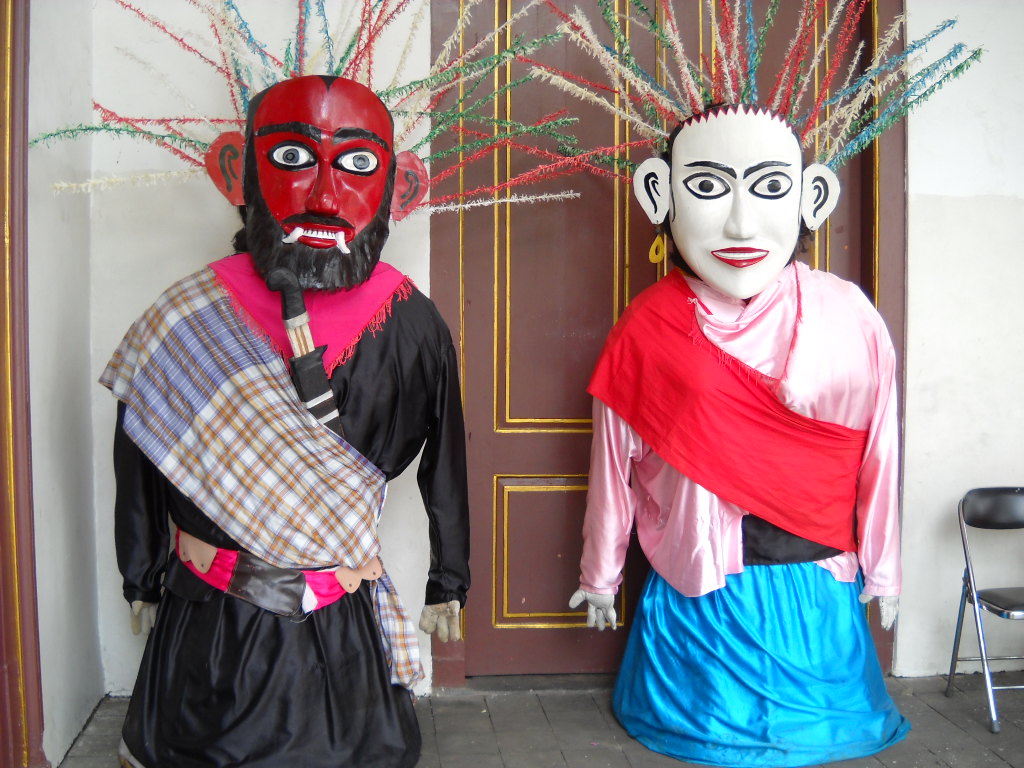
Despite being the melting pot of Indonesia, Jakarta's indigenous tribe called the Betawi still stays proud of its culture. They are actually a unique assimilation of various domestic and international races from the Chinese to the Portuguese, which makes it distinct from other parts of Indonesia. The Lenong theatre performance is accompanied by the Gambang Kromong orchestra that consists of the Sundanese Gendang, the Javanese Gamelan, and the Chinese Kongahyan (its own version of violin). The Tanjidor trumpets are an influence from the Dutch, while the Portuguese bequeathed the Keroncong orchestra. At the anniversary of the city's founding every 22 June, a distinctive piece of culture can be seen in hotels, the infamous pair of Ondel-ondel puppets. The complete experience of the culture can be found at Setu Babakan, the village of Betawi culture (and fishing at its lake).
Cinema
Cinemas are a more affordable escape at around Rp30,000 - 45,000 for a plush seat (Rp40,000 - 70,000 on the weekend, up to Rp150,000 if you watch in Premiere Class at XXI or Velvet Class at CGV ) in any of the capital's shopping malls. Beware of the heavy hand of the Indonesian censor though. The price of popcorn and drinks are exorbitant so you may wish to sneak your own coming in. CGV cinemas will typically show movies in any foreign language other than English and the lesser ones also exhibit Indonesian B-Movies with erotic themes (still heavily censored). The largest chain of cinemas in Indonesia are the 21 Cineplex (branded as XXI in premium shopping malls) and CGV . IMAX theaters are only available at Gandaria City's XXI theatre, Mal Kelapa Gading III's theatre and Keong Mas in TMII, although the latter more often shows documentary than blockbuster films.
Shopping

Individual listings can be found in Jakarta's district articles More than 2.5 million foreign tourists and more than 30 million domestic tourists visit Jakarta every year. It's a paradise for buying international brand-name garments (both genuine and fake). If you're stopping in Jakarta, consider buying an extra suitcase, because there are lots of good shopping opportunities. Good used suitcases can be bought at Surabaya street and vendors also sell antiques. However, although quality can be excellent, genuine branded goods or quality products are expensive. Every year, the Provincial Government of Jakarta holds an annual Festival Jakarta Great Sale that takes place from Mid-June to Mid-July. Most markets, shopping malls, and department stores attend it and will give discounts on selected items, although the event itself might be barely noticeable aside from some banners. Some stores also run Midnight Sales, usually in the weekend. And most of the malls are open from 10:00-20:00 every day, except on Ied Day when they're open 13:30-22:00.
Shopping malls
An escape from Jakarta's sweltering heat, hundreds of shopping malls serve as social hotspots and are where the city congregate on weekends to shop, buy groceries, and hang out. They range from grand top-end luxury malls to smaller trade centers and shopping complexes, with new buildings constantly under construction, so you can probably find a suitably stocked mall (or three) for what you're looking for close to you. Genuinely imported goods from official retailers are priced to international standards, but Jakarta also offers local and lesser-known designer alternatives. A vast selection of cafes and social spots are also attached to malls, so if you're planning to meet up with an Indonesian acquaintance, brunch or dinner at a mall is a popular affair. As a convention, most Jakarta malls will have a supermarket in the basement, alongside utilities such as ATMs, office goods, barber shops, pharmacies, personal health, and budget eating options. Shopping options are on the middle floors, followed by a selection of higher-end restaurants and potentially a movie theater at the top floors. Expect each location to have one or more lobbies at which you can be dropped off, and one of these lobbies will usually include a taxi stand. If calling in your own taxi (or rideshare) be sure to specify which lobby you're waiting at. Most malls open at 10:00, though breakfast dining spaces on the ground floor may open sooner, and lunch options may only fully open at 11:00. Some of the most well known shopping complexes are at the heart of the city. Grand Indonesia and Plaza Indonesia are massive upper-class malls next to each other on Jakarta's busy Hotel Indonesia Roundabout, easily accessible via MRT. To the south, Plaza Senayan & Senayan City are popular chic hangouts across from each other, also accessible by MRT. Mal Taman Anggrek and Central Park to the west at Jalan Letjen S. Parman are for all rounders. Jalan Prof. Dr. Satrio is Jakarta's answer to the famed Orchard Road in Singapore, Ginza in Tokyo and Fifth Avenue in New York. Four malls (namely ITC Mal Ambassador, Kuningan City, Lotte Shopping Avenue, and a bit further off, Kota Kasablanka) and counting, catering to visitors of all budget levels. Kelapa Gading has a street with four malls on its side, and two other giant malls are located elsewhere in the region. Pluit and Pondok Indah hosts three malls located along a single strip. Every shopping mall has at least one department store, alongside brands that have their own shops. Sogo has the most branches, followed by Metro & Centro. Galeries Lafayette can be found at Pacific Place while Seibu and Central are located at Grand Indonesia. Matahari also provides similar fashion usually for a lower price.
Markets
In addition to malls, there are also numerous extremely large shopping centres, most of them within a complex, so if you are unable to find what you need at one mall, you can try again at the mall next door. Mangga Dua, Tanah Abang, and Pasar Baru are the best places in Jakarta to shop for fashion. In Mangga Dua area there are at least 3 shopping centres connected by bridges: ITC is for middle and upper middle class fashion, while the lower class is served by Pasar Pagi Mangga Dua, and Mangga Dua Mall is for gadget enthuasiasts. Tanah Abang is a wholesale market and the biggest in Southeast Asia, with delivery to Africa and other parts of the world. Tanah Abang is overcrowded, so Thamrin city next to Grand Indonesia (500 m from Tanah Abang) can serve as an alternative, mainly for Muslim wear and batik. Pasar Baru is not a shopping centre, but more like a street with old retail shops; stamp collectors will be able to find Indonesian stamps at the front of many of these shops. Mangga Dua Square, as well as Glodok and Roxy, are places to find gadgets. WTC (Wholesale Trade Centre) Mangga Dua is now specialised in selling used cars, with more than 100 sold per day. If you are looking for antique products such as local handicrafts, Indonesian traditional batik or wayang golek (Sundanese puppets), you can go to Jalan Surabaya in Central Jakarta. If you are looking for rare maps, prints or paintings, you can go to Kemang Raya, where there are many galleries including Bartele gallery and Hadi Prana. Pasaraya Grande shopping mall at Blok M, South Jakarta has one dedicated floor for Indonesian antiques and handicrafts. Pasar Seni at Ancol is the centre of paintings and sculpture, including portrait pictures you can have done on the spot. Sarinah department store also has a vast section of traditional gifts. Shopping at traditional markets may also be an exciting experience, where you can find exotic tropical fruits, traditional snacks, cheap fashion and novelty items. While most of them are far from tourist hot spots, Pasar Gondangdia across the namesake train station and the Fresh Market Pantai Indah Kapuk are the places that still offer such experience in a modern building while easily accessible. Cash is still the most effective payment system for all transactions. A few established shops may accept payment with debit/credit card and electronic money.
Eat

Individual listings can be found in Jakarta's district articles
Jakarta has a vast range of food available at hundreds of eating complexes located all over the huge city. In addition to selections from all over the country, you can also find excellent Chinese, Japanese, Western, and many other international foods thanks to the cosmopolitan population. If you want to go local Jakarta, the indigenous Betawi has its own dishes to offer:
Asinan Betawi: assorted pickled vegetables, served with peanut sauce (and sometimes chili) and chips. Bubur ase/dingin, literally cold porridge with beef sweet soup. Gabus pucung, snakehead fish soup. Gado-gado is like ketoprak, but all of it is vegetables. Kerak telor, omelette cooked with glutinous rice and served with shredded coconut and a dried shrimp topping. Ketoprak, lontong (rice cake), tofu, bean sprout, and shrimp crackers in peanut sauce. Mie kangkung: noodles with water spinach in savoury thick gravy sauce. Nasi kebuli: a Betawi pilaf influenced by Arab culture. Nasi uduk, rice cooked in coconut milk similar to nasi lemak, served with choices of various toppings, such as fried chicken, beef, fried shallots, and sambal (chili sauce). Nasi ulam, rice cooked in coconut milk served with fried minced beef, sweet fried tempeh, many other toppings, cucumber, and sambal. Rujak/Mie juhi: noodles with vegetables and dried squid in peanut sauce. Sop iga sapi, beef spare rib soup that takes a simple Dutch dish and piles on Indonesian spices. Soto Betawi, coconut milk broth with beef tendons, intestines, tripe. Food at malls and brick-and-mortar restaurants are by and large of hygiene standards. Street vendors (kaki lima) or carts can be questionable, though it is still wise to use discretion as some of the best or well-known food can actually be from them. The online ride-hailing apps Gojek and Grab also offer food delivery service (such as Gojek's GO-FOOD) to virtually all restaurants, for a small fee. Furthermore, it can increase your convenience when you only want to rest at your hotel. Though tipping is not customary in restaurants, it has become more common. In fact, a few automatically charge a service fee (typically 5%), which may surprise some patrons. Eating at restaurants are almost always subject to a 10% general tax.
Drink
Individual listings can be found in Jakarta's district articles Jakarta may be the capital of the world's largest Muslim-majority country, but it has an underground life of its own. If you're the clubbing type, its nightlife is arguably among the best in Asia, except during fasting months when some venues are closed or have limited hours. From the upscale Kemang to the seedy Mangga Besar, nightlife is there for all levels of loudness, but bring a friend if you decide to brave the seedier places (though they tend to have the best DJs). Fans of live music, on the other hand, are largely out of luck if they go to budget bars, at least unless they're into Indonesian pop. Since 2015 alcoholic drinks are no longer available in convenience stores to discourage underage drinking. Malls and supermarkets are exempt from this rule. In addition, there are specialist imported wine and liquor shops. Jakarta has a fairly large number of prostitutes, known in local parlance as ayam (lit. "chicken"), so much so that much of the female clientele of some respectable bars (operated by five-star hotels, etc.) is on the take. The Kota area in northern Jakarta is the oldest part of town with numerous colonial buildings still dominating the area. It is also considered to be the seediest part of town after midnight. Most karaoke bars and 'health' clubs there are in fact brothels who mostly cater to local Jakartans. Even regular discos such as Golden Crown have special areas designated for prostitutes. Other notable establishments in this area are Malioboro and Club 36 which should not be missed. This part of town has a large ethnic Chinese population who also dominate the clubbing scene there. The bulk of the clubbing scene is spread throughout Jakarta but usually found in office buildings or hotels. The help of an experienced local with finding these places is recommended. Nightlife in Jakarta tends to be pricey by local standards. Due to Jakarta's freedom, there is no specific dress code that should be worn unless you are in a religious area. However, it is best not to dress too openly to avoid awkward stares or giving the impression (especially for women) that you are a prostitute since most of them in Jakarta wear very short dresses or skirts. Sandals are fine to wear if you're heading for North Jakarta since it is near the beach. During the month of Ramadan, most nightlife ends at midnight, while some venues do not open all month. A nightlife district popular among expats is Blok M in South Jakarta, or more specifically the single lane of Jl. Palatehan 1 just north of the bus terminal, packed with pubs and bars geared squarely towards single male Western visitors. While lacking the bikini-clad go-go dancers of Patpong, the meat market atmosphere is much the same with poor country girls turned prostitute. Blok M is easily accessible as the southern terminus of BRT Line 1. For a more off-the-beaten track experience, head a few blocks south to Jl. Melawai 6 (opposite Plaza Blok M), Jakarta's de-facto Little Japan with lots of Japanese restaurants, bars and karaoke bars. If you prefer to mingle with Koreans, go south to Jalan Wijaya. Plaza Senayan's Arcadia annex attempts to duplicate the concept, but with more of an emphasis on fine dining. The Kemang area in southern Jakarta is popular with expats and locals alike so it has numerous places to eat, drink and dance. Or if you want to keep it sober, bubble tea cafes and coffee shops are popping up sporadically, especially in North and West Jakarta, and most major malls. No jamming music and (mostly) no alcohol, but still a good place to hang out. Coffee aficionados can rejoice as some of the best beans in the world hail from Indonesia, and they can easily be found from stands on the street to dedicated coffee shops and even the sachets at the supermarket. They are usually priced from Rp30,000 per cup while powdered coffee are sold from Rp15,000. Co-working spaces are also starting to expand their business into making a coffee shop which caters mostly for workers in the city.
Sleep
Individual listings can be found in Jakarta's district articles
The travel agencies at Jakarta's airport can have surprisingly good rates for mid-range and above hotels. Star ratings are reserved for midrange and better hotels, while budget places have "Melati" rankings from 1-3 (best). Tax and service charges of 21% are usually added to the bill.
Budget, hostels (losmen) can be found around Jalan Jaksa, which is close to the Gambir station, for as low as Rp30,000 per night! Or Kwitang area offer low cost but filthy hotel for Rp50,000 to Rp150,000. Hotels around Cikini has better room to offer for Rp300,000 to Rp 400,000. Another choice is hotels around Mangga Besar, a street with a wide variety of hotels, clubs, restaurants and low class spas. Elsewhere, look for brands such as favehotel, amaris, and ibis budget. Mid-range are easily found at all parts of Jakarta, from independents to chain brands such as all Accor Group hotels but Pullman. Splurge, Jakarta has more than its fair share of luxury hotels, and after the prolonged post-crash hangover new ones are now going up again. Many remain good value by world prices, but opulent lobbies do not always correspond to the same quality in the room. Mostly found within the business strips of Sudirman-Thamrin and Rasuna Said. Jakarta is a business destination, so rates are often lower on the weekends. During the Eid holiday season, Jakarta empties out and there are some great deals to be had. For stays longer than 2½–3 weeks, monthly rental rooms (called kost) and apartments are a good alternative to budget and mid-range hotels, respectively. Fully-furnished rooms (with TV, air-con, large bed, hot shower, kitchen outside) can be rented for 1½-4 million rupiah per month. In most cases, the rental fee already includes electricity and water usage, and often there are additional services included like laundry, Internet access, breakfast, etc. There are cheaper rooms as well (starting from Rp500,000-700,000), but those are usually small, windowless, and the furniture includes just a bed or even nothing at all. Also, some cheaper places are exclusively for either men or women (no opposite-sex tenants or visitors allowed); many others allow couples to stay together only if they're legally married. For apartments (one or more rooms + private kitchen + often balcony), prices are Rp3-4 million and up. Cheaper rates can be obtained in some places which are oriented to the long-term rental (3, 6 months or 1 year minimum); however, there may be same limitations as for cheaper rooms. Short term room rentals services such as Airbnb can be an option for those on the budget.
Stay safe
By and large, your stay in Jakarta should not be problematic as long as you use common sense. While theft and robbery are common, they are highly unlikely to happen in the crowded Sudirman streets, but much more likely at night in the less economically fortunate areas such as in the East, or in residential areas in the suburbs. It is generally better to use a car, or the Transjakarta and commuter trains if you opt for public transit. Women are even entitled to a dedicated seating area or car on these routes!
Strict gun control laws make Jakarta safer, leaving theft and robbery as day-to-day concerns. Violence is low, and most criminal acts are done by stealth or intimidation rather than lethal force. It is rare for serious injuries to occur during these situations, although there are exceptions. If the theft is done by stealth, simply catching the thief in the act will cause him to run away. For intimidation such as robberies, simply giving them an object of value will usually satisfy the thief, who will leave without further ado. Shout for help ("Tolong!") or robber ("Maling!"). Many Indonesians are very protective of their neighbors and friends; in many neighborhoods, a thief caught by the local residents will be punished "traditionally" before being taken to police. Be on your guard in crowded places such as markets, because pickpockets often steal wallets and cellular phones. Carry your backpack on your chest when you see others do the same. Keep a close eye on laptops, which have been known to disappear even from within co-working spaces. For all-night party excursions, it may be wise to keep your cab waiting; the extra cost is cheap and it's worth it for the security. Lock your car and keep valuables out of sight. Organised criminals sometimes operate on the streets (especially at traffic lights) without fearing crowds. A number of high-profile terror attacks in 2003, 2004, and 2009 have led to the city beefing up its security presence. An attack in 2016 specifically targeted foreigners, killing four. However, given the scale and population of the city, terror attacks are exceedingly rare and wayward traffic is a much more realistic threat. Security continues to be highly visible in the city, although checks are generally light and act more as a first layer of defense. You'll spot many x-ray machines and people waving metal-detection wands in offices, malls and transportation infrastructure.
Protests
As a dense metropolis representing one of the world's largest democracies, Jakarta sees regular protests of all sorts. Most protests are rowdy yet organised events, taking place around government offices. Visitors will see their impact from miles away as they cause congestion in the already congested traffic, but they're also decorated with large banners, flags and posters. Protesters generally don't interact with others around them, although given the tight streets and sidewalks, beware of getting swept away or separated in a march. During larger protests, entire roads or areas may be cordoned off by police. There is always a police presence of some sort at these events, so follow their directions. Transjakarta, rail and metro services will also know in advance and announcements may be displayed in stations. Taxi companies also broadcast this information to their drivers. When in doubt, do like an Indonesian and simply ask a nearby uniformed person and ask if there's a disruption going on. Protests tend to take a turn for the chaotic once night falls and the bulk of protesters leave to return to their families. Most protests end right around nightfall (about 18:00), but if a one extends into the night, it would be prudent to give it a wide berth.
Go next
Within the metropolitan area:
The fun does not end in Jakarta, but well beyond its satellite cities!
Thousand Islands — administratively a part of Jakarta, but it is the complete opposite of the hectic mainland: an island escape with sprawling resorts and nature reserves. Bogor — a sense of nature one hour away, where you can tuck yourself away in its botanic gardens or golf courses. Puncak — cooler climate, beautiful view of the mountains and tea plantations, restaurants, as well as the Taman Safari Wildlife Park. Tangerang — a thriving area for premium residents and opulent malls, especially to its south. Depok — a budget style city with adequate facilities because of the nearby University of Indonesia. Bekasi — home to Jakarta's big companies and an increasingly bustling city.
A bit further off
A 3-hour drive using the tollway leads into the Merak Port at the western end of Java, where you can continue your journey by ferry to Sumatra island for 1½ hours. Anyer is an upscale resort beach 4 hours away from Jakarta, but if you want a less crowded option, the Carita Beach is just a short drive away from there. Pulau Umang, an island resort to itself, is midway between Carita Beach and Ujung Kulon National Park. Ujung Kulon National Park — a beautiful national park 5 hours away, featuring the endangered single-horn rhinoceros. Bandung — 3 hours away from Jakarta, it's a budget style city famous for both food and bargain fashions. For a tropical island hype (without the resorts) and an instant escape from the hectic city, head to Belitung Island, less than 1 hour away by air.
More pictures of Jakarta


From this destination's category on Wikimedia Commons. Each photograph is credited to its own author under its own licence.
The guide text on this page is from the Wikivoyage article Jakarta, written by Wikivoyage contributors and published under CC BY-SA 4.0. The authors are listed in the article’s edit history. It has been shortened and re-laid-out for this page; that adapted text is available under the same licence. Nothing else on this page is.
Wikivoyage is written by travellers, not by us. Opening hours, prices and whether a place still exists are exactly the details that go out of date, so check anything you are relying on.
“2,275 readers a month” and the ranking are ours, counted from Wikimedia’s published pageviews (CC0) — the median of twelve complete months. They count people reading about a place, which is not the same as people going there.