
Dublin
Dublin (Irish: Baile Átha Cliath, "Town of the Hurdled Ford") is the capital city of Ireland. Its vibrancy, nightlife and tourist attractions are world renowned and it's the most popular entry point for international visitors to Ireland. As a city, it is disproportionately large for the size of the country with a population of over 2 million in the Greater Dublin Region (2022); nearly half of the Republic's population lives in this metropolitan area. The central sights can be navigated by foot, with a few outlying sights, and suburbs sprawling out for miles. The climate is mild, making Dublin a year-round destination. It's seldom freezing in winter, cool in summer and frequently has light showers. For more information, see County Dublin weather chart.
Most read about in July, least in October. That is when people look it up, which tends to run a month or two ahead of when they go.
Before you book
The Foreign, Commonwealth & Development Office publishes the UK’s official travel advice for Ireland. It changes without notice and travelling against it usually invalidates your insurance, so read it at the source rather than anywhere else — including here.
FCDO travel adviceUnderstand

History
Dublin is in a low-lying, fertile area, not boggy by Irish standards, and with good sea access. It became the core of the Gaelic kingdom of Leinster, and the Vikings established a large settlement by what is now Dublin castle, until ejected by Brian Boru at the Battle of Clontarf in 1014. This set a pattern that Dublin was fought for, not fought in. The Normans colonised the southwest and Leinster from the 12th century, and further out they battled with the Gaels, but Dublin sat snug within the "Pale" — the defensive palisade. Similarly with the Tudor conquests; then the city fell swiftly to Cromwell so his atrocities were elsewhere, and King William marched in unopposed after the Battle of the Boyne. 18th century Dublin was the second largest city in the British Isles, with a tight little Protestant clique ruling the place to London's liking. Industry and culture flourished, and the city acquired its graceful Georgian streets and squares, but Ireland was ruled as a colony. Britain's other colonies watched with great interest as the independence movement gathered pace. "The Troubles" of the late 19th and early 20th century involved ethnic conflicts, paramilitary gangs, and savage reprisals by the authorities. The outbreak of the First World War seemed to put a brake on this, with tens of thousands of Irishmen marching away to France and Flanders. Surely one big push on the Somme would win this war - but while the generals were planning this, armed insurrection broke out at Easter 1916. The rebels seized the central Post Office on O'Connell Street, read their proclamation of independence, then were bombarded until they surrendered. Initially they attracted little sympathy or support, especially as they were backed by arch-foe Germany, but the authorities snatched defeat from a quick win by the subsequent court-martials and executions by firing squad. Hundreds were arrested and 15 were shot. This and atrocities such as the Croke Park massacre were fatal to the legitimacy of British rule. By 1921, the Irish tricolour fluttered over a Dublin that was capital of a separate state. In contemporary times, Dublin is a city of paradoxes. A sizable immigrant population has moved in, seeking a better life. But, the city has at the same time been somewhat terraformed by transnational firms seeking tax benefits and an English speaking EU jurisdiction, with offices for Google or Deloitte looming over the city. At the same time, the city has built very little new housing, leading to skyrocketing rents for locals. Dublin is at once somewhere that everyone wants to be because it is a very human city, and yet the level of demand from tourists—and Ireland's recent friendliness to megacorporations—has led to much of the city feeling a bit hollowed out.
Orientation
Dublin is divided by the River Liffey. North of the Liffey runs O'Connell Street the main thoroughfare, intersected by numerous shopping streets such as Henry Street and Mary Street. On the south bank are Merrion Square, St Stephen's Green, Grafton Street (the main southside shopping area), Trinity College, Christ Church and St Patrick's Cathedrals, the main branches of the National Museum, and many other attractions. The postal district Dublin 1 is north of the river centred on the Post Office, Dublin 2 is south centred on Trinity College, and so on out to the suburbs. These districts have been incorporated into Eircodes, which cover the whole Republic. Thus D04 followed by four alphanumerics is somewhere around Ballsbridge. These pages state Eircodes wherever possible, as keying them into an online map will drop you onto the exact address. They only apply to addresses that receive mail so a lonely megalithic tomb on a mountainside won't have one, but that's seldom an issue in downtown Dublin. Electricity is 230V using Type G plugs. Visitors from countries with different plugs will need an adapter. Visitor info: Several places purport to be tourist information offices, but are simply agencies selling tours. The official source of advice is Visit Dublin, with two walk-in centres:
Northside at 14 O'Connell St Upper D01 WP59, 200 yards (180 m) north of the post office, M-Sa 9AM-5PM; Southside at 3 Palace St D02 T277, next to City Hall west end of Temple Bar, M-Sa 9AM-5PM, Su 10:30AM-3PM.
Getting there

By plane
1 Dublin Airport (DUB IATA) (10 km north of city centre). Dublin Airport has an extensive short and medium haul network, and is the base for Aer Lingus, Aer Lingus Regional, and Ryanair. Terminal 2 handles wide-bodied jets and is used by Aer Lingus (& Regional), British Airways, American Airlines, Delta, Emirates, Norwegian and United. All others use the older Terminal 1, some 300 m north with a walkway between. Together they offer direct flights from most major cities in the UK (serving all London airports, but most frequently Heathrow) and continental Europe. North American flights arrive from New York, Newark, Boston, Chicago, Orlando, Philadelphia, San Francisco, Seattle and Washington (with pre-clearance of US customs & immigration westbound) and Toronto. Middle East flights include Dubai, Doha and Abu Dhabi. Domestic flights are from Kerry and Donegal; there are none from Belfast, Shannon or Cork. All the main car hire companies have kiosks in Arrivals. There's a better choice here than in the city centre, but book ahead for the best deals. The airport has car parking short-term on-site, long-term off-site, and "meet & greet" services. The currency kiosks are run by ICE with a 10% buy/sell spread, decent value. Clayton and Maldron hotels are at the airport, with a few more at the M1/M50 junction just south and in Swords to the north. (updated Jun 2024) Between airport and city: bus and taxi are the options, there's no rail or metro link.
Aircoach. Aircoach 700 runs to the city centre from T1 then T2, every 15-30 minutes, taking 30 minutes. The fare in 2024 is €10 single or €15 return. The last bus to the city is 1:30AM then the next is 6AM. See below for Aircoach 701, 702 and 703 for south side of Dublin. They also run to other cities such as Cork and Belfast. Taxi drivers routinely try to pick up passengers waiting at the Aircoach stop: they're forbidden to do so, but offer a similar rate and get many takers, so they persist. (updated Jul 2024) Dublin Express runs to city centre and Heuston Station every 10 minutes or so. The last bus to the city is 11PM then the next is 5:30AM. The cost in September 2024 was €8 single. €10 return if purchased online.
Local buses by Dublin Bus are much slower — allow an hour — but much cheaper at €2.60 in coins, or €2 if paying with a Leap Card (see "Get around"), and may be more convenient for the suburbs. The two routes are: Bus 16 via Drumcondra railway station, O'Connell St, George's St and out to the southern suburbs of Rathmines and Ballanteer / Kingstown. It runs from morning until late evening. Bus 41 via Drumcondra railway station and O'Connell St, passing near Busáras, to Lower Abbey St. Northbound it runs out to Swords. It runs 24 hours every 20-30 minutes. Stops for the local buses are at Terminal 1 through the car park opposite Arrivals exit and then to the right. Pay with exact coins (bus drivers don't accept cards or banknotes, and don't give change). Alternatively, purchase a prepaid Leap Card (see "Get around") from a convenience store in the terminal or near the bus stops. Luggage space is limited on these local buses, and it's not unknown for drivers to turn away travellers with packs that cannot be stored. Taxis to city centre might cost €34-40 (July 2024), so they are competitive with the Aircoach for a group of three or more. See "Get around" for rules on taxis. Other destinations: most buses to other Irish cities run via the airport, see individual cities' "Get in". Within County Dublin:
Getting around

You can see much of the city on foot.
By public transport
Public transport in Dublin consists of trains, trams and buses. Unlike many other European capitals, the rail network in Dublin is quite limited, so buses are by far the main mode of public transport. Public transport is not run by a single agency, but by a number of state-contracted operators, and most information is provided separately on each operator's website. Trains are run by Irish Rail and trams by Luas, while most buses are run by Dublin Bus, except some local buses in suburban areas which are run by Go-Ahead Ireland. Transport for Ireland (TFI) is the umbrella brand for public transport in Ireland, although its website primarily just directs you to the individual operators websites for information. However, the TFI Journey Planner is a good way to plan your journey across different modes, and the Live Departures provides real time information for all rail and bus stops. TFI also provides a number of smartphone apps including a journey planner and real time departures. The journey planner app also provides real time departures, so you don't need to download both. The TFI Journey Planner and Live Departures are also integrated into Google Transit and are available within Google Maps.
Tickets and Leap Card
You can use the Leap Card (see below) to pay on all forms of public transport in Dublin and most of Ireland. There is a flat fare in place for all journeys on Dublin Bus and Luas when paying with a Leap Card: €2 for adults and €0.65 for children (Aug 2026). Children under 5 travel for free. You cannot pay using contactless bank cards though this is planned to be rolled out in the future. On trains and trams, tickets can also be purchased from ticket vending machines at the station or stop prior to boarding. Train tickets are valid for the day of purchase and are sometimes needed to get through the entry and exit turnstiles at stations, though most smaller stations do not have these. Tram tickets do not have to be validated prior to boarding, but must be used within 90 minutes of purchase. On buses, you can also pay the fare to the driver in cash, but you must have the exact amount in coins. Banknotes are not taken, and if you overpay in coins, no change is given. If you plan to use public transport a lot, consider getting a TFI Leap Card which can be purchased from most convenience shops for a deposit of €5 for adults and €3 for children. If you register your card online, it can later be refunded to an EU bank account or a number of charities. You can check your credit and top up the card at most convenience shops, at train or tram ticket vending machines, and on your phone with the Leap Top-Up App. To use your Leap Card on trains or trams, you need to tag-on by holding your card against the turnstile or validator before boarding, and then tag-off again at the turnstile or validator at the end of your journey. To use your Leap Card on buses, hold your card against the validator on the right hand side of the door. Unlike trains and trams, you don't need to tag-off when you leave the bus. It's important to note that if you don't tag-on before travelling, you don't have a valid ticket, so you could be fined if a ticket inspector boards and checks your card. This is uncommon on buses and trains but happens often on the Luas. Single fares are around 30% cheaper with a Leap Card than with cash. A 90-minute fare is in effect, meaning that after you tag onto any mode of transport, you can use the same Leap Card to tag onto any other Dublin regional buses, trams or trains within the next 90 minutes without extra cost. The fares are also capped, so once you reach a certain amount within the same day or week (Monday to Sunday), you can continue to travel for free for the remainder of that day or week. For adults, the daily caps are €5.60 for buses or trams, €7.60 for trains and €8 for all modes. The weekly caps are €22 for buses or trams, €29.60 for trains and €32 for all modes. Child caps are much lower, about one third of the adult caps. A special Leap Visitor Card is also available for tourists, which allows unlimited use of all public transport for 1 day (€8), 3 days (€16), or 7 days (€32), starting from the time of first use. This can be purchased at arrivals in Dublin Airport (WH Smith and Wrights in Terminal 1 and Spar in Terminal 2) in some city centre tourist offices, or ordered online for delivery. Once your chosen time period expires, you can also top it up with additional time periods at most convenience shops in the city.
See
Dublin's top attractions sell out in summer. Buy tickets online in advance if you know you want to see something, especially for the Book of Kells where even early arrivals may find all the day's slots are filled. The Dublin Pass gives you free and fast track entry to thirty-some attractions in Dublin. Adult prices in 2024 are €79 for one day, €109 for two, €129 for three, €154 for four and €164 for five, child prices about half, and days must run consecutively. You'll struggle to break even on this deal as only the Hop-on Hop-off bus tour and the Jameson Distillery and Guinness tours charge over €25; most are way cheaper. The Pass doesn't include the National Museum sites (free anyhow), the Library and Book of Kells at Trinity College, or any public transport.
North of the river
1 GPO Museum, O'Connell St Lower D01 F5P2, ☏ +353 1 872 1916. M-Sa 10AM-5PM. The GPO is the headquarters of the Post Office in Ireland, built in Neo-Classical style 1814-1818. In 1916 it was occupied by Irish rebels led by PH Pearse, who read the Proclamation of the Republic outside the front door of the building. The interior was burnt out by shelling from government forces against the rebels, but the exterior survived. Subsequently the GPO was restored, reopening in 1929, and remains a busy working post office. The museum within it is a multimedia exploration of the Easter Rising. Adult €17, conc €15, child €8.50. (updated Jun 2024) O'Connell Street is the broad thoroughfare running north from the river. It was smashed up in the 1916 uprising and subsequent civil war, but rebuilt; then in the 1970s the developers made one sorry mess of it. And their assistants: All along O'Connell Street the pieces flew, up went Nelson, and the pillar too... was the ditty commemorating the 1966 IRA bombing of Nelson's Column. Where it stood, next to the GPO, is now the 121-m pin of the Spire of Dublin; close by on North Earl St is the James Joyce Statue. Northbound trams glide up the street: go a block east for the southbound track. As of 2026 the street is best avoided by day and especially by night due to rampant and open drug-dealing and drug-taking leading to anti-social behaviour, even violence. Most locals avoid the street at all times. 2 St Mary's Pro-Cathedral, 83 Marlborough Place D01 DX9, ☏ +353 1 874 5441. Daily 9AM-5PM. Dublin's Catholic cathedral, built in 1825. Catholicism was always the majority religion in Ireland, but its practice was forbidden until the 19th century. The official cathedral is Christ Church, so designated by the Pope in 1300, but taken over by the Protestants in the 16th century. When the laws relaxed, St Mary's was built in neo-Classical style as a temporary or "pro"-cathedral, until such time as the Pope decrees otherwise or the Protestants hand back Christ Church. Neither event appears imminent. (updated Jun 2024) National Leprechaun Museum, 2 Mary's Abbey D07 X6R6 (Tram to Jervis), ☏ +353 1 873 3899. Su-Th 10AM-6:30PM, F Sa 10AM-8PM. The "little folk" appeared in lore around 1300 AD but only flourished from the 19th century Celtic revival, dressed in late Georgian garb in an idealised rural past, mending a shoe. They proliferated into the silliest of 20th century Irish tourism, like greenfly upon the Rose of Tralee, and fell out of fashion. This museum is immersive telling of the stories woven around them, with a daytime and darker night show. Day show adult €18, conce €16, child €11. (updated Jun 2024)
Parnell Square is the north end of O'Connell St, where it bends and becomes Frederick St. Here are the Rotunda Hospital, Hugh Lane Gallery, James Joyce Centre, Writer's Museum and Garden of Remembrance. 3 Hugh Lane Gallery, Charlemont House, Parnell Square North D01 F2X9, ☏ +353 1 222 5564. Tu-Sa 10AM-5PM, Su 11AM-5PM. Sir Hugh Lane (1875-1915) was one of the first collectors of modern art. He died in the sinking of Lusitania and this public gallery reflects his Will, which involved about as much negotiation, fudge and compromise as the Treaty for Irish independence. The permanent exhibitions are mostly contemporary Irish artists, plus Francis Bacon's studio, relocated from London in 2001. Charlemont House was built in 1763 and in 1929 its gardens were built over to create the gallery, which is wheelchair accessible. Free. (updated Jun 2024) Garden of Remembrance across the street from the gallery and museum commemorates those who died in the struggle for Irish independence. Open daily. James Joyce Centre, 35 North Great George's St D01 WK44 (Tram to Parnell), ☏ +353 1 878 8547. Tu-Sa 10:30AM-4:30PM. Georgian townhouse with an exhibition of Joyce's life and times. He never lived here himself. (updated Jun 2024) Saint Saviour is a confident neo-Gothic church on Dominick St Lower, west of the Rotunda. Built in 1853, it's the Priory of the Dominican order, who also worship at St Martin's Chapel on Parnell Square.
Do

So Padraig comes for a job in construction, and the hiring boss says "So can you tell me, what's the difference between a joist and a girder?" "Sure, everyone knows that. Joist wrote Ulysses and Girder wrote Faust."
Tours
1 Guinness Storehouse, St James's Gate D08 VF8H (Bus 13, 40 or 123, or tram to Heuston), ☏ +353 1 408 4800. Su-Th 9:30AM-5PM, F Sa 9:30AM-6PM. Guinness is brewed in 49 countries and Ireland just happens to be one of them. The St James Gate brewery is still in production, now part of Diageo, and this vast storehouse has become an exhibition (self-guided) on the drink and the Guinness family. Price of entry includes a pint at the seventh floor Gravity Bar, which forms the head of the giant pint of stout formed by the atrium. Outside, touristy-trappy horse-drawn carriages ply for hire, but a stretch limo for the 2 km ride back to city centre might be cheaper. Adult €26, child €10. (updated Jun 2024) 2 Teeling Distillery, 13-17 Newmarket D08 KD91, ☏ +353 1 531 0888. Daily 11AM-PM. Distillery opened in 2015, primarily for whiskey but with small amounts of poitín. Tasting tour €25 (pointless going for the cheaper "cocktail" tour). (updated Jun 2024) 3 Jameson Distillery, Bow Street, Smithfield D07 N9VH, ☏ +353 1 807 2355. M-Sa 10AM-PM, Su noon-PM. Jameson whiskey was produced in Dublin from 1780 to 1976, when the business relocated to Midleton near Cork. So the old Bow St distillery no longer makes whiskey but has been converted into a museum about the process and industry. Adult €26. (updated Jun 2024) The Lazy Bike Tour Company, Drury Street multi-story car park, ☏ +353 1 443 3671, hello@lazybiketours.com. Daily 9:30AM-5:30PM. Two-hour bike tours of the major sights and off the beaten track, with informative guides. e-bike €40, push-bike €35. (updated Jun 2024) Walking Tours. Dublin city is famous for its characters. A great way to experience and live the city is by learning about it from people who are characters themselves - Dublin Tour Guides. Tours can vary from one to four hours in length and include, as well as the standard sightseeing tour, tours on topics like the paranormal and ghosts, music and song, literature, historical, 1916 Rising, and even Irish mythology. There are various walking tour companies and freelance tour guides available in Dublin. Anyone interested in geeky history should try the Ingenious Dublin tours, that cover history of medicine, Irish inventions (yes, there are lots!), great Irish scientists (lots of those too). They have walking tours and self-guided MP3 tours. Dublin Literary Pub Crawl, 'The Duke Pub', 9 Duke St, Dublin 2 (Just off Grafton St). 2. This is the most ingenious crash course in Irish literature, history, architecture and pub bonhomie yet devised... It combines street theatre with the 'craic' that makes Dublin pubs the liveliest in Europe. It is a highly enjoyable evening that gives you the pleasant notion of replacing brain cells as you drown them. The tour is a kind of rough guide to the cultural, religious and political life of the city. Performances by professional actors are central to the experience, not forgetting a fun-filled quiz with prizes for the winners. Can be a bit formal at times but this one's been going a long time and is well worth the experience for such an unusual tour. There's just enough time to stop in each pub for a pint as well. €10-12.
Performing Arts
4 Abbey Theatre (National Theatre of Ireland), 26/27 Lower Abbey St D01 K0F1, ☏ +353 1 878 7222. Opened in 1904, and always at the centre of the Irish drama scene, the Abbey is a good venue for catching local playwrights' work but with a global repertoire. It's intended to replace the current building with two new theatres fronting onto the Liffey. This will mean a lengthy closure, but the work has not started. (updated Jun 2024) 5 Gaiety Theatre, 46 King St South D02 V097, ☏ +353 1 646 8600. Founded in 1871 so this is the oldest continually operating theatre in Dublin. It hosts popular musical shows, opera, ballet, dance and drama. (updated Jun 2024) 6 Gate Theatre, 8 Parnell Square East D01 T8K1, ☏ +353 1 874 4045. This has a focus on European and American theatre ranging from classics to modern plays. It was established as a theatre company in 1928 by Hilton Edward and Micheál MacLiammóir. (updated Jun 2024) 7 National Concert Hall, Earlsfort Terrace D02 N527, ☏ +353 1 417 0077. This offers classical concerts. Frequent performances by the resident orchestra, the RTÉ National Symphony Orchestra. The main auditorium seats 1200 and there are three smaller spaces. It was built in 1865 for a trade fair then became an entertainment venue then the core of University College Dublin. It became a concert hall from 1981 when UCD moved to the Belfield campus. (updated Jun 2024)
Shopping

Dublin is not cheap, but visitors from outside the European Union can obtain a refund of VAT on some goods, which in 2024 is 23%. Ask the shop for details: the refund is usually applied at point of sale, or you may be issued a voucher to claim it on leaving the country. Visitors from Great Britain are eligible, but not those from Northern Ireland. More on VAT refunds can be found on the Irish Government website.
South side
Grafton Street is the principal shopping street. It courses south from Trinity College (junction with Temple Bar) for a block to the corner of Nassau St, and beyond it's pedestrianised to St Stephen's Green. Brown Thomas, 88-95 Grafton Street D02 VF65, ☏ +353 1 605 6666. M Tu 10AM-7PM, W-F 9AM-8PM, Sa 10AM-8PM, Su 11AM-7PM. Dublin's best-known and expensive department store. (updated Jun 2024) Nassau Street branches east from Grafton St to form the south boundary of Trinity College. It retails giftware such as Waterford Crystal, Belleek Pottery, Aran sweaters, and other craft items. Easons at #24 is a well-stocked bookstore. 1 Kilkenny Design, 6 Nassau Street D02 W865, ☏ +353 1 677 7066. Daily 9:30AM-6PM. Clothing, jewellery and giftware. (updated Jun 2024) Dawson Street branches off Nassau St to run south parallel to Grafton St. It has clothes, music and book shops, restaurants and Mansion House the Lord Mayor's residence. Hodges Figgis, 56 Dawson Street D02 XE81, ☏ +353 1 677 4754. M-F 9AM-7PM, Sa 9AM-6PM, Su 10:30AM-6PM. Well-stocked large bookshop, part of the Waterstones chain. (updated Jun 2024) 2 Powerscourt Centre, 59 South William Street D02 HF95, ☏ +353 1 679 4144. M-Sa 10AM-6PM, Su noon-6PM. Attractive shopping centre in a beautifully restored 18th-century townhouse, with clothes, cafes, galleries and jewellers. You're paying premium prices for the elegant location. (updated Jun 2024) George's Street Arcade (Market Arcade), South Great George's St (block west of Powerscourt Centre). M-Sa 9AM-PM, Su 11AM-PM. A covered red-brick shopping arcade, with vintage clothing, fabrics, unusual accessories, vinyl and club wear. It also has some small cafes. (updated Jun 2024) Fresh is a gourmet grocery chain with nine city outlets. The most central south-side are on Grand Canal Square and on Lower Camden St. Temple Bar has small independent shops along Temple Lane, Crow Street and Fownes Street. Markets are held on Saturday on Temple Bar Square and Meetinghouse Square, mostly food items. Cow's Lane Design Market is held on the street on Saturday. It's west edge of Temple Bar approaching Christ Church.
North side
Shopping north of the river is focussed in the quarter bounded by O'Connell Street to the east (for green line trams), Parnell St to the north, Jervis St to the west and Abbey St to the south (for red line trams). Henry Street runs east-west through the quarter, and off it is Moore Street, with a fruit, vegetable and fish market.
Eat

Dublin has a wide range of eating places in all price brackets, though visitors may consider them overpriced by European standards – one factor is VAT of 23%. Cuisines such as Indian and Chinese were slow to appear as Dublin only had small ethnic communities, but they now have a good presence especially north of the river. Indian food is generally North Indian. Chinese food in Ireland has become something of its own thing, with the omnipresent "Spice Bag" an idiosyncratic new food of 21st century Ireland. Vegetarian, vegan and GF options are also now readily available.
Budget
1 Bewley's Café, 78 Grafton St D02 K033, ☏ +353 1 564 0900. M–F 8AM–6:30PM, Sa–Su 9AM–6:30PM. Grand stylish coffee shop, a Dublin institution. It's had some famous regular customers, from Joyce to Geldof, but they'll make you feel just as important. (updated Jun 2024) 2 Butlers Chocolate Café, 24 Wicklow Street D02 R981, ☏ +353 1 671 0591. M–Sa 7:30AM–7PM, Su 10AM–7PM. Chain of chocolate-themed cafes, Wicklow Street is the original outlet. There are three others in city centre, plus airside in T1 and T2 at the airport. They also ship orders. (updated Jun 2024) Lemon Crèpe & Coffee Company, 66 South William St D02 FT51 (next to Butlers), ☏ +353 1 672 9044. M–Sa 8AM–5PM, Su 9:30AM–5PM. Good value filled crèpes, they also do waffles and sandwiches. (updated Jun 2024) Govinda's, 83 Middle Abbey St D01 EV91, ☏ +353 89 962 1787. M–Th noon–7PM, F–Sa noon–8PM. Hare Krishna-run vegetarian restaurant. Filling portions, only order their Special if you're really hungry. (updated Jun 2024) Leo Burdock is a chain of fish & chips takeaways. Central outlets are Crown Alley off Temple Green and Werburgh St by Christ Church Cathedral, open daily 12:30-10:30PM. 3 Pablo Picante, 131 Lower Baggot St D02 Y237, ☏ +353 1 662 9773. M–Sa noon–8PM. Small friendly Mexican eatery, eat in or take away to nearby St Stephen's Green. They also have outlets at Clarendon Market and Dawson St. (updated Jun 2024) 4 Zaytoon, 44 Lower Camden St D02 YR71, ☏ +353 1 400 5006. Su–W noon–midnight, Th–Sa noon–4:30AM. Casual Persian restaurant. They also have a fast-food cafe in Temple Bar (corner of Parliament St and Essex St). (updated Jun 2024)
Mid-range
5 Bad Ass Café, 9 Crown Alley D02 ED77, ☏ +353 1 675 3005. M–Th noon–11:30PM, F noon–1:30AM, Sa–Su 9AM–1:30AM. Modern pub and entertainment venue for US-themed food, plus trad Irish beer and live music. (updated Jul 2025) 6 Balfes, 2 Balfe Street (within Westbury Mall), ☏ +353 1 646 3353, reserve@balfes.ie. M–F 8AM–9:30PM, Sa–Su 10AM–9:30PM. Lively seafood restaurant with outdoor terrace. (updated Jun 2024) 7 Bar Italia, Ormond Quay D01 CA21, ☏ +353 1 874 1000. Daily noon–10PM. Good value Italian with great atmosphere. (updated Jun 2024) 8 Cornucopia, 19–20 Wicklow St D02 FK27, ☏ +353 1 677 7583, info@cornucopia.ie. M–F 8AM–9:30PM, Sa–Su 9AM–8:30PM. Smart modern restaurant for vegan and other wholefood options. (updated Jun 2024) 9 Dunne & Crescenzi, 16 South Frederick St D02 RK68, ☏ +353 1 677 3815. Daily 8:30AM–11PM. Smart trattoria, rightly popular so get there early. (updated Jun 2024) 10 Caketopia, 16 Norseman Place, ☏ +353 85 767 58 98, caketopiadublin@gmail.com. Artisan home-made cakes for any occasion for collection or delivery all over Dublin and surrounding areas. Cakes starting at 70€ serving up to 10 people. (updated Jun 2026)
Drink

Water in Dublin is fresh and clean from the Wicklow Mountains. The water of Vartry reservoir at Roundwood is commended in Joyce's Ulysses but the characters go boozing instead. Poulaphouca at Blessington was built later, and Sally Gap is the scenic road between the two catchments. Pubs: it's reckoned that Dublin has over 600. You can but make a start. In 2021 you might pay €6 for a pint, glass of wine or measure of spirits, somewhat more in Temple Bar. Pubs are generally open Su-Th to 23:00 and F Sa to 01:00 or later. Hours were curtailed during covid, the plus (which will likely remain) was that pubs increased their food offering, which meant they were "restaurants" and permitted to stay open - "You must try our pizza!" became a legally enforceable invitation. Smoking is illegal within all Irish pubs but many have a beer garden or similar outdoor smoking area. Temple Bar was named for the sand bar and mud flats along the south bank of the Liffey, reclaimed for building in the 17th century. "Temple" was both the name of the landowners, and of the Temple Bar district in London, with Essex St and Fleet St in the same respective positions. It's nowadays a tourist strip of cobbled alleys, drinking places, restaurants, more drinking places, shops, even more drinking places . . . it's very central so those stag and hen parties are probably just in for a quick one before heading to the Book of Kells or the big museums. Take care, but the sheer number of people on the streets gives you a measure of safety.
Traditional Irish
1 Peadar Kearney's, 64 Dame St D02 RT72 (Temple Bar), ☏ +353 1 670 6457. M-Th 11AM-11:30PM, F Sa 11AM-12:30AM, Su noon-11:30PM. Named for Peadar Ó Cearnaígh (1883-1942) who penned Amhráin na bhFiann, Ireland's national anthem, and was uncle to the three Behans, authors and prolific drinkers all. The pub is a great spot for pre- and post-gig drinks next to Olympia Theatre, with a young crowd and live music from up and coming Irish trad bands. Mostly tourists here but a nice spot to talk to other visitors. (updated Jun 2024) 2 The Cobblestone, 77 North King St D07 TP22 (Smithfield Square), ☏ +353 1 872 1799. M-Sa 2-11:30PM, Su 1-11:30PM. They describe themselves as "a drinking pub with a music problem" and have nightly trad sessions. (updated Jun 2024) 3 Frank Ryans, 5 Queen St D07 D227, ☏ +353 89 217 3073. M-Sa 4-11:30PM, Su 6-11PM. This pub and pizzeria has friendly bar staff and a mixed crowd of students, law types, trendies and locals. Expect weekly trad nights interspersed with Rockabilly, Country and Soul on the jukebox. (updated Jun 2024) 4 O'Donoghue's, 15 Merrion Row D02 PF50, ☏ +353 1 660 7194. M-Th 10:30AM-midnight, F Sa 10:30-1AM, Su 12:30AM-midnight. With two bars across a courtyard, it's famous for impromptu live music, and where folk group The Dubliners were formed. They have rooms. (updated Jun 2024) 5 The Barge (McCafferty's), 42 Charlemont St D02 R593 (by canal and Clayton Hotel), ☏ +353 1 475 1869. Su-W noon-11:30PM, Th-Sa noon-2:30AM. Friendly trad pub with four areas, good food and great decor. (updated Jun 2024)
6 Hartigan's, 100 Leeson St Lower D02 W023, ☏ +353 1 443 9541. M-Th 12:30-11:30PM, F Sa 12:30-12:30AM. Popular student bar, good choice after international rugby matches. (updated Jun 2024) 7 The Brazen Head, 20 Bridge Street Lower D08 WC64, ☏ +353 1 679 5186. Daily noon-11:30PM. Surely the oldest pub in Dublin, founded in 1198 - Ireland's oldest, in Athlone, is from 900 AD. Wonderful on warm, dry summer nights. Live trad music and friendly atmosphere. One of the bars is covered in signed currency notes, there's quite a collection but lacking any bitcoins. (updated Jun 2024) 8 Ned O'Shea's, 12 Bridge Street Lower D08 Y271 (opposite Brazen Head), ☏ +353 86 040 5763. M-Th noon-11:30PM, F-Su 8AM-midnight. Decent food and live music and dancing. Ned O’Shea (1937-2018) was a famous trad musician from Kerry. (updated Jun 2024) 9 John Fallon's (Capstan Bar), 129 The Coombe D08 Y8CP (opposite St Patrick's Cathedral), ☏ +353 1 454 2801. Su-Th 12:30-11:30PM, F Sa 12:30-12:30AM. Small friendly local pub. (updated Jun 2024) 10 The Oval, 78 Middle Abbey St D01 RW24 (corner with O'Connell St), ☏ +353 1 872 1264. M-Th 10:30AM-11:30PM, F Sa 10:30AM-12:30AM, Su 12:30-11PM. Good for drink and food, does an excellent Irish stew. Attracts a mixed age group. Lots of pictures of old Irish celebrities with a tribute to the Quiet Man. (updated Jun 2024) 11 John Kavanagh's (The Gravediggers), 1 Prospect Square, Glasnevin D09 CF72 (by Glasnevin cemetery). M-Sa 10:30AM-10:30PM, Su 12:30-10:30PM. Mournfully authentic pub from 1833 and little altered, where you toast the departed in the next-door cemetery. (updated Jun 2024) 12 Bowe's Lounge Bar, 31 Fleet St D02 DF77 (by Trinity College), ☏ +353 1 671 4038. M-Th 12:30-11:30PM, F Sa 12:30-12:30AM, Su 3-11PM. Victorian pub with a huge selection of whiskey. (updated Jun 2024) 13 Mulligans, Poolbeg St D02 TK71 (by Tara St station), ☏ +353 1 677 5582. Su-Th noon-11:30PM, F Sa 11AM-12:30AM. Busy pub with great Guinness and plenty of history, having been frequented by James Joyce among others. (updated Jun 2024) 14 Nancy Hands, 30 Parkgate St D08 W6X3, ☏ +353 1 677 0149. Su-Th noon-11:30PM, F Sa noon-12:30AM. Family-friendly restaurant and bar by entrance to Phoenix Park. (updated Jun 2024) 15 Ryan's, 28 Parkgate St D08 CH93 (next to Nancy Hands), ☏ +353 1 677 6097. M-Sa noon-10PM, Su 12:30-9PM. Beautiful Victorian pub, part of Buckley Steakhouse chain. A good place for a pint or meal before getting a train out of Heuston. (updated Jun 2024) 16 Palace Bar, 21 Fleet St D02 H950 (Temple Bar), ☏ +353 1 671 7388. Su-Th noon-11:30PM, F Sa noon-12:30AM. Trad bar with interesting decor complete with "snug" (small private booth). Live music upstairs. (updated Jun 2024) 17 The Long Hall, 31 South Great Georges St D02 DV744, ☏ +353 1 475 1590. Daily noon-11:30PM. Atmospheric bar with Victorian decor, one of the last "long hall" bars in Ireland. (updated Jun 2024) 18 Kehoe's, 9 Anne St South D02 NY88, ☏ +353 1 677 8312. Daily M-Th 10AM-11:30PM, F Sa 10AM-12:30PM, Su 11:30AM-11PM. An excellent spot for a pint or a meal after a days' sight-seeing or shopping. Several snugs downstairs. (updated Jun 2024)
Sleep

Camping
Dublin is not well-served for camping or caravaning. The nearest to the city centre is beyond the M50 to the southwest. 1 Camac Valley Caravan and Camping Park, Naas Rd, Clondalkin D022 DR60 (10 km west of city on N7 Naas Rd), ☏ +353 1 464 0644, info@camacvalley.com. Friendly well-run site on bus route to city. Tent €12, hook-up €40. (updated Jun 2024)
Budget
There are a huge number of youth hostels, bed & breakfasts and hotels. Cheaper accommodation is north of the river, around the Busáras bus station; south of the river is more expensive. Abbey Court Hostel, 29 Bachelors Walk D01 AX90, ☏ +353 1 878 0700, info@abbey-court.com. Clean well-run hostel just off O'Connell St. Bunk €35 ppn. (updated Jun 2024) 2 Ashling House, 168 Drumcondra Rd D09 XH90, ☏ +353 1 837 5432. Basic accommodation in leafy Drumcondra. Decent rooms but it's not a B&B. Double (room only) €140. (updated Jun 2024) DCU Summer Rooms, ☏ +353 1 700 5736. Dublin City University offer spare accommodation to the public all year, with most availability June - September. Their three campuses are Glasnevin, All Hallows in Drumcondra, and St Patrick's in city centre. (updated Jun 2024) 3 Latroupe Jacobs Inn, 21-28 Talbot St D01 W5P8 (100 m north of bus station), ☏ +353 1 855 5660. Nice, clean budget hostel with keycard security. Ensuite shower and bathroom as well as an additional washroom at the end of each hall. The bunks are pods so there's extra privacy. Pod €35 ppn. (updated Jul 2025) Lyndon House, 26 Gardiner Place D01 Y103, ☏ +353 1 878 6555. Basic but clean B&B near the James Joyce Museum and the Custom House. B&B double €130. (updated Jun 2024) Travelodge Dublin City Centre, 44 Townsend St D02 DY01, ☏ +353 1 525 9500. Reliable chain 3-star, clean and efficient. There are three other Travelodges in the city and one at the airport. B&B double €200. (updated Jun 2024) Premier Inn Gloucester Street South, 29 Gloucester St South D02 WC98, ☏ +353 1 636 9060. Value-for-money chain hotel. There are three other Premier Inns in the city and one at the airport. B&B double €150. (updated Jun 2024) Trinity College, TCD Campus, ☏ +353 1 896 1177. TCD accommodation is available May-Sep in single, double or apartment rooms, some en suite. There is limited access to the campus after midnight, which can result in a long walk from the main gate to some of the residences. (updated Jun 2024) Generator Dublin, Smithfield Square D07 F2VF (by distillery), ☏ +353 1 901 0222, dublin@generatorhostels.com. Smart hostel. Open social spaces but also a bar and a café to its guests. There are male and female shared rooms that come with all facilities, plus private rooms. Group bookings and private hires available. Bunk €40 ppn. (updated Jun 2024)
Mid-range
Albany House, 84 Harcourt St D02 Y045 (100 m south of St Stephens Green), ☏ +353 1 475 1092. Good central 3-star, some noise in street-facing rooms. Shower and taps take 5 min to run hot, keep running and have faith. B&B double €180. (updated Jun 2024) Ariel House, 50-54 Lansdowne Rd, Ballsbridge D04 DD27 (by Aviva Stadium), ☏ +353 1 668 5512. Comfy welcoming B&B near Aviva stadium. No dogs. B&B double €180. (updated Jun 2024) Baggot Court Townhouse, 92 Lower Baggot St, D02 KV77 (300 m south of Merrion Sq), ☏ +353 1 661 2819. Decent 3-star Georgian townhouse. B&B double €220. (updated Jun 2024) Belvedere Hotel, Great Denmark St D01 W1C0 (100 m north of Rotunda), ☏ +353 1 873 7700. Swish hotel in a Georgian townhouse. B&B double €250. (updated Jun 2024) Clayton Hotel Ballsbridge, Merrion Rd D04 P3C3 (opposite Intercontinental), ☏ +353 1 668 1111. Splendid hotel in 19th-century school building, 3 km south of centre. They have three other hotels in town and one at the airport. B&B double €230. (updated Jun 2024) Buswells Hotel, 23-27 Molesworth St D02 CT80 (100 m south of TCD College Park), ☏ +353 1 614 6500, info@buswells.ie. Cosy Georgian hotel, small rooms but friendly staff, good location. B&B double €200. (updated Jun 2024) Castle Hotel, Great Denmark St D01 R640 (200 m north of O'Connell St), ☏ +353 1 874 6949. Welcoming Georgian hotel with 130 bedrooms all en suite. Restaurant & bar with live Irish music every weekend. B&B double €250. (updated Jun 2024) Dublin Citi Hotel, 46-49 Dame St, Temple Bar D02 X466 (next to Central Bank), ☏ +353 1 679 4455, reservations@dublincitihotel.com. Friendly hotel in a busy central spot, all rooms en suite, with Trinity Bar. B&B double €200. (updated Jun 2024) Handel's Hotel, 16-18 Fishamble St, Temple Bar D08 E7R0 (off Dame St), ☏ +353 1 555 3587. Central hotel in the west end of Temple Bar, cleaning could be better. B&B double €200. (updated Jun 2024) Fitzwilliam Townhouse, 41 Upper Fitzwilliam St D02 PW71 (200 m south of Merrion Square), ☏ +353 1 662 5155. Georgian house with many original features. All room en-suite with free Wi-Fi. Decent place, you're paying for the great location. B&B double €200. (updated Jun 2024)
Stay safe
Dublin is still relatively safe, but the situation has noticeably declined in the last few years due to increases in drug abuse, illegal immigration etc. Locals advice is to keep your wits about you at all times. The Garda (police) presence is poor in the city centre and many areas are dirty and filled with vacant buildings. The surroundings and atmosphere can change vastly by walking just 100 metres. The emergency number for all services is 999 or 112. Traffic: the city is congested, avoid bringing a car yourself, and never leave valuables on display in a car. Motorists often ignore pedestrian crossing lights. Maybe they're preoccupied with searching for a parking spot. Street life: Buskers, drunks and down-and-outs are all part of the picaresque Dublin scene, and An Béal Bocht - "the poor mouth" - has a noble literary tradition. A polite "sorry" should see them off. Gardaí (police officers) are happy to assist or give directions but they are often nowhere to be found. If you fear for your safety and can't find or phone a Garda, head to the nearest shop, bar etc where you will be safe and can call. Pub doormen and bouncers will likewise call the police for you, they want to forestall trouble on their street. LGBTQ+ travellers: Dublin is usually not only safe but welcoming, however 2022 saw a 29% increase nationwide in hate crimes against LGBTQ+ people. Each Garda station has a Diversity Officer on duty, and the police are vigilant against all forms of hate crime. Support can also be obtained from Outhouse LGBTQ+ Centre on Capel Street, tel +353 1 873 4999. Rough areas: The areas around the Liffey Boardwalk, Lower Abbey Street and around Connolly station can be unsafe by day, worth a swerve at night. O'Connell Street should be avoided at all times, apart from rampant drug-dealing and street crime it is also dirty and has few real attractions to speak of. You have simply no reason to be in down-at-heel outlying districts such as Ballymun.
Go next

Almost all of Ireland is within 2-3 hours travel from Dublin, and the transport routes converge on the city. People even make day-trips to the Aran Islands out west or Giant's Causeway in the north, a mad way to experience them. Those listed here are all within an hour of the city.
County Dublin: - Dun Laoghaire is the city's former harbour, and Dalkey is a prosperous seaside suburb with Riveria architecture. - Howth is a scenic peninsula. Boat trips sail to Ireland's Eye, teeming with bird life. - Malahide has a fine castle. A walk along the coast brings you to Portmarnock beach. County Meath: - Brú Na Bóinne Archaeological Park has the megalithic tombs of Newgrange, Knowth and Dowth. County Wicklow: - Enniskerry has the gardens of Powerscourt and the highest waterfall in Ireland. - Glendalough is a remarkable monastic village in a scenic mountain valley.
More pictures of Dublin


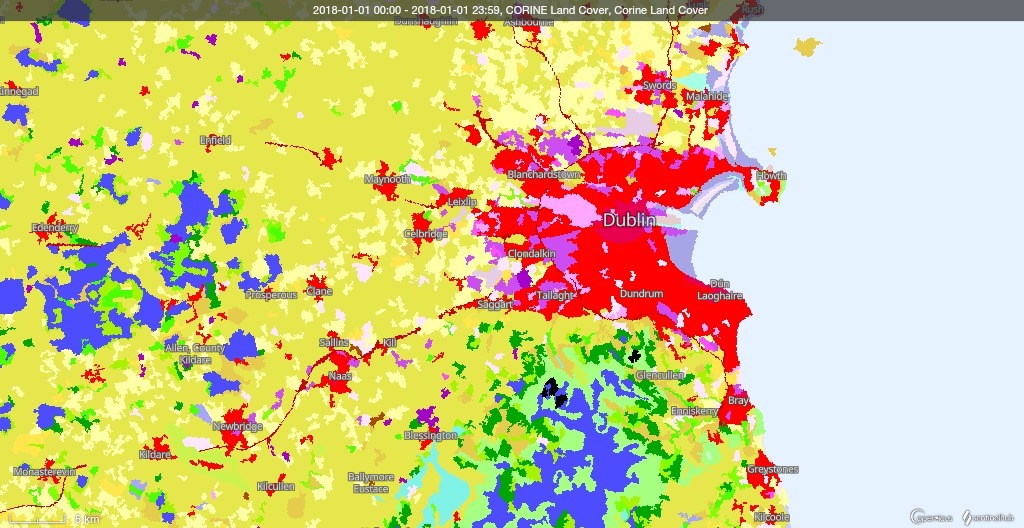


From this destination's category on Wikimedia Commons. Each photograph is credited to its own author under its own licence.
The guide text on this page is from the Wikivoyage article Dublin, written by Wikivoyage contributors and published under CC BY-SA 4.0. The authors are listed in the article’s edit history. It has been shortened and re-laid-out for this page; that adapted text is available under the same licence. Nothing else on this page is.
Wikivoyage is written by travellers, not by us. Opening hours, prices and whether a place still exists are exactly the details that go out of date, so check anything you are relying on.
“3,097 readers a month” and the ranking are ours, counted from Wikimedia’s published pageviews (CC0) — the median of twelve complete months. They count people reading about a place, which is not the same as people going there.