Why Black Friday discounts can leave shops worse off: the margin maths
Drop this at dinner: A shop with a 40 per cent margin that knocks 20 per cent off has to sell twice as much just to stand still, which is why Which? could not find a single Black Friday deal last year that was actually at its cheapest on the day.
Black Friday falls on 27 November this year, with Cyber Monday on 30 November, and the retail industry is heading into it braced for a hard sell. PayPal research among 1,000 UK e-commerce decision-makers, published on 17 November, found 85 per cent expect to rely more on discounts and promotions this Christmas than last year. At the same time, a survey of shoppers by the marketing platform Omnisend suggests UK spending across Black Friday and Cyber Monday could fall by 32 per cent, to about £9.9 billion, with the average planned spend down from £390 to £267. More discounting aimed at fewer, more cautious customers is a combination that can leave a retailer selling a great deal and earning very little, and the arithmetic of a sale shows why.
Where a discount comes from
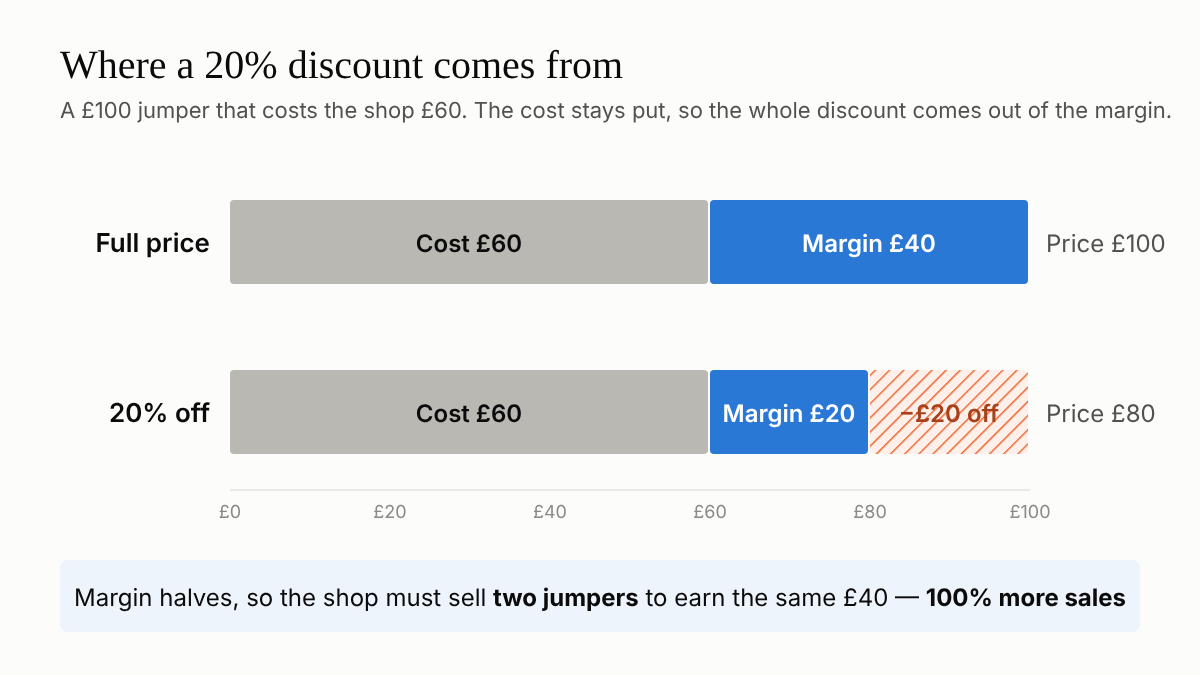
A discount comes entirely out of the margin, not out of the price as a whole. Take a jumper that sells for £100 and costs the retailer £60 to buy in. The £40 difference, the gross margin, is what has to pay for rent, staff, delivery and, eventually, profit. Cut the price by 20 per cent and it falls to £80, but the jumper still cost £60, so the margin halves to £20. To earn the same £40 the shop now has to sell two jumpers instead of one: a 100 per cent increase in volume for a fifth off the price.
The rule, and why it gets steep so quickly
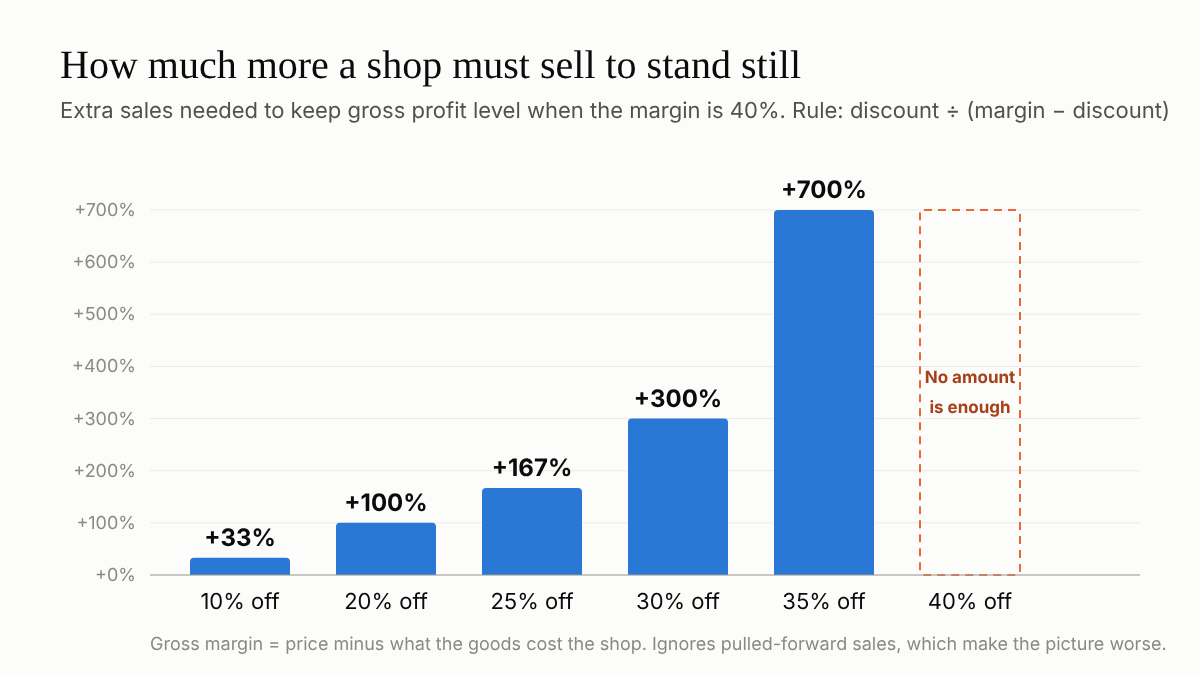
The general rule is that the extra sales needed to keep gross profit level equal the discount divided by the margin minus the discount. With a 40 per cent margin, 10 per cent off needs a third more sales, 20 per cent off needs double, 30 per cent off needs four times as many and 35 per cent off needs eight times as many. At 40 per cent off the margin disappears completely and no volume of sales can make it up. Some of the extra sales are not extra at all: they are Christmas purchases that would have been made at full price anyway, simply brought forward by a few weeks.
How retailers make the numbers work
Retailers cope chiefly by making sure the real discount is smaller than the headline one. Suppliers often fund part of a promotion, or make cheaper special models for the sale period, and some stock is ageing and would be marked down regardless. The starting price matters too. The consumer group Which? tracked 175 home, technology and health products at eight large retailers, including Amazon, Argos and John Lewis, for six months either side of Black Friday 2024, and reported in November 2025 that 83 per cent were the same price or cheaper on at least one other date outside the sales period. None was at its cheapest price of the year on Black Friday itself.
The retailers that come out ahead tend to treat the day as advertising: a thin or even negative margin on the headline offers, recovered through new customers, full-price add-ons and the rest of the year's trading. PayPal's own research found 82 per cent of UK online retailers prioritise winning new customers during peak trading.
Sources
This piece was drafted by AI from the public sources named, then read and approved by Michael Rossi before it went up. It explains how something works; it is not advice of any kind.
← Back to StreetOwl