Why a 46 per cent fall needs an 85 per cent rise to recover
Drop this at dinner: Nvidia is down about 46 per cent in seven weeks, which sounds like half-way to zero, but just to get back to where it was it now has to rise 85 per cent.
On Friday 20 November the S&P 500, the index of America's 500 largest listed companies, fell 3.7 per cent to 6,910, its seventh losing day in a row and its longest run of falls since February 2020. That left it 11.6 per cent below its record close of 7,818.93 on 6 October: officially a “correction”, Wall Street's term for a fall of more than 10 per cent from a peak. A fall of 20 per cent is called a bear market.
The Nasdaq lost 10 per cent in the week, its worst since March 2020. Nvidia fell 14 per cent in a day and, according to Reuters, is down about 46 per cent over seven losing weeks, its longest slide since 2008. Several triggers arrived together: Anthropic's record $81 billion stock-market listing rose 17 per cent on its first day, Thursday 19 November, then gave back part of that gain; there were reports that the US Securities and Exchange Commission is examining Nvidia's accounting; and futures markets priced a near-certain Federal Reserve interest-rate rise in December.
Why losses and gains are not symmetrical
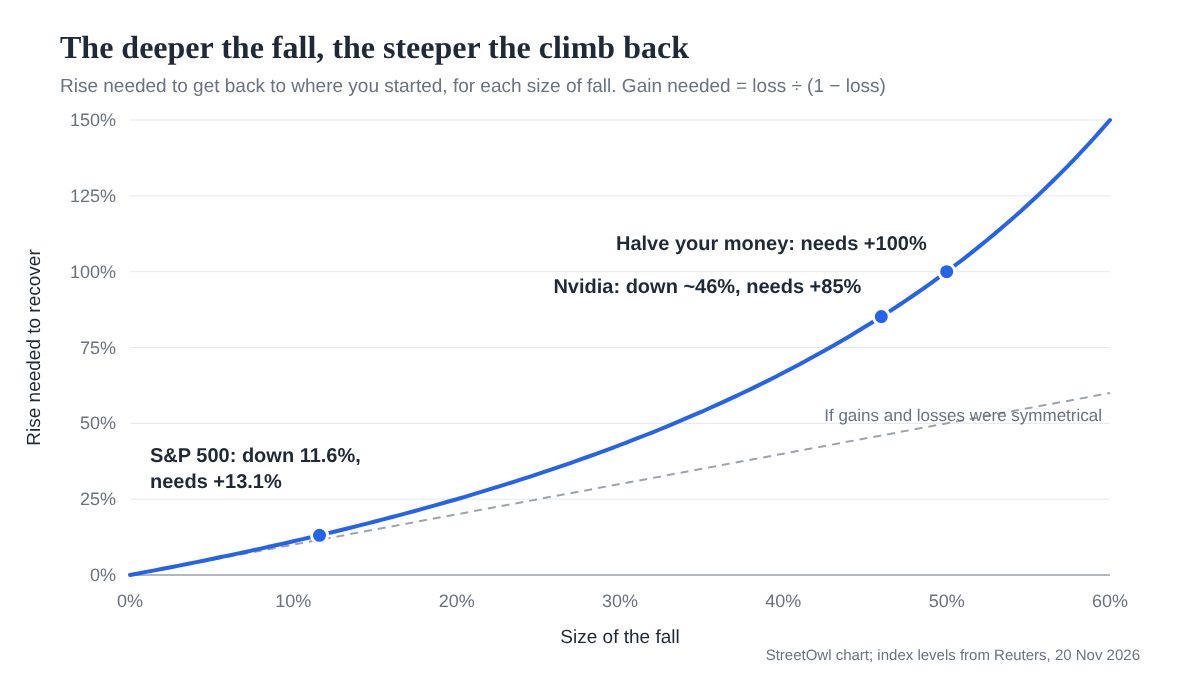
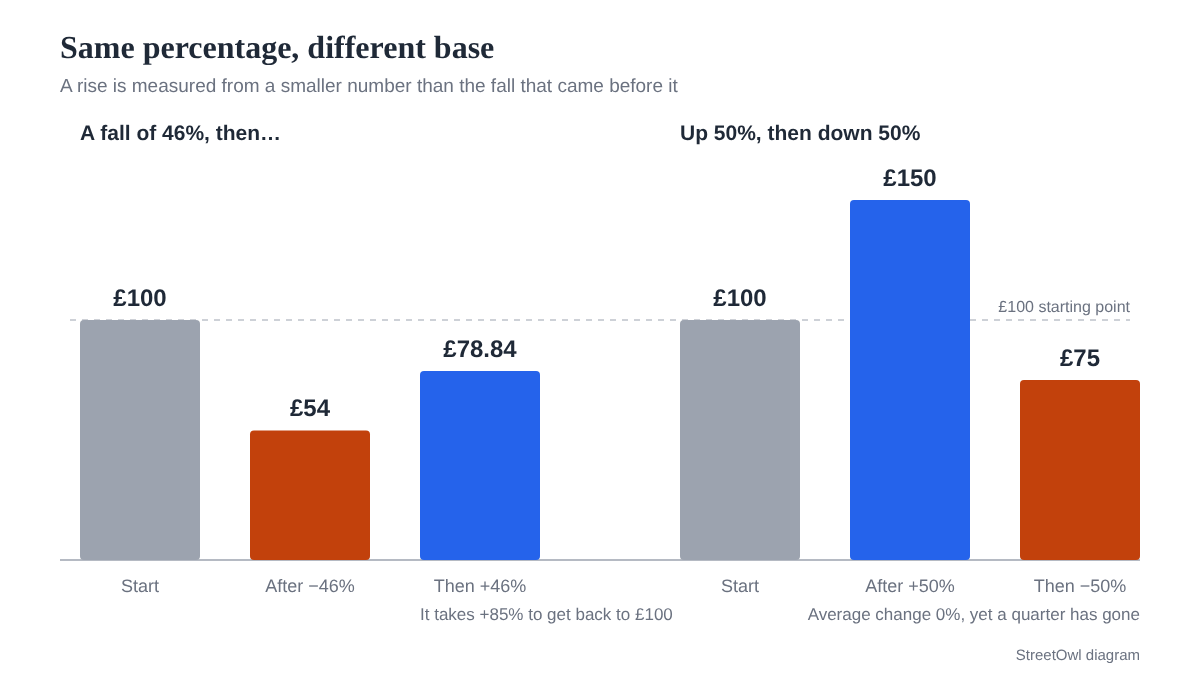
Headline percentages hide an asymmetry: a loss and the gain that follows it are measured from different starting points. A fall of 10 per cent needs a rise of 11.1 per cent to recover. A fall of 46 per cent needs a rise of 85 per cent. Halving an investment means it has to double to get back. The rule is that the gain needed equals the loss divided by one minus the loss, so after Friday the S&P 500 needs to rise 13.1 per cent simply to return to its October record.
The cost of a bumpy ride
The same arithmetic punishes swings. A rise of 50 per cent followed by a fall of 50 per cent turns £100 into £75, even though the average change is zero. Economists call this volatility drag. It is why two investments with the same average return can end with very different sums, the steadier one finishing ahead, and why professional investors pay as much attention to the depth of a fall, known as the drawdown, as to returns.
Sources
This piece was drafted by AI from the public sources named, then read and approved by Michael Rossi before it went up. It explains how something works; it is not advice of any kind.
← Back to StreetOwl