The mortgage and the overdraft: why the Budget shortens the life of Britain's debt
Drop this at dinner: Britain is quietly turning its mortgage into an overdraft: the Budget will sell the smallest share of long-term debt in 35 years, because the pension funds that used to buy it have stopped.
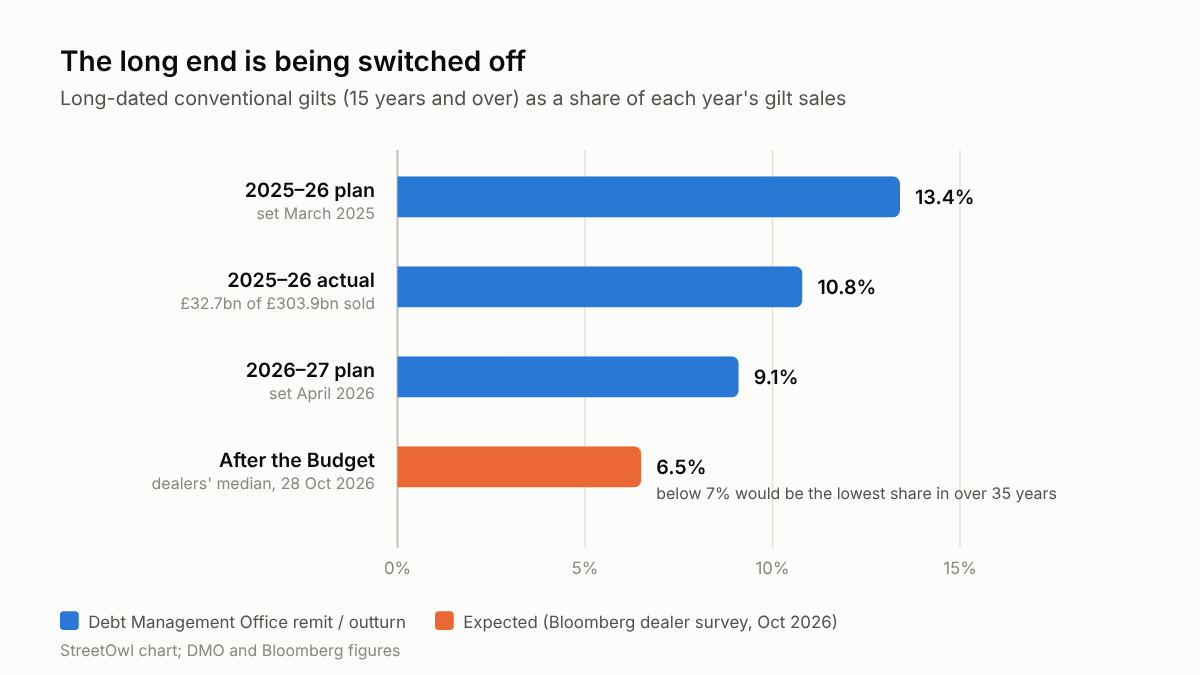
On 28 October 2026 John Healey delivers his first Budget, and the number most people will watch is the tax take. The more interesting one is buried in a document the Debt Management Office publishes alongside it: the gilt remit, which sets out not how much Britain will borrow this year but for how long. Dealers surveyed by Bloomberg expect the share of long-dated gilts, bonds that run for twenty, thirty or forty years, to fall below seven per cent of this year's sales, the lowest in more than 35 years, while short-dated gilts and Treasury bills rise to fill the gap. The April 2026 remit planned £246.2bn of gilt sales with 9.1 per cent in long conventional gilts; the dealers' median for the revised plan is about £249bn with roughly 6.5 per cent long-dated, and net Treasury bill issuance doubling from £5bn to around £10bn or £11bn.
That is a quiet reversal of something Britain was oddly good at. For decades the UK had the longest-dated government debt in the rich world, with an average maturity of about fourteen years on the Debt Management Office's measure (13.8 years at the end of March 2026) against roughly six for the United States, because defined-benefit pension schemes needed assets that paid out for as long as their pensioners lived and would buy fifty-year gilts at almost any price. That captive buyer has gone. The schemes are closed and mature, pension funds' and insurers' share of the gilt market has fallen from 39 per cent in 2008 to about 21 per cent, and the Bank of England, which bought £875bn of gilts under quantitative easing, has been selling them back. On 17 September 2026 it halted sales of anything maturing after 2049 and slowed its overall unwind to about £20bn of sales a year, and thirty-year yields have come down from a six per cent peak at the start of October, the highest since 1998, to about 5.75 per cent.
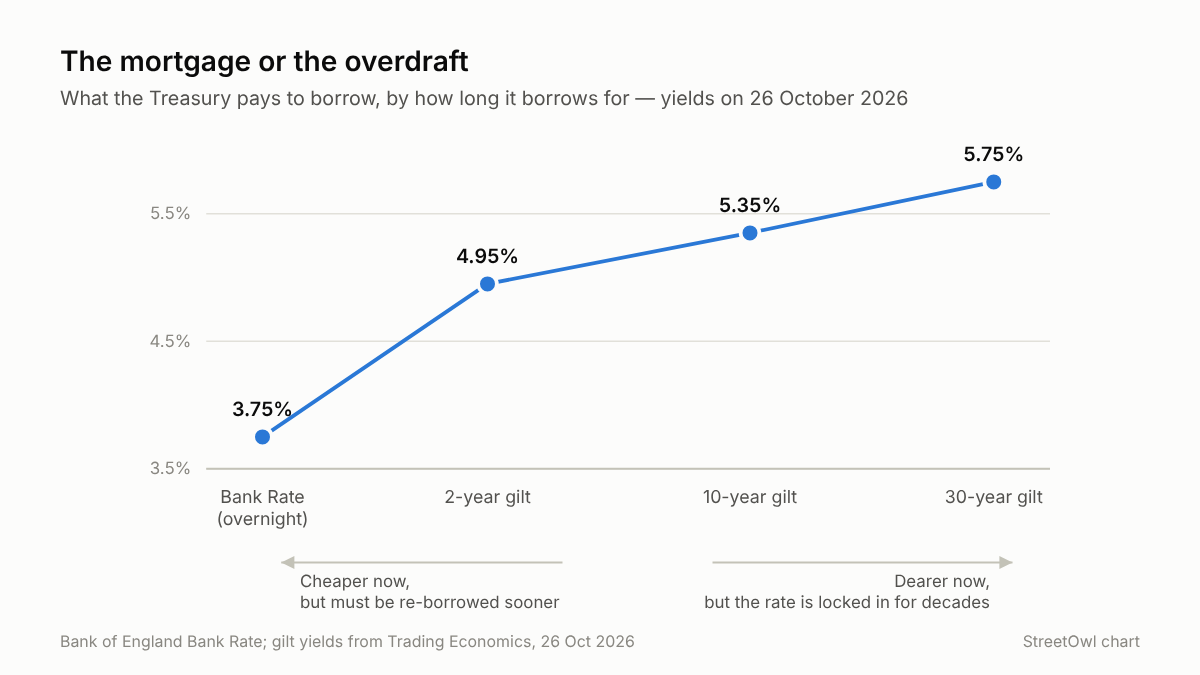
The economics is a trade-off. On 26 October 2026 a two-year gilt yielded 4.95 per cent, a ten-year 5.35 and a thirty-year 5.75, while Bank Rate stood at 3.75. Borrow short and the bill is cheaper and the fragile long end is spared, which is why Bank of America's rates strategists say maturity reduction is a global theme but nowhere needs it more than the UK. But a bond that falls due in two years must be re-borrowed in two years at whatever rate then prevails, so a shorter book is a bigger bet on future interest rates, and every percentage point on yields already adds about £8.4bn a year to debt interest by 2029-30. It is the difference between a mortgage and an overdraft: the overdraft is cheaper this month, and far more exposed next year.
Sources
- UK Debt Management Office, 23 April 2026
- UK Debt Management Office, 21 August 2026
- Briefs (Bloomberg dealer survey), 20 October 2026
- Briefs (Bloomberg on Treasury bills), October 2026
- Newsquawk, October 2026
- Reuters via Euronext, 17 September 2026
- Goldman Sachs, 19 May 2026
- Institute for Fiscal Studies, 16 October 2025
- Trading Economics, 26 October 2026
- Bloomberg, 17 September 2026
This piece was drafted by AI from the public sources named, then read and approved by Michael Rossi before it went up. It explains how something works; it is not advice of any kind.
← Back to StreetOwl