Key-person risk: why Nvidia's board could let its founder go, and what it cost
Drop this at dinner: Nvidia lost the better part of a trillion dollars in value this week when its founder walked out, yet he owned only 3.5 per cent of it, which is exactly why, unlike Mark Zuckerberg, he was never beyond his board's reach.
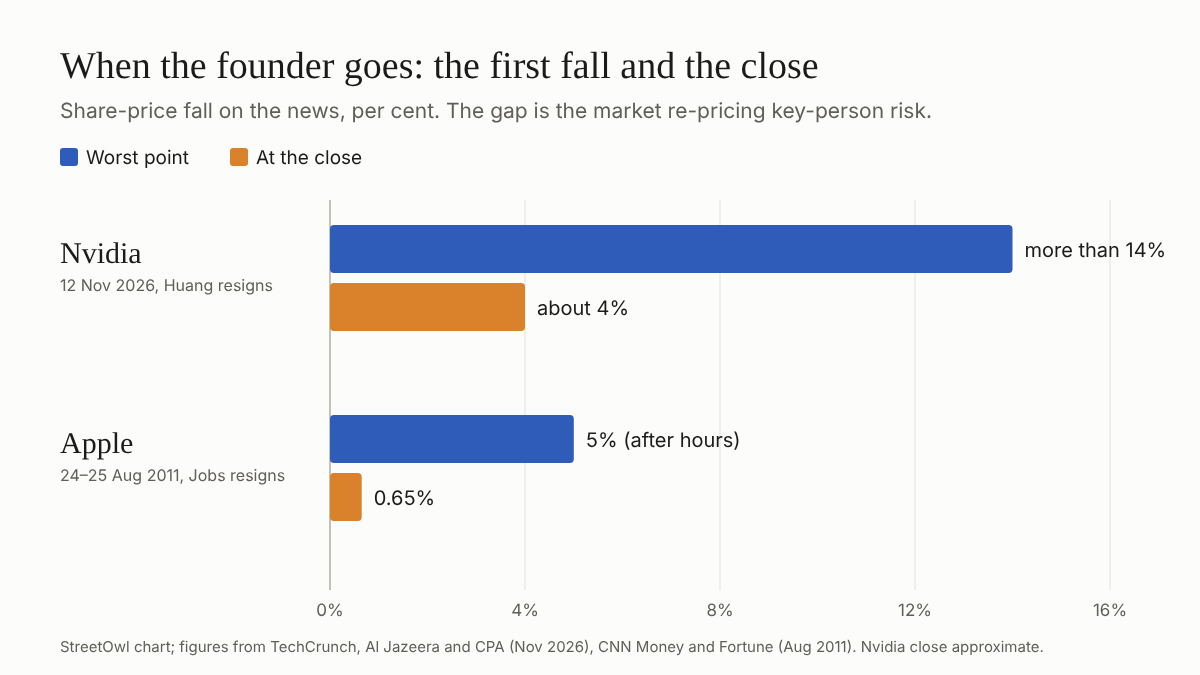
On Thursday Nvidia, the chipmaker whose processors power most of the world's AI, announced that Jensen Huang had resigned as chief executive and left the board, 33 years after co-founding it. Its finance chief, Colette Kress, is running the company for now, and Harvey Jones, a director since 1993, has become its first-ever chair. The company gave no reason. It followed a week of reports about Huang's private life and an independent inquiry the board had opened into reports that he had been targeted by Chinese intelligence; the board says it has no reason to believe national security was compromised. The shares fell more than 14 per cent within hours, then clawed most of it back to close a few per cent down. Since the previous Friday they had been down as much as 19 per cent, more than $855 billion, on a company worth about $5.9 trillion at its October peak.
That swing is the market pricing what investors call key-person risk: the slice of a company's expected future profits that depends on one person's judgement. A share price is a guess at all the cash a business will ever earn, so when the person steering it goes, investors have to guess again, and how hard they lurch depends on what sits behind him. Huang ran a flat company with about 60 people reporting directly to him and no heir apparent, so the first reaction was close to panic. Apple in August 2011 is the contrast: Steve Jobs resigned, the shares fell 5 per cent after hours and closed the next day just 0.65 per cent lower, because Tim Cook had already run the company during Jobs's earlier leaves of absence.
Count the votes
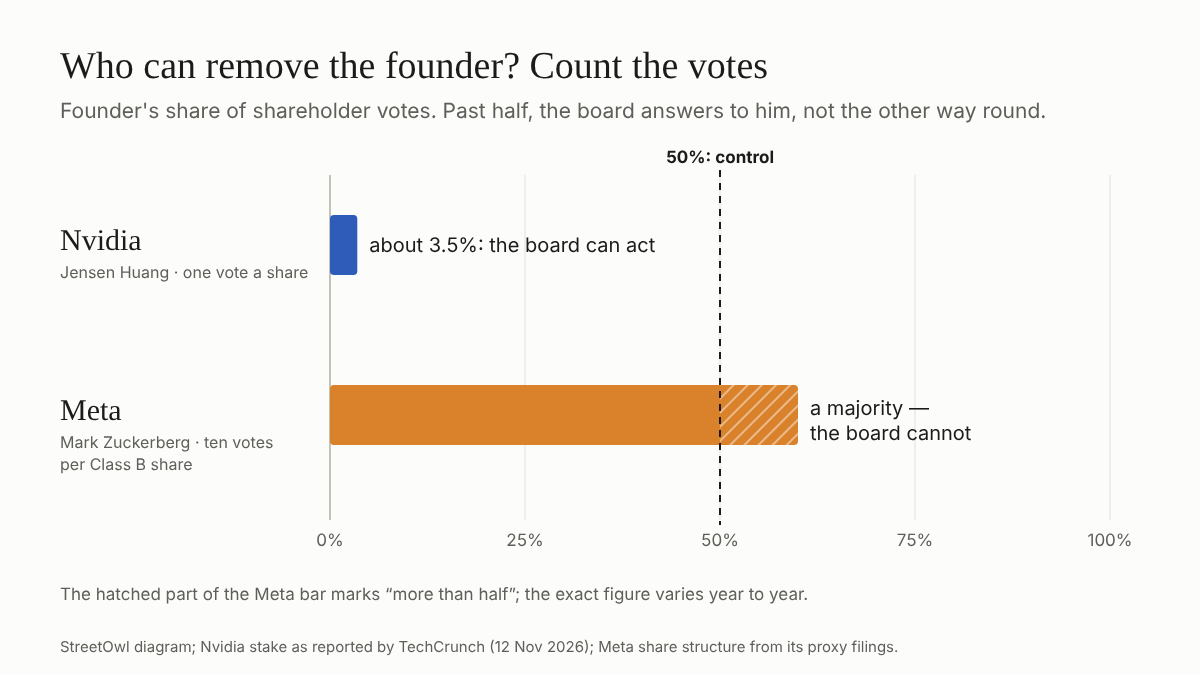
The less obvious lesson is about votes. Huang owns about 3.5 per cent of Nvidia, with one vote per share like everyone else, so his board could always have removed him. Mark Zuckerberg's ten-vote Class B shares give him a majority of Meta's votes, so his board cannot. Founder-controlled shares protect a visionary from impatient investors; they also take away the board's off-switch for exactly the kind of week Nvidia has just had.
Sources
This piece was drafted by AI from the public sources named, then read and approved by Michael Rossi before it went up. It explains how something works; it is not advice of any kind.
← Back to StreetOwl