How does buy now, pay later make money?
Drop this at dinner: When you pay in three with no interest, the interest is still paid: the shop pays it, by handing the lender a few per cent of the price.
Since 15 July 2026, buy-now-pay-later lending in Britain has been regulated by the Financial Conduct Authority. Firms such as Klarna and Clearpay must now be authorised, must run proportionate affordability checks before lending, and must let customers take complaints to the Financial Ombudsman Service. The FCA puts the number of users at around 11 million, and the market grew from £0.06 billion in 2017 to more than £13 billion in 2024. Black Friday, on 27 November, is the first under the new rules. The puzzle at the heart of the product is simple: if the shopper pays no interest, who pays for the loan?
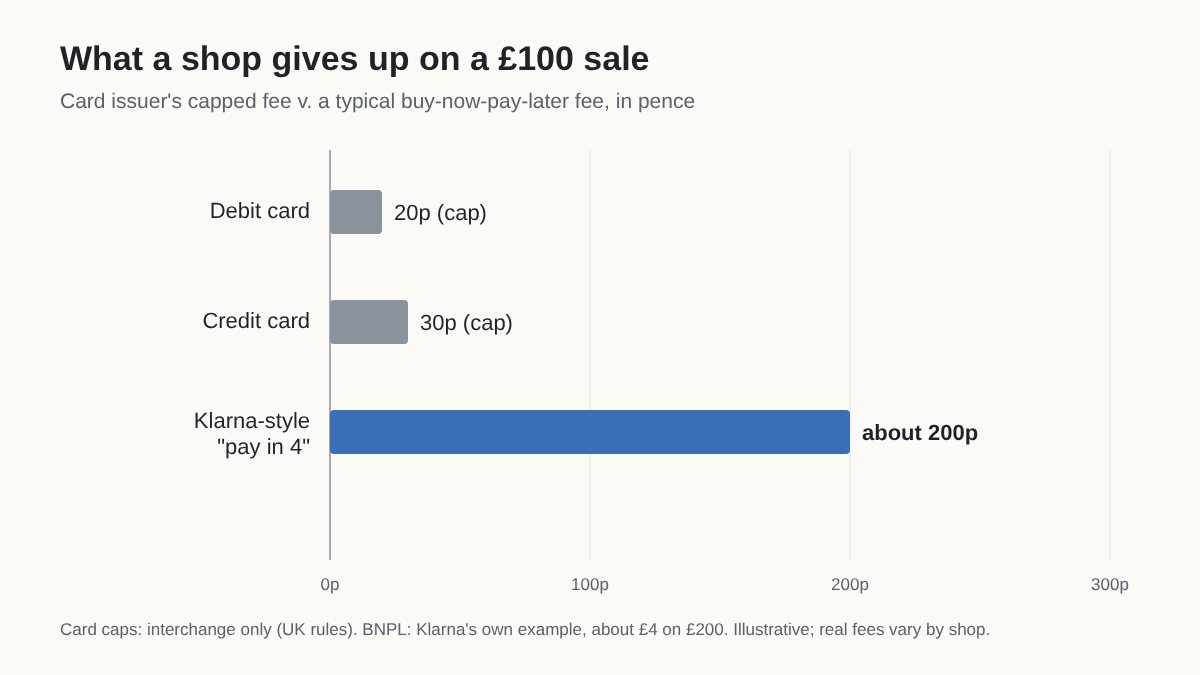
The shop does. When a £200 coat is bought in instalments, the lender pays the retailer at once, but not the full price: in Klarna's own published example, about £196. That fee of roughly 2 per cent is the business. It is far more than a shop pays to take a card, where the card issuer's share, known as interchange, is capped in the UK at 0.2 per cent of the sale for debit cards and 0.3 per cent for credit cards. Retailers accept the higher cost because the option sells: shoppers who can spread the cost and take the item home first are more likely to complete a purchase. For the shop, the fee works more like a marketing cost than a payment charge.
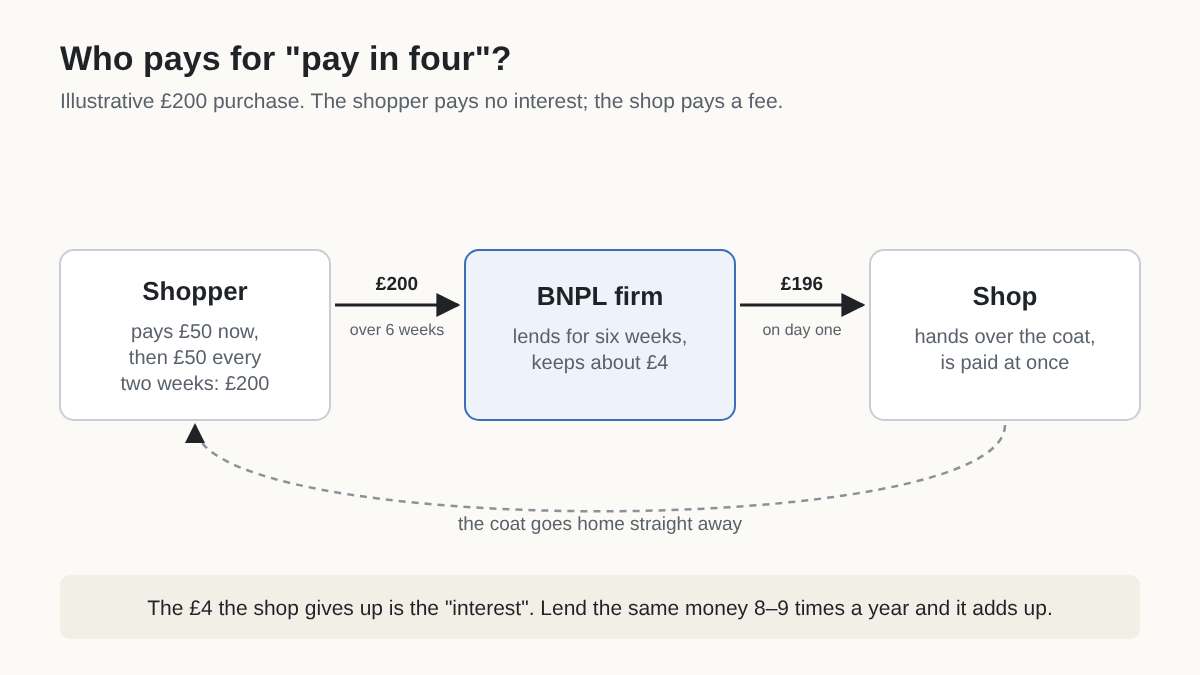
The rest of the model depends on speed. A six-week loan is repaid quickly, so the same pound can be lent eight or nine times in a year, and a 2 per cent cut each time comes to roughly 17 per cent a year on the money lent, before any bad debts. Klarna's results for April to June 2026 show the shape of it: $36.6 billion of purchases, $1.04 billion of revenue, a take of 2.84 per cent of spending, and provisions for bad loans of 0.52 per cent of spending. Its profit for the quarter was $9 million. The margin is thin because the difficult part is not lending but avoiding lending to people who cannot repay. UK Finance figures cited by Finextra show more than 3 million customers missed a repayment in 2024, which is the problem the new affordability checks are meant to address.
Sources
This piece was drafted by AI from the public sources named, then read and approved by Michael Rossi before it went up. It explains how something works; it is not advice of any kind.
← Back to StreetOwl