Why your car insurance is about to go up again, and why that was decided two years ago
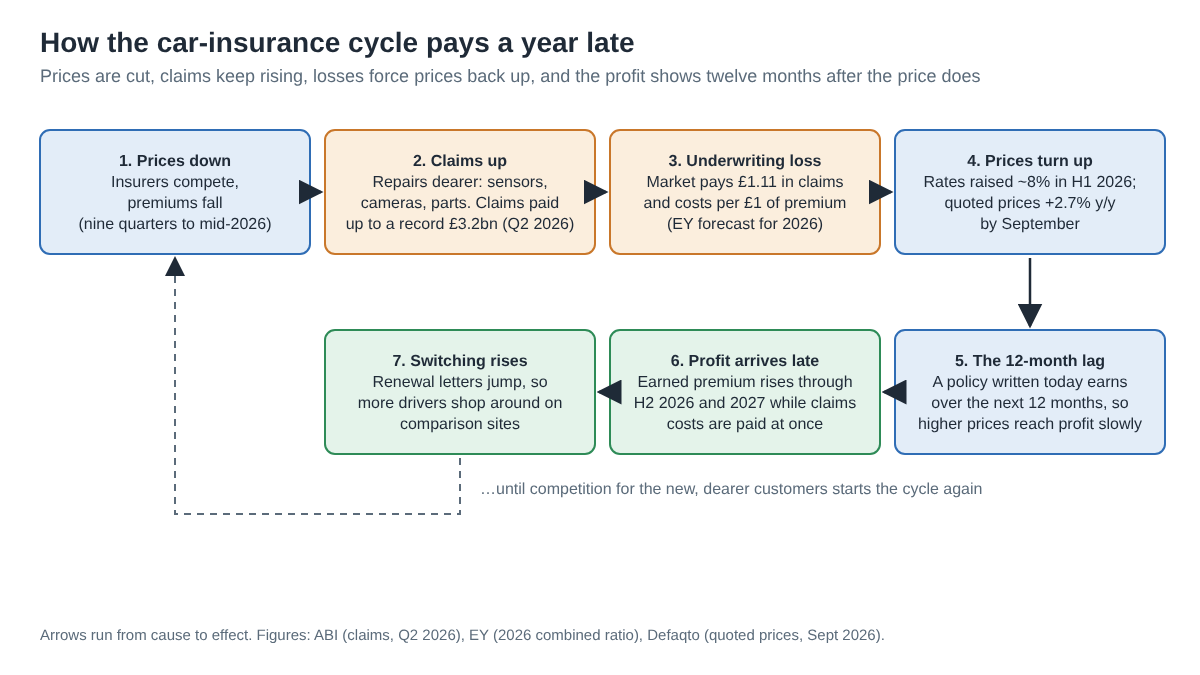
Insurers cut prices to win customers, repair bills kept rising, so the market now pays out more than it takes in, so prices are turning up, and because a policy earns over twelve months the effect on bills and on the insurers' books arrives a year later.
A price war, then the bill
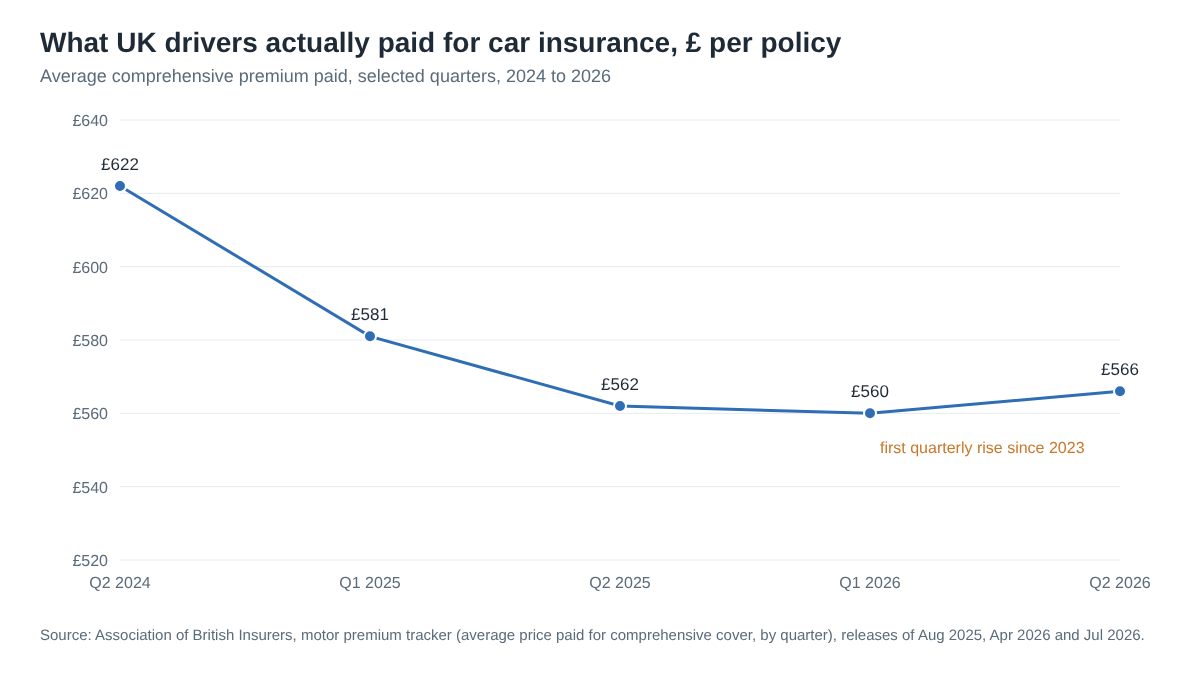
The average comprehensive car insurance quote peaked at £995 in December 2023, according to the Confused.com price index, and then fell for nine quarters in a row as insurers competed for drivers. The Association of British Insurers, which measures what people actually paid rather than what they were quoted, puts the average premium at £566 in the second quarter of 2026, down from £622 two years earlier.
The cost of a crash went the other way. A modern bumper carries cameras and sensors, so a minor knock is a computer repair. The ABI paid out a record £3.2bn in motor claims in the three months to June 2026, 7% more than a year earlier, with the average claim at £4,900. Repairs are roughly two thirds of everything insurers pay. In the first quarter of 2026 the average accidental-damage claim rose 8% in a single quarter to £3,699.
When every pound in costs £1.11
Put falling prices and rising claims together and the sums stop working. The accountancy firm EY expects the UK motor market to pay out £1.11 in claims and costs for every £1 of premium it collects in 2026, a combined ratio of 111%. Insurers can run at a loss for a while, but not for long: the reinsurers who stand behind them, and the capital rules they work under, force prices back up.
That is now happening. Several large insurers raised their rates by high single digits in the first half of 2026, while claims inflation runs at 5% to 7%. The quoted market followed with a lag: Defaqto's index of competitive quotes ended September 2026 2.7% higher than a year earlier, the first annual rise since 2023, although the pace slowed through the summer and September itself was flat.
Why the effect arrives a year late
A car policy is priced on the day you buy it but covers you for twelve months, so the money is earned a month at a time. Claims, by contrast, are paid at today's garage prices as soon as they happen. A price rise applied in the spring of 2026 therefore shows up in insurers' earned income gradually through the second half of 2026 and most of 2027. The same lag worked in reverse on the way down: the price cuts of 2024 and 2025 only became fully visible as losses in 2026.
For households the sequence is the mirror image. Drivers who renewed in 2025 enjoyed the price war; drivers renewing from now on will see the correction. Renewal letters that jump are also what send people to comparison websites, so switching rises just as prices do, and the comparison sites earn a fee whichever insurer wins the customer.
What to watch
The ABI's quarterly premium tracker shows what drivers actually paid; a second consecutive quarterly rise would confirm the turn. Defaqto and Confused.com publish quoted prices each quarter. The Office for National Statistics reports the motor insurance component of inflation every month. The regional spread is wide: Defaqto found quotes down 1% in London over the year to September and up 16.3% in Northern Ireland.
Sources
- Insurance Edge, Defaqto motor insurance price index Q3 2026, 15 October 2026
- Insurance Times, motor insurance payouts hit record £3.2bn in second quarter (ABI data), 30 July 2026
- Insurance Business UK, Confused.com price index and ABI claims data, June 2026
- LBC / Press Association, ABI motor premium tracker Q2 2025, 13 August 2025
- GlobeNewswire, half-year financial report of a large UK motor insurer (rate rises, claims inflation 5-7%), 6 August 2026
This piece was researched with AI from the public sources named and written up and checked by Michael Rossi before it went up. It describes how one thing moves another; it names no investment and is not financial advice.
← Back to StreetOwl