Why the plane that can't be built is paid for in the engine workshop
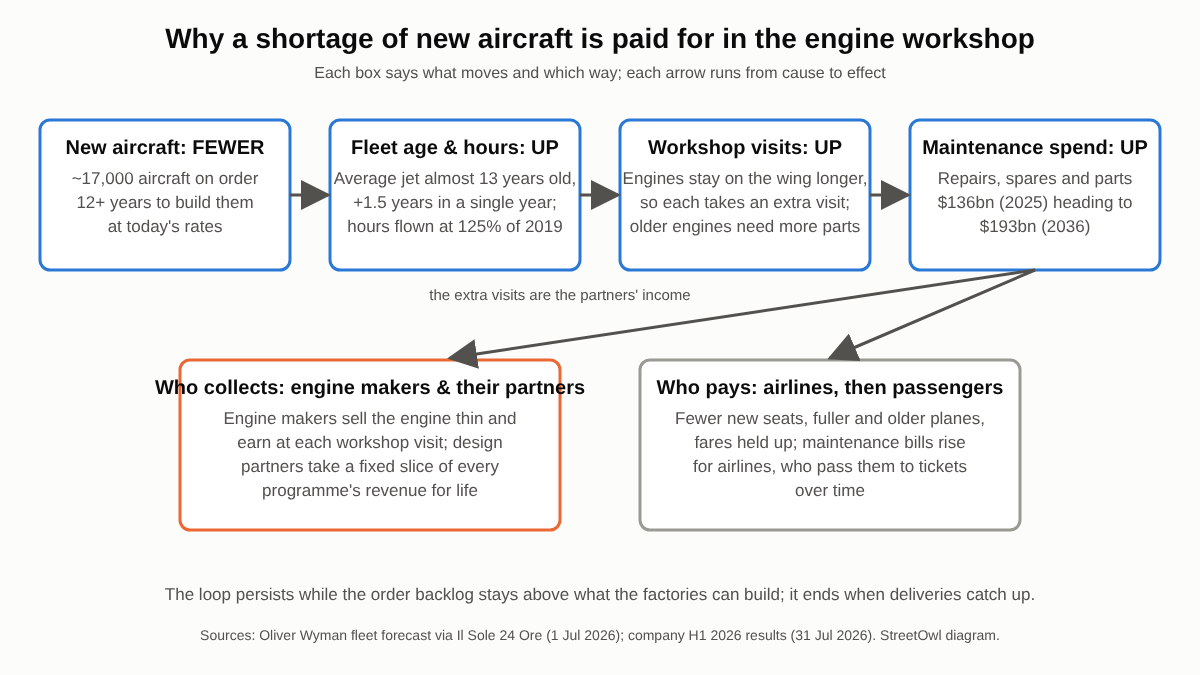
Airbus and Boeing cannot build jets fast enough, so airlines keep old ones flying, so old engines go through more workshop visits, so the people who make and design engine parts are paid more for every year the shortage lasts.
A shortage of 17,000 aircraft
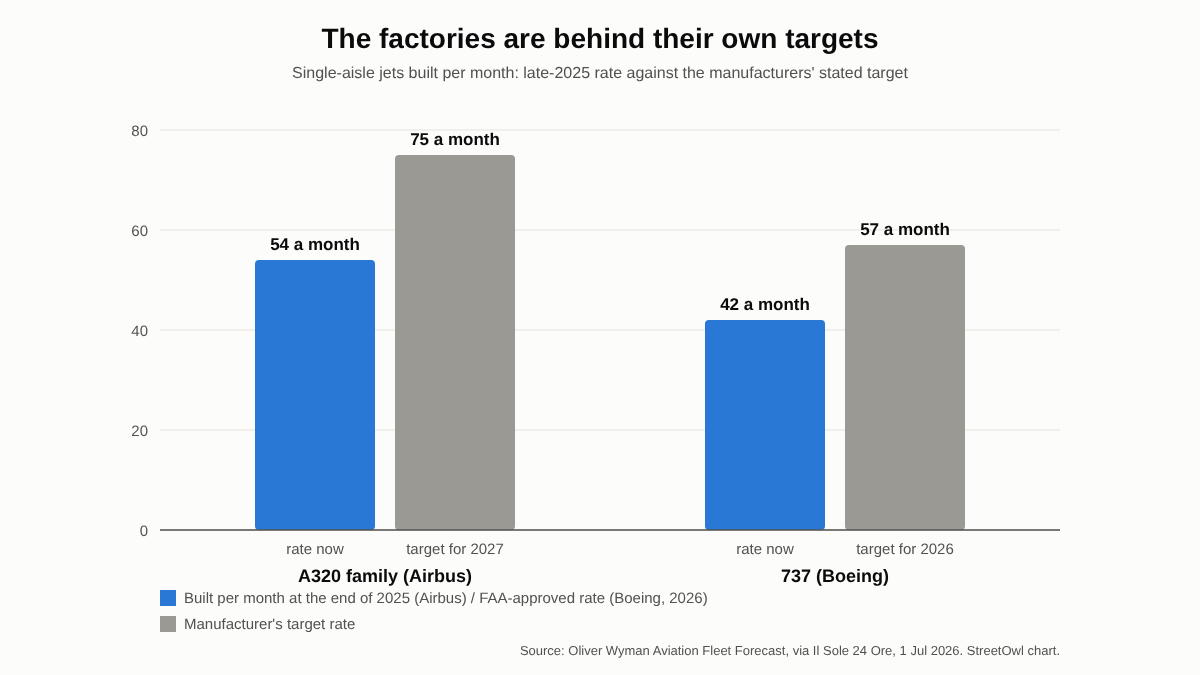
At the start of 2026 the world's airlines had about 17,000 aircraft on order that had not been delivered, according to Oliver Wyman's annual fleet forecast (1 July 2026). At today's build rates that backlog takes more than twelve years to clear. Airbus was making 54 of its A320-family jets a month at the end of 2025 against its 75-a-month goal for 2027; Boeing is allowed by the US regulator to make 42 737s a month against its own 57-a-month goal. Oliver Wyman reckons more than 6,000 aircraft that should have been delivered by 2030 will not be.
The result is a fleet that is getting old quickly. The average commercial jet was just under 13 years old in 2025, about a year and a half older than in 2024, a very large move for a figure that normally shifts by weeks. The fleet is also flying harder: passenger traffic in January 2026 was 125% of its 2019 level and aircraft utilisation was up 2%.
The engine earns its money in the workshop
A jet engine is usually sold at a thin margin or a loss. The money is made later: every five to eight years the engine comes off the wing for a workshop visit costing millions, and the spare parts fitted at that visit are priced by the companies that designed them. An engine that stays in service three or four years longer than planned goes through one more visit than anyone budgeted for, and the oldest engines need the most work. More hours per engine mean the visits come round sooner as well.
None of this needs a single new aircraft to be delivered; it is what happens because they are not. The global maintenance, repair and overhaul market was worth $136bn in 2025 and is forecast to reach about $193bn by 2036.
Who collects, and who pays
The engine makers collect, and so do the design partners who share their programmes. Under contracts known as risk and revenue sharing partnerships, a parts maker designs and builds structural parts of an engine at its own cost and in return takes a fixed share of that programme's revenue for the life of the programme, workshop visits included. One British partner in these arrangements reported engine-division revenue up 19% in the first half of 2026, with its aftermarket income growing in the mid-teens and repairs up 27%, while its civil engine partnerships grew 18% (results of 31 July 2026). The partners' share of 70% of the world's flight hours means an old A330 or 737 kept flying because its replacement is late pays them at every visit without their lifting a spanner.
Airlines pay, and then passengers. Fewer new seats keep fares firmer than they would otherwise be, and older aircraft cost more to maintain and burn more fuel, costs that reach ticket prices over time. The loop persists while the order backlog stays above what the factories can build; it ends when deliveries catch up, which on current rates is not before 2030.
Sources
This piece was drafted by AI from the public sources named, then read and approved by Michael Rossi before it went up. It describes how one thing moves another; it names no investment and is not financial advice.
← Back to StreetOwl