Why the New Zealand dollar is gaining on the Canadian dollar: milk is dear and oil is not
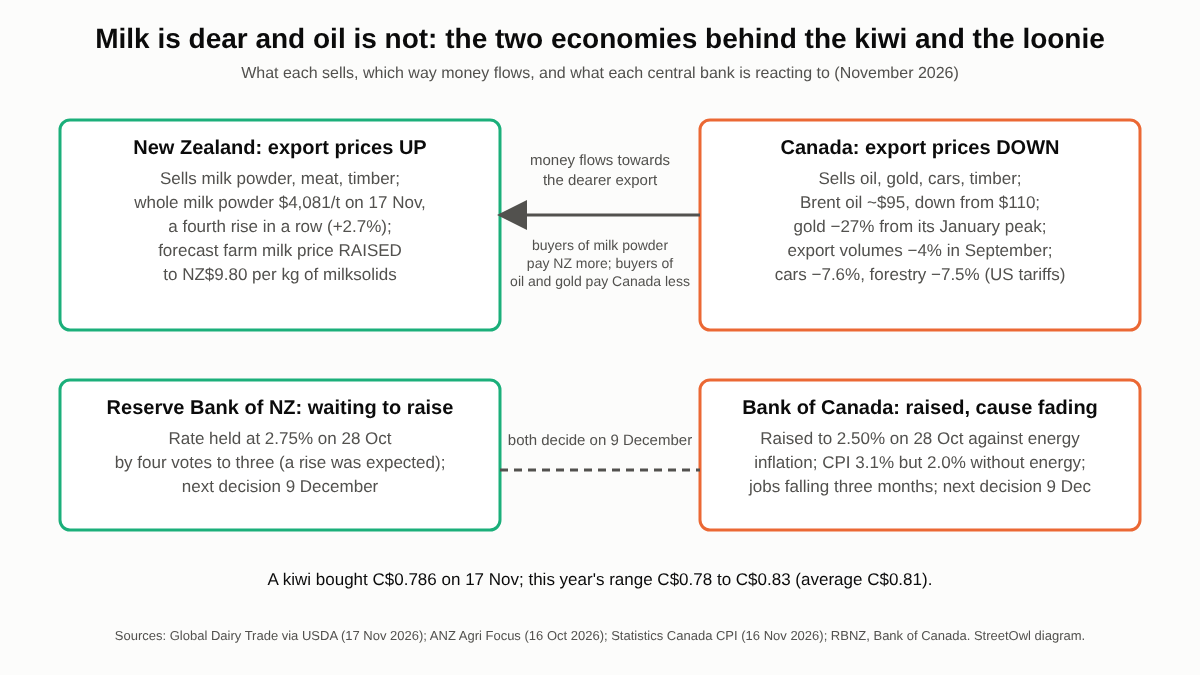
New Zealand sells milk powder whose price has risen at four auctions running, Canada sells oil and gold whose prices have turned down, so money flows towards the kiwi and away from the loonie, and both central banks decide on the same day in December.
What each country sells
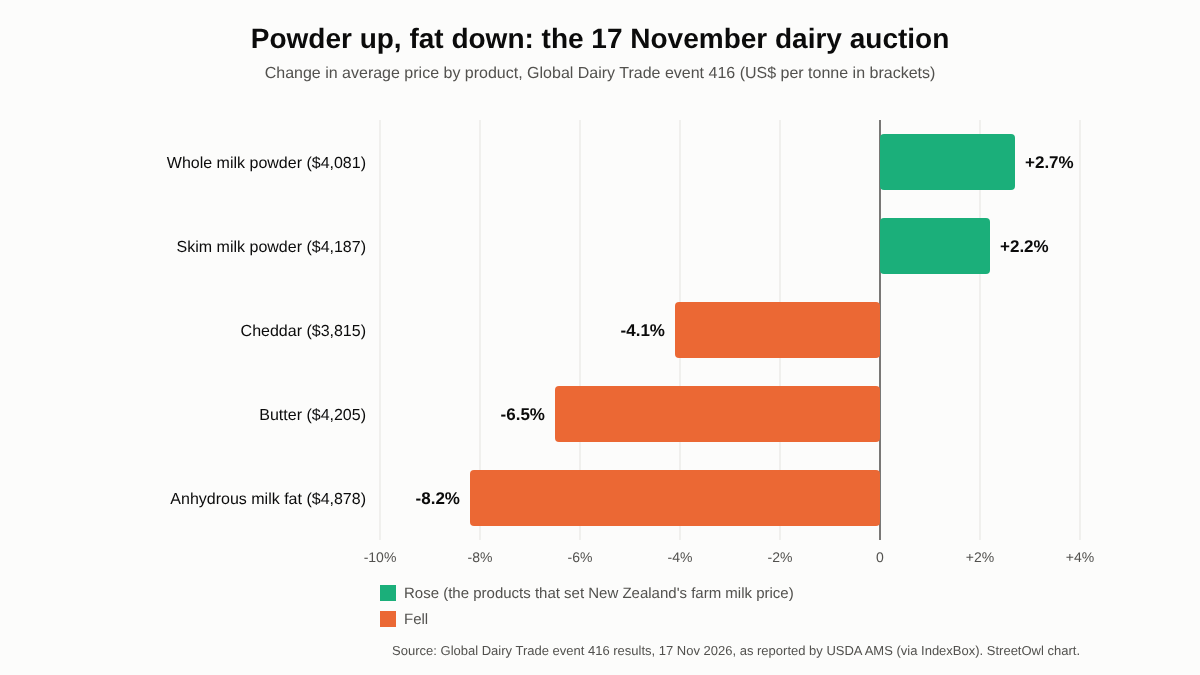
New Zealand's biggest export is dairy, and the price that matters is set at the Global Dairy Trade auction every fortnight. At the auction of 17 November whole milk powder rose 2.7% to $4,081 a tonne and skim milk powder 2.2% to $4,187, the two products that set the farmgate milk price; butter fell 6.5% and anhydrous milk fat 8.2%, which is why the headline index was flat. ANZ raised its forecast for the 2026/27 farm milk price to NZ$9.80 per kilogram of milksolids from NZ$9.20 in October, with milk production up 4.3% on the year, and the season's peak collections run through December.
Canada's biggest exports are oil and gold. Its exports rose 15.5% in the first nine months of 2026, but most of that rise was the price of oil and gold rather than more barrels or ounces, and both prices have since turned: Brent crude is about $95 after $110 in the autumn, and gold is 27% below its January peak. Statistics Canada's September figures showed export volumes down 4%, with cars down 7.6% and forestry down 7.5% under American tariffs.
What the two central banks are reacting to
The Reserve Bank of New Zealand held its cash rate at 2.75% on 28 October by four votes to three when a rise had been expected; its two-year government bond yields about 3.85%. Unemployment is 5.7%. Its next decision is on 9 December.
The Bank of Canada raised its rate to 2.50% on 28 October, reacting to inflation that was 3.1% in October for a second month. But excluding energy, Canadian inflation was 2.0%; petrol prices fell 2.5% on the month, rents are slowing, and employment has fallen for three months with unemployment at 6.7%. Its two-year bond yields about 3.30%. RBC's economists still expect a further quarter-point rise in December but call the decision finely balanced. The Bank of Canada also decides on 9 December.
Put together: holding New Zealand dollars pays about half a percentage point a year more than holding Canadian dollars, New Zealand's export prices are rising while Canada's are falling, and the Canadian rate rise was aimed at an energy price that is already fading. That combination is why the kiwi has been gaining ground on the loonie.
What could change it, and what it means at home
A jump in the oil price, for instance if the Gulf talks collapsed, would reverse the Canadian side within a day. A further Canadian rate rise on 9 December with a signal of more to come would do the same. On the New Zealand side, a fall in milk powder prices at the auctions of 1 and 15 December, a cautious Reserve Bank on 9 December, or a political upset at the 27 November official election count would weaken the kiwi. A kiwi bought C$0.786 on 17 November; this year's range has been about C$0.78 to C$0.83, with an average near C$0.81.
For a British household the pound is strong against both: £100 bought about NZ$240 and about C$189 on 17 November, close to this year's highs against each, so a holiday in either country is cheaper than it was in the summer (StreetOwl's Holiday money board on the Travel tab shows what £100 buys). Britain imports little from either country directly; the price that reaches a British kitchen from this story is dairy, where New Zealand sets the world price for milk powder, and the recent rise there is a small upward pressure on the cost of milk-based ingredients next year.
Sources
This piece was drafted by AI from the public sources named, then read and approved by Michael Rossi before it went up. It explains why a currency moves; it is not advice to buy or sell any currency and is not financial advice.
← Back to StreetOwl