When a 600-shop discount chain goes bust, where does the spending go?
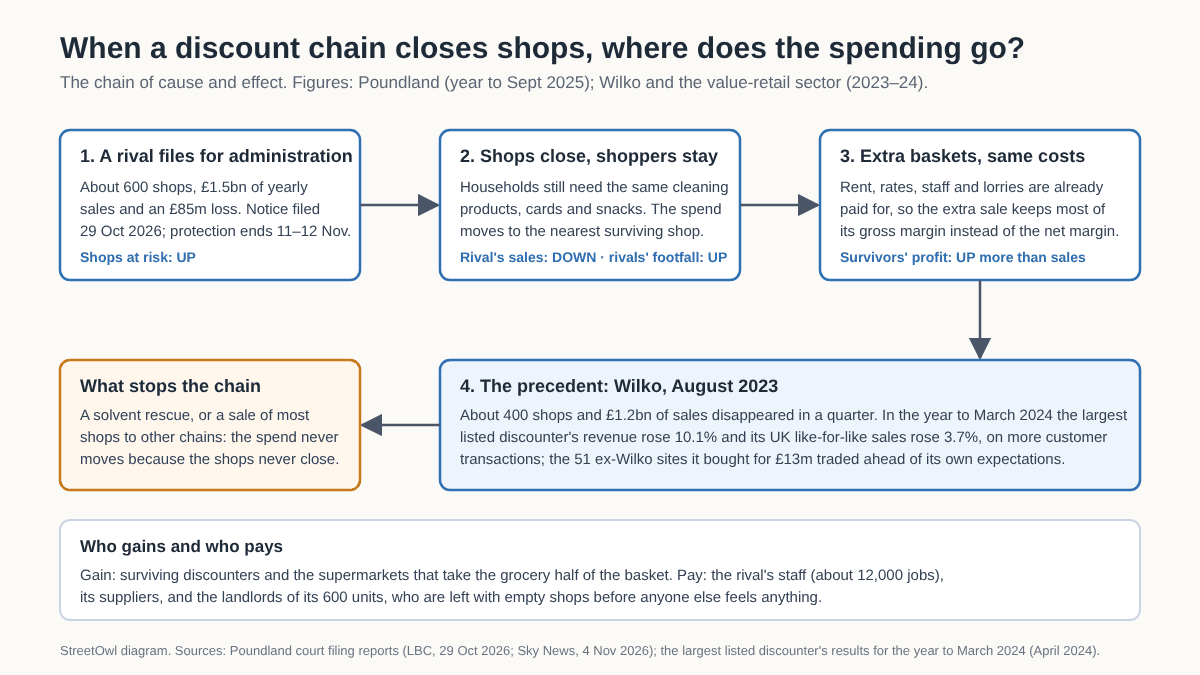
A rival's shops close, but its shoppers still need the same bin bags and birthday cards, so the money walks to the nearest surviving discounter, where it lands on costs that are already paid for.
A chain on a ten-day clock
Poundland filed notice to appoint administrators on the afternoon of Thursday 29 October 2026. That filing gives a company ten working days of protection from its creditors, which run out on Wednesday 11 or Thursday 12 November. The chain has about 600 shops and around 12,000 staff (its owner puts the retail jobs at risk at up to 10,500), took £1.5bn in sales in the year to September 2025, and lost £85m doing it.
Gordon Brothers, an investment firm, bought it for £1 in June 2025, shut more than a hundred shops under a restructuring plan, and put it up for sale in September. On 2 November it rejected the one offer that would have kept the whole business trading, from Martin Property Group, because the offer would not repay a £30m shareholder loan in full. Ministers have since asked for an explanation. All the shops are still open.
Shops close; shoppers do not
Here is the part that is easy to miss. When a shop closes, the spending that went through its tills is not destroyed. A town that spent £2.5m a year in its Poundland still has the same households wanting the same cleaning products, cards, snacks and bin bags. Most of that money crosses the road to whichever discounter is left: Home Bargains, the big retail-park discounters, The Range, Poundstretcher, or the supermarkets for the grocery half of the basket.
The last time this happened at scale was Wilko, in August 2023: about 400 shops and £1.2bn of yearly sales gone in a quarter. In the year to March 2024 the largest listed discounter's revenue rose 10.1% and its UK like-for-like sales rose 3.7%, which it put down to more customer transactions, and the 51 former Wilko sites it bought for £13m traded ahead of its own expectations.
Why the survivors gain more than the sales suggest
A discounter's costs are mostly fixed. Rent, business rates, wages and the lorries that stock the shelves are paid whether a hundred or a hundred and ten people walk in. So an extra basket that arrives from a dead rival is sold by the same staff in the same building, and most of the gross margin on it drops through to profit rather than the much thinner net margin. For a chain making an 8% profit margin on sales, a 2% rise in sales that it did not have to pay for is worth several per cent of profit. It keeps paying for as long as the rival's shops stay shut.
The arithmetic is modest rather than dramatic. If a third of the 600 shops closed and a fifth of their spending landed on one survivor, that would be about £100m of sales, roughly 2% of a large discounter's UK takings. The bigger prize would be a chain that disappeared outright, as Wilko did.
What would stop it
The mechanism only runs on shops that actually close. A solvent rescue, or a sale that hands most of the shops to other chains (The Range, Poundstretcher and two large grocers have all reportedly expressed interest in groups of stores), keeps most of that £1.5bn in the same hands and the same high streets. The government is now pressing the owner to find exactly that outcome.
Who pays is clearer than who gains: the chain's staff, its suppliers, who are told they may not be paid, and the landlords of 600 units, who are left with empty shops before anyone else feels anything. Whatever happens this week, the shopping does not stop; it just changes address.
Sources
This piece was researched with AI from the public sources named and written up and checked by Michael Rossi before it went up. It describes how one thing moves another; it names no investment and is not financial advice.
← Back to StreetOwl