The regulator told the water companies to spend £104bn, and takes back what they don't spend
Ofwat fixed five years of water spending and now claws back money for work not done, so the companies are spending in a rush, so the firms that lay the pipes have their order books filled for the rest of the decade.
The regulator decides how much is spent, not the company
A water company in England and Wales does not choose its own investment budget. Every five years Ofwat sets it. The 2024 price review fixed £104bn of spending for April 2025 to March 2030, about double the previous five-year period, paid for by bills that rise with inflation (CPIH) each April and by adding the spending to each company's regulated asset base, on which it earns a fixed return above inflation for decades.
That is the familiar half of the bargain. The other half was finalised on 17 August 2026: Ofwat now tracks about £38bn of those allowances against named delivery commitments, and money for improvements that are not delivered is returned to customers. The first assessment of the companies' delivery plans is due in December 2026. A company that is paid a guaranteed return on every pound it spends, and loses the pound if it does not, spends.
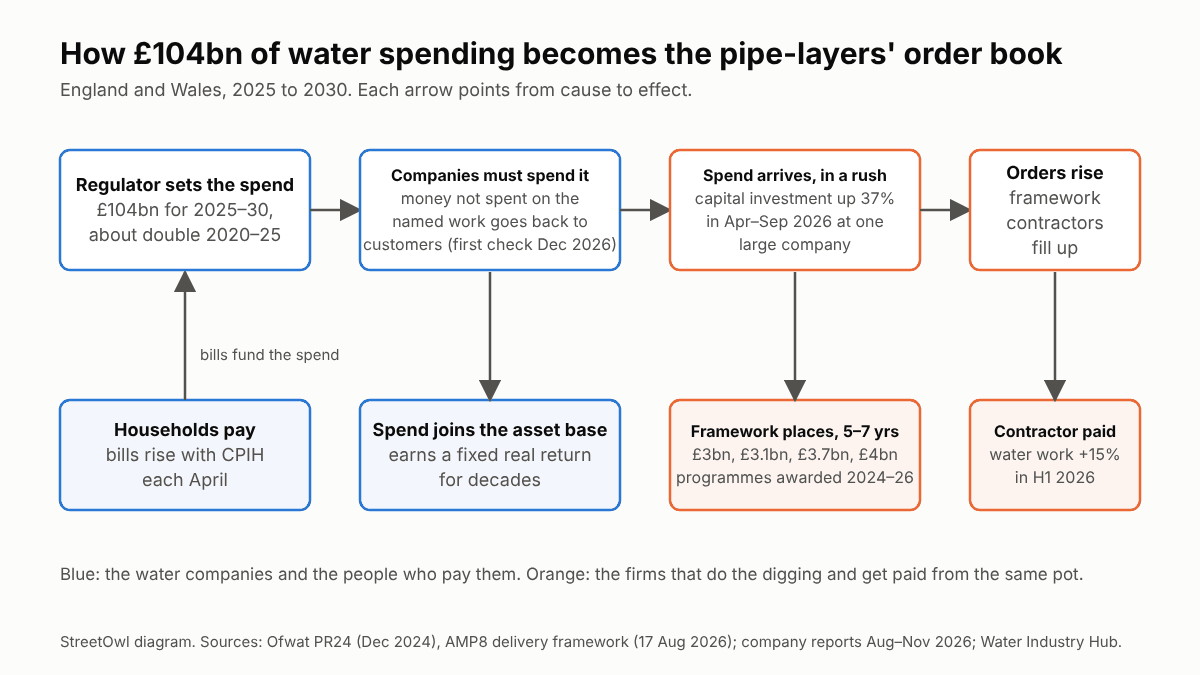
The spending is arriving late and in a rush
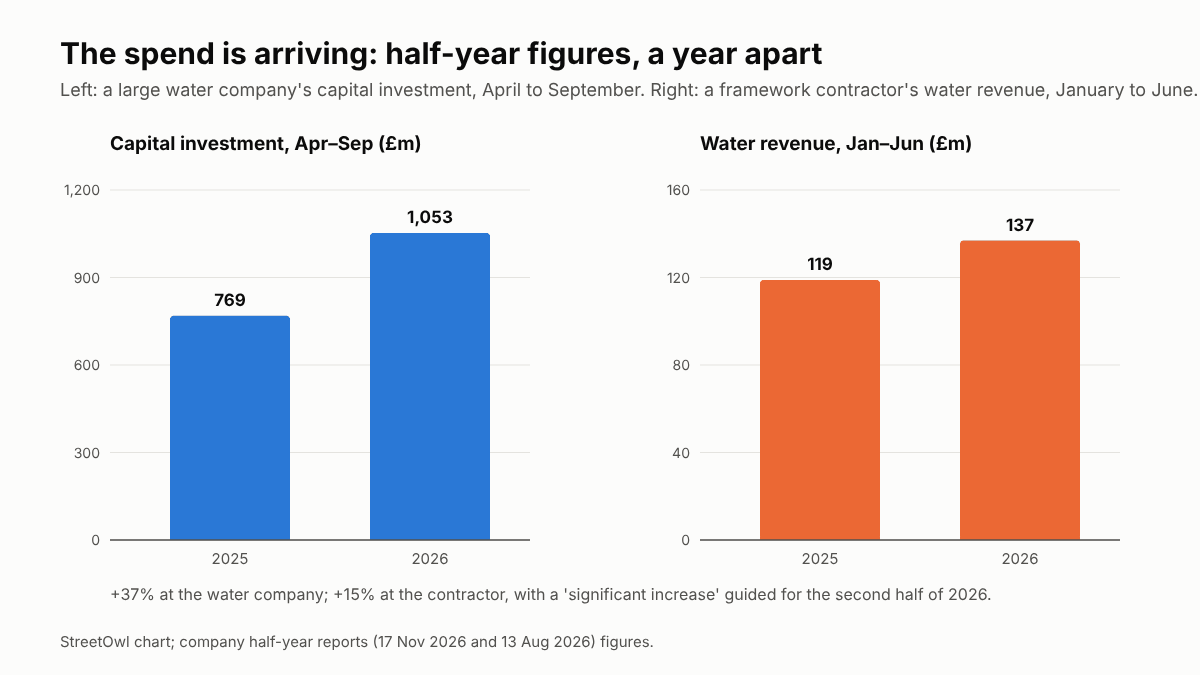
The first year of the new period went slowly: the regulators' first joint report on 29 October 2026 rated seven of sixteen companies off-track on delivery for 2025-26. The second year is different. The Midlands water company reported on 17 November that its capital investment in April to September 2026 was £1,053m, up 37% on the same six months a year earlier, lifted its full-year forecast to £2.3bn to £2.5bn, and said 65% of its five-year programme is now under contract with a goal of 80% by March 2027. The north-west company reported on 12 November that its net regulatory investment in the half was £993m, with more than £2bn to be spent this year, part-funded by £800m of new shares sold in April.
Across the sector the regulator counted £1.8bn of new equity raised to fund the programme. The largest company, which serves London, is still negotiating with its creditors and in November asked them for more time to repay its debts; its spending continues but its payments can be slower.
Who receives the orders
The water companies do not dig the trenches themselves. In 2024 to 2026 they awarded multi-year framework places to a short list of engineering contractors: a £3bn major-projects framework in the north west, a £3.1bn strategic delivery partnership on the south coast, a £3.7bn programme in the west country, a £1.5bn major-projects framework in East Anglia, and a £4bn major-projects framework for London and the Thames valley awarded this month. Most run five to seven years with options to extend.
A framework contractor's revenue is therefore a regulated utility's investment line, indexed to inflation, with the regulator policing whether it is spent. One listed contractor reported water revenue of £136.9m for January to June 2026, up 15.1%, a quarter of its business, and said it expected a significant increase in the second half; its forward workload stood at £7bn. Another said its water work had been flatter in the year to June because of the transition between the old and new five-year periods, which is a way of saying the ramp is still ahead of it.
Who pays, and what could change it
Households pay: the average bill rises each April for five years, and the extra spending is what the rises are for. Contractors earn thin margins, typically 3% to 7% of revenue, so one badly priced job can cancel a year of water growth. The regulator's December decisions matter twice over: it will rule on the companies' claims for extra cost allowances (one company was provisionally allowed £402m in August) and publish its first assessment of delivery, which can move money between years and name the laggards. A financial collapse at the London company would not stop its spending, which is funded through bills, but it would slow payment to the firms doing the work.
Sources
- Smart Water Magazine, 18 November 2026: Severn Trent lifts spending outlook after £1bn first half
- Sharecast via Hargreaves Lansdown, 12 November 2026: half-year earnings surge at United Utilities
- Water Magazine, 17 August 2026: Ofwat finalises framework to monitor AMP8 delivery
- gov.uk, 29 October 2026: regulators publish first joint report on water industry performance
- Smart Water Magazine, 2026: Ofwat reports £1.8bn equity boost as water companies face investment test
- Water UK: the £104bn investment plan
- Costain Group, 13 August 2026: half-year results
- Construction Enquirer, 17 September 2026: road building drives strong results at Galliford Try
- Water Industry Hub, updated 13 November 2026: AMP8 framework winners
- Water Magazine, 10 November 2026: Thames Water secures creditor support for debt maturity extension
This piece was drafted by AI from the public sources named, then read and approved by Michael Rossi before it went up. It describes how one thing moves another; it names no investment and is not financial advice.
← Back to StreetOwl