The fibre is laid. Now the digging stops, and the cash starts
Britain's full-fibre build is nearly finished, so the money spent digging stops while the lines keep earning, which is why the cash the network throws off roughly doubles without the business growing.
Five years of digging comes to an end
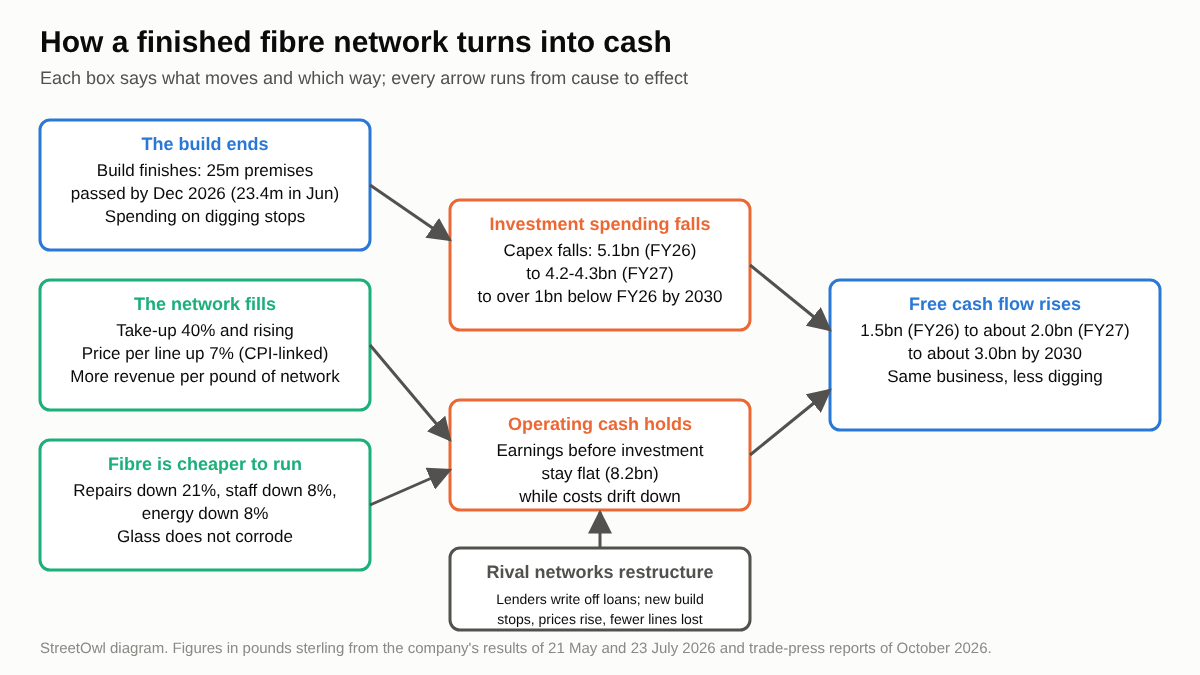
Since 2020 the country's largest network builder has been laying glass fibre past British homes at a rate of about a million premises a quarter at the peak, in a programme priced at up to £15bn. By the end of June 2026 the network had passed 23.4 million homes and businesses, more than two-thirds of the country, and the company says it will reach its 25 million target in December 2026, with an ambition of up to 30 million by 2030 if regulation and the market allow.
A build like this is a fixed cost. Every street takes the same ducts, the same cable and the same engineers whether the people living on it ever buy a connection or not. The money goes out first and the income comes later, which is why the last few years have looked expensive and the next few will look very different.
What happens to the money when the build ends
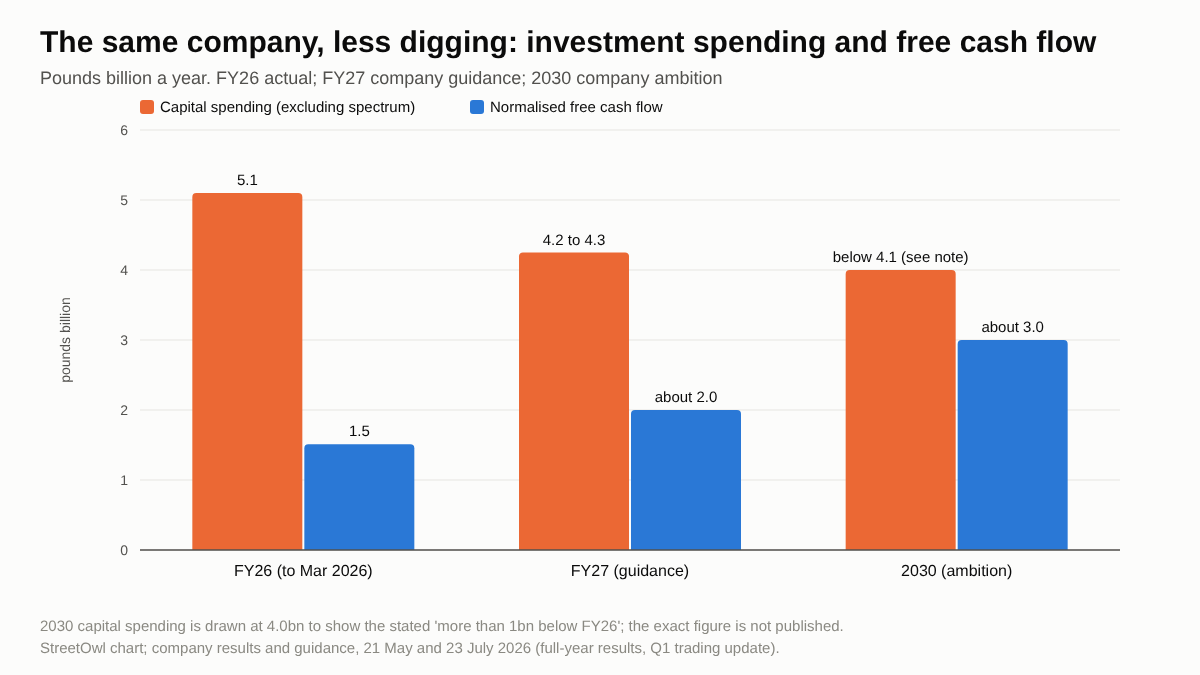
In the year to March 2026 the company spent £5.1bn on capital investment and generated £1.51bn of normalised free cash flow, the cash left after investment, interest and tax. For the current year it guides capital spending down to £4.2–4.3bn and free cash flow up to about £2.0bn, on earnings before investment that it expects to stay flat at around £8.1–8.2bn. By the end of the decade it says capital spending will be more than £1bn below the 2026 level and free cash flow about £3.0bn.
Nothing clever is needed for that to happen. The business does not have to grow; it simply has to stop building. The cash that was going into the ground starts arriving in the bank instead.
Meanwhile the network fills, and gets cheaper to run
Two things happen on the lines already laid. First, people move on to them: 40% of the premises passed had taken a fibre connection by June 2026, up about two percentage points a quarter, with a record 574,000 added in that quarter alone and 9.4 million connected in all. Fibre lines are priced above the old copper ones and the wholesale price rises with inflation each year, so the average monthly revenue per broadband line reached £17.70, up 7% on a year earlier.
Second, glass is cheaper to look after than copper. It does not corrode, it does not pick up water in the joints and it does not need the same army of engineers in vans. Repair volumes in the June quarter were 21% lower than a year earlier, the workforce was 8% smaller at 94,000 and network energy use was down 8%. Every copper line retired is a fault that never gets logged.
The rivals that borrowed to compete are running out of road
Dozens of smaller 'alternative network' builders borrowed heavily to lay their own fibre past the same houses. The largest of them has passed 4.8 million premises but has only 1.1 million customers, lost £397m in its latest accounts, carries £6.06bn of liabilities and was reported in October 2026 to be negotiating a write-off of up to £2bn with its banks. Several others have already restructured their debts.
That matters for the incumbent because its one real weakness is the 825,000 broadband lines it lost to rivals last year, with about 800,000 more expected this year. When a competitor's lenders are writing off their loans, they stop paying for new streets to be dug and start asking for returns, which means fewer cut-price offers. The drain should slow, not speed up.
Who gains, who pays, and what could stop it
Households get a faster, more reliable line and, once the rivals stop discounting, probably a higher bill; the staff who laid the network have mostly done their job; the lenders to the smaller builders take the losses; and the owners of the finished network collect the cash for decades. The regulator proposed in July 2026 to block a new wholesale discount scheme to keep the smaller networks alive, so it can slow the harvest, and the company still carries £20bn of debt and a pension scheme whose June 2026 valuation is not yet agreed. The half-year figures on 5 November 2026 are the next reading on whether the lines lost to rivals are falling.
Sources
- BT Group, Q1 FY27 trading update, 23 July 2026
- Investing.com, BT full-year results, 21 May 2026
- ISPreview, Openreach loses 192k lines as FTTP covers 23.4m, 23 July 2026
- ISPreview, CityFibre reportedly preps up to £2bn haircut on debts, 12 October 2026
- ISPreview, CityFibre builds to 4.8m premises and preps £900m for consolidation, October 2026
- Capital.com, BT share price update (Ofcom discount-scheme proposal of 28 July 2026), 10 August 2026
- BT Pension Scheme, Report and Accounts 2026
- Sunday Telegraph, October 2026 (via ISPreview)
This piece was researched with AI from the public sources named and written up and checked by Michael Rossi before it went up. It describes how one thing moves another; it names no investment and is not financial advice.
← Back to StreetOwl