India halved the duty on Scotch in July. The bottles aren't moving, the tankers are
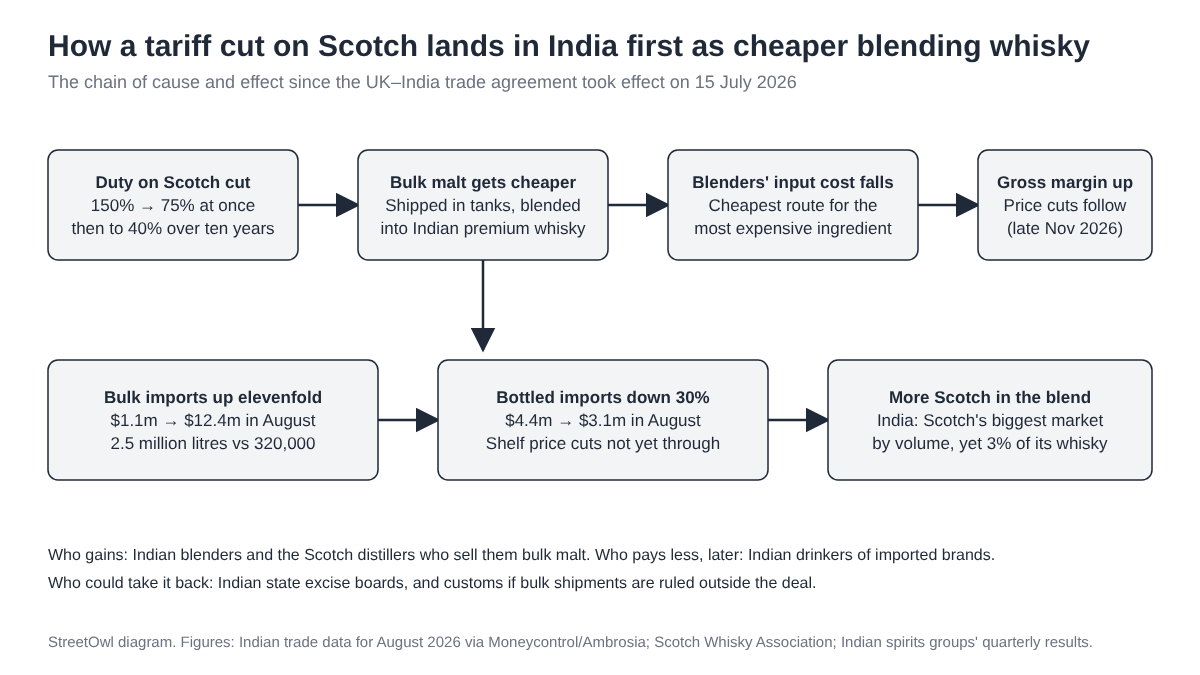
India cut its duty on Scotch from 150% to 75%, so bulk whisky for blending got cheaper, so Indian whisky makers' costs fell first and shelf prices only later.
A duty halved in a day
On 15 July 2026 the UK–India trade agreement came into force and India's customs duty on Scotch whisky fell from 150% to 75% in one step. It will keep falling, to 40%, over ten years.
India is already the biggest market for Scotch by volume: the equivalent of 192 million bottles in 2024 and more than 220 million in 2025, up over 200% in a decade. Yet Scotch is only about 3% of the whisky Indians drink. Most of the rest is Indian whisky, made from Indian grain spirit with a share of imported Scotch malt blended in.
The obvious prediction was cheaper bottles of famous Scotch brands in Indian shops. That is not what the first full month of trade data shows.
The tankers moved before the bottles
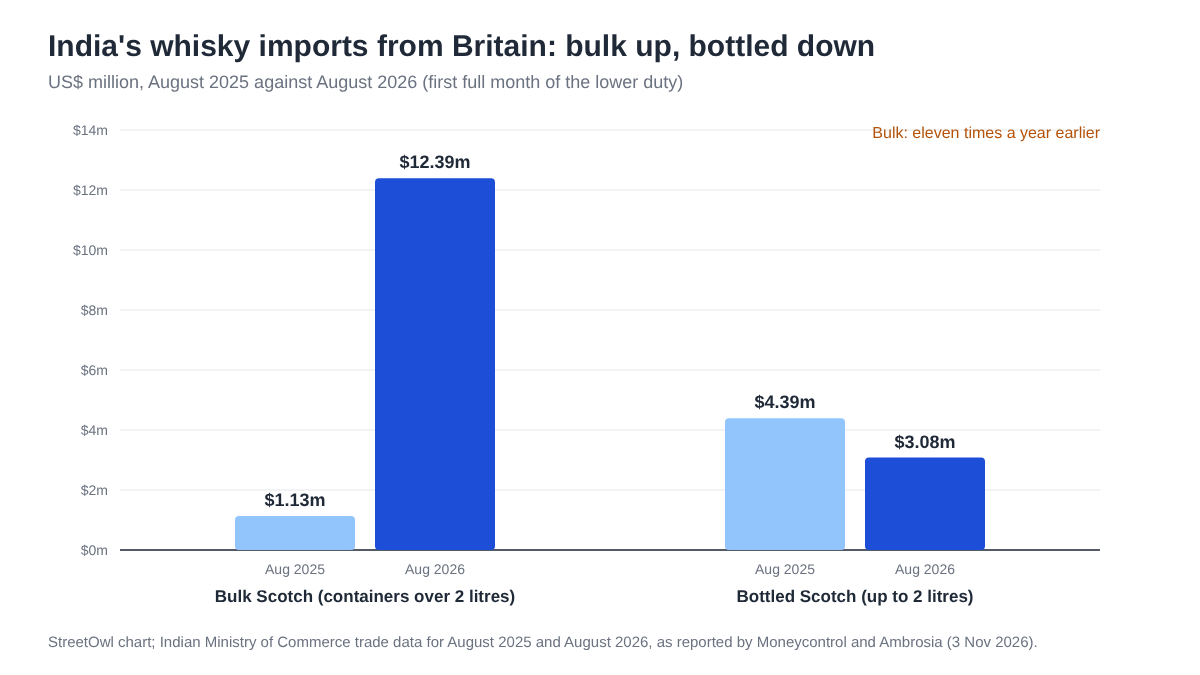
In August 2026 India's imports of bottled Scotch (containers up to two litres) fell 30% from a year earlier, to $3.1 million. Imports of bulk Scotch, shipped in containers over two litres for blending, rose from $1.1 million to $12.4 million, eleven times as much, about 2.5 million litres against 320,000.
The reason is the recipe. Indian premium whisky sells on its Scotch content, and that imported malt is the most expensive ingredient in the bottle. Halving the duty on it cuts the blender's cost before it changes any price on a shelf. Every Indian whisky maker imports it, so the duty cut lands first in Indian factory margins.
The largest Indian spirits group reported its gross margin up again in the July–September quarter, which it attributed to its product mix and the trade-agreement benefit. It said the lower rate had applied to every shipment since 15 July and that shoppers would see lower prices on imported brands by about the end of November, once state excise boards approve new price cards.
Why it keeps going
The duty falls again every year for nine more years. Each step either widens the blender's margin or lets more Scotch go into the blend at the same price, which is the direction the Indian market was already heading. The Scotch Whisky Association expects up to £1 billion of extra exports to India over five years; the drinks analyst IWSR expects Indian spirits servings to grow 38% by 2035.
Total whisky imports into India were $449 million in 2025, $375 million of it from Britain, so the pie is small today and the growth is the point. Who gains: Indian blenders, and the Scottish distilleries that sell them bulk malt. Who pays less, later: Indian drinkers of imported brands.
What could take it back
India's states levy their own excise on top of the national duty and can claw the cut back; the biggest Indian producer names state excise responses to the coming price cuts as something it is watching. Customs investigators have also questioned whether bulk Scotch qualifies for the 75% rate. On 2 November India's commerce ministry said the country would honour the agreement.
For Scotland the machine runs the other way round from the headlines: the growth is in tanker-loads of young malt for blending, not in cases of twelve-year-old single malt.
Sources
This piece was drafted by AI from the public sources named, then read and approved by Michael Rossi before it went up. It describes how one thing moves another; it names no investment and is not financial advice.
← Back to StreetOwl