Every landlord who quits hands the rent to whoever stays
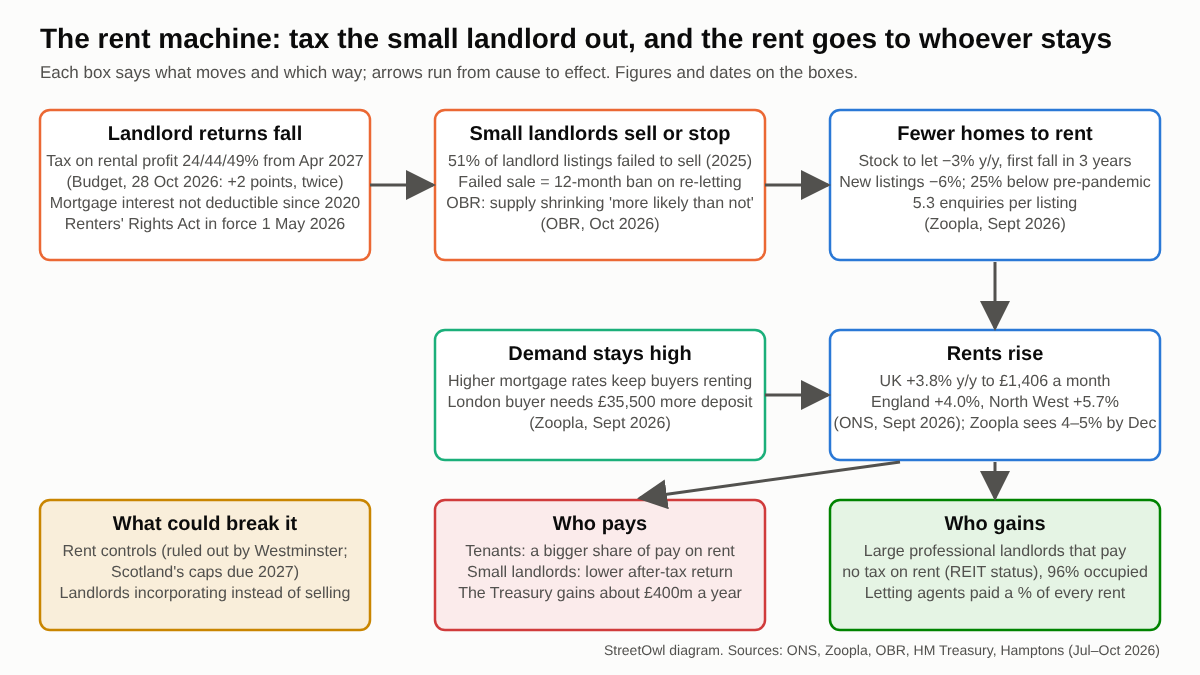
Tax rises and new tenancy rules push small landlords out, so there are fewer homes to let, so rents rise, and the rent goes to the large landlords and letting agents that remain.
What the Budget changed
Last Wednesday's Budget doubled last year's tax rise on landlords. From April 2027 the income tax charged on rental profit will be 24, 44 and 49 per cent, two points above the 22, 42 and 47 per cent set only eleven months earlier, and worth about £400 million a year to the Treasury. The Office for Budget Responsibility said the measures mean a "material reduction in return to private landlords", that fewer landlords and a smaller rental supply are "more likely than not", and that rents are likely to rise as costs are passed on and the landlords who stay find more room to raise prices.
How a landlord's sums work
A private landlord's return is rent, minus mortgage interest, repairs and tax. Since 2020 mortgage interest has not been deductible, only credited at the basic rate, so a higher-rate landlord whose mortgage costs 5.5 per cent on a home yielding 5.5 per cent is taxed on income that largely does not exist. Buying another home carries a 5 per cent stamp duty surcharge. And since 1 May 2026 the Renters' Rights Act has ended no-fault eviction, limited rent rises to one a year by formal notice, banned bidding above the asking rent, and barred a landlord from re-letting for twelve months a home they tried and failed to sell. Hamptons estimates 51 per cent of landlord listings failed to sell in 2025, so that last rule alone would have trapped 80,000 to 100,000 homes.
Fewer homes, more people chasing them
The small landlord's answer is to leave, and the supply figures now show it. Zoopla's September report recorded the first fall in homes to let for three years: the stock down 3 per cent on a year earlier, the flow of new listings down 6 per cent, the total still 25 per cent below pre-pandemic levels, and 5.3 enquiries chasing every listing. Demand is not easing, because higher mortgage rates keep would-be first-time buyers renting: Zoopla puts the extra deposit a London buyer now needs to keep repayments level at £35,500. The same rate rises that slow house sales therefore keep the rental market full.
Where the rent goes
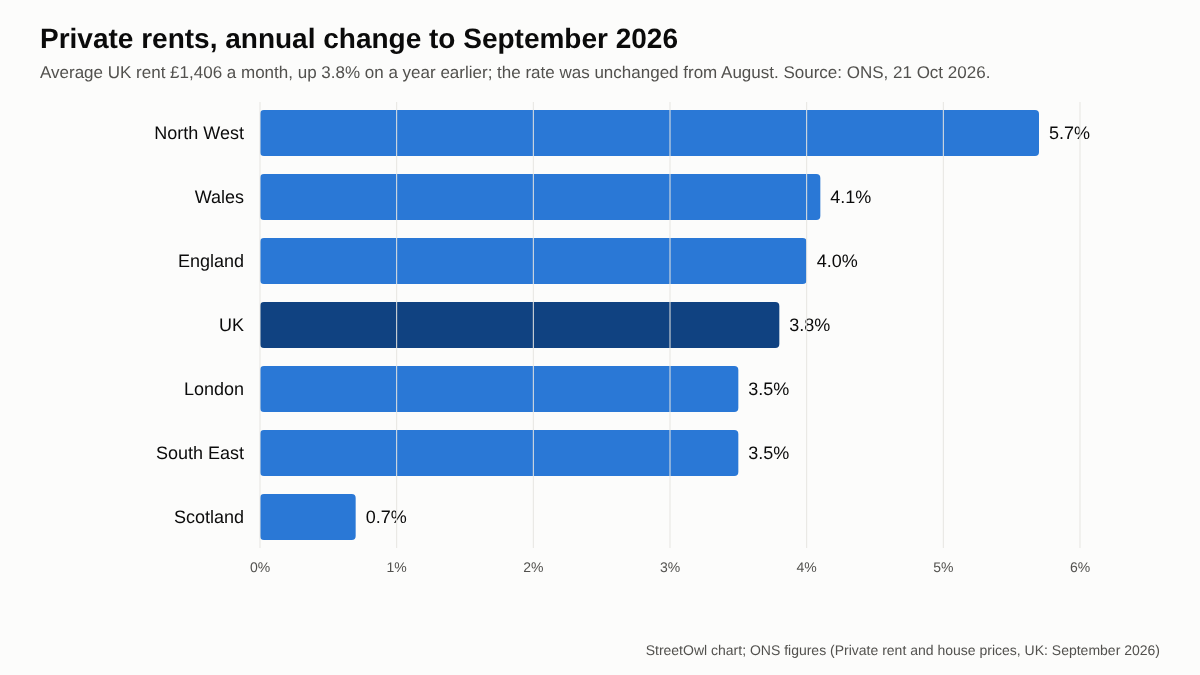
The Office for National Statistics has private rents up 3.8 per cent in the year to September 2026, to £1,406 a month, with England up 4.0 per cent and the North West up 5.7 per cent; Zoopla expects rents to end the year 4 to 5 per cent higher. Two kinds of business collect that rise and cannot be taxed out of it. Large professional landlords with real estate investment trust status pay no tax on rental profit, let purpose-built blocks at around 96 per cent occupancy, and report rents rising in line with the market with no increase in tenants leaving. Letting agents are paid a percentage of every rent, so rent inflation is fee inflation at no extra cost, and the new rules make self-managing harder, so more landlords buy a managed service. The sharper edge of the same rules is also visible: tenants can now leave on two months' notice, which has cost some agents fees they had booked on fixed-term lets.
What could change it
Rent controls are the one thing that breaks the chain. Scotland's rent control areas are expected from 2027, three quarters of Londoners told YouGov in February they want a cap, and the Mayor has asked for the power; the Housing Secretary has ruled it out for England. The other question is whether landlords leave or simply incorporate: 71 per cent of new buy-to-let mortgage applications in the third quarter were made through limited companies, which the new rates do not touch, and Hamptons found that in June landlords bought more homes than they sold for the first time since 2019. If the response to April's tax rise is company structures rather than sales, supply stops falling and the rent rise slows.
Sources
- Office for National Statistics via The Intermediary, 21 October 2026
- Office for National Statistics, Private rent and house prices, UK (latest)
- Zoopla Rental Market Report, 14 September 2026
- Mortgage Solutions, Budget 2026 and the OBR, 28 October 2026
- Property Reporter, Budget 2026 landlord tax, 28 October 2026
- Roost, Renters' Rights Act timeline, 2026
- Hamptons via The Negotiator, 13 July 2026
- Hamptons and Hampshire Trust Bank via Mortgage Professional, 17 September 2026
- Property118, Scotland's rent controls set for 2027
This piece was researched with AI from the public sources named and written up and checked by Michael Rossi before it went up. It describes how one thing moves another; it names no investment and is not financial advice.
← Back to StreetOwl