
Your 2-year fixed mortgage rate: where it stands and what it means
The standard variable rate is 6.58%, and the two-year fixed deal has moved a long way since late 2025. Here is what that gap means for your monthly payment.
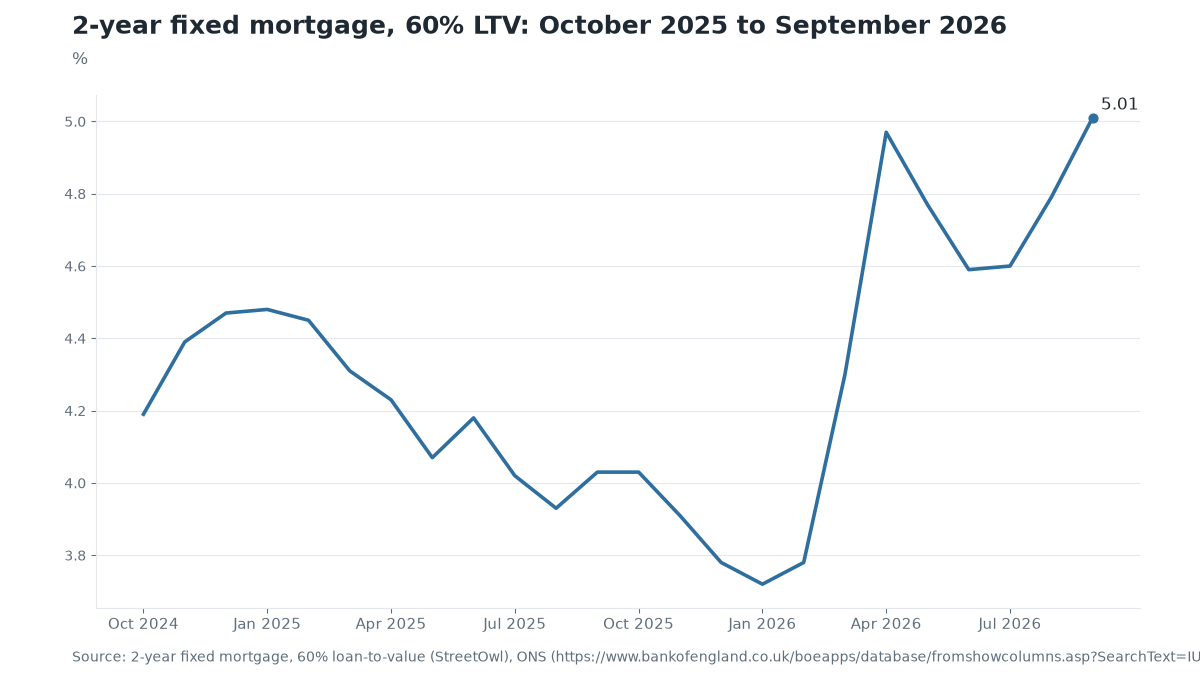
The fixed rate has climbed since late 2025
The two-year fixed mortgage market has shifted noticeably over the past year. In October 2025, the average rate for a deal with a 60% loan-to-value stood at 4.03%. By September 2026, that figure had risen to 5.01%. This represents an increase of nearly a full percentage point in just twelve months. Borrowers with smaller deposits have also seen rates climb. At a higher loan-to-value, the average rate moved from 4.2% to 5.13% over the same period. Those with the highest loan-to-value saw a similar pattern, with rates rising from 4.31% to 5.26%.
These consistent increases across different deposit sizes indicate a broad market movement rather than an isolated change for one group of borrowers. It is important to remember that these figures are advertised market averages. They are calculated by weighting the rates banks and building societies advertised by the volume of products taken out. This makes them a useful benchmark for tracking how the market has moved over time. However, they do not represent the specific offer any individual will receive. Your actual rate will depend on your lender, credit history and the size of your deposit, so your quote may sit above or below these national averages.
Worked example: what 6.58% does to a typical mortgage
To see how the standard variable rate affects your payments, consider a mortgage balance of £250,000 with 25 years remaining. Using the Bank of England’s September 2026 rate of 6.58% as the interest rate, the monthly repayment is £1,700.54. Over the full term, the total interest paid is £260,160.94. These figures are based on the stated assumptions and standard arithmetic.
If you overpay £100 a month, the total interest drops to £221,752.59. This saves you £38,408.35 in interest and clears the loan 37 months sooner, cutting the term by about 3.1 years. While this extra payment helps, the interest rate itself is the primary driver of your costs. The 6.58% figure serves as a market benchmark, but your actual rate will vary based on your lender and credit history.
What the standard variable rate actually means
The 6.58% standard variable rate is the revert-to rate your mortgage lands on when a fixed deal ends. It is not a price any one person will receive, but a weighted market average of advertised rates from banks and building societies. This level was unchanged in August 2026 and stands down 0.22 points on September 2025. While the rate has been relatively stable recently, it remains well above current fixed deals. The gap between your fixed rate and this standard variable rate is a rough guide to what you are saving each month while the fixed period is live. However, this depends on your specific deal, not just the market average. Some products also carry early repayment charges if you switch early.
What to do before your fixed deal ends
Start by calculating your loan-to-value. Divide your remaining mortgage balance by your home’s current market value. This ratio is crucial because lenders use it to determine which deals are available to you. Next, record your current fixed rate and count exactly how many months remain on your existing deal. Knowing this timeline helps you decide whether to act immediately or wait for a better window.
Compare your current fixed rate against the standard variable rate mentioned earlier. This gap shows how much you are saving each month while your fixed deal is live. If you are within a few months of your deal ending, do not wait. Get a remortgage quote before the deal lapses. This ensures you have options ready and avoids the risk of being stuck on a higher rate. Acting early gives you leverage and prevents last-minute pressure.
Who this helps most
This information is for anyone holding a two-year fixed mortgage, or one due to end within the next year, who is currently weighing a remortgage. It is designed to help you understand how the market has shifted since late 2025, so you can make informed decisions about your next move. The focus is on the practical implications of current rates and what they mean for your monthly outgoings.
Please remember that this is general information, not personal financial advice. Your specific situation will vary depending on your own rate, balance, and lender terms. The figures cited here are market averages, not individual offers. You should always check your own contract details and seek professional guidance tailored to your circumstances before making any changes to your mortgage.
- mortgage balance: £250,000
- remaining term: 25 years
- monthly overpayment: £100 a month
- Work out your loan-to-value by dividing your remaining balance by your home's current value
- Note your current fixed rate and how many months are left on the deal
- Compare your fixed rate to the 6.58% standard variable revert rate to see your monthly saving
- If your fixed deal ends within a few months, get a remortgage quote before it lapses
- Decide whether a small overpayment is worth it, checking first for any early repayment charges
Sources
- What mortgages cost (advertised averages): Standard variable rate (the revert-to rate a fixed deal falls onto), Sep 2026 (Bank of England IUMTLMV, via StreetOwl)
- 2-year fixed mortgage, 60% loan-to-value (StreetOwl)
- 2-year fixed mortgage, 75% loan-to-value (StreetOwl)
- 2-year fixed mortgage, 85% loan-to-value (StreetOwl)
This digest was drafted by StreetOwl’s own model from published figures and the sources listed, then read and approved by Michael Rossi on 22 October 2026 before it went up. It is general information, not financial advice: your circumstances are yours, and for a decision that matters, MoneyHelper (free, government-backed) or a regulated adviser is the place to go. General information, not personal financial advice. Figures checked on the dates shown.
← Back to StreetOwl