
The 'free' ticket that can cost 24.71%: BNPL and your family day out
Buy now, pay later feels like a no-cost way to spread a theme park trip. But one missed payment can turn it into a credit card bill. Here is how the real interest rates compare.
Why 'interest-free' is doing a lot of work
Buy now, pay later services often market leisure spending as completely cost-free. However, this promise usually holds only if you clear the balance within a short, specific window. The moment you miss a payment or extend the repayment period, the financial picture changes rapidly. You may find yourself paying fees and interest that push the total cost up to levels similar to a standard credit card.
To understand what “not free” actually looks like, consider the market average for credit card purchases. In August 2026, the Bank of England reported a representative APR of 24.71%. This figure serves as a useful benchmark for the kind of interest you might face if a BNPL plan tips into default territory. It is worth noting that this is an advertised market average, not the specific rate any one provider will charge you. Your actual cost will depend on your individual agreement and any late fees you incur.
The real rates on the table
In August 2026, the credit card representative APR on purchases stands at 24.71%. By comparison, a personal loan of £5,000 has an average APR of 12.08%, while a £10,000 loan is 6.9%. These lower rates suggest a personal loan is often a cheaper way to finance a larger holiday than carrying a credit card balance. However, a buy now, pay later plan can be cheaper if you clear the balance quickly within the interest-free window.
Avoid using an arranged overdraft for this gap, as its average interest rate is 34.53%, making it the most expensive option. Your best choice depends on how long you hold the balance and which provider you use. If you pay off the amount within a few months, a BNPL plan might save you money compared to a credit card. But if you need to spread the cost over a longer period, the lower APRs on personal loans typically offer better value. Remember that these are market averages, not certain offers, and missing a BNPL payment can trigger fees that erase any initial savings.
Worked example: financing a family day out
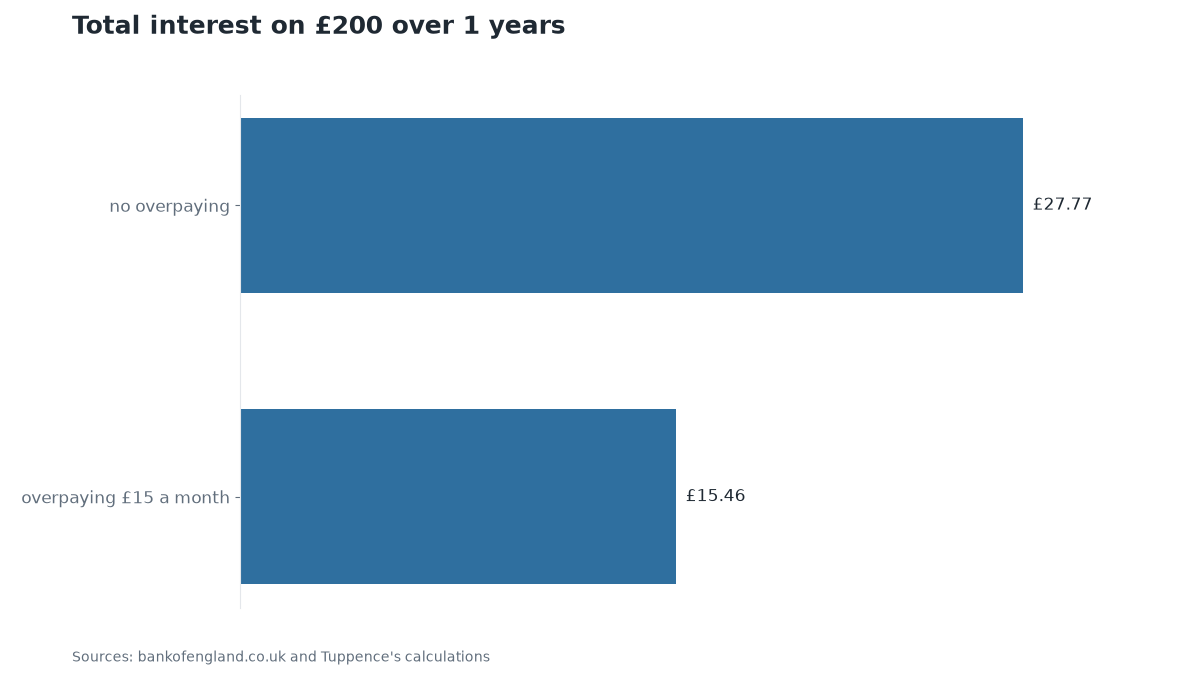
Imagine financing a £200 trip over 1 year. On a credit card with the representative APR previously noted, you would pay £18.98 a month, resulting in £27.77 of total interest. If you overpay by £15 a month, your total interest drops to £15.46. This saves you £12.31 and clears the debt 5 months, or about 0.4 years, sooner.
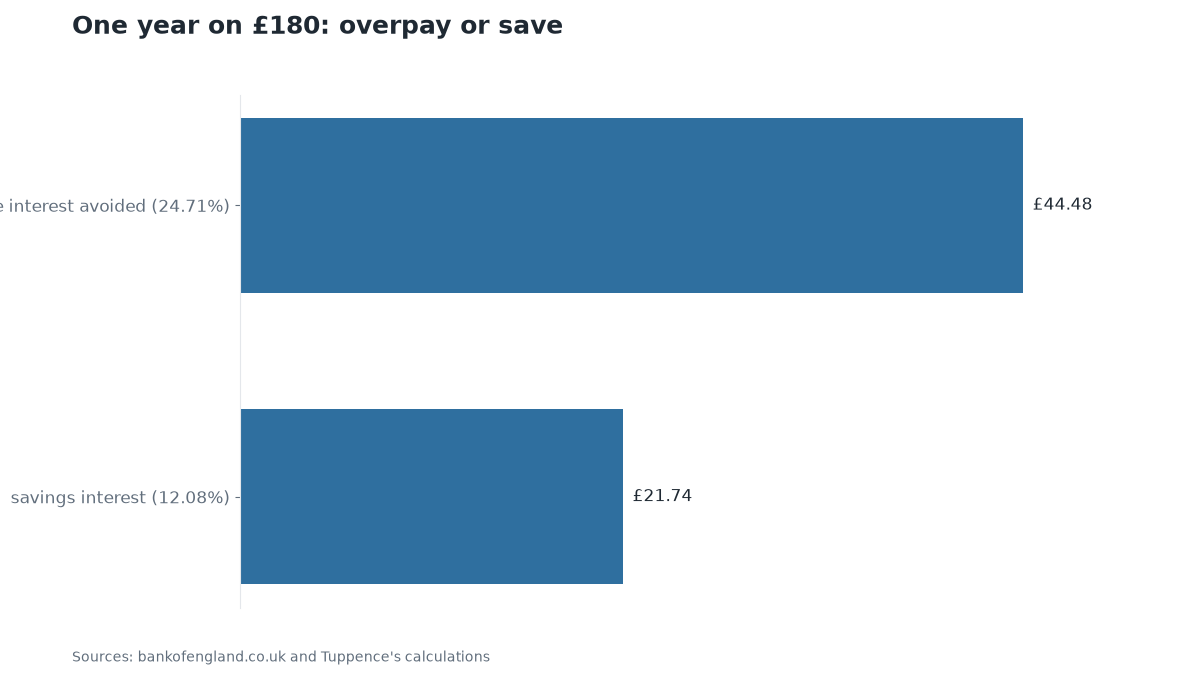
Consider the annual impact of those overpayments. The total extra amount is £180. Keeping this on the card avoids £44.48 in interest at the higher rate. If parked in savings at the personal loan average, it earns £21.74. The rates are 12.63 percentage points apart. By paying down the balance faster, you end up £22.74 ahead. This shows that while BNPL can be cheap if cleared quickly, managing the cash flow to overpay is often where the real saving lies.
What to do before you tap 'pay in 4'
Before tapping "pay in 4," read the terms and conditions to understand what happens if you miss a payment. You need to know about any late fees or default interest, as these vary by provider and can negate the "free" aspect.
Check if your credit card offers a 0% purchase period. This could make the repayment window genuinely interest-free. For larger holiday spending, compare a personal loan against a credit card balance. A personal loan often carries a lower APR, making it a potentially cheaper option, though you will need to pass a credit check.
Avoid using an arranged overdraft to bridge a gap. Its average rate of 34.53% is the most expensive option here. While terms vary by bank, relying on this for leisure spending is a poor choice compared to other credit products.
Who this matters most for
This is most relevant for families planning a one-off leisure spend of a few hundred pounds who are tempted by the 'interest-free' checkout. It also matters for anyone who regularly uses an arranged overdraft or carries a credit card balance month to month. Relying on an overdraft is particularly costly, given the high average interest rate noted earlier in this article.
If you are confident you will clear the BNPL balance within its interest-free window, it can be a cheap option. However, the risk is a single missed payment, which can trigger fees and interest that make it comparable to a credit card bill. Check your specific terms, as late fees vary by provider.
This is general information, not personal financial advice. Your actual rates will depend on your credit profile and the specific provider. The figures quoted are market averages, not offers any one person will get.
- day out cost: £200
- financing period: 1 years
- monthly overpayment: £15 a month
- Read your BNPL provider's terms to see what happens if you miss a payment
- Check if your credit card has a 0% purchase period that covers your repayment window
- For larger holiday costs, compare a personal loan APR against your credit card APR
- Avoid using an arranged overdraft to cover the gap, as it is the most expensive option
- Set a reminder for each BNPL payment date so you do not miss one
Sources
- What borrowing costs: Credit card, representative APR on purchases, Aug 2026 (Bank of England IUMCCTL, via StreetOwl)
- What borrowing costs: Personal loan of £5,000, APR, Aug 2026 (Bank of England IUMBX67, via StreetOwl)
- What borrowing costs: Personal loan of £10,000, APR, Aug 2026 (Bank of England IUMHPTL, via StreetOwl)
- What borrowing costs: Arranged overdraft, interest rate, Aug 2026 (Bank of England IUMODTL, via StreetOwl)
This digest was drafted by StreetOwl’s own model from published figures and the sources listed, then read and approved by Michael Rossi on 3 October 2026 before it went up. It is general information, not financial advice: your circumstances are yours, and for a decision that matters, MoneyHelper (free, government-backed) or a regulated adviser is the place to go. General information, not personal financial advice. Figures checked on the dates shown.
← Back to StreetOwl