
The £10,000 split: why a personal loan beats your credit card for Christmas
The average credit card purchase APR runs well above the average personal loan rate. Here is what that gap costs you over a year of December borrowing.
The rate gap, in context
The Bank of England records the average advertised rate for credit card purchases at 24.88% in October 2026. The average for a £10,000 personal loan is 7.11%. These are market averages weighted by volume, not individual offers. Consumer credit is growing at 9.8% a year, and total outstanding credit card balances sit at £84,091 million, showing that carrying a balance through winter is common.
Context matters. An arranged overdraft costs 34.51% on average, the most expensive option. A smaller £5,000 personal loan carries a higher APR of 11.2%, proving that the amount borrowed changes the rate. Borrowing at a lower rate for the same purpose usually costs less in total interest, all else being equal. However, personal loans can carry arrangement fees, and credit card minimum payments can stretch the total cost well beyond the nominal term.
Worked example: one year on a £10,000 balance
For a household borrowing £10,000 over 12 months, the standard repayment at 7.11% is £865.77 a month, with total interest of £389.30. If you add a £50 monthly overpayment, the total interest drops to £369.35. This saves you £19.95 in interest, although the loan is cleared 0 months sooner.
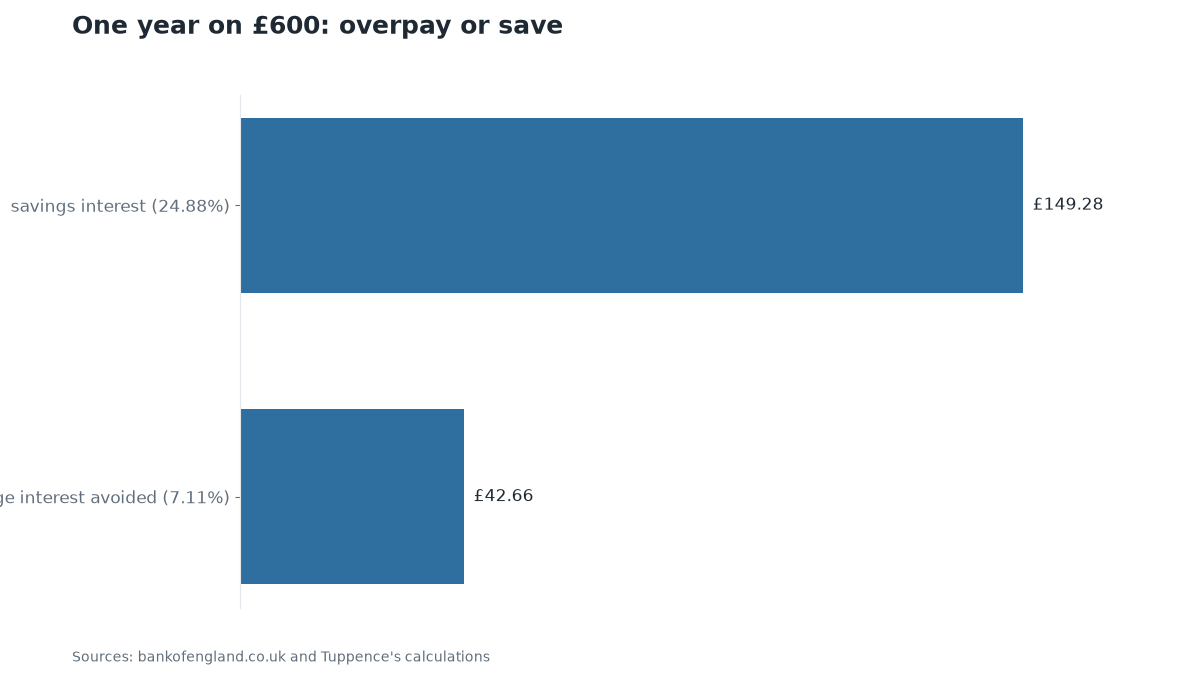
Consider the alternative: keeping that £600 (a year’s overpayments) in a savings account at 24.88% earns £149.28 before tax. Paying it toward the loan avoids £42.66 of interest. The rates are 17.77 percentage points apart, so the saving comes out £106.62 ahead. This highlights why directing surplus cash to high-interest debt often beats saving.
Remember, these figures are advertised averages. Your actual offer will differ based on your credit profile and lender. Also, the card figure assumes you carry the balance for the full year, which is typical when paying only the minimum. A personal loan’s fixed payment makes budgeting from January to December easier, as you know exactly what you owe each month.
When the card is the right tool
The high credit card rate only applies if you carry a balance beyond the statement date. For a small gift bought in November and paid off in December, the card costs nothing in interest. If you pay your balance in full before the interest-free period ends, you typically pay no interest at all. However, check your specific grace-period terms, as they vary by issuer. Cash withdrawals and balance transfers usually attract interest from day one, regardless of the purchase grace period.
The distinction matters when you expect to be paying the balance off over three, six or twelve months. In that scenario, the personal loan is almost always the cheaper route. This is because interest accrues from day one at a much lower rate. The card’s high representative rate only bites when you fail to clear the debt within the interest-free window. If you plan to repay slowly, the lower loan rate will save you money compared to the card’s daily accrual.
Five things to do before December
Log into your card app to note your exact purchase APR, statement date, and any active 0% purchase period. Use the market average for credit cards as a reference point. Next, obtain written personal-loan quotes for your required amount from at least two lenders. The market average for a standard loan is a starting point, not your individual offer. Check for arrangement fees in each quote.
Calculate the maximum monthly repayment you can cover after essential bills, choosing a term no longer than necessary. If using the card, set a standing order for the full statement balance on the issue date to prevent interest from accruing. Avoid using an arranged overdraft as a buffer. At an average rate of 34.51%, it is the most expensive option by a wide margin.
Who this matters most for
This guidance is most relevant if you expect to carry a card balance over the winter. It applies to families budgeting for gifts, food and travel who will not clear the balance before the interest-free period ends. For those who pay off small purchases in a single cycle, or who hold a 0% purchase deal with no exit fee and will clear it before it lapses, the difference is less significant.
Remember that the advertised average rate published by the Bank of England is not the rate any individual will be offered. Your actual rate depends on your credit profile and the lender. Shop around and compare at least two written offers before accepting. Each application triggers a hard credit check, and several checks in a short window can nudge your score down.
- loan amount: £10,000
- repayment term: 1 years
- monthly overpayment: £50 a month
- monthly overpayment above the standard repayment: 50 GBP
- Check your credit card's purchase APR, statement date and any 0% period in your card app
- Get written personal-loan quotes for the amount you need from at least two lenders and note any arrangement fees
- Work out your maximum comfortable monthly repayment and pick a term no longer than you need
- If you keep the card, set a standing order for the full statement balance on the issue date
- Do not use an arranged overdraft as a backup; at the rate in the facts it is far costlier than either option
Sources
- What borrowing costs: Personal loan of £5,000, APR, Oct 2026 (Bank of England IUMBX67, via StreetOwl)
- What borrowing costs: Personal loan of £10,000, APR, Oct 2026 (Bank of England IUMHPTL, via StreetOwl)
- What borrowing costs: Credit card, representative APR on purchases, Oct 2026 (Bank of England IUMCCTL, via StreetOwl)
- What borrowing costs: Arranged overdraft, interest rate, Oct 2026 (Bank of England IUMODTL, via StreetOwl)
- Borrowing and saving, as it happened: Consumer credit, annual growth rate, Sep 2026 (Bank of England LPMB4TC, via StreetOwl)
- Borrowing and saving, as it happened: Credit card balances outstanding, Sep 2026 (Bank of England LPMVZRE, via StreetOwl)
This digest was drafted by StreetOwl’s own model from published figures and the sources listed, then read and approved by Michael Rossi on 14 November 2026 before it went up. It is general information, not financial advice: your circumstances are yours, and for a decision that matters, MoneyHelper (free, government-backed) or a regulated adviser is the place to go. General information, not personal financial advice. Figures checked on the dates shown.
← Back to StreetOwl