Returning Black Friday goods in January: what the credit card interest costs you
Buy on credit in November, return in January, and three months of interest at the representative APR can quietly eat a real chunk of your sale savings.
The three-month gap nobody plans for
You buy in late November or December, but return in January. For this article, we assume a three-month gap between purchase and return. This is a common pattern, not an edge case. Credit card balances across the UK stood at £83,943m in August 2026, up 9.7% on the year, while consumer credit overall is growing at 9.6% annually. These figures show how widespread this delay is.
The key issue is timing. Interest on a credit-card purchase typically starts accruing from the transaction date or the statement cut-off, not when the retailer processes your return. This means the full three-month gap can attract interest. You are effectively paying for the period the retailer holds your money, even after you have sent the item back. Some cards offer a grace period, so check your specific terms. However, if you do not pay the full balance by the due date, interest will likely accrue for the entire duration. This quiet accumulation can significantly reduce the savings you expected to find during the sales.
What 24.71% does to a £5,000 basket
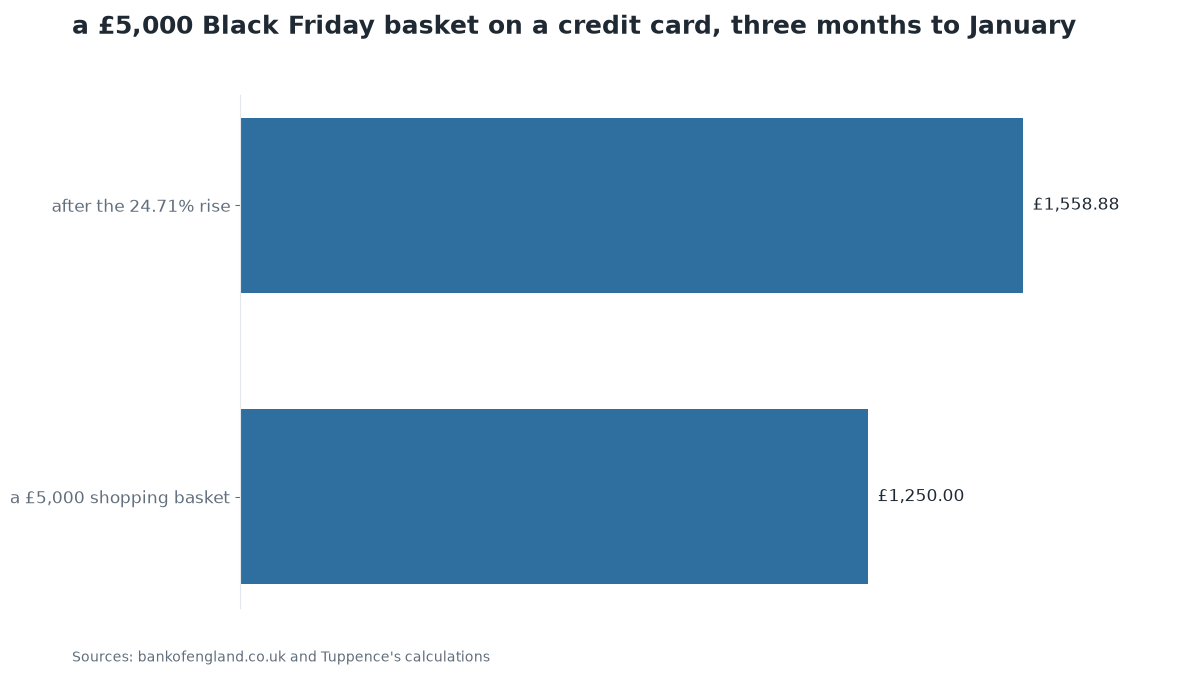
The Bank of England reports the representative APR on purchases at 24.71% in September 2026, unchanged from August. This is a market average, not a specific offer. Consider a £5,000 shopping basket carried for the assumed three months to January. The total rises to £1,558.88. Since the principal for that period is £1,250, the interest cost is £308.88.
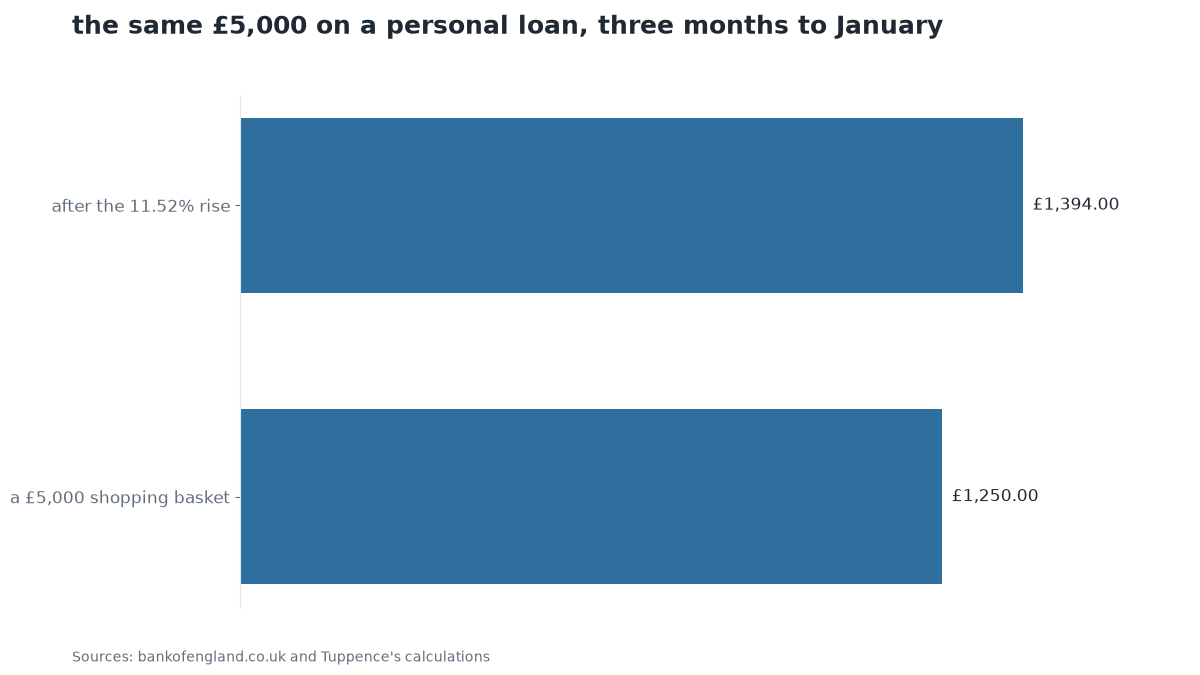
Compare this to a personal loan. The average APR for a £5,000 loan was 11.52% in September 2026. For the same three-month period, the total is £1,394. With the principal at £1,250, the interest is £144.
This difference shows what interest does to savings. If you use a debit card or an interest-free purchase period, the sale price is your total cost. The interest in these examples is the perceived savings that disappears. A fixed-rate loan can be cheaper than a revolving balance, but it involves commitment. Check your terms, as some cards offer a grace period. If you pay the full balance by the due date, most cards charge no interest at all.
Cheaper ways to bridge the gap
The Bank of England data for September 2026 shows the arranged overdraft rate at 34.52%. This is typically the most expensive form of short-term borrowing available to a household. Because the cost is so high, it is the option you should avoid for a planned purchase where you know the amount in advance. The interest compounds quickly, making it a poor choice compared to other methods.
A fixed-rate personal loan offers a different structure. For a £10,000 loan, the average APR was 6.98% in September 2026. A fixed-rate loan for a known, one-off amount can work out cheaper than a revolving credit card balance over the same period. However, this comes with specific obligations. You must check for arrangement fees and confirm that you are confident you will keep the item, as a loan on a returned purchase is a pure loss. You also commit to a fixed repayment schedule that you must follow strictly.
When you place these options side by side, the differences become clear. The credit card stands at 24.71%, the £5,000 personal loan at 11.52%, and the overdraft at 34.52%. While the loan carries fees and a rigid commitment, the lower interest rate often makes it the smarter financial move for bridging the gap to your return date. Avoid the overdraft entirely for this purpose.
What to do before you tap the card in November
Paying the full statement balance by the due date usually avoids purchase interest on most UK credit cards, making the grace period your first line of defence. However, a partial payment or a missed due date can void the grace period for the full balance, so this protection is conditional on strict adherence to your bill.
To protect your savings, follow these steps before you buy. First, check whether your card offers an interest-free purchase period and note the end date before you buy. Second, if you are likely to return the item, use a debit card so no interest can accrue in the gap. Third, if you must use credit, pay the full balance from your monthly statement rather than the minimum. Fourth, if the amount is large and you will keep it for months, compare a fixed-rate personal loan against the card APR before committing.
This advice helps most households that rely on a credit card for cash-flow flexibility. The 9.7% year-on-year rise in card balances and £2,464m net consumer borrowing in August 2026 show this is widespread. It also applies to anyone whose sale discount is small relative to the purchase price, where a single month of interest can erase the benefit.
- three months to January: 3 months
- three months to January: 3 months
- Check whether your credit card offers an interest-free purchase period and note the exact end date before you buy in November
- If you think you might return the item, pay with a debit card so no interest can accrue in the gap
- If you do use credit, pay the full statement balance by the due date rather than the minimum
- For a large one-off purchase you will keep for months, compare a fixed-rate personal loan APR against your card's representative APR before committing
Sources
- What borrowing costs: Credit card, representative APR on purchases, Sep 2026 (Bank of England IUMCCTL, via StreetOwl)
- What borrowing costs: Personal loan of £5,000, APR, Sep 2026 (Bank of England IUMBX67, via StreetOwl)
- What borrowing costs: Personal loan of £10,000, APR, Sep 2026 (Bank of England IUMHPTL, via StreetOwl)
- What borrowing costs: Arranged overdraft, interest rate, Sep 2026 (Bank of England IUMODTL, via StreetOwl)
- Borrowing and saving, as it happened: Consumer credit, annual growth rate, Aug 2026 (Bank of England LPMB4TC, via StreetOwl)
- Borrowing and saving, as it happened: Consumer credit, net borrowing in the month (seasonally adjusted), Aug 2026 (Bank of England LPMB3PS, via StreetOwl)
- Borrowing and saving, as it happened: Credit card balances outstanding, Aug 2026 (Bank of England LPMVZRE, via StreetOwl)
This digest was drafted by StreetOwl’s own model from published figures and the sources listed, then read and approved by Michael Rossi on 16 October 2026 before it went up. It is general information, not financial advice: your circumstances are yours, and for a decision that matters, MoneyHelper (free, government-backed) or a regulated adviser is the place to go. General information, not personal financial advice. Figures checked on the dates shown.
← Back to StreetOwl