
Moving cash into a fixed ISA: why acting now beats rate-chasing
The biggest saving on your spare cash isn't finding the top rate. It's getting it out of a current account and into a fixed ISA before the year runs out.
Cash in a current account is a silent tax
Leaving spare cash in a current account acts as a silent tax. Most such accounts pay no interest, so every pound sits idle while inflation erodes its value. If you are also in an arranged overdraft, the cost escalates sharply. The market-average rate for these facilities is 34.52%, meaning you pay a high price to borrow while your own cash generates nothing.
Even moving funds to an instant-access deposit offers limited relief. The average rate households actually receive on these deposits is only 1.64%, well below the cost of borrowing. This disparity highlights a critical inefficiency. Holding cash earning no interest while simultaneously carrying debt at a high rate is the most expensive combination a household can face. Some overdrafts carry a fixed monthly charge rather than pure interest, so the effective cost may differ. This assumes you can access the spare cash to pay down the overdraft or move it into a savings product, breaking the cycle of paying high interest on borrowed money while your own funds remain unproductive.
Where your money actually earns right now
The Bank of England reports a 4.56% market average for 1-year fixed-rate cash ISAs in September 2026. Variable-rate cash ISAs average 1.95%, while instant-access savings accounts pay 2.06%. These figures are weighted by the volume of funds taken out, meaning individual offers will vary, but the trend is clear. With CPI inflation currently at 3.5%, the variable-rate and instant-access averages sit below the rate at which prices are rising. This creates a specific financial problem: a savings rate below inflation means your money is quietly losing purchasing power every month it stays there. You are effectively paying for the flexibility of easy access. While inflation can fall and specific offers may differ, the current market averages suggest that keeping spare cash in these lower-yield products erodes its real value over time.
Why acting early beats waiting for a higher rate
Rates shift over a few months and can move in either direction. The 1-year fixed cash ISA average was 3.97% in Sep 2025, rising to 4.41% in Aug 2026 and 4.56% in Sep 2026. Every month you delay moving spare cash from a no-interest current account into a fixed ISA is a month of interest you never collect. Waiting for a slightly higher rate in six months still costs you six months of nothing. Locking in a fixed rate earlier captures more months of interest, and the months lost while waiting can outweigh a marginally higher rate found later.
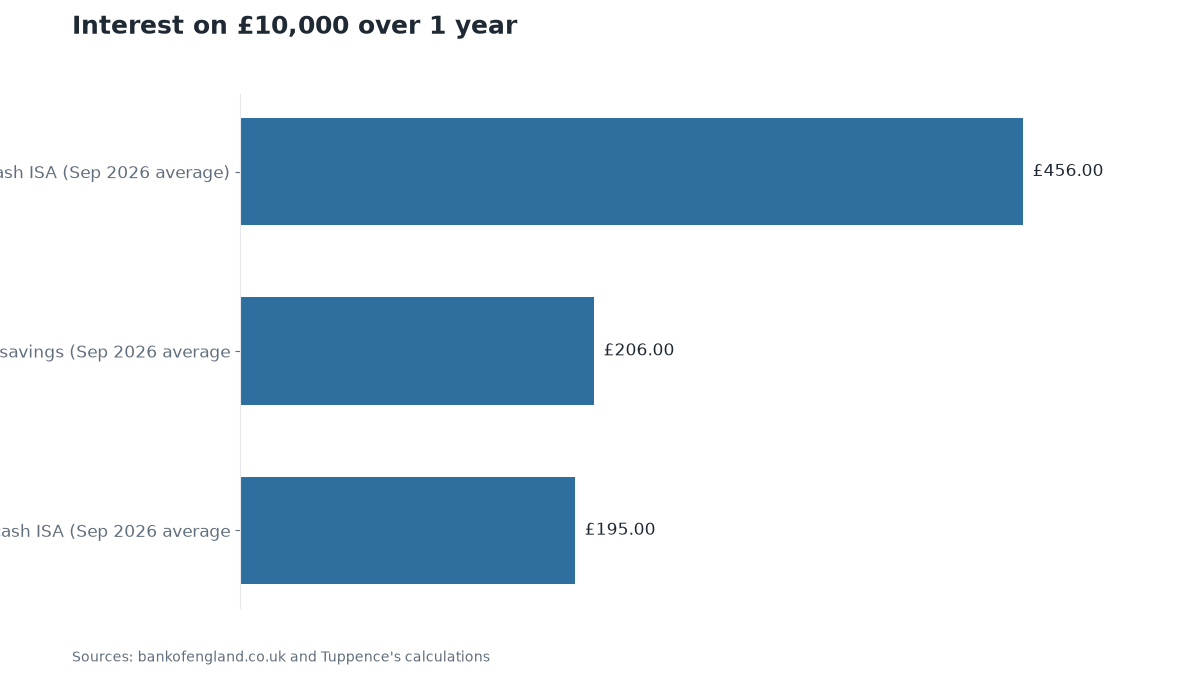
Consider a household using £10,000. For a year at the 4.56% fixed rate, you earn £456 before tax. At the 1.95% variable rate, you earn only £195. Instant-access savings at 2.06% yield £206. The fixed option earns £261 more than the variable alternative over that year. This gap illustrates why acting now beats rate-chasing. The time lost while idling is not recovered by a future rate increase. You lose the benefit of compounding time, which is not something you can buy back later.
What to do this week
Start by logging into your bank app to check your current-account balance. If you are in overdraft, note the amount and the rate you are charged, as the market average stands at 34.52%. Next, check your remaining ISA allowance through your HMRC online account, remembering that this limit resets each tax year on 6 April. Then, compare 1-year fixed cash ISA deals. While the market average is stated elsewhere, individual offers differ, so check a few before choosing. Once you have selected a provider, open the ISA and transfer the money in the same week. The interest clock starts on the day the funds arrive, so delaying the transfer means delaying the earnings. Finally, set a calendar reminder for next April to review the rate. Since the fixed period will be ending, you can then move to a new deal if rates have changed.
Who this matters most for
If you are using an arranged overdraft, the market average penalty is severe. Holding spare cash in a current account while paying that interest is contradictory. Moving that money into a fixed ISA is the single highest-impact step you can take. It allows you to pay down the debt and earn interest, rather than paying to borrow while your own funds sit idle.
This also applies if your savings sit in variable-rate or instant-access products. The earlier section noted these averages sit below the current CPI rate. You are losing real value every month because your returns do not keep pace with rising prices.
Finally, if a lump sum from a bonus or house sale sits in a current account, it loses value immediately. Cash does not generate interest there, so inflation quietly claims it. Locking it in a fixed ISA protects that capital from silent erosion. You are securing a rate that keeps up with the cost of living, rather than letting it disappear.
- savings pot: £10,000
- years: 1 years
- Log in to your bank app and note your current-account balance; if you are in overdraft, note the amount and the rate you are charged
- Check your remaining ISA allowance via your HMRC online account (the allowance resets each tax year on 6 April)
- Compare 1-year fixed cash ISA deals; individual offers differ from the market average, so check a few before choosing
- Open the ISA and transfer the money in the same week; the interest clock starts on the day the funds arrive
- Set a calendar reminder for next April to review the rate, since the fixed period will be ending and you can move to a new deal
Sources
- What borrowing costs: Arranged overdraft, interest rate, Sep 2026 (Bank of England IUMODTL, via StreetOwl)
- What savings pay: Instant-access savings account (including introductory bonuses), Sep 2026 (Bank of England IUMB6VJ, via StreetOwl)
- What savings pay: Variable-rate cash ISA (including introductory bonuses), Sep 2026 (Bank of England IUMB6VL, via StreetOwl)
- What savings pay: 1-year fixed-rate cash ISA, Sep 2026 (Bank of England IUMB6VN, via StreetOwl)
- Borrowing and saving, as it happened: Effective interest rate paid on households' instant-access deposits, Aug 2026 (Bank of England CFMHSCV, via StreetOwl)
- Prices: CPI inflation, twelve-month rate, Sep 2026 (ONS D7G7, via StreetOwl)
This digest was drafted by StreetOwl’s own model from published figures and the sources listed, then read and approved by Michael Rossi on 27 October 2026 before it went up. It is general information, not financial advice: your circumstances are yours, and for a decision that matters, MoneyHelper (free, government-backed) or a regulated adviser is the place to go. General information, not personal financial advice. Figures checked on the dates shown.
← Back to StreetOwl