The economics of… A £175,000 car against a £22,000 one: what the extra £150,000 buys
Edition 7 · By Michael Rossi · 19 November 2026 · next review 19 February 2027
Over four years a Range Rover SV costs about £125,000 to own against about £18,000 for a Dacia Duster, before counting the money tied up. None of the extra comes back in money; it buys speed, comfort, a higher safety rating and a badge.
“A £175,000 car is not eight times better than a £22,000 one. That is the law of diminishing value: past a certain point, every extra pound buys less than the one before it.”
The question
Both cars here are five-seat SUVs that will carry a family, a dog and the weekly shop. One comes from Dacia, the low-price brand of the Renault group; the other is the flagship of Land Rover's Range Rover line. The price gap is about £150,000. What does that money buy, and does any of it come back?
We took the Dacia Duster Expression mild hybrid 140 at £21,845 (Dacia's recommended price and a dealer's on-the-road price, checked 19 November 2026) and the Range Rover P615 SV at £174,545 (Sytner Land Rover's listed price in its finance offer to 30 June 2026). PistonHeads gave the SV's base price as £174,345 in June 2026, and its test car came to £181,625 with options.
What you get for the money
| Dacia Duster Expression mild hybrid 140 | Range Rover P615 SV | |
|---|---|---|
| Price | £21,845 | £174,545 (£181,625 as tested) |
| Engine | 1.2 petrol mild hybrid, 140hp, manual | 4.4 twin-turbo V8 mild hybrid, 615hp |
| 0-62mph | 9.8 seconds | 4.5 seconds |
| Official economy (WLTP) | 52.3mpg, 123g/km CO2 | 24.1mpg, 266g/km CO2 |
| Insurance group | 25 | 50 (top group; Vogue SE shown, SV not listed) |
| Euro NCAP | 3 stars (2024) | 5 stars (2022) |
| Warranty | 3 years / 60,000 miles; up to 7 years with dealer servicing | 3 years |
The Range Rover is four times as powerful and more than twice as quick to 62mph. It has the top safety rating where the Duster has three stars, a score Auto Express puts mainly down to a shortfall in driver-assistance systems. The two tests were run in different years, so the stars are a guide, not a like-for-like crash comparison.
On reliability there is little to choose between the badges. In Auto Express's 2026 Driver Power survey, Land Rover scored 84.4% for reliability and Dacia 84.1%.
Depreciation: the biggest cost by far
The best published guide to what a new car will be worth is the final payment in a finance deal, because the lender has to stand behind it. On a four-year deal at 10,000 miles a year, Sytner's offer set the Range Rover's optional final payment at £69,470: 39.8% of the price. A Dacia dealer's current four-year deal, at 6,000 miles a year, sets the Duster's at £10,640: 48.7%.
So over four years the Range Rover loses £105,075 and the Duster £11,205. The Duster's figure assumes fewer miles; if it held only 40% at 10,000 miles a year, its loss would be £13,107, which barely changes the picture.
To be fair to the Range Rover, it still holds far more in pounds: after four years it should be worth about £69,000 against £11,000. Top Gear says Range Rovers have "class-leading residuals" for a luxury car. But as a share of what you paid, it keeps less.
Running costs
At 10,000 miles a year and the AA's average of 169.7p a litre for petrol, the Duster's official 52.3mpg means about £1,475 a year in fuel and the Range Rover's 24.1mpg about £3,201.
Road tax widens the gap. A new car emitting over 255g/km pays £5,690 in its first year, against £455 for the Duster. From year two the Duster pays the standard £200; the Range Rover pays £640, because cars with a list price over £40,000 carry a £440 supplement for five years. Over four years that is £1,055 against £7,610.
Insurance, servicing and tyres would add more to the Range Rover's side, but there are no fair published figures for either car, so they are left out. The sums below therefore flatter the Range Rover slightly.
The sum: four years of ownership
| Over four years, 10,000 miles a year | Dacia Duster | Range Rover SV |
|---|---|---|
| Depreciation | £11,205 | £105,075 |
| Fuel | £5,900 | £12,805 |
| Road tax | £1,055 | £7,610 |
| Total | £18,160 | £125,490 |
| Per year | £4,540 | £31,372 |
| Per mile | 45p | £3.14 |
| Money tied up, illustrative 4% a year | £3,495 | £27,927 |
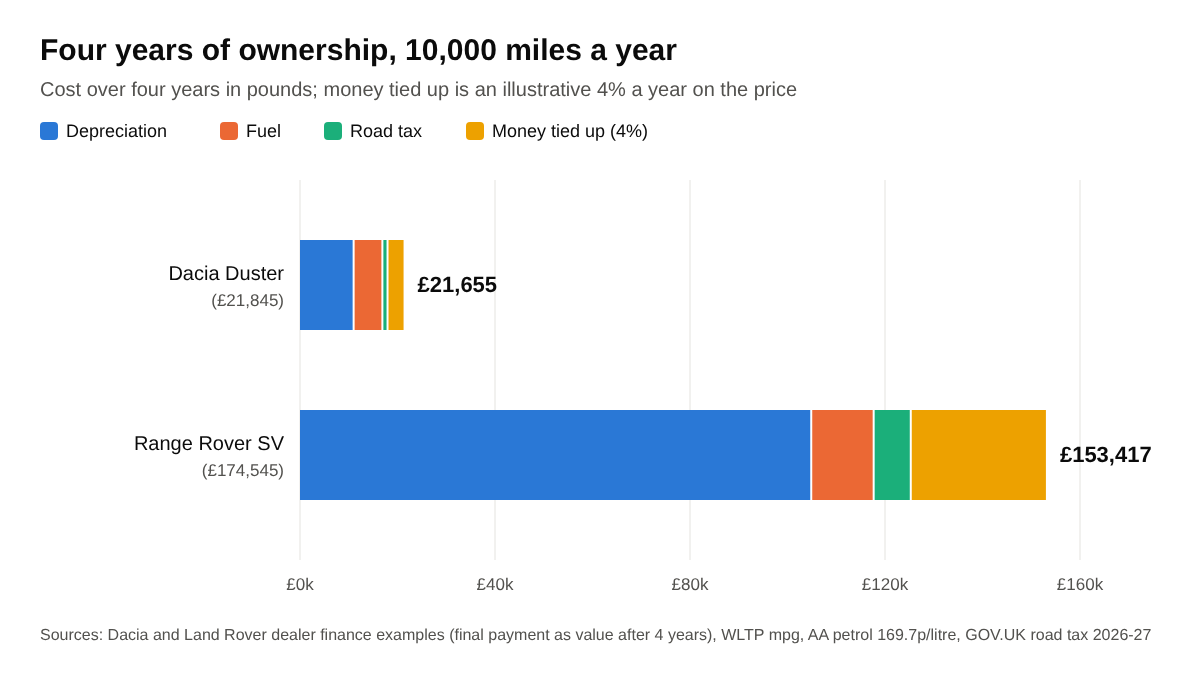
The Range Rover costs £107,329 more to own over four years: about £26,800 a year, £73.50 a day, or £2.68 for every mile driven. If the £152,700 difference in price stayed in savings at an illustrative 4%, it would earn about £6,100 a year, taking the extra cost to about £32,900 a year, or £90 a day.
There is no break-even. Every line in the sum is higher for the dearer car, so it never pays back. The only question is whether what it gives is worth about £90 a day to you.
Brand cost and added value
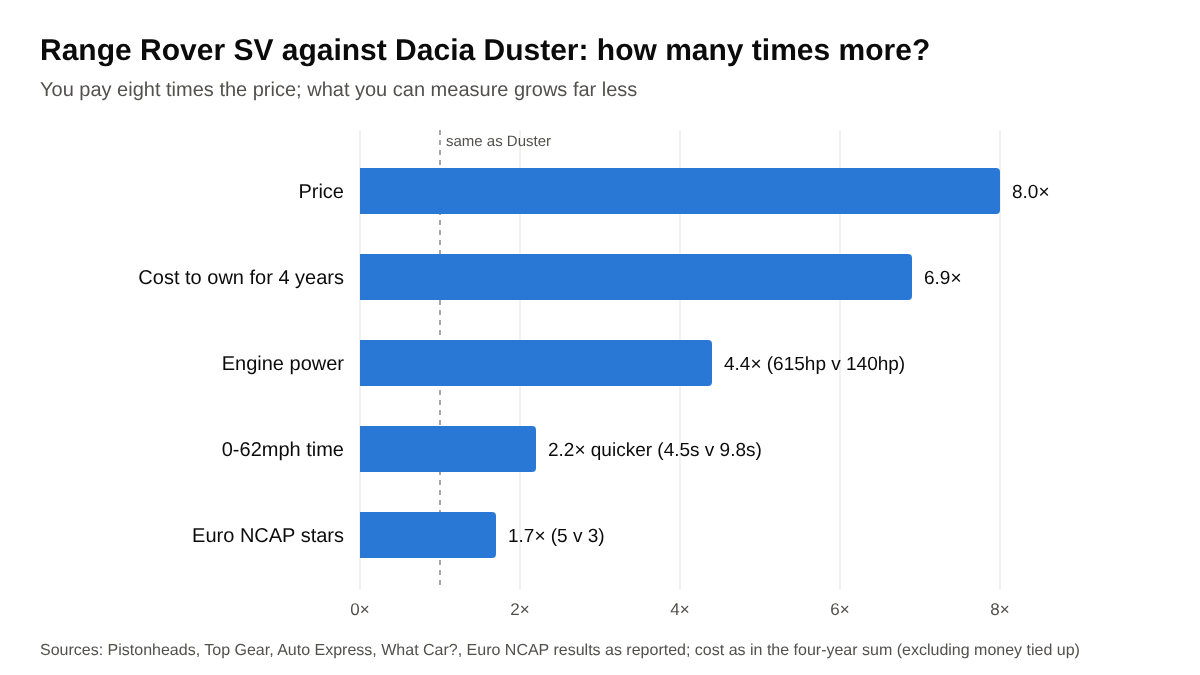
Split the £150,000. The added value that pays you back in money is nil: the dearer car costs more to fuel, to tax and to insure, and loses more of its price each year. Measured that way, every extra pound is brand cost.
Some of it buys real things that are not money: a higher safety rating, far more speed and a far more luxurious cabin. That is added value for the person who uses it, but you do not need £175,000 to get most of it. The Range Rover range starts at about £108,000, and PistonHeads's reviewer said much of the car's appeal is in cheaper models.
The rest is badge, exclusivity and how the car makes you feel. That is a fair thing to pay for, as long as it is a choice and not a mistake about value.
Does the law of diminishing value apply?
Yes, and this is the clearest case in the series so far. Eight times the price buys four times the power, twice the acceleration and two more safety stars, and none of it comes back in money. The first steps up from a budget car buy the most: safety systems, comfort and a better engine. By the time you reach the last £70,000 of the Range Rover range, you are buying a name and a feeling.
Next week: organic against free range, and what the extra buys at the till.
This is an explainer, not financial advice. For free, impartial guidance, see MoneyHelper.
What the sums assume
- Prices: Dacia Duster Expression mild hybrid 140 at £21,845 (Dacia recommended price, and a dealer's on-the-road price, checked 19 November 2026); Range Rover P615 SV at £174,545 (Sytner listed price, offer ending 30 June 2026)
- Value after four years taken from finance optional final payments: £69,470 for the Range Rover (10,000 miles a year) and £10,640 for the Duster (6,000 miles a year); a 40% case for the Duster is shown in the text
- 10,000 miles a year for four years, at official WLTP economy: 52.3mpg and 24.1mpg; real-world economy is usually lower for both
- Petrol at 169.7p a litre (AA UK average, November 2026), held flat; any need for super unleaded in the V8 is ignored
- Road tax at 2026-27 rates: first year £455 and £5,690; then £200 and £640 (including the £440 expensive car supplement)
- Insurance, servicing, tyres and repairs are not costed because no fair published figures were found; all would add more to the Range Rover
- Money tied up: simple interest at an illustrative 4% a year on the purchase price, not compounded
- Euro NCAP results from different years (2022 and 2024) are a guide only; the test changes over time
- All figures in today's money; no discounts or finance costs included
Sources
- Dacia UK, Duster prices and versions (checked 19 November 2026)
- JCB Group Dacia, Duster PCP representative examples, offers to 16 December 2026
- Auto Express, Dacia Duster review, 20 October 2026
- Top Gear, Dacia Duster prices and specs
- Sytner Land Rover, Range Rover P615 SV offer, ending 30 June 2026
- PistonHeads, 2026 Range Rover P615 SV Intrepid UK review, 24 June 2026
- Top Gear, Range Rover buying guide, May 2025
- What Car?, Range Rover review, updated 19 May 2025
- Auto Express, Range Rover 3.0 V6 S/C Vogue SE prices and specs (insurance group)
- Auto Express, Most and least reliable car manufacturers 2026, 30 August 2026
- The AA, Petrol down 5p a litre, 10p to follow, 10 November 2026
- Car Analytics, UK car tax 2026 (rates checked against GOV.UK), 19 October 2026
- Honest John, VED increases: 2026/27 car tax rates explained, April 2026