
Sardinia
Sardinia (Italian: Sardegna [sarˈdeɲɲa], Sardinian: Sardìgna/Sardìnnia) with its quintessential Mediterranean beauty, is mainly loved for swimming, windsurfing, hiking, and boating—particularly in the La Maddalena Archipelago National Park, where many protected beaches like the Pink Beach (Spiaggia Rosa) are accessible only by sea. The inner life of the island away from the tourist spots takes longer to appreciate and requires you to peel away the layers of apparent Italianization. Hiking and archaeological tourism with a low environmental impact has developed considerably, thanks to very important archaeological discoveries such as the Giants of Mont'e Pramma, and great investment by local institutions and by citizens in the protection and enhancement of the internal territory. It is an autonomous region of Italy.
Most read about in August, least in October. That is when people look it up, which tends to run a month or two ahead of when they go.
Before you book
The Foreign, Commonwealth & Development Office publishes the UK’s official travel advice. It changes without notice and travelling against it usually invalidates your insurance, so read it at the source rather than anywhere else — including here.
FCDO travel adviceUnderstand

Geology and geography
Sardinia is the only region in Italy of Hercynian origin, and the southwest of the island is even older (Cambrian). The mineral riches of Sardinia are the consequence of heavy hydrothermalism during the Permo-Triassic. As in the rest of Hercynian Europe, erosion has taken its toll since the orogeny and has reduced elevations considerably. 30 million years ago, the Sardinia-Corsica block started to detach from mainland Spain and tilted toward its present position. The island is aseismic and non-volcanic. Sardinia is the second largest island in the Mediterranean Sea (24,090 km2 [9300 sq mi]); only Sicily is larger. In addition to spectacular beaches, the island has many beautiful mountain vistas. The island's interior is dominated by the Gennargentu Range, culminating at the highest elevation in Sardinia at the summit of Punta La Marmora, 1834 m [6017 ft]. This range also includes Monte Limbara, Monte di Ala', and Monte Rasu (all below 1500 m [4900 ft]). An independently formed range of hills, the Sulcis-Iglesiente, stretch across southwestern Sardinia. The highest hill peaks at 1236 m [4055 ft], and this range once gave life to large mining operations.
Plains are quite rare and generally small with two exceptions. The Campidano Plain is the largest flat area and reaches from Oristano to Cagliari, separating the Gennargentu from the Sulcis-Iglesiente. The second largest is Nurra Plain in the northwest between Sassari, Alghero, and Porto Torres, and the Nurra's erstwhile forests and mines have mostly made way for today's pastures. Other notable features are the former marshes of Sulcis and Cagliari. Sulcis was a marshy area where malaria was still present in the 1940s but has been eradicated. Cagliari's outer neighborhoods sit upon flat and boggy land, and harvesting salt is a major industry there. Coasts are generally rocky with many cliffs, especially along the eastern half. Despite the precipitous coastline, there are many large beaches all around the island. These exist between Logudoro and Gallura in the north; Teulada and Pula in the south; and at the tip of Sulcis-Iglesiente in the southwest. Apart from the Strait of Bonifacio (famed for its often rough sea) which divides Corsica from Sardinia, the surrounding sea is quite deep at short distances from the shore. The population is small (a little more than 1,650,000 inhabitants in 2010) and heavily concentrated in Cagliari (one third of the total population) and Sassari (one fifth). Olbia is the only other town with a population exceeding 50,000 inhabitants. Other centres include Alghero, Nuoro, Santa Teresa Gallura, Oristano, Carbonia and Iglesias. Sardinia, along with the Valle d'Aosta region at the French border, has the lowest population density in Italy.
Climate
Sardinia enjoys for the most part a Mediterranean climate. It is however heavily influenced by the vicinity of the Gulf of Genoa (barometric low) and the relative proximity of the Atlantic Ocean. Sardinia being relatively large and hilly, weather is not uniform; in particular the east is drier, but paradoxically it suffers the worst rainstorms: in Autumn 2009, it rained more than 200 mm (8 inches) in a single day in Siniscola. The western coast is rainy even for modest elevations (for instance Iglesias, elevation 200 m, average annual precipitation 815 mm against 750 mm for London).
What's inside

1 Cagliari – a metropolitan city and the capital of the autonomous region of Sardinia 2 Alghero – the Catalonian city 3 Arbus – famous for its uncontaminated coastline and for Sud Sardegna's many archaeological sites Oristano
4 Bosa – a beautiful medieval town in Oristano 5 Nuoro – a heart of the central Sardinia 6 Olbia – capital of Gallura and northernmost city on the island 7 Sassari – the second largest city in the northern part of the island
The Punic and Roman archaeological sites of 1MISSING WIKILINK Nora and 2 Tharros 3 Arcipelago di La Maddalena National Park – home to many beautiful beaches
Getting there

The following budget airlines can get you there cheaply: Jet2.com, Wizz Air, Ryanair, Easyjet and Eurowings.
By plane
Three Sardinian commercial airports are close to the cities of Cagliari, Olbia, and Alghero.
Aeroporto di Cagliari-Elmas (Cagliari Airport) (CAG IATA) is the busiest in Sardinia. Cagliari is served directly by domestic and international flights, while well-connected Milan-Linate and Rome-Fiumicino airports can also serve as intermediate stops to Cagliari. Aeroporto di Olbia-Costa Smeralda (Olbia Airport) (OLB IATA) is the second busiest airport in Sardinia and the 17th in Italy; it is the gateway to the Costa Smeralda. Aeroporto di Alghero (Alghero Airport) (AHO IATA) is the third busiest in Sardinia. It is 10.5 km northwest of Alghero.
Getting around

The government of Sardinia runs SardegnaMobilità, a public transportation portal, which, among other things, provides a travel planner for the whole island and for journeys to the island.
By bus
Regular, cheap buses between the main centres: Cagliari, Sassari, Olbia, Santa Teresa Gallura, Alghero, Nuoro, etc. You may end up changing buses (or trains) in, for example, Macomér. Less frequent buses, but worth persevering for the smaller villages. ARST is the main regional bus service provider on the island (check with their schedules, also mobile site). They also run urban buses in some locations.
Tickets can be bought at the ARST stations, from the various sales outlets, ticket vending machines, or, if you have an Italian number, by a mobile phone. Tickets are also sold on board but with a surcharge (usually €1).
See

Monuments and sites
Sardinia has few monuments but many are well worth visiting. Check-in particular Cagliari (Sard. Casteddu, Castle), Oristano, Sassari, Alghero, Olbia, and Nuoro. Nuraghi and Domus de janas (Sard. for witch houses) are found in many places, in particular in Barumini (Su Nuraxi, in the UNESCO World Heritage list since 1997) and around Alghero. Tharros, Nora, and Monte Sirai (just off Carbonia) are fine examples of the Phoenician/Carthaginian presence. Roman remains are also found in Sardinia, among which Nora, the Sant'Antioco bridge or the amphitheatre in Cagliari; the Antas site in Fluminimaggiore is also of interest, even if the present temple is a reconstruction of the original. Pisans have left important traces in the South (Cagliari, Iglesias) and the well-preserved Castello di Acquafredda (It. for cold water castle) near Siliqua is worth a visit, as is the backcountry. Bosa is of interest for its medieval urbanism; Burgos (Castle of Goceano) is also worth a visit. Some fine churches are found on the island, from the early Christian times to the Baroque period, in the aforementioned cities but also in Porto Torres and Iglesias (Spanish for church). Examples of industrial architecture can also be found in and around Cagliari, in Porto Torres, and in the Sulcis-Iglesiente area, where organized tours can be booked to visit mines, for instance, the Buggerru mines with galleries just above the sea. Finally, several museums dedicated to Sardinia are of interest; the Museo Sardo di antropologia ed etnografia and the Museo Archeologico Nazionale in Cagliari, and the Museo etnografico sardo in Nuoro are important starting places.
Do
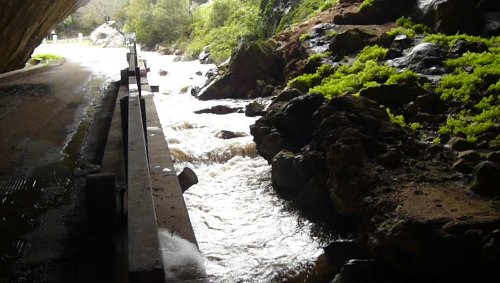
There is much to do in Sardinia, but the island will probably appeal more to nature lovers than to clubbers (with the exception of the Costa Smeralda area, one of the 'hot spots' of the Italian show-business jet set).
Sea
Sailing has become increasingly popular, in particular in the Costa Smeralda area; the first Italian challenge in the America's Cup hailed from there. There are many ports everywhere, and some places are reachable only by boat. Do not miss this opportunity if you like to sail.
Islands
While not many, the islands are generally of interest; check in particular the Asinara National Park (famous for its Albino Donkeys) and the Maddalena archipelago in the north, the islands of Sant'Antioco (actually connected to the mainland since Roman times) and San Pietro (a community of Genoese fishermen) in the south.
Eat
The traditions and habits are very strong. You will not get any pizzas in restaurants before 19:00, and you will get nothing to eat in restaurants between 16:00 and 19:00, besides 'panini' that is usually a cold sandwich with ham and cheese. The exception may be some tourist-oriented restaurants in tourist-oriented places.
Culurgiones. They are similar to Ravioli (made with typical pasta of Ogliastra) with a filling of potatoes, 'Pecorino' cheese (sheep's milk cheese, see below), egg, onion, mint and garlic - available in many Sardinian restaurants. (updated Dec 2018) Malloreddus. A type of gnocchi that are served al dente with a tomato, meat or cheese sauce. (updated Dec 2018) Pizza and Pasta. There are pizzerias serving fresh, stone oven-baked authentic style pizzas and pasta dishes. (updated Dec 2018) Porcheddu. A local specialty of inner Sardinia, it's a young pig roasted in a special manner over a wood fire with an aromatic local shrub called mirto. The pig is frequently basted. (updated Dec 2018) Salsiccia di cinghiale. The wild boar sausage. There are many other types of sausage too. (updated Dec 2018) Stufato di Capretto. A rich casserole made from kid goat, artichokes, wine and also egg. (updated Dec 2018) Su Zimminu (aka Zuppa alla Maddalenina). A spicy seafood soup typical for Maddalena archipelago. (updated Dec 2018) Mediterranean fish (Pesce Azzurro). Look for a fish market in any small coast town and buy early in the morning, cook and eat: it's simply fantastic barbecued. The Bottarga (the dried roe of tuna [Bottarga di tonno] in Carloforte or of flathead mullet [Bottarga di muggine] elsewhere) is rather expensive but quite good. (updated Dec 2018) Fruit and Vegetables. Many locally-produced fruit and vegetables are very tasty, as they are grown in small farms and are mostly organic; vendors along the roads are a frequent sight. Apart from the usual assortment of typical Mediterranean products (such as eggplants, bell peppers, orange, and grapes), you will also find among others wild asparagus, figs, water-melons, and nuts (hazelnuts, chestnuts, walnuts, almonds). Spices (such as thyme, rosemary, fennel) are found in abundance in the country. (updated Dec 2018) Pecorino. Sheep cheese (It. Pecora, sheep) is found everywhere with all degrees of ripeness from fresh to seasoned (the latter being stronger in taste). Sale of Casu marzu (Sard. for rotten cheese) is forbidden; but its production is perfectly legal and it may be found with the help of locals. As usual with this kind of product, precautions must be taken; it is highly recommended to eat it with trusted locals. Goat cheese can also be found. (updated Dec 2018) Fainé. Pancakes made of chickpea flour. (updated Dec 2018) Seada ((pl. Seadas or Sebadas)). Typical of Barbagia, is a dessert similar to Ravioli. It has a characteristic filling of fresh cheese and lemon rind, and melts when Seada is cooked. It must be fried and served with honey. (updated Dec 2018) Sardinian bread and pastries. There are numerous types of these, with specialties such as Carasau (a type of thin crispy bread), sponge biscuits and almond pastries. What distinguishes Sardinian pastry is the use of pig lard for fat and honey for sugar. (updated Dec 2018) Torrone. Sardinian version of nougat with honey instead of sugar, and almonds, hazelnuts, and walnuts (all locally produced); the torrone capital of Sardinia is Tonara (Nuoro province): just going there is worth your time. (updated Dec 2018)
Drink

Beers
Beer is the most common alcoholic drink among Sardinians; in fact, Sardinia has the highest consumption of beer in all of Italy.
1 Birra Ichnusa, Assèmini, Cagliari. The main local beer brand, however many artisan beers are produced, some of them even awarded at the international level. (updated Dec 2018)
Wines
Cannonau. A strong red wine from the Sardinian variety of Garnacha (Grenache) grapes. (updated Dec 2018) Monica di Sardegna. A lighter, more accessible red wine. (updated Dec 2018) Vernaccia di Oristano. This include both dry and sweet wines as well as fortified "sherry-like" wines aged in a solera. (updated Dec 2018) Vermentino di Sardegna. A light wine with a strong minerally taste. (updated Dec 2018)
Sleep
While you can find most major hotel chains in Sardinia, the better way to really enjoy a stay in the island is to find a local hotel or a bed and breakfast or a holiday apartment. Another often cheaper option that adds many 'out of town' locations is to rent a small cabin in a camping village or a room in an 'agriturismo' farm or rural cottage. Most accommodations are located near the coast, but also internal regions offer great opportunities.
Local customs
Sardinians are generally a quiet and reserved people, especially those from the interior where they are, more than the other islanders, deeply attached to their land and culture; surely they may prove to be different from the archetype of the outgoing and talkative Mediterranean.
Stay safe
Sardinia is part of the Mediterranean area and shares its specific hazards. A few basic precautions are generally enough to stay out of trouble, especially during summer and autumn. Sardinia is sparsely populated, in particular the interior; help is not always easily found, and there remain large patches of land where mobile-phone coverage is non-existent (e.g. at the bottom of sheltered valleys). Terrain, despite the lack of high elevations, is generally rugged and steep; this, in combination with heat and lack of water, can quickly lead to disaster. Beware! Summer is hot and the sun quite strong; the usual precautions to avoid heatstroke and sunburns apply. From May to September, water scarcity in the country is a serious problem. Always take a lot of water with you (especially so when hiking), even if you plan a short trip; bringing along fresh watery fruit (such as peaches) is also helpful. While tap water is generally (but not always) safe, it is recommended to buy bottled mineral water; remember that sweating implies loss of water and of mineral salts. Autumn is generally fine, but heavy rainstorms combined with hilly topography can potentially create land- and mud-slides. Always check the weather before embarking on a trip, even with your car. Winter and spring are generally safer, with pleasantly mild weather (especially during the day) and an abundance of water; but remember that higher elevations correspond to colder temperatures and heavier precipitation. Much of Sardinia (especially the Western part) is very windy from September to April; all drivers, and in particular those with campers, must exercise caution. Some open-sea beaches are notorious for strong underwater currents (in particular on the west coast); warning signs are not always posted. Ask at your hotel or locals. The Mediterranean Sea is no lily pond; every year, there are several people killed by drowning in Sardinia, and regularly victims are imprudent persons dragged from the shore by large waves. Be careful when hiking in old mining districts (Sulcis-Iglesiente, Sarrabus, Nurra). While local authorities have sealed off many dangerous areas, some remain unmarked. Always avoid dark galleries, because they might hide vertical ventilation shafts. Do not venture into closed areas (look for the word Pericolo [Danger] or the usual warning signs). If you want to explore mines, go to the local tourist information agencies; they will direct you to organized tours. There have been tales of individuals (mostly ex-mineworkers) running their own private tours; avoid these, as they are illegal and extremely unsafe, because of risks of cave-ins, water infiltration, etc. Local fauna and flora can be dangerous or source of discomfort:
Ticks (Rhipicephalus sanguineus) carry infectious diseases and are endemic to certain areas: avoid tall grass fields or close prolonged contact with domesticated animals (in particular sheep). Lethal mushrooms (among which Amanita phalloides) are found in the island. Consult specialized texts for expert advice.
Sardinia has a very low crime rate. Be wary of game hunters during the September–February period; check with locals, hotel employees, and the website of the Sardinian Region for legal hunting dates. Do not hike in the wilderness during these days. There are protected areas (It. Oasi di protezione della fauna) but even these are regularly raided by poachers, especially during the night. From April/May to September, fires plague Sardinia as the rest of the Mediterranean area; some are spontaneous wildfires, but most are criminal. Observe the usual precautions. It is generally forbidden to start domestic fires in forests. Check with local authorities; Sardinia is an autonomous region and Italian laws might be superseded by local provisions. Taking sand, stones, or shells from beaches is a criminal offence. Fines range from €500 to €3,000, and airport scanners detect these items.
Go next
You can consider visiting Corsica, which is right next to Sardinia. Bear in mind that the island is a part of France, not Italy. Your Schengen visa (if you are required to get one, that is) will allow you to cross through without any problems.
More pictures of Sardinia


From this destination's category on Wikimedia Commons. Each photograph is credited to its own author under its own licence.
The guide text on this page is from the Wikivoyage article Sardinia, written by Wikivoyage contributors and published under CC BY-SA 4.0. The authors are listed in the article’s edit history. It has been shortened and re-laid-out for this page; that adapted text is available under the same licence. Nothing else on this page is.
Wikivoyage is written by travellers, not by us. Opening hours, prices and whether a place still exists are exactly the details that go out of date, so check anything you are relying on.
“776 readers a month” and the ranking are ours, counted from Wikimedia’s published pageviews (CC0) — the median of twelve complete months. They count people reading about a place, which is not the same as people going there.