
Montreal
Montreal (French: Montréal) is the largest city in the Canadian province of Quebec. While Quebec City is the political capital, Montreal is the cultural and economic centre, and the main entry point to the province. With 1.8 million residents in the city (2021), and 4 million in the urban area, Montreal is Canada's second largest city and the largest francophone city in the Americas. That said, the city has a proud tradition of bilingualism, with a large and long-established Anglophone minority, and most Francophones being conversant in English. Old Montreal has a heritage of colonial times. Though a large city, Montreal gives opportunities for outdoor life, and for watching the legendary Montréal Canadiens ice hockey team.
Most read about in July, least in March. That is when people look it up, which tends to run a month or two ahead of when they go.
Before you book
The Foreign, Commonwealth & Development Office publishes the UK’s official travel advice for Canada. It changes without notice and travelling against it usually invalidates your insurance, so read it at the source rather than anywhere else — including here.
FCDO travel adviceUnderstand

History
On an island in the St. Lawrence River at the historically highest navigable point, Montreal has been a strategic location since before the arrival of Europeans in Canada. A thriving Iroquoian town called Hochelaga was on the site of present-day Montreal when explorer Jacques Cartier first visited in 1535. In 1642, the tiny town of Ville-Marie was founded as a Catholic mission by Paul Chomedey, sieur de Maisonneuve. It soon became a centre of the fur trade. After its capture by the English in 1762, Montreal remained (until the 1970s) the most important city in Canada and was briefly capital of the province in the 1840s. Prohibition on sales of alcohol in the United States during the 1920s and 1930s made Montreal a destination for cross-border fun seekers from nearby New England and New York. The city built up a seedy, yet playful, industry in alcohol, burlesque, and other vices. In the 1960s, an urban renewal drive centred on Expo 67. The World's Fair in Montreal brought the Metro system and attractive urban parks and is considered to be one of the most successful World Fairs. Over 50 million visitors gathered in Montreal during this memorable summer. The 1976 Olympics left a strikingly idiosyncratic stadium and many other urban improvements.The opening of the Saint Lawrence Seaway in 1959, though much-lauded as an economic boom, spelled the beginning of the end for Montreal's economic dominance in Canada. Once the transition point between western railways and eastern sea carriers, Montreal watched helplessly as some of this business moved farther west, up the now navigable seaway, to ports in Ontario and on Lake Superior. The Quebec sovereignty movement, which began to pick up steam in the 1960s, further chilled the atmosphere for Canada-wide businesses, many of which moved their headquarters to Toronto. Following an economic depression in the 1980s and 1990s, Montreal became more secure in its place in North America and the world. It remains a centre of culture, arts, computer technology, aerospace, the biotech industry, and media for all of Canada.
Orientation
It has been said that Montréal is the only city in the world where the sun "rises in the south". Montrealers use an unconventional compass, using the river and the mountain as cardinal points. When you are downtown, the St Lawrence River is “south” and Mount Royal is “north”; making the West Island and the East End correct in both their names and orientations. This tends to confuse visitors because the “East” End is really north and the “South” Shore is east, and the St Lawrence River runs almost north-south at this location. Most local maps use this convention as do the highways around the city. For example, Autoroute 15 north actually runs northwest and Autoroute 40 east runs northeast. To underscore this fact, a Montreal map will show that the "south end" of Victoria Bridge is in fact further north than the "north end".
Climate
The climate of Montreal is a true humid continental climate with 4 distinct seasons. The city has warm—and occasionally hot & humid—summers. Typical summer temperatures average around 26.7 °C (80.1 °F) in the day and 18 °C (64 °F) at night. A heat wave in the summer could see temperatures rising upwards to or even exceeding 32 °C (90 °F) and not going below 22 °C (72 °F) at night, alongside humid conditions. Springs and autumns are generally mild, and winters are often very cold & snowy. Montreal gets over 2,000 hours of sunshine annually, daylight hours range from 05:15-20:45 in early summer, to 07:30-16:15 in the December. Precipitation is moderate throughout the year, with around 2 metres of snow per season.
What's inside
Ville-Marie borough
Neighbourhoods from west to east:
Getting there

YMQ IATA is used as the metropolitan area airport code for all airports and rail station.
By plane
1 Montréal-Pierre Elliott Trudeau Airport (YUL IATA) (☏ +1 514-633-3333 / ☏ +1 800-465-1213 ), also known to locals as Dorval Airport, is west of the city centre on Expressway (Autoroute) 20. It is well-connected domestically, and to Europe and the United States, but connections to the rest of the world are much more limited. Travel time to the airport from the city centre can be as much as an hour, depending on traffic. The 747 bus and taxis are able to use a special lane to bypass traffic. For Air Canada passengers, Landline runs a non-stop shuttle between the airport and the Palais des congrès downtown every 15–30 minutes for $9 one way. 2 Montreal Metropolitain Airport (YHU IATA), also known to locals as Saint-Hubert Airport, is east of the city, and only serves domestic flights on Pascan Aviation and Porter Airlines. Plattsburgh International Airport and Burlington International Airport, in the United States, are 1 hr 20 min and 1 hr 50 min away, respectively, by car from Montreal. Adirondack Trailways offers a bus service from Plattsburgh International Airport to Montreal. Greyhound offers a bus service from Burlington International Airport to Montreal. For travellers from the US, these airports may offer a significant cost savings compared to Trudeau but at the added inconvenience of arranging ground transportation between the US and Canada.
By train
3 Montreal Central Station (Gare Centrale) ((YMY IATA)), 895 rue de la Gauchetière Ouest (one block west of rue University, and is served by the Bonaventure metro (subway) station). Train operators stopping at this station are listed below. (updated Oct 2023)
Getting around

Montreal has historically been divided into east and west by boulevard Saint-Laurent, with the west side traditionally being Anglophone and the east side traditionally being Francophone. Numbered addresses on streets that cross Saint-Laurent start there and increase in either direction; most addresses are given as "rue ____ Ouest" (west) or "rue ____ Est" (east). Many streets are named after Catholic saints and figures from local history, both well-known and obscure. In Montreal street names, "east" and "west" refer to the direction parallel to the St. Lawrence River, and "north" and "south" refer to the direction perpendicular to the St. Lawrence River. Because the St. Lawrence River runs almost north-south near downtown Montreal, "east", "west", "north", and "south" are actually northeast, southwest, northwest and southeast respectively. Most maps displayed in the city have "Montreal north" on top which can be confusing with a satellite navigation that uses pole north. Don't try to navigate by looking at the sun!
Fares
The Autorité régionale de transport métropolitain (ARTM, Metropolitan Regional Transportation Authority) sets the fares for all public transit in the greater Montreal area. This includes the fares for all Metro, REM, Exo and bus journeys. The ARTM divides the greater Montreal area into zones, labelled A, B, C and D. Zone A covers Montreal. Zones B-D cover areas outside of Montreal. For example, a REM journey from Montreal (zone A) to Deux-Montagnes (zone C) requires an All Modes ABC fare. The ARTM has a fare schedule listing the prices for all variations. There are two types of fare card: the "L'Occasionnelle" card and the "OPUS" card. Either card can be purchased at Metro, REM or Exo stations, as well as other retail points of sale. Either card can be purchased using cash, credit card or debit card. The L'Occasionnelle card is a non-rechargeable smart card. It can contain regular transit fares and is valid for pre-determined periods and zones. There are L'Occasionnelle cards for 1 trip, 2 trips, 24 hours, 3 days, unlimited evenings (between 18:00 and 05:00) and unlimited weekends, with separate prices depending on zones travelled: A, AB, ABC and ABCD. The OPUS card is a rechargeable smart card. The card can be recharged via the Chrono App, ticket machines or ticket counters. There are two types of OPUS card: standard ($6) and designated ($15). The standard OPUS card supports the same fare types as L'Occasionnelle as well as 10-trip, weekly (Monday through Sunday) and monthly (1st through 31st) fares but only for zone A. The designated OPUS card supports zones AB, ABC ABCD plus reduced fares for youths (aged 6-17) and senior citizens (65+). To get a designated OPUS card, you must get your photo taken and show identification (e.g. passport) at a Metro station. Here are some All Modes A fares as of 2026: 1-trip $3.75, 2-trips $7.00, 24-hours $11.25, 3-days $21.75, 10 trips 34.25 (OPUS card only). The 24-hour and 3-day passes are well worth it to avoid fumbling for change, checking transfer times and restrictions, and worrying about getting off at the wrong stop and having to repay. Fares by trip are valid for transfers but not for stopovers and return trips, and each trip must me completed within 120 minutes. Children 11 or younger ride free when accompanied by someone 14 or over who paid a fare. On buses, the exact 1-trip fare could be paid in coins (no bills, no change provided). For bus 747 to/from YUL Montréal-Trudeau Airport, you need to buy a 24-hour or more expensive fare. You must hold onto your fare card for the whole journey as it is your proof of payment; fare inspectors may give you a large fine if you are unable to show it when they request it.
By Metro
Société de transport de Montréal (STM), ☏ +1-514 786-4636. (updated Jan 2024)
See
Architecture
Many notable historical buildings and churches are located in Montreal, the vast majority of which are in old Montréal. Most of these date from the 17th to the 19th century, showcasing the variety of architectural styles seen in these periods. At night, several of the buildings are beautifully illuminated, seemingly glowing from within. A Tourist Welcome Office brochure from Bonjour Québec lays out a walking map. It is worthwhile to follow the map twice, once during the day, and again at night.
Of the four Roman Catholic Basilicas in Montreal, the Notre-Dame Basilica (Basilique de Notre-Dame) at Place d'Armes is undoubtedly the most famous church in Montreal. This architectural marvel is known throughout the world for its lavishly decorated and colourful interior. This basilica, splendidly exemplifying the Gothic Revival style, is an extremely popular tourist attraction. Although rather small and not a basilica, another notable church located in Old Montreal is the Notre-Dame-de-Bon-Secours Chapel (Chapelle Notre-Dame-de-Bon-Secours) near the Bonsecours Market, the first church to be founded in Montreal. It is known for its maritime theme and beautiful frescoes on the inside walls and ceilings. Downtown Montreal houses Saint Joseph's Oratory (Oratoire Saint-Joseph), the largest church in Canada. Stylistically based on elements of the Italian Renaissance, it features the third highest dome in the world, and acts as the highest point in all of Montreal. Downtown Montreal is also home to the opulent Mary, Queen of the World Cathedral (Cathédrale Marie-Reine-du-Monde), a National Historic Site of Canada modeled on St Peter’s Basilica in Rome, and Saint Patrick's Basilica (Basilique Saint-Patrick), which was built to serve Montreal's Anglophone Catholic community. Aside from churches, a main architectural feature of downtown is Habitat 67, a residential complex built from interlocking modular forms, giving a result that somewhat resembles a pile of Lego bricks. It is the only intact pavilion remaining from Expo 67 and is known around the world as an excellent example of post-modern and minimalist architecture. Its conception has had an incalculable impact on later development of modular homes. Located at Cité-du-Havre, near the Old Port (Vieux-Port). Guided tours are available; tickets must be booked online in advance. Adults $50; children under 12 free.
Landmarks
Le Plateau combines scenic residential streets with hip shopping and dining. Vieux-Port (Old Port), is located south of rue Saint-Antoine between rue McGill and rue Berri (Metro Champ-de-Mars or Place-d'Armes). The Old Port is a large waterfront green space with attractions such as Cirque du Soleil, the Montreal Science Center, the Labyrinth, the Clock Tower, and a large outdoor audio-visual stage which is the site for the Canada Day fireworks. It is a vibrant place to visit during the day and the evening. ☏ +1 514-496-7678, toll-free: +1 800-971-7678, information@oldportofmontreal.com. 6AM-Midnight. Downtown Montreal has skyscrapers, the enormous McGill university campus, churches, and museums. Several blocks are connected by the famed 30 km of underground arcades and malls, allowing comfortable walking and shopping when the weather is foul. Parc Jean-Drapeau, site of the 1967 World Fair, now devoted to green spaces and a large outdoor concert venue. The Gilles-Villeneuve racing circuit, home of the Montreal Formula 1 Grand Prix. An artificial beach, a huge outdoor pool complex, and the Montreal Casino are also in or around the park. A few kilometres to the north, Hochelaga-Maisonneuve offers the Olympic Stadium, the Insectarium, the Jardin Botanique, and the Biodôme. This diverse range of activities and environments offer something for all ages. When planning a trip, allow four hours to see all four.
Do

In Montreal/Parc Jean-Drapeau, you will find the Casino de Montréal and the La Ronde, a Six Flags family amusement park.
Cross-country skiing
During the winter, many parks offer the possibility to do cross-country skiing with groomed paths, including Parc regional de l'Ile-de-la-Visitation (ski rental available), Parc du Mont-Royal (ski rental available and usually the best ski conditions, and Parc Maisonneuve and Jardin Botanique (no ski rental).Ice skating There is year-round ice-skating at 1000, rue De La Gauchetière (Metro Bonaventure). There is free skating at Lac aux Castors Beaver Lake in the Parc Mont-Royal, in the connected ponds of Lafontaine Park in Plateau Mont-Royal, and in the Vieux-Port in front of the Bonsecours Market and many parks.
Water sports
River surfing — Although the Saint Lawrence River is frozen nearly solid for four to five months out of the year, the waterway has become a magnet for aficionados of this new sport. Unlike their oceanic brethren, river surfers ride the standing waves in fresh waterways. The Saint Lawrence has two main hot spots for the sport: Habitat 67 is close to the bridge between Montreal and Île des Soeurs, the site of the 1967 Expo and the Montreal Casino. (This wave is also known as Expo 67.) The Surf 66 Boardshop at the 1952 rue Cabot offers lessons. Kayaking — Just off the shore of the park in Lasalle are the Lachine Rapids. Huge waves, fast water, and loads of fun for kayaks. Lessons are available on site in the huge eddy formed by the peninsula. Annual surf (rodeo) competitions at "Big Joe" (still called "Beneath the Wheel" by old schoolers). Other famous play waves on this set of rapids on the St. Lawrence river are, Istambul and Constantinople, Pyramid, Slice and Dice, Black and Decker, and HMF on the other side of the islands. For those seeking less of an adrenaline rush, there is always the Bunny Wave (La Vague a Guy) upstream near the bike path at Park Rene Lesvesque. Rafting these same rapids is also a fun option.
Shopping

Although Montreal's economy has been booming, the city remains remarkably affordable compared to other major cities in Canada and the United States. Shopping in Montreal ranges from eclectic budget stores to high-end fashion, with a wide spectrum in between.
General
Rue Ste-Catherine, between rue Guy and boulevard Saint-Laurent, has many of the big department and chain stores as well as a few major malls. Avenue Mont-Royal has funky consignment and gothic clothing stores from boulevard Saint-Laurent to rue Saint-Denis and a mixed bag of neighbourhood stores, used record shops, and gentrified boutiques heading east towards avenue Papineau. Rue St-Viateur is one of the city's most interesting streets, with its amazingly varied range of businesses crammed into the short stretch between boulevard Saint-Laurent and Avenue du Parc. St-Laurent remains one of the city's prime shopping streets, more or less along its whole length. Just about anything can be found there, with different blocks having different clusters of businesses (Asian groceries and housewares near de La Gauchetière, cheap electronics a little farther up, hip boutiques between Prince-Arthur and Mount Royal, anything and everything Italian between Saint-Zotique and Jean-Talon). Rue Sherbrooke ouest, west of the Autoroute Décarie, has an increasingly interesting concentration of largely food-oriented businesses. Jean-Talon market, near the intersection of Jean-Talon and St-Laurent, has a wide variety of local produce and food products (maple syrup, cheese, etc.) at very good prices. For electronic stuff, the largest chain store is BestBuy. You can also find many smaller ones on boulevard Saint-Laurent (between Ontario and Sherbrooke).
Budget
Village des Valeurs, 2033 Pie IX (Métro Pie IX). Second hand store providing montrealers with shops inside and outside of Montreal. (updated Aug 2023) Le coffre aux trésors "Chainon", 4375 Boulevard St Laurent (Métro Sherbrooke). L'Aubainerie Concept Mode, 1490, av du Mont-Royal E (metro mont royal). Friperie St. Laurent, Friperie St. Laurent, ☏ +1 514-842-3893. Some military equipment shops around St-Laurent and Ste-Catherine. For trekking and outdoor, you also have many options
Eat
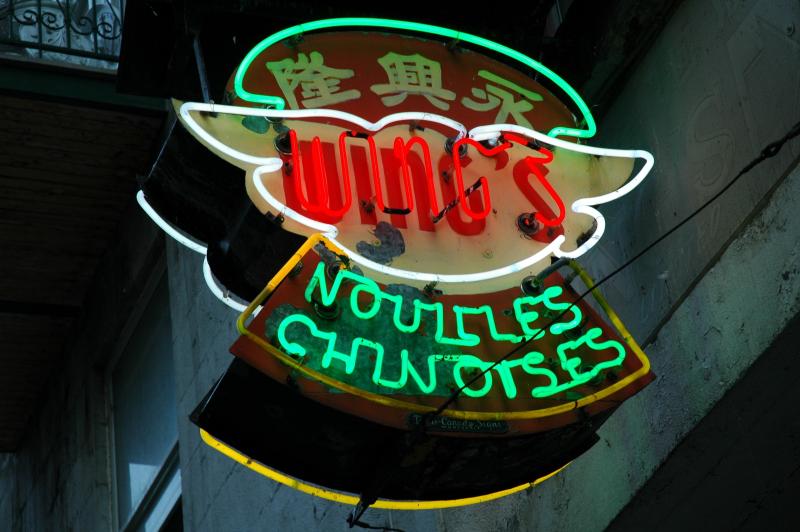
Montreal is a culinary mecca and has a huge variety of food options, from diners and fast food to low-cost ethnic restaurants to haute cuisine. The city was ranked 2nd best dining city in North America after San Francisco and ahead of New York. The large local Jewish population has contributed local specialties including huge smoked meat sandwiches (beef brisket) (Schwartz's is the most authentic smoked meat restaurant, though this title has been challenged by a gradual slip in quality in the early 2020s) and small, crusty bagels (the undisputed classic bagel places are St-Viateur's and Fairmount Bagels). Other specialties are "all-dressed" pizza (pepperoni, mushrooms and green peppers), pizza and spaghetti with smoked meat, and Québécois favourites like split pea soup and poutine.
Many Montreal restaurants are "apportez votre vin" (bring your own wine). This may sound like a hassle, but you end up paying much less for wine with dinner if you bring it yourself. There's usually a SAQ (government liquor store) or a dépanneur (convenience store, with a limited selection of typically inexpensive wine) nearby; ask your waiter where it is. Your waiter will open your wine for you; corkage fees are rare, but don't forget to factor this service into your tip so make sure to ask. If you are driving from the United States, you may find Canadian liquor prices quite frightening. Even the duty-free shops along the border are rarely cheaper than an American liquor store (although these are still cheaper than the SAQ). Visitors can bring in 40oz of hard alcohol, 1.5L of wine, or a 24-pack of beer. Separate bills (la facture in French) are common and you may be asked ensemble ou séparément? (together or separately?) The standard tip for acceptable restaurant service is 15% and is not included. Never call a waiter "garçon"! Use "monsieur" or "madame".
Montreal specialties
There are several foods that are specialties of the city:
Drink
The legal age to purchase alcohol in Quebec is 18 and the Québécois are now much more rigid in enforcing this age limit. All retail alcohol sales stop at 23:00 and bars and clubs stop serving at 03:00. Quality wine and liquor (but only a small selection of imported beers) can only be purchased at SAQ shops, most of which are open until 18:00 Sunday to Wednesdays and 20:00 or 21:00 on other days; the smaller SAQ Express outlets are open daily from 11:00 to 22:00. Beer and a small selection of lower-quality wine are also sold at convenience stores (dépanneurs) and grocery stores. Some supermarkets have partnered with the SAQ to offer a few selection bottles, so if you are caught outside business hours or are in a hurry, places like IGA Extra and Métro generally offer a better variety of wine than the local dépanneur. The selection of beer to be found in grocery stores and even the humble corner store have exploded in the last decade in and around greater Montreal. Two micro-breweries in particular are world-class: McAuslan (brands include St-Ambroise and Griffon) and Unibroue (Belgian-style ales such as Blanche de Chambly, Maudite, La Fin du Monde, and simpler, more affordable U lagers). Boréale makes a good, if unspectacular range of brews, while Rickard's and Alexander Keith's domestics are gaining popularity among locals. Most stores also sell a few major imports such as Stella Artois, Sapporo, Guinness, Leffe and of course, Heineken.
Bars
Montreal has three main strips for bar-hopping. Rue Crescent, in the western part of downtown, caters mostly to Anglophones and tourists. It tends to be trendy and expensive. On the edge of the bar-heavy Plateau, Boulevard Saint-Laurent gets extremely busy when McGill and Concordia students are back in town for a new session. Between rue Sherbrooke and avenue des Pins you'll find trendy clubs and bars with more of a Francophone clientele. Farther up St-Laurent, it's relatively downscale and linguistically mixed. Rue Saint-Denis, between rue Sherbrooke and de Maisonneuve, is the strip with the strongest Francophone feel. There are also many good bars away from the main strips, like on Avenue Mont-Royal, and even nowadays on Rue Masson et Rue Ontario in the eastern part of town. You should never have to line up to go have a drink, because there's virtually an unlimited choice. Depending on the day of the week, the best events vary. For example, on Tuesday you should go to Les Foufounes Électriques for cheap beer and a unique experience in a Montréal institution. In summer, many bars offer a terrasse (outdoor seating) which is perfect for people-watching or lounging under leafy backyards.
Dance clubs
Dance clubs can be found all over the downtown area, with hotspots on boulevard Saint-Laurent and rue Crescent. Check out the Plateau, too.
Sleep
For the budget traveller, Montreal offers youth hostels with dorms or private rooms and budget bed and breakfasts (sometimes with very skimpy breakfasts). The densest collection of budget hotels are in the Latin Quarter, in the streets east of Berri-UQAM Metro and the intercity bus station. Old Montreal has a couple of quality hostels, but you'll pay more to be there. Montreal is also the city with the most Couch Surfing members, so it is easy to find a hospitable local host for a few nights. As with most major Canadian cities, another option is to stay at a hostel or hotel in an adjacent suburb; Laval and Longueuil are good choices for these due to their connection to the city's subway network. Mid-range options include Downtown chain hotels to "gîtes", guest houses that range from a single room in an apartment to elegant historic homes with three to five rooms. Gîtes are usually found in the more residential neighbourhoods like the Plateau. On the upper-end, four and five-star luxury and boutique hotels are mostly concentrated in Old Montreal and Downtown. Montreal is home to four major universities and numerous smaller schools. Students routinely sublet apartments in the summer months.
Local customs
As in the rest of Quebec, language politics and Quebec sovereignty are contentious issues in Montreal. Don't make the assumption that all French Canadians are in favour of Quebec's separation from Canada as many (especially in bilingual Montreal) are against it. Also, while most Francophones in other parts of Quebec identify solely as Québécois and not Canadian, many Francophones in Montreal identify as both Québécois and Canadian. If you really want to discuss those topics with locals, be sure you are well-informed. It is still safer to avoid the subject, as it is still a very emotional issue. Use common sense and be respectful. The main language in Montreal, as in the rest of Quebec, is French. Making an attempt to use the language is a great way to show respect for locals, whether or not they can speak English, even if you can manage only a few words with a very strong accent. However, Montreal is considered to be one of the world's most bilingual cities with many residents whose primary language is English, and you will often hear locals code switching between French and English when having a conversation. In case of doubt, you may want to open with a warm "Bonjour!" (Good day) and see what language is used in response. Most likely you will be answered in English, if your French accent does not sound local. Don't be offended if you are trying to speak French and locals respond to you in English. Since most Montrealers speak both French and English, they are simply trying to make things easier for you. Many people working in the tourist and service industries are completely bilingual without accents. But don't make jokes about French people (especially since Francophones in Montreal are mostly Québécois with a few Acadiens and Franco-Ontariens, all of whom consider themselves different from the French from France and from one another). Also, do not assume that all Québécois are Francophones. Montreal has a significant English-speaking community with a long history in Quebec and many immigrants whose first language is neither English nor French ("Allophones").
Stay safe
For emergencies call 9-1-1. Although Montreal is Canada's second largest city, it shares Canada's low violent crime rates making it relatively safe. However, property crimes, including car theft, are remarkably high: make sure to lock your doors and keep your valuables with you. Take extra care if you want to visit Montréal-Nord or Saint-Michel. These neighbourhoods are the worst of the city and shootings are not unheard of in these areas. There is, however, little for tourists to do and they are unlikely to enter by accident. The men and women of the SPVM (Service de Police de la Ville de Montréal) are hard-working, professional and approachable if you need assistance or have any safety concerns. Do know, though, that they deal with many annoyances and big-city problems and take a no-nonsense approach that many from other countries (or even other cities in Canada) may not be used to. Young men in groups (especially visible minorities) can and frequently are stopped by patrol officers late at night in seedier areas, including parts of downtown. They may check ID and ask cursory questions but usually nothing more. Part of Montreal's Sainte-Catherine downtown corridor is arguably where crime is common in the city, especially east of Place des Arts. There are homeless people panhandling during the summer and fall. Although most of them are polite, there are some that are more aggressive. Avoid individuals wandering on the streets that appear intoxicated. The street is at its most dangerous around 03:00 when closing clubs and bars empty their drunken crowds into the street. You may also come across occasional pockets of street prostitution, especially around strip clubs. In Montreal, pickpockets are not very common, but keep an eye on things when watching street performances in the Old City or in other crowds. If you are concerned about safety on the Metro, use the first Metro car where the driver is. Emergency intercoms are on every Metro car. Emergency phone booths are on every platform throughout the Metro system, which is generally safe. While written instructions are in both English and French, most announcements (usually about delays) are in French only so if you think you heard something in the announcement that may affect you, just try asking a fellow passenger for a translation. The STM offers a "between stops" (entre deux arrêts) service that allows women travelling alone at night to get off the bus between two regularly designated stops if the bus driver feels they can stop the bus safely. Pedestrians and bike-riders should be especially careful. Crosswalks are rarely respected. Motorists have a general contempt for pedestrians, especially when they are trying to make a right turn at an intersection. Wasps are a considerable menace during the height of summer. Consider carrying vinegar with you in case of stings to help neutralize the sting. Otherwise, see below if you are allergic for the nearest hospital.
Weather
Montreal is often icy and cold in winter, be careful by dressing appropriately for the conditions and be mindful of ice or snow anytime you are driving or walking. Street clearing of snow is generally effective. Summers are warm to hot and can be quite humid. Being surrounded by rivers adds to this effect.
Hospitals
The closest hospital to Pierre Elliott Trudeau Airport is the Lakeshore General Hospital at 160 avenue Stillview in Pointe-Claire. (+1 514-630-2225) The Montreal General Hospital is at 1650 avenue Cedar. (+1 514-934-1934) The McGill University Hospital (Glen site) (MUHC) is at 1001 Decarie Boulevard (+1-514 934-1934). The Jewish General Hospital is at 3755 rue Côte Ste-Catherine. (+1 514-340-8222) If you do not have Quebec Health Insurance, be prepared to pay by credit card at the door as it does not accept traveller's insurance (but you may be reimbursed when you return home). Several hospitals offer service in French and English.
Go next
Montreal makes an excellent entryway for visiting other cities and destinations in Quebec and the northern United States. You will have to pass the border control if you go to the US, and arm yourself with the appropriate visas and papers. Add at least one extra hour for the border control.
The Adirondacks are a 2½-hour drive to the south. These mountains make up the largest park in the contiguous US and offer outdoor activities like hiking, rafting and skiing. Boston is a 5-hour drive to the southeast. Mont Tremblant lies less than two hours north in the Laurentides. The Eastern Townships are two to three hours straight east. The Laurentians and in the Eastern Townships between December and March offer good downhill skiing. There are some very good night-skiing centres such as Ski Bromont and Mont-St-Sauveur. The Monteregie townships, a short drive east of Montreal. New York City is a 6½-hour drive directly south. Ottawa is two hours west by car. Quebec City, about 3 hours to the north east on Highway 40, is almost but not quite a day trip. You'll want to stay over, anyway. Tadoussac, about 6 hours away by car, has great whale-watching Toronto is more distant, but still a doable 6-hour drive (or a faster 4½-hour train trip).
More pictures of Montreal


From this destination's category on Wikimedia Commons. Each photograph is credited to its own author under its own licence.
The guide text on this page is from the Wikivoyage article Montreal, written by Wikivoyage contributors and published under CC BY-SA 4.0. The authors are listed in the article’s edit history. It has been shortened and re-laid-out for this page; that adapted text is available under the same licence. Nothing else on this page is.
Wikivoyage is written by travellers, not by us. Opening hours, prices and whether a place still exists are exactly the details that go out of date, so check anything you are relying on.
“2,384 readers a month” and the ranking are ours, counted from Wikimedia’s published pageviews (CC0) — the median of twelve complete months. They count people reading about a place, which is not the same as people going there.