
Mexico City
Mexico City (Spanish: México, Ciudad de México or CDMX) is the capital of the Mexican Republic, the most populous city in the country, and one of the most important financial and cultural centers of the American continent. The city center is built on the ruins of the Aztec capital Tenochtitlan, and later came to be the capital of New Spain, which included much of North America. The city grew fast in the 20th century, and today is North America's largest city (and the world's largest Spanish-speaking city) with 9.2 million inhabitants in the city proper, and 22 million in the urban area (in 2020). Three of Mexico's many UNESCO World Heritage Sites are here: the colonial-era Centro Histórico, sites related to architect Luis Barragán in Chapultepec and the university campus in Coyoacán. Several more can be visited as a daytrip.
Most read about in July, least in April. That is when people look it up, which tends to run a month or two ahead of when they go.
Before you book
The Foreign, Commonwealth & Development Office publishes the UK’s official travel advice for Mexico. It changes without notice and travelling against it usually invalidates your insurance, so read it at the source rather than anywhere else — including here.
FCDO travel adviceUnderstand

The greater Mexico City metropolitan area is one of the world's largest and the largest city in North America, with 22 million people living in the metropolitan area in 2020. It sits in the Valley of Mexico. It is shaped roughly like an oval of about 60 km by 40 km with large parts of it built on the dry bed of Lake Texcoco, and surrounded on three sides by tall mountains and volcanoes such as the Ajusco, the Popocatepetl and the Iztaccihuatl. Mexico City proper (with an estimated population of 9.2 million) is the country's capital, and since 2016 has been a "federal entity" with the same powers as the states of Mexico, though still separate from the states. Confusingly, the rest of the metropolitan area extends beyond Mexico City into the State of Mexico, which surrounds Mexico City on the west, north and east, and Hidalgo further north. Practically speaking, Mexico City refers to the city proper and is the area where tourists will spend all or most of their time. The city center is 2,230 m (7,320 ft) above mean sea level, and some outlying areas reach up to 3,000 m (9,800 ft). This is far higher than any metropolitan area in the United States or Europe, and some people have breathing difficulties because of this. If you live closer to sea level, you may experience difficulty breathing due to altitude and pollution. Air quality has, however, been improved in the last few years.
Mexico City is the wealthiest city in all of Latin America, with a GDP per capita of US$27,000, and has the lowest poverty rate in all of Mexico. More than a third of the total Mexican economy is concentrated here. Most of the country's large and multinational corporations have headquarters in the city, mainly in the Polanco and Santa Fe districts.
History
The origins of Mexico City date back to 1325, when the Aztec capital city of Tenochtitlan was founded and later destroyed in 1521 by Spanish conqueror Hernan Cortes. The city served as the capital of the Vice-royalty of New Spain until the outbreak of the Independence War in 1810. The city became the capital of the Mexican Empire in 1821 and of the Mexican Republic in 1823 after the abdication of Agustin de Iturbide. During the Mexico-US war in 1847, the city was invaded by the American army. In 1864 the French invaded Mexico and the emperor Ferdinand Maximilian of Habsburg ruled the country from the Castillo de Chapultepec and ordered to build Avenue of the Empress (today's Paseo de la Reforma promenade). Porfirio Díaz assumed power in 1876 and left an outstanding mark in the city with many European styled buildings such as the Palacio de Bellas Artes and the Palacio Postal. Diaz was overthrown in 1910 with the Mexican Revolution and this marked a radical change in the city's architecture. The 20th century saw the uncontrolled growth of the city beyond the Centro Historico with the influx of millions of migrants from the rest of the country. In 1968, the city was host to the Olympic Games, which saw the construction of the Azteca Stadium, the Palacio de los Deportes, the Olympic Stadium and other sports facilities. In 1985 the city suffered an 8.1 Magnitude earthquake. Between 10,000 and 40,000 people were killed. 412 buildings collapsed and another 3,124 buildings were seriously damaged in the city.
What's inside

The city is administratively divided into 16 alcaldías (boroughs) which are in turn subdivided into colonias (neighborhoods), of which there are around 2150. However, it is better for visitors to think of the city in terms of districts, grouped by shared history and clusters of attractions. In addition to the most central districts, many older towns (like Coyoacán, San Angel and Tlalpan) merged into the urban sprawl while retaining some of their original and unique characteristics.
Other areas of Mexico City include:
La Villa de Guadalupe - In the borough of Gustavo A. Madero in the northern part of the city. Home to the Basilica of Our Lady of Guadalupe, perhaps the holiest Catholic site in the Americas. Draws a large crowd of pilgrims from around the world every day. Magdalena Contreras - Sometimes called the city's "green lungs", this area in the southwest of Mexico City is heavily forested with eco-parks to the south and about 250,000 residents in the northern urban areas near the Periferico. This area lies west of Coyoacan. Iztapalapa - Largely impoverished area in the eastern part of the city that nevertheless has a number of historical and cultural sites and a famous Easter celebration Milpa Alta - Rural borough in the southeast of Mexico City. Famous for its mole production and festival, nopal cactus fields, and the San Andrés convent in Mixquic. Interlomas - Residential and shopping area at the West of the City Azcapotzalco - Mainly residential and industrial area in the northwest of the city. Home to the Parque Bicentenario, built in a former oil refinery, and the Arena Ciudad de México, a modern concert and sports venue. Tláhuac - A former island between the Lakes of Xochimilco and Chalco. Now famous for its production of pottery and an alternative embarkation point to see the ancient gardens and canals that used fill the Valley of Mexico.
Getting there

1 Benito Juarez International Airport (MEX IATA)
Main article: Benito Juárez International Airport Most travellers arrive to Mexico City by air, to Benito Juárez International Airport, located in the eastern part of the city. This is the most convenient airport to most parts of the Mexico City area. From the airport, downtown hotels can be as close as 15 minutes by taxi if traffic is light (which it rarely is). A bus terminal inside the airport makes for easy connections to nearby cities.
2 Felipe Ángeles International Airport (NLU IATA)
Mexico City's second airport is the main hub of Mexicana airlines and serves mostly domestic flights, with a smattering of regional destinations but no flights to the US. Opened 2022, it has modern luggage scanners which don't require passengers to remove laptops or liquids. Like most airports in Mexico, nobody actually uses the long official name of an obscure government figure, but rather, Chilangos simply call this airport "Santa Lucia", or often by the abbreviation "AIFA" (as opposed to "AICM", which denotes Benito Juarez/Mexico City International). While constructing the new passenger facilities, workers uncovered several woolly mammoth remains, which are now housed in the beautiful new Museo Paleontologico Santa Lucia Quinametzen (inside the airport facility). If you have a spare hour or two between flights, a visit would be time well spent. Flying to this airport could (maybe) save you some money over flying to MEX. Skyscanner and Google Flights don't include the Felipe Ángeles airport if you look for flights to/from Mexico City. Instead you need to specifically type in this airport. kiwi.com does include this airport when typing in Mexico City. When booking flights to Mexico City on other sites (such as Kayak), be aware that they sometimes show results that mix NLU and MEX arrivals and departures, so check your reservations before ordering an Uber to the wrong airport.
Ground transportation
Like most outlying airports, NLU is not as convenient for travelers as MEX - allow at least 90 minutes from the airport to downtown.The airport is 49 km (30 miles) from the city and only limited public transportation is available. There are taxi stands which will get you into the centre of town for about M$750 (fixed price). The airport has its own train station called AIFA, which was completed in April 2026. It is served by Tren Suburbano trains. From the airport, trains go to the Buenavista station in Mexico City/Centro. The 40-minute train ride costs M$11.50 to M$26.50 (about US$1.50 for the most expensive fare). At Buenavista station, you can transfer to Metro Line B (but remember, heavy baggage is not allowed on Metro trains). Vivabus, will take you to the Central de Autobuses del Norte (North) and Central de Autobuses del Sur Terminal Taxqueña (South) bus terminals in the city. These buses are your fastest and easiest option, but their departures are not regularly timed so make sure you check the online timetables to make sure they suit your flight. A bus station in the main terminal is served by ADO, Futura and Conexion buses. Buses from AIFA go to AICM (16 daily departures), Autobuses del Norte (4 daily departures), and the city of Pachuca (5 daily departures). Each of these destinations is about 1 hour from AIFA and fares cost about M$150 (Oct 2025). If you want to take regular public transport into Mexico City, it'll take you about 2 hours - although you could always book a ride share service at one of the stops along the way (luggage space on the buses is limited, and large luggage is forbidden on the Metro). Look for the Terminal de Pasajeros bus stop where the Mexibus will take you to Ojo de Agua (about 40 min), where you then have to change to another Mexibus for Ciudad Azteca (try to get an express, and do not get one that terminates at Central de Abastos). At Ciudad Azteca you can then change to the Metro (line B) - just follow the signs through the shopping mall and go over the bridge. The Mexibus requires a separate card for ticketing - the MI card for Metro and city buses won't work. These cards cost M$19 and include M$9 worth of credit - M$28 in exact change will get you the card and on the two buses. The ticket machines are cash only and don't give change, although having 2 pesos leftover on your card if you only have 30 available isn't the end of the world. The airport is relatively close to Teotihuacán (about 40 minutes' drive), so if you only have small luggage you could get a taxi (or Uber from Ojo de Agua) here and explore it on your way to the city.
Getting around

Mexico City is a huge place, but driving is definitely not a way to see it even if tourist attractions are scattered throughout the city. There are several public transport options.
The city government operates the Metro and Metrobús bus rapid transit (BRT) system, which are cheap and reliable but can be very crowded during rush hour. It also operates a light rail line, RTP bus system and electric trolleybuses. There are plenty of franchised private buses, minibuses and vans, known as peseros and combis, which are less reliable and safe but reach more destinations. In the metropolitan area, there is a commuter train line and the Mexibús bus rapid transit system, but most destinations are only served by private minibuses and vans. There are thousands of taxis, painted in white and magenta, and several ride-hailing services with surprisingly cheap rates. If you get lost and are far away from your hotel, hop into a pesero (mini bus) or bus that takes you to a Metro station (look for the sign with the stylized metro "M" in the front window). Using the wall maps, you can get back to a more familiar place (such as Zocalo or Bellas Artes). If it's after midnight, taking a taxi is your best bet.
By metro
The Sistema de Transporte Colectivo, known as the Metro, is one of the largest and most patronized subway systems in the world, with 12 lines that measure more than 190 km (120 mi) and carry 4.4 million people every day. The metro is relatively quick and efficient, especially as an alternative to taxis during rush hours when the streets are essentially parking lots. Operating hours are from 05:00 to 00:00 on weekdays (starts at 06:00 on Saturday and 07:00 on Sunday). A last train leaves every terminal station at midnight. The metro trains run every couple of minutes, so if you just miss it, you won't have long to wait until another arrives. It gets crowded, particularly lines 1, 2 and 3 and during the morning (07:00-09:00) and afternoon (17:00-19:00) rush hours: trains are often filled to significantly over capacity, and sometimes it will be hot and uncomfortable. It can get loud in the trains due to the noise of the wheels and due to conversation, vendors or people blasting their music. The Metro is quite safe, but there are a few incidences of pickpocketing every day. Keep your belongings close to you; if you have bags, close them, keep them in sight and you won't have any problems.
See

Downtown Mexico City has been an urban area since the foundation of Tenochtitlán in 1325, and the city is filled with historical buildings and landmarks from every epoch since then. It is also known as the City of Palaces, because of the large number of stately buildings, especially in the Centro. Mexico City has three World Heritage Sites: the Centro Histórico and Xochimilco, the house of architect Luis Barragán and the University City campus of UNAM. In addition, Mexico is one of the cities with the largest number of museums in the world.
Landmarks
Plaza de la Bellas Artes (Centro Historico). Commonly known as Palace of Fine Arts or Cathedral of Arts in Mexico, host of art events and art exhibitions, along with a number of enormous murals including Diego Rivera's El hombre controlador del universo and Jorge González Camarena's Liberación. (updated Feb 2026) Plaza de la Constitución (Centro Historico). Commonly known as Zócalo, it is one of the largest squares in the world, surrounded by historic buildings, including the City Hall and the Cathedral. Catedral Metropolitana de la Ciudad de México (Centro Historico). Next to El Zocalo in the city center. The biggest cathedral in the Americas. Containing many altars, its principal altar is made from solid gold. Angel de la Independencia (El Angel) (Zona Rosa). A monument in Reforma Avenue that celebrates Mexico's independence in 1810. Basílica de Guadalupe (La Villa de Guadalupe). Catholicism's holiest place in the Americas, and the destination of pilgrims from all over the world, especially during the yearly celebration on the 12th of December. It is the shrine that guards the poncho of Juan Diego that contains the image of Our Lady of Guadalupe, and is in the northernmost part of the city. Ciudad Universitaria (Coyoacán). The main campus of the Universidad Nacional Autónoma de México, the National Autonomous University of Mexico. Located on Insurgentes Sur Avenue, it is one of the world's largest universities, with more than 270,000 students every semester. In 2007 it was declared a UNESCO World Heritage Site. Coyoacán. Historic Colonial Arts district which was home to Frida Kahlo, Leon Trotsky, and Diego Rivera, among others. Plaza Garibaldi-Mariachi (Centro Historico). The square is surrounded by cafés and restaurants much favored by tourists, and in these and in the square itself groups of musicians play folk music. Most of these groups are "mariachis" from Jalisco, dressed in Charro costume and playing trumpets, violins, guitars and the guitarrón or bass guitar. Paseo de la Reforma (Reform Avenue) (Centro Historico, Zona Rosa). A 12 km long grand avenue built for the Emperor Maximilian's wife in the 19th century. Its name commemorates the liberal reforms of Mexican President Benito Juarez. Cineteca Nacional (National Film Archive) (Coyoacán). It was the first to screen art films, and is known for its forums, retrospectives and homages. It has four screening rooms, a video and a film library, as well as a cafeteria. Torre Latinoamericana (Centro Historico). For stunning views of the city. Its central location, height (183 m or 597 ft; 45 stories), and history make it one of Mexico City's most important landmarks.
Parks
Mexico City is full of various plazas and parks scattered through every neighborhood, but the following are some of the biggest, prettiest, most interesting, or best-known.
Do

As the world's 7th largest city, Mexico City offers something for everyone and for every budget. Attractions in Mexico City focus less on lazing on the beach (there are no beaches in Mexico City!) and more on exploring the culture and urban culture of Mexico.
Itineraries
Traveling in Mexico City with children
Festivals and events
Wise Men's day. January 6. Most Mexican kids receive toys from the Three Wise Men (Reyes Magos). This is a celebration that pays homage to the aforementioned Bible story. To celebrate it the family gather to eat the "Rosca de Reyes", a sort of bundt cake filled with plastic baby Jesus figures. Traditionally, people who get a figure in their slice of cake are expected to host a feast with tamales on Candelaria Day, February 2. The surroundings of the Alameda Central park are filled with costumed Reyes Magos on the days leading to January 6. Art Week. early February (Feb. 3 - 9 in 2025). Each year in February, the world of contemporary art focuses on Mexico City's Art Week when parties, celebrations, special gallery exhibitions and myriad galas take place throughout the city. The event takes place at the same time as two other major art events, ZsONA MACO, and Feria Material as well as numerous other events at galleries and museums throughout the city. Independence Day "Yell". September 15. In the evening, the President of the country (or the city mayor) salutes the crowds from the presidential balcony in the National Palace in the Constitution Square (Zocalo) and shouts the famous "Viva Mexico". The Zocalo (and the rest of the city) is decorated with ornaments and lights. This is an incredible expression of Mexican patriotism combined with a party mood. Expect big crowds with a big revelery. If you want smaller crowds, the squares at the center of every borough usually host similar celebrations. Independence Parade. September 16. In the morning, there is a military parade that runs across Paseo de la Reforma, turns right at Juarez Avenue which later becomes Madero Street and ends at the Zocalo. 15,000 to 30,000 soldiers of the Mexican Army, Navy and Air Force march through the streets displaying its equipment and weapons. Alebrijes Parade, Reforma to Zocalo. mid-October. Alebrijes are brightly colored fanciful animal figures that are one of Mexico's most iconic pop art genres. Each year, enormous Alebrijes floats are created and a parade is held along Paseo de la Reforma and then on to the Zocalo. Pink polka-dotted pigs, Purple-winged dragons, orange dogs with spiked haircuts....these and more will march in the parade. After the parade, the giant Alebrijes will be placed in plazas and public spaces along Avenida Reforma for a 3-4 week period when the public can get up close to take their Instagram-ready selfies. Day of the Dead. November 1–2. Mexico is one of the few countries in the world that celebrates this day (Dia de los Muertos), in which people go to the cemeteries to offer tribute to their departed ones, and decorate their graves with marigolds and bright colors. But this is not a sad celebration, on the contrary, people give family and friends candy treats in the shape of skulls and bones made of sugar and chocolate, as well as delicious bread called "Pan de Muerto". Don't miss a visit to a public market to find these delicacies, and watch out for the parades to and from the local cemeteries. In Mexico City, festivities include the lively Desfile de Día de Muertos (Day of the Dead Parade) which was inspired by the James Bond movie, Spectre. The parade includes people dressed as calaveras catrinas and huge colorful alebrije balloon as well as floats and marching bands. The parade route goes up Reforma and over to the Zocalo. In Xochimilco, there are Day of the Dead parties on the canals and the already colorful trajineras are decked out in marigolds, skeletons and wildly fanciful themes.
Shopping
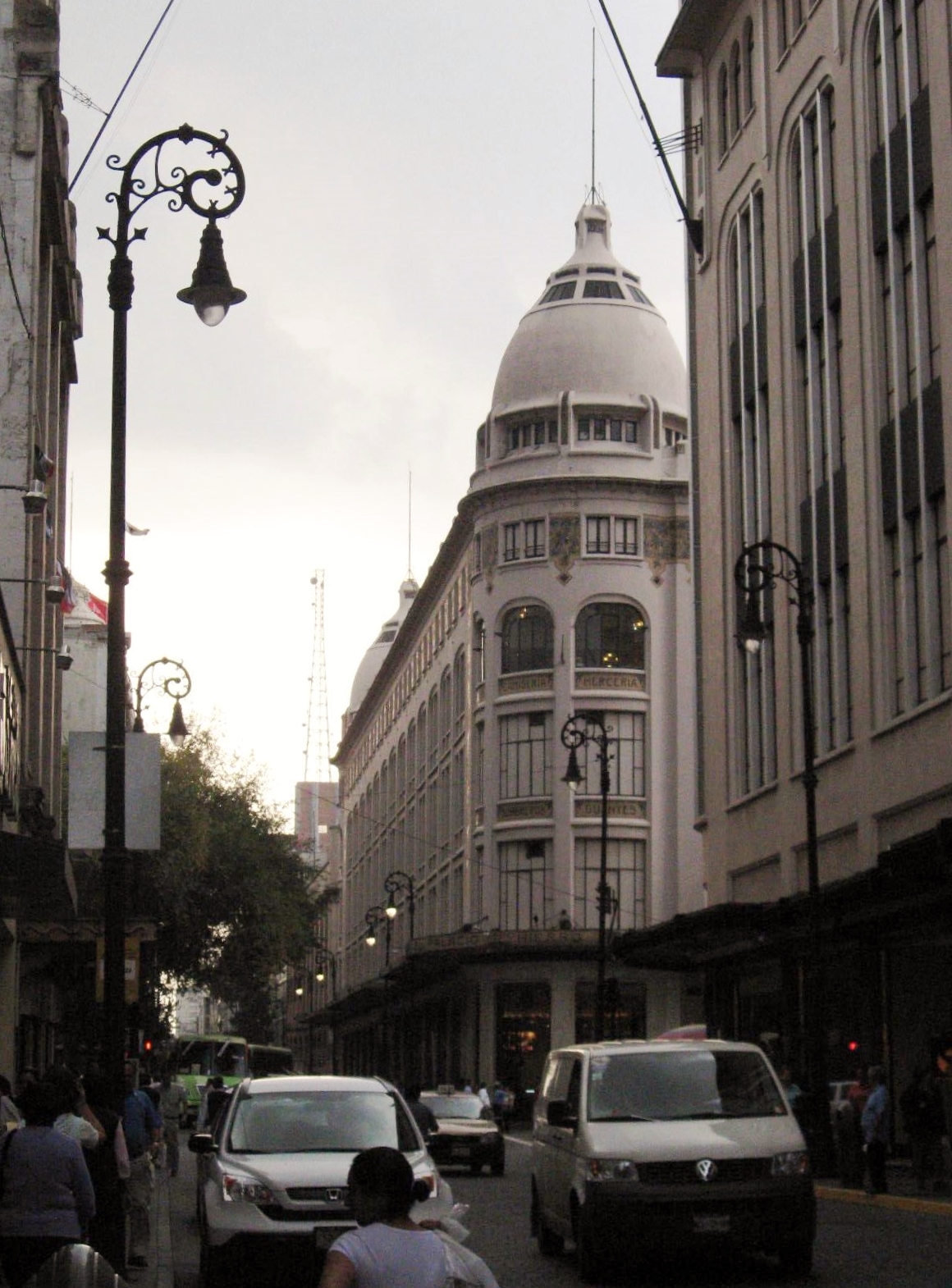
Money
These ATMs have low withdrawal fees and are widespread throughout the city:
banamex / citibanamex Santander Banorte If there is none of them near you, check these ATMs with low fees:
BanCoppel BanBajío Banco Azteca Banjercito Users of Bank of America, Barclays, BNP Paribas, Deutsche Bank, Westpac and Scotiabank may withdraw money with no fees at any HSBC, Scotiabank, BanBajío, Inbursa, Banregio or Mifel ATM.
Eat

You can find almost any kind of food in this city. There are regional specialties from all over Mexico as well as international cuisine, including Japanese, Chinese, French, Polish, Italian, Argentinean, Belgian, Irish, you name it. The main restaurant areas are in Polanco, Condesa, Centro, Zona Rosa, along Avenida Insurgentes from Viaducto to Copilco and more recently Santa Fe. There are several Mexican chain family restaurants that can be assumed to be safe and similar no matter where you are, including Vips, Toks, La Casa de Toño and the more traditional Sanborns, all reminiscent of Denny's in the United States. They are uniformly good (if never excellent) and relatively approachable to those who have trepidation around Mexican cuisine. El Globo, a French-style bakery, has locations throughout the city selling both French and traditional Mexican pastries, like orejas (little ears), éclairs, empanadas, and rosca during New Year's. It can't be beat for a quick snack or bagful of pastries to eat later. If you're on a budget, you can also try one of the myriad comida corrida (set menu) restaurants, frequented by many office workers. Some of these offer very good food, are usually safe, and should range between M$70-110 (March 2022). Perhaps the most ubiquitous type of food almost anywhere in Mexico city are fast food outlets, located on the ground floor of a street-facing building, or puestos, street stands located on a sidewalk or almost anywhere there is room. Most of these serve the usual tacos or tortas, and they can be very cheap. Hygiene varies from good to abysmal, so eat at a place that has plenty of people. Given that most of these establishments cook entirely in view, you can tell if it's going to be okay or not. Often, a street taco stand is going to have better food than a sit down restaurant. If you want to stuff your face with lots of real Mexican food at cheap prices then head over to a market, such as Mercado La Merced, the former central market in Centro Historico. There are several restaurants as well as stands serving up some delicious food. Huaraches and alambres are popular here. Another superb market in Centro is Mercado San Juan Arcos de Belem, full of food stalls offering all the Mexican favorites. Vegetarian (vegetariano) alternatives are commonly available at larger restaurants, but don't expect much from street vendors. The magic phrases, for vegetarians or vegans, are "sin pollo" (no chicken), "sin carne" (no meat), "sin huevo" (no eggs) and "sin queso" (no cheese). If you can communicate this and then gesticulate to the menu, the waiter normally will give you suggestions. In regular restaurants, they will even try to edit an existing dish for you. Just make sure you are clear. Chiles Rellenos are usually filled with meat, but different fillings are a definite standard in any vegetarian restaurant. There is a vegan scene scattered across the trendier neighborhoods. Much of it is world cuisine, but some of Mexico's famous meat preparations translate well to mushrooms and plant-based proteins, and indigenous traditions have known how to put beans and vegetables at the forefront of a meal long before the Spaniards introduced domesticated livestock.
Favorite dishes
Mexico City is deep into the part of the country that prefers corn tortillas to wheat flour tortillas. Don't expect to come across a big overstuffed burrito. In fact, here they call a flour tortilla filled with gooey cheese a gringa, also the slang term for "foreigner"! More generally, if you're only familiar with the Tex-Mex style of Mexican food exported globally by way of the U.S. border states, then there are a few surprises in store for you. Most famously, Mexico City is the world capital of tacos. There are many other foods around the world that have taken the name "taco"; here they are always a small corn tortilla topped with seasoned meat and maybe a few garnishes like chopped onion, cilantro and a wedge of lime.
Tacos al pastor – marinated pork derived from Lebanese shawarma. Look for the massive stacks of meat spinning on vertical roasting spits. Tacos de tripa – tripe (beef intestines) Tacos de suadero – thin slices of fried beef Tacos de barbacoa – tender, slow-cooked beef. It's rooted in the same roasting techniques that lead to barbecue in the southern U.S. Tacos de canasta – filled with various stews and bathed in oil, often made in the morning and kept warm in distinctive baskets You will see plenty of other street foods:
Drink
Mexico City's nightlife is like all other aspects of the city; it is huge. There is an enormous selection of venues: clubs, bars, restaurants, cafes, and variations and combinations thereof to choose from. There is incredible variation, from ultramodern lounges in Santa Fe and Reforma, to centuries-old dance halls in Centro and Roma. There are also pubs in Tlalpan and Coyoacán and clubs of every stripe in Insurgentes, Polanco, Condesa and the Zona Rosa. Traveling by yourself at night in certain areas of Mexico City is not a good idea, especially in Plaza Garibaldi, where pickpocketers are ever ready to relieve you of your unguarded cash. One of the ways you can check out the night life safely is by doing a Night Club Tour. These tours will typically take you to a few clubs and include transportation. Mexicans are for the most part very friendly and enjoy socializing. The typical Mexican place to go to drink is the cantina, a bar where food is usually free, and you pay for drinks (exact policies and minimums vary). Cantinas serve a wide range of Mexican and foreign drinks, with prices usually reasonable compared to prices in the US, and you'll be continually served various Mexican foods, such as tacos (you should ask for 'Botana'). If your tolerance for Mexican music (mariachi or otherwise) and lots of noise is low however, this may not be your kind of place. Cantinas are open moderately late, usually past midnight at the very least. However some cantinas, like La Victoria, near the Plaza Garibaldi, are also open at midday for lunch. A lower-end traditional option is going to a pulquería, where you can drink pulque, a fermented agave drink that was once sacred to the Aztecs. After being on a steep decline for decades, many are finding a new surge in popularity with young people, and pulque can now be found at hipster bars from time to time. They can be found in the Centro Histórico and around Xochimilco. If you don't like pulque, they usually serve beer as well. Many bars play a combination of Spanish and English-language rock, electronic music, and some Latin/Caribbean music. These bars tend to close around 3-4AM. Club music mainly falls into three main categories, pop, rock and electronic music. The pop places generally play what's on the music charts, Latin pop, and sometimes traditional Mexican music, and are frequented by a younger (sometimes very young) audience, and are often more upper class. The rock places play rock in the wide sense, in English and Spanish. Most people are at least over 18 in these places. The electronica clubs, which attract everyone from Mexico City's large subculture of ravers and electronica fans, of all ages. Most clubs close late, 3-4AM at the earliest, and some are open until 7AM or 8AM. The best bet used to be the Zona Rosa, which has a large number of street bars with rock bands playing and a large selection of clubs, especially strip clubs and gay bars. South of Zona Rosa you can find the Condesa and Roma areas, with many options of bars and restaurants. Another good area is Polanco, particularly a street called Mazaryk, where you'll find plenty of good clubs but it is best to make a reservation. Republica, La Santa or Guilt (gay club) are posh and exclusive clubs on that street. Be forewarned - entrance is judged on appearance and to get a table a minimum 2-bottle service is required, unless it's a slow night [min. US$80 per bottle]. Posh and upper scale night clubs can be found in the Lomas area, particularly the Hyde, Sense and Disco Lomas Clubs, but be warned some of these could be extremely expensive, where the cover charge could range from 250 pesos upwards and bottles start at US$130. In addition, getting in could very difficult, as these are the most exclusive in town. There are also exclusive gay clubs in that area with the same characteristics: Envy night club on Palmas 500 and Made nightclub on Chapultepec next to the lake and the restaurant El Lago Chapultepec. The other common Mexican-style thing to do when going out is to go dancing, usually to salsa, meringue, rumba, mambo, son, or other Caribbean/Latin music. This is considerably more fun if you're a somewhat competent dancer, but even complete beginners who don't mind making fools of themselves will likely enjoy it. Most dance places close late, 3-4AM is common. The legal drinking age is 18. It is illegal to consume alcohol in public ("open container"). This is strictly enforced and the penalty is at least 24 hours in jail. Take an identification card such as a copy of your passport. When going out, check the date, since this is an important indicator of how full places will generally be and how long you might have to wait to get in. Salaries are usually paid twice per month: the 30th/31st-1st and the 14th-15th. On or soon after these dates is when most Mexicans will go out, especially if payday coincides with a weekend. In the more expensive places, people might leave for Acapulco or vacations farther afield during the summer and long weekends. Mexican weekends, in the sense of when it is common to go out drinking, are Thursday night to Sunday morning and sometimes throughout Sunday.
Sleep

The city has more than 3,000 hotels in all price ranges. Details about individual properties are in the various District articles.
Budget Hotels: Look in the Centro Histórico where you will find myriad hostels and budget hotels rich in character and charm. Standouts include the Hostel Mexico City, the Casa de los Amigos, and the Hotel MX chain which has several low-priced properties to choose from. Moderate Hotels: Zona Rosa is a tourist haven with mid-range prices and good amenities at places like the Galerias Plaza. A number of stately older hotels along Paseo de la Reforma leading towards Centro Histórico offer character and affordability. A good value in this area is the Barcelo Mexico Reforma. Splurge Hotels: Look in the Polanco district, where high-end hotels thrive (along with trendy restaurants and clubs, upscale shopping and elegant older homes). Chapultepec has several modern high-rise hotels by international chains like JW Marriott, Fiesta Americana and St Regis. The Marquis Reforma is a good bet here. Boutique Hotels: Small hotels that deliver charming local character, preserve historical integrity, and provide personal service are found in many parts of Mexico City, particularly in Condesa and Roma and Polanco.
Stay safe

Despite its reputation, travel in Mexico City is generally safe and most people find it surprisingly non-threatening. Areas around the historic center and other places where tourists usually go are generally well-lit and patrolled in the early evening. Much of your travel within the city will be done via public transportation or walking. Most people in Mexico City are quite hospitable and some will speak English, and people who work for hotels and other hospitality-oriented businesses will always help. This will help in avoiding confusion, becoming lost or stranded. Also, you can ask a local for advice to get somewhere, though you might need basic Spanish to do this. In the Polanco, Sante Fe and Lomas districts, some police officers and many business people and younger children speak English, as it is very common to learn it in school. The least safe places where tourists often go are around the north part of the Centro Historico, such as around Garibaldi Square. Be extra vigilant if you go there at night. There is a detailed crime map based on official statistics. In case of emergency, dial 911, the number for all emergencies (fire, police and medical).
Theft
Mexico City is an immensely crowded place. As with any major metropolitan area, stay aware of your surroundings.
Do not show money in front of others as this generally attracts pickpockets. Carry just the money you need for the daily expenses and a credit card. Place items in a hotel safe, or tuck them away inside your clothes. A money belt might be a good option. Protect your personal information, such as your ATM PIN when entering it at an ATM or bank terminal. When paying at a restaurant, it's best if you don't let your card be taken away but instead ask for the terminal to be brought to you or go where it is located. Do not leave anything of value visible from your car window, always use the trunk, even things that could be considered to hold something of value (for example, an empty gift box) might prompt a broken window. Avoid ostentation: do not wear jewelry or eye-catching accessories when going out. If you have any problem related to purchases, services or bills, you may call the Federal Consumer Attorney (Procuraduría Federal del Consumidor, PROFECO) at +52(55)52111723 (in Mexico City) and at 01 800 468 8722, or send an email at asesoria@profeco.gob.mx. To make a complaint from your residence country, you may also email the unit of foreign travelers: extranjeros@profeco.gob.mx. The Mexico City Government has a specialized prosecution office (Ministerio Público) for foreigners that find themselves affected by robberies or other crime situations. It is in Victoria Street 76, Centro Historico. Multilingual staff are available.
Go next

Day trips
Teotihuacan – 50 km. The ancient city of giant pre-Columbian pyramids.
National parks
Many visitors are surprised to find that the city includes large tracts of open land intended to preserve some of the natural resources of the region. These parks offer natural scenery, historical landmarks, and recreational opportunities including hiking, mountain biking, and camping. Public transit is generally not a reliable way to reach these parks, but taxis or private drivers can get you there.
Desert of the Lions National Park (Desierto de los Leones) – 28 km. The site of an abandoned Carmelite convent from the early 17th century is surrounded by trees in the middle of a pine forest. Take a hike from "La Venta" to "El Convento" or up to "Cruz Blanca" and eat some great quesadillas for lunch, you can't miss them since it the only structure on "Cruz Blanca". If you can find a mountain bike, it's one of the best places to ride. Iztacchuatl-Popocateptl National Park – 60 km. When you look east from downtown, the horizon is dominated by two snow-capped mountain peaks, known locally as Izta-Popo. The still-active Popo volcano may have smoke billowing from its cauldron. These twin volcanoes are the centerpoint of a 172,000 hectare park spanning the range that crosses the border between Estado de Mexico and neighboring Puebla state.
The guide text on this page is from the Wikivoyage article Mexico City, written by Wikivoyage contributors and published under CC BY-SA 4.0. The authors are listed in the article’s edit history. It has been shortened and re-laid-out for this page; that adapted text is available under the same licence. Nothing else on this page is.
Wikivoyage is written by travellers, not by us. Opening hours, prices and whether a place still exists are exactly the details that go out of date, so check anything you are relying on.
“3,342 readers a month” and the ranking are ours, counted from Wikimedia’s published pageviews (CC0) — the median of twelve complete months. They count people reading about a place, which is not the same as people going there.