
Marrakech
Marrakech (Arabic: مراكش, Berber: ⴰⵎⵓⵔⴰⴽⵓⵛ), also spelt Marrakesh, is one of the imperial cities of Morocco. Marrakech is the main tourist destination in Morocco. The city is divided into two parts: the Medina, the historical city, and the new European modern district called Gueliz or Ville Nouvelle. The Medina is full of intertwining narrow passageways and local shops full of character; it also contains the large square Djemaa El-Fna, where many hotels are located and tourists, locals and vendors congregate. In contrast, Gueliz plays host to modern restaurants, fast food chains and big brand stores.
Most read about in July, least in April. That is when people look it up, which tends to run a month or two ahead of when they go.
Before you book
The Foreign, Commonwealth & Development Office publishes the UK’s official travel advice for Morocco. It changes without notice and travelling against it usually invalidates your insurance, so read it at the source rather than anywhere else — including here.
FCDO travel adviceUnderstand

The name Marrakech originates from the Amazigh (Berber) words mur (n) wakush, which means "Land of God". It is the third largest city in Morocco after Casablanca and Rabat, and lies near the foothills of the snow-capped Atlas Mountains and a few hours away from the foot of the Sahara Desert. Its location and contrasting landscape have made it an enviable destination in Morocco. As the country's main tourist destination, Marrakech is where many Moroccans try to become rich fast by ripping off tourists. This mentality is so widespread that even Moroccans are now ripped off whenever possible so that they call the city "Marrakech, Arnakech" – which rhymes in French and translates to "Marrakech, Scam" (see Touts and scams below). For further information, you may also visit the 1 Marrakech Tourist Information (at a small square at the intersection of Avenue Mohammed V and Rue de Yugoslavie).
Getting there

By plane
There are flights from many European cities, including flights operated by a number of low cost carriers. Connections via Casablanca (45-min flight) are also possible.
Easyjet — flights from Manchester, Stansted and Gatwick Airport (and also from Madrid, from Lyon, Amsterdam and from Basel) Ryanair — direct flights from Oporto (Portugal), London Luton, and London Stansted, and also from Hahn (Germany), Berlin (Germany), Alicante, Madrid and Reus (Spain), Girona (Spain), Eindhoven (the Netherlands), Bergamo (Italy) (Spain), and Dublin (Ireland) British Airways — from London Gatwick TUIfly — flights from Cologne and several other European destinations. Transavia — a low-cost airline from Air France-KLM group flying to Marrakech from several cities in Europe, including Paris Norwegian — direct flights from Copenhagen, Oslo, Helsinki and Stockholm. Iberia — two non stop flights from Madrid. TAP Portugal — offers direct flights from Lisbon Domestic flights are operated by Royal Air Maroc, with flights from Agadir, Casablanca (daily), Fez (daily), Ouarzazate, Al Hoceima, and Tangier. 1 Marrakech-Menara Airport (RAK IATA), ☏ +212 4444 7910. Marrakech-Menara Airport has two terminals housed in one complex. Both terminals have money exchange offices, and there is an ATM in the arrivals hall of Terminal 2. On ATMs, check for the Maestro, Cirrus or Plus logos to be sure that the machine accepts foreign credit cards. Some ATMs work only in French. If your card is taken at the ATM, tell airport security and they can help you get it back. There are no potable water dispensers after the security check and the small shops only see overpriced 0.5-L water bottles. However the tap water from the WC only tastes slightly of chlorine and is drinkable for tourists. Gift shops, cafes and restaurants located after security (airside) usually display prices in euros only, but many will take Moroccan Dirhams in cash too, at their own exchange rate.For some airlines, you can only use the smartphone or mobile app for check-in but have to arrive at the airport with a print-out of your ticket. You also need to queue at the check-in counter before entering the security check (even if you do not have drop-off luggage), to get your tickets stamped by the airline, so better arrive earlier than usual.
Ground transport
The airport is about 9 km south-west of the city center (Medina), and 6.6 km from the Djemaa El-Fna square. The L19 airport shuttle bus is 30 dirham one way, 50 dirham return (as of 2025). It is a great way to go from the airport to the Medina area. The 2 bus 19 departure stop is right out of the terminal (exit the arrivals hall at Terminal 2, to your left you will see the parking area, walk into it and continue across all the taxis, at the end, close to the exit, there's an empty area with a black BUS sign without signs or maps, nor a place to sit or shadow.) The bus leaves the airport every 30 minutes between 06:00 and 23:30. This bus line passes Jeema El Fna, the main bus station and it only has a couple of stops along the way, most notably the Menara Mall. The whole trip takes 15–20 minutes. You can see the whole route and departure times in Google Maps. Beware, some taxi drivers will approach and try to convince you to go with them, sometimes even resorting to lies ("The bus is not running today" or "It comes only once an hour") – don't listen to them. You can also catch city bus #11 or city bus #12 which run from different suburbs, meet at the airport and continue to the long distance bus station at Bab Doukkala, stopping also at Jeema El Fna. They stop on Avenue Gnassa - the main road near the airport, 500 m from the terminal. This is an option only for people with convenient luggage, but it is the cheapest one - the buses cost 4 dirham, like all local buses. The driver can give change. By petit taxi, the city center is a 10–15 min ride away. Prices directly from the airport are fixed: you pay in advance (card or cash) after entering your destination at a machine and receive a ticket with the assigned taxi number. Walking the 200 m across the parking lot to the road and hailing a taxi there will get you a much, much better price per vehicle (about 60 dirham compared to the airport's 200 dirham). Apps like InDrive can hail unofficial taxis for slightly less, payable with cash. Many hotels and riads offer a shuttle service for about €15 per person. The advantage is that you avoid the hassle, and they will lead you all the way to you lodging, even if the car cannot drive there. However, you might have to wait a while for all your fellow passengers to get out of the airport. Several international rental car companies are based at the airport as well. If you do not have too much luggage then it is possible to walk from the airport to the Medina even though it would take you from an hour and half to two hours. There is a footpath alongside the road all the way and the minaret of the Koutoubia mosque provides an excellent landmark to head towards. If you have enough time you can break the trip with a visit to the Menara gardens, which are between the airport and the city.
Getting around
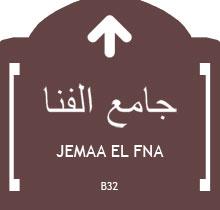
Once in the medina, everything can be seen on foot, though you'll be doing a lot of walking. Many tourist destinations are signposted by brown, red or green signs affixed to posts or to buildings. Bear in mind that many of these signs don't take the direct route, and some seem to deliberately send tourists via various markets or other places money may be spent.
For exploring more of the city, buses and petits taxis are plentiful.
By bus
Alsa run the city buses and have maps, fares and a frequency guide on their web page. Almost all buses stop at Djemaa El-Fna (the bus stop for Djemaa El-Fna is called Terminus Arset El Bilk, and it is marked on Google Maps) and Place Youssef Ben Tachfine and fares range from 2–5 dirham depending on the distance. Important municipal bus lines are:
See

There is much to see and do in Marrakech. An entire day can be dedicated to wandering around all the different souks, seeking out the best bargains. The city also offers several historical and architectural sites as well as some interesting museums.
1 Medina. The Medina is the old city quarter located within the sandstone city walls that give Marrakech the nickname the Red City. As an ancient hub, it contains a maze of narrow streets and outdoor marketplaces. (updated Dec 2024) 2 Djemaa El-Fna. The highlight of any Marrakech night. Musicians, dancers, and story tellers pack this square at the heart of the medina, filling it with a cacophony of drum beats and excited shouts. Scores of stalls sell a wide array of Moroccan fare (see the Eat section) and you will almost certainly be accosted by women wanting to give you a henna tattoo. Amateur boxing matches are sometimes held. Enjoy the various shows, but be prepared to give some dirham to watch or take photos. By day it is largely filled with snake charmers and people with monkeys, as well as some of the more common stalls. (updated Nov 2019) 3 The Souks (suuqs). Markets of Marrakech, just adjacent to Place Djemaa El-Fna, are where you can buy almost anything, from spices to shoes, jellabas to kaftans, and tea pots to tagines. Undoubtedly, being a foreigner means you will end up paying higher prices than a native would, but be sure to bargain nonetheless. If you happen to run out of dirham, you will also find plenty of people in the souks who will eagerly exchange your dollars or euros (though a fair rate here is less likely than at an official exchange). All that said, the sellers here are much less aggressive than, say, Egypt, so have fun! (updated Jan 2018) 4 Koutoubia Mosque (right besides Djemaa El-Fna). Named after the booksellers market that used to be located here. It is said that the minaret of the Koutoubia mosque is to Marrakech as the Eiffel Tower is to Paris. The minaret is visible from Gueliz which is connected to the Medina by Avenue Mohammed V. At night, the mosque is beautifully lit. It was completed under the reign of the Berber Almohad Caliph Yaqub al-Mansur (1184 to 1199), and has inspired other buildings such as the Giralda of Seville and the Hassan Tower of Rabat. Non-Muslims are not allowed inside. (updated Jan 2018) 5 Tanneries. Visiting the tanneries can be an interesting experience. Even if some people tell you the area is only for locals, it is possible to visit the Tanneries without paying a youngster. After finding a tannery, ask one of the workers if you can visit it and take pictures 6 Saadian Tombs, Rue de la Kasbah (beside the Kasbah Mosque within walking distance of Jemaa el-Fnaa). generally 09:00–17:00, although visitors should check current information before travelling. Saadian Tombs. The tombs were built in the 16th century as the dynastic necropolis of the Saadian dynasty. The complex includes the Chamber of the Twelve Columns, the Chamber of the Mihrab, the Chamber of the Three Niches and the garden tombs. The site was rediscovered in 1917 and subsequently restored and opened to visitors. The site is relatively compact and most visitors can see the main areas in 20–30 minutes. The entrance passage is narrow, so arriving early can help avoid queues. Foreigners: adult 100 dirham, children aged 7–13 50 dirham; Moroccan nationals and residents: adult 30 dirham, child 10 dirham. (updated Aug 2026) 7 Moroccan Culinary Arts Museum (Musée d'art culinaire Marocain), Rue Riad Zitoun el Jdid. If you are interested in food and eating culture, you will enjoy this museum. Audiovisual information about the rich culinary culture of Marocco, its ingredients, techniques and traditions. You can also touch and smell many things. They also sport a very well equipped cooking school. (updated Mar 2023) 8 Majorelle Gardens (Jardin Majorelle), Rue Yves Saint Laurent (In Gueliz), ☏ +212 5 24 31 30 47, info@jardinmajorelle.com. Oct-Apr: 08:00-17:30, May-Sep: 08:00-18:00, Ramadan: 09:00-17:00. It provides an excellent respite from the hustle and bustle of the city streets, if not crowded by tourists as it sometimes is. The park was designed by the artist Jacques Majorelle in the 1920s and 1930s. Since 1980 the garden has been owned by Yves Saint-Laurent and Pierre Bergé. It boasts a collection of plants from around the globe, including what seems like every cactus species on the planet. Get here early to avoid the crowds. Inside the gardens is also the Berber Museum, which shows a slightly bigger and more modern presentation than the Dar Si Saïd. Advance bookings must be made online, it is not possible to buy a ticket at the site. 170 dirham, 30 dirham extra for the Berber Museum. (updated Jan 2025) 9 Yves Saint Laurent Museum, Rue Yves St Laurent (next door to Majorelle Gardens), ☏ +212 5242-98686. Th-Tu 10:00 - 18:00. Advance bookings must be made online, it is not possible to buy a ticket at the site. 120 dirham, combination ticket with Majorelle Gardens and Berber Museum 180 dirham, queues are far shorter here than at the gardens to buy tickets though you have to buy either a YSL Museum ticket or combination ticket. (updated Jan 2025) 10 Dar Si Saïd Museum (on Rue Riad Zitoun Jdid, is a museum 5 mins away from Djemaa El-Fna.). 10:00–18:00. Museum set in an old palace with beautiful gardens. While somewhat run-down, it is worth seeing and houses many different artifacts from Morocco through the ages, such as wood carvings, musical instruments, and weapons. It is dedicated to the Moroccan craft industry of wood, gathering a very beautiful collection of popular art: carpets, clothing, pottery and ceramics. All these objects are regional, coming from Marrakech and all the south, especially from Tensift, High Atlas, Soussthe, Anti Atlas, Bani, and Tafilal. Locals: adult 10 dirham, child below 12 3 dirham; tourists: adult 30 dirham. (updated Nov 2019) 11 Ben Youssef Madrasa, Kaat Benahid. 09:00-18:00, closed for religious holidays. One of the largest madrassas in North Africa. It is a school attached to the Ben Youssef Mosque and is home to beautiful art and architecture. Build ca 1570. 50 dirham. (updated Jan 2018) 12 El Bahia Palace, contact@palais-bahia.com. 09:00–17:00. An ornate palace complex built in the late 19th century, with courtyards, gardens, richly decorated rooms and traditional Moroccan architectural details. The palace was developed in several stages and expanded by Ba Ahmed, Grand Vizier to Sultan Moulay Abdelaziz. The complex covers about 8 hectares. The main entrance is on Rue Riad Zitoun el Jedid. The palace is relatively close to other attractions in the southern Medina and can be reached on foot from Jemaa el-Fnaa. Arriving shortly after opening can be useful for visitors who want to avoid the busiest periods. Foreigners: adult 100 dirham, child aged 7–13 50 dirham; Moroccan/resident: adult 30 dirham, child aged 7–13 10 dirham. (updated Aug 2026) 13 El Badi Palace, Ksibat Nhass. 09:00-17:00. The palace complex is extensive, with ruins, courtyards, underground passages and exhibitions. The terrace offers views over the surrounding Medina and the Atlas Mountains on clear days. Allow around 45–90 minutes to explore the main areas. Visitors should check current information before travelling. (updated Aug 2026) Foreigners: adult 100 dirham, child aged 7–13 50 dirham; Moroccan/resident: adult 30 dirham, child aged 7–13 10 dirham. (updated Aug 2026) 14 The Menara gardens (west of the city in walking distance). 09:00-17:00. A mixture of orchards and olive groves surrounding the water reservoir with the central pavilion which is a popular sight on tourist postcards. Not a decorative garden, and now quite run down. The pavilion was built during the 16th-century Saadi dynasty, and renovated in 1869. It has a small cafe, but it is not open all hours. There are no toilets open when the cafe is closed. Free admission. (updated Jan 2018) 15 Jewish Cemetery, Avenue Taoulat El Miara (adjacent to the mellah, within the medina). 09:00-17:00. The largest Jewish cemetery in Morocco, characterized by white-washed tombs and sandy graves. The men selling tickets are full of interesting information about the cemetery but you have to ask. 10 dirham. (updated Nov 2019) 16 Slat Al Azama Synagogue. 09:00-19:00 (closed Sa). Synagogue which is not only a place of worship with a beautiful open courtyard, but also includes interesting displays about Judaism's varied history in Morocco, including photos of Jews in the Berber Mountains. 10 dirham. (updated Nov 2019) 17 Marrakech Museum, ☏ +212 24 44 18 93. 09:00-18:30. It's housed in the Dar Menebhi Palace, constructed at the end of the 19th century. 50 dirham. (updated Jan 2018) 18 Musée de la Palmeraie, Dar Tounsi, Route de Fès (in the south of the Palmeraie, it is quite off the main tourist paths, expect to travel at about an hour per direction; you must get a taxi or bus 17 towards Palmeraie (which does not run often); the route with the museum is off to the left side of the road, the crossroads just before the Atacadao supermarket; you have to head follow the road for about 500 m, there are also signs), ☏ +212-661 09 53 52, museepalmeraie@gmail.com. 09:00-18:00?. In old agricultural buildings in the Palmeraie, made out of rammed earth. The architecture itself is interesting if you haven't seen it. It offers a small collection of contemporary art, with a room dedicated to Moroccan artists (also famous ones), the international ones are rather not top-notch. The gardens are nicely made and are good place to relax in quiet. 40 dirham. (updated Mar 2016) 19 Musee Farid Belkahia, Dar Tounsi, Route de Fès (at the seat of the Fondation Farid Belkahia, which is off Route de Fès, Dar Tounsi, walking past Musée de la Palmeraie for further 500 m-1 km), museepalmeraie@gmail.com. M-Sa. A museum dedicated to the renowned contemporary artist Farid Belkahia, showcasing different periods of his work (updated Mar 2016) 20 Maison de la Photographie, 46, Rue souk Ahal Fès (200 m behind Ben Youssef Medersa - Koranic School). A little photography museum, it has one of the highest roof terraces in the Medina. Ticket is also valid for Museum of Mouassin Music. 80 dirham. (updated Feb 2026) 21 Ali Ben Youssef Mosque. The first mosque in Marrakesh was erected at this place by the Almoravid emir Yusuf ibn Tashfin in the 1070s. However, it was almost completely rebuilt in early 19th century by the Alaouite sultan Suleiman, with hardly any trace left of its original Almoravid or Almohad design. Non-Muslims are not allowed to enter it. (updated Jan 2018) 22 Agdal Gardens. It consists of groves of orange, lemon, fig, apricot and pomegranate trees in rectangular plots, linked by olive-lined walkways. Together with the medina of Marrakech and the Menara Gardens, the Agdal Gardens were listed by UNESCO as a World Heritage Site in 1985. 70 dirham for foreign adults. (updated Jan 2018) 23 Almoravid Koubba. A very small but intricate domed pavilion, known for being the only surviving example of Almoravid religious architecture (early 12th century) in Marrakech. Located across the street from the Ben Youssef Mosque, it is believed to have been an annex of the former Almoravid mosque. It was excavated in the 20th century after being half-buried for centuries. The pavilion's exterior can be easily seen from the street, so paying for entry just lets you see its interior. 50 dirham. (updated Mar 2023)
Day trips
Jbilets Geological Site. Explore the Berber village on a desert tour. 2 Anima garden (Anima André Heller's Garden), ☏ +212 666 56 17 76, info@anima-garden.com. One of the prettiest gardens in the world. Created by André Heller, it is true oasis when you’re weary of the medina hubbub. Book the official shuttle bus to get there and back for free.
Do

1 Chez Ali Fantasia, La Palmeraie de Marrakech (10 km north of Marrakech), ☏ +212 5 24307730. Horse show, acrobats on Arabian horses firing rifles in the air, horseback acrobatics, belly dancing, etc. It takes place at night in a huge imitation of an old castle. €15. Football: 2 Stade de Marrakesh (ملعب مراكش). This is multi-use but mostly for football, with a capacity of 41,356. It's the home ground of Kawkab, who play in Botola 2 the second tier. In 2025 / 26 it hosted matches in the Africa Cup of Nations. (updated Jan 2026)
The Medina
The historic district of the city. The main square in the Medina is Djemaa El-Fna. It is surrounded by endless labyrinths of souks (bazaars) and alley ways covering all of the Medina. Djemma El-Fna is a must as there is always something to see there day and night whether it be snake charmers, acrobats, sooth-sayers,or the musicians and food stalls. At night the square really comes to life as people navigate toward the exotic aromas and the entertaining sights. As the evening darkens, the hustle & bustle of activity rages on. The exotic music appears louder and more hypnotic. The Medina is also the place to stay in a Riad, a Moroccan house with an internal courtyard. Most windows are inward facing towards the central atrium. This design of property suits Islamic tradition as there is no obvious wealth statement being made externally, no windows to peer through. Entering a Riad is like discovering an Aladdin's Cave in comparison to its non-descript exterior. They are great places to stay and offer an intimate and relaxing retreat. Directly south of the Djemaa El-Fna is Rue Bab Agnaou. A five-min walk takes you straight to the famous Bab Agnaou entrance to the Kasbah district of the Medina. The Bab Agnaou entrance, through the ramparts, is by far the most impressive entrance of all medina rampart entrances. The Kasbah, in comparison to the Derbs (streets) surrounding the Djemaa El-Fna, portrays a calmer, less abrasive atmosphere. It is home to the Royal Palace, also the former El - Badi Palace and the Saadian Tombs. This naturally creates better security, cleaner streets and a hint of being a special place within the medina. The Kasbah has its own little bazaars (Souikas), food stalls, restaurants, hotels and riads for travellers to enjoy.
Hammams
Hammams are baths, often close to mosques to facilitate the performance of ablutions. In guidebooks and signs that call them "Moroccan Turkish Baths" the name "Turkish" is a misnomer, since Morocco (unlike Egypt or Syria) was never under Ottoman rule, but the historical role of the baths is authentic in Morocco.
Shopping

Along with the major souk (Arabic for 'market') adjacent to the Djemaa El-Fna, there are a plethora of smaller souks throughout the city, where any number of products can be had. In any of them, you generally need to bargain. Keep an eye out for a wide array of hand-crafted candle-holding lanterns, as well as spectacular displays of local spices. Most shops sell the same handful of items. But if you wander a little off from El-Fna, you can find small workshops with real craftsmen making handmade goods. You then get to talk to craftsmen of the item you bought. If you buy shoes or clothes, they can also make alterations for you, and there are a few places that make unique products. Argan oil, produced only in Morocco, is used in Moroccan cooking and beauty treatments. If you enjoy its unique nutty flavour, be sure to pick some up in the souks. It will cost you about 70 dirham per 100 ml at local supermarket for cooking oil or 200 dirham for genuine cosmetic oil.
Marrakech is home to a large tanning industry, and leather goods of high quality can be bought here cheaply. Check out camel leather items especially - jackets, round poufs (little ottomans), and handbags. For the shoes, always check they have no paper inside sole because it is very common. Do not be fooled by demonstration of bending the shoe back and forth; try it yourself by feeling and hearing how the paper bends. For poor quality shoes you should not pay more than 40 dirham, and for a good pair no more than 90 dirham. Shop around and learn the difference in shoe quality. Also of interest would be items made of the local cactus silk, which is really rayon, a natural fiber made of plant cellulose and produced in Morocco. Rayon holds the chemical dyes well, which accounts for the vibrant range of true colour (natural dyes cannot produce a "true" color). On offer are scarves, handbags, tablecloths, bedspreads and throws in stunning colour. Some merchants try to charge a premium price for this "cactus silk". Check well because there are many fakes and sellers will usually tell you any lie to get you to pay a high price. Be sure to wander around the potters' souk, and look for brightly colored platters and bowls, as well as tagines (large, lidded cookpots) in all sizes Lovely cashmere shawls can also be had for less than a fiver with a little bargaining.
If you cannot stand the bargaining, there are two government-run shops where you can buy handicrafts at fixed prices. Look for boutique d'artisans. One is near Djemaa El-Fna while the other one is in the ville nouvelle.
Eat

How to eat (well) in the Djemaa El-Fna
Each night in the Djemaa El-Fna rows of street stalls are set up under giant white tents. The huts targeting tourists serve similar fare and have menus printed in French, Arabic and usually English. Everyone has tajine, couscous, brochette and some variety of soups. Some have specialities like offal, egg sandwiches or special tajines. Be aware that most restaurants employ rather insistent "greeters," who are very aggressive in trying to customers for their stall. The line 'we already ate' seems to work well to get them to stop. As of 2018, the "greeters" mentioned above have changed strategies to one of harassment and insults. They try to separate couples and corner women while hurling insults. If you want to eat well in Marrakech, do what the locals do and eat at the food stalls in the square. It is a common misconception that these stalls are only here for the tourists. Actually, they have been in existence long before Marrakech became a tourist destination. All of the stalls can be regarded as perfectly safe to eat at. They are strictly licensed and controlled by the government, especially now as it is a popular destination for tourists. The locals eat at the cheaper stalls that don't employ greeters and serve the more interesting food: snails, sheep head, lentils and beans. Some tips:
Prices tend to vary a little. Depending upon how hungry you are, you can pay anything from 10 dirham for a bread filled with freshly grilled sausages, or perhaps a bowl of harira soup to 100 dirham for a full three-course meal with salad, bread, starter, main course, and tea. Try harira (great soup, of lamb/beef, red lentils and vegetables) and the fried aubergines. Don't be afraid to try the lamb head: it's really tasty. The "bull stew" (beef stew) should also be given a chance in the same stalls. Don't miss the tea! There is a row of tea sellers along the front of the food stalls who each sell tea for 3 dirham each (as of 2011). Most of the tea at these stalls is ginseng tea with cinnamon and ginger... most delicious and welcoming. They also have cake, made of basically the same spices, which can be a bit overpowering. All food stalls at Djemaa El-Fna display the price on the menus, making it less likely you'll be overcharged, but many will bring starters to you without asking, then charge for them at the end. Drinks are rarely on the menu so it is better to ask the price of them before ordering, as they can often be comparatively high. On the other hand, some stalls offer free mint tea to encourage you to choose them. Early mornings, look for people frying riifa in the covered part opposite the Koutoubia. Riifa is dough stretched and flattened and folded over, then cooked in a frying pan, and is best described as a Moroccan version of a pancake or crepe.
Budget
1 Chez Chegrouni, Avenue Jamaa El Fna (near the main entrance to the market.). Their vegetarian couscous is supposedly the only true vegetarian couscous in town; it's also bland but they give you plenty of it. Prices go up if you sit on the terrace. Usually packed full of good-time tourists. 30 dirham. (updated Sep 2022) 2 Chez Yassine, 70 Avenue Fatima Zohra (5 min north from the Koutoubia mosque, 70 Rue Fatima Zohra Rmila (next to the Bacha hamam)). Not much choice but served by very friendly people. Tajines and pizzas are great and you can also order skewers that are not on the menu. 30 dirham tagines. (updated Sep 2022) 3 Henna Cafe, 93 Arset Aouzal Souikat, bab Doukala (go to the taxi rank at Dar El Basha and walk 100 m up towards Bab Doukala. Henna Café is on the right side), ☏ +212 656566374, info@hennacafemarrakech.com. 11:00-20:00. A pretty little cafe on 3 floors with an orange sign on the Berber hand-carved wooden facade opened in November 2011. You can have a cup of tea or coffee or simple lunch with dessert or just a sandwich. The Henna Café offers safe henna body adornment as well-ranging from a 50 dirham small motif on your hand to a full arm complex design for a wedding from 500 dirham. All profits go to local causes. Henna cafe was set up by the owners of Riad Cinnamon and Riad Papillon and Vivid Trading in order to start to 'give back' to Marrakech and offer support to those who might want it. The café offers free English lessons to Moroccan women so that they can find employment out of the home. 40 dirham mains. (updated Sep 2022) 4 Chez Bismilah, 193 Souk El kebir. Amazing food and wonderful service. The owner is very kind and the fantastic chef is a humble lady who cooks perfectly all the traditional Moroccan recipes. Tayine Royale is recommended. The roof top has an amazing view over the old medina. (updated Sep 2022) 5 Café Babouche medina, 37 Rue des Banques. In a small street a few steps from the Jemaa El Fna square. You can eat there in a friendly atmosphere. The veal tagine with prunes and almonds is spectacular. (updated Sep 2022) Black Pan, 42, Rue Ibn Toumert (in the Gueliz district), ☏ +212 679-636136. Daily 12:00-02:00. Italian restaurant. Artisanal pizzas, traditional Italian dishes and warm atmosphere. Average of 100-200 dirham per dish. (updated Oct 2024)
Drink
Street vendors offer fresh orange juice (jus d'Orange) by the glass for 4 dirham. Try it with a dash of salt like the locals, but be wary of vendors who try to water the juice down with tap water. Also, pay attention when you buy as they offer 2 types of orange... the blood orange juice costs 10 dirham per glass and a misunderstanding on what you want to drink could occur. Confirm the price of your orange juice and pay for it before you drink. Unscrupulous vendors will sometimes try to charge you 10 dirham for a 4-dirham glass of jus d'Orange, so don't accept your drink until you've paid the correct amount. Be wary also, that they do not always clean the glasses very well so it is possible to get an upset stomach from the juice. There is a very limited selection of places selling alcohol in the Medina.
1 Chesterfield Pub (Bar Anglais), 115 Avenue Mohammed V (In the Hotel Nassim). 09:00-01:00. A slightly unusual experience, apparently an 'English pub' it serves Moroccan lager and has an outside pool in a courtyard with palm trees, not an entirely English experience. Much less touristy than it sounds with a mainly local clientele. It serves a decent pint. 2 Le Salama, 40 Rue des Banques (On Jeema El Fna, facing Cafe de France, take the road to the left of Café de France (as in walking behind it). After 100 m on the left hand side.), reservations@lesalama.com. 11:00-13:00. Happy hour from 17:00 until they close, mostly western pop classics on the top floor. Very touristy with shishas, belly dancing and waiters who wear a fez - none of it is typically Moroccan but the overall atmosphere is between relaxed and party vibe. Also offers traditional Moroccan snacks. Good for smaller (up to 10 people) groups. (updated Apr 2019) 3 Hotel Grand Tazi, Rue Bab Agnaou. The hotel has a public bar, serving beer and wine and is not overly expensive. 4 Narwama, Hay Zefriti 30, Rue Koutoubia., ☏ +212 6 7250 8700. Restaurant and bar that has a fire fountain in the centre and an open roof around the patio. The atmosphere is very chilled and their food is very good, but slightly expensive. Good for pre-dinner drinks. 150 dirham mains. Outside the Medina.
5 Montecristo, Rue Ibn Aicha 20, ☏ +212 5 24439031. 20:00-02:00. Nightclub with rooftop terrace 6 Jad Mahal, 10 Rue Haroun Errachid, ☏ +212 5 24 43 69 84. 17:00-late. Lounge bar and formal restaurant. 7 Sky Lounge, 3 Rue du Temple (at The Pearl Hotel), ☏ +212 524 42 42 42, reservation@thepearlmarrakech.com. 11:00-late. Fashionable rooftop lounge on top of the Pearl Hotel 8 Comptoir Darna, Avenue Echouhada, ☏ +212 524 437 702, contact@comptoirdarna.com. 20:00-03:00. Cocktail bar and night club Dress code: elegant 9 Piano Bar, 26 Rue de la Koutoubia (in les Jardins de la Koutoubia), ☏ +212 524 38 88 00. 17:00-midnight. 10 African Chic, 6 Rue Oum Errabia (Behind Hotel Marrakech), ☏ +212 5 24431424. Moroccan Latin Brazilian. Also has a restaurant with a view to the dance floor. 11 Le Lounge, 24 Rue Yougoslavie, ☏ +212 70028561. 10:00-01:00.
Sleep

Marrakech has an amazing choice of places to stay ranging from tented camps outside Marrakech to cheap hostels and hotels that can be charming or seedy to luxurious kasbahs in luxurious gardens or the traditional riad (garden courtyard) hotels. Wherever you choose (or can afford) to stay it really is a must to visit one of the riad hotels to see this amazing style of architecture. Most riad managers will be happy to show you around provided that they are not too busy and in some riads you can even book a lunch or dinner without being a resident provided that the riad is not privately rented. For example, see Riad Cinnamon, Riad Laksiba and Riad Papillon. There are three main zones to sleep: Medina, Guéliz (also known as Ville Nouvelle), and the surroundings of the city. The Medina has the highest concentration of very cheap hotels and riads (small palaces), while Guéliz is much more quiet and most of the hotels are mid price (including showers in the room, breakfast service), but going to the Medina from the Guéliz by taxi costs about 10-15 dirham and can take a long time at busy periods (evenings and weekends). The surroundings have all the huge tourist hotels, the ones that usually come with what the travel agencies offer. They can be further away from the medina and the rest of the city, but have big swimming pools, restaurants, and many services. The Medina is packed with Riads and Dars (old grand houses converted into hotels and inns). Traditionally, riads should have gardens; with smaller dars having open courtyards. However the term riad is now used loosely to describe any house with an internal open-air center. These are wonderful places to stay to get a feel for life in Marrakech. If you arrive by car, ask the hosts to help you find your way from the parking lot, especially if you never experienced orientation in a real medina before.
Dars
1 Dar Attajmil, Marrakech-Medina, 23 Rue Laksour, Bab Laksour (Once entered Bab Laksour, take the second alley right, keep on until no. 23.), ☏ +212 524 426966, contact@darattajmil.com. Check-in: 14:00, check-out: 12:30. Centrally located and easy to reach, Dar Attajmil has a sand colored courtyard shaded by a tall banana tree; 4 double rooms with bathroom, 1 family suite with private courtyard, several cozy sitting areas, fireplace and library, a large terrace garden where breakfast and meals are served and a devoted team of 5 lovely persons; hammam, massages, cooking class available. Owner organic farm near Essaouira provides daily fresh products, olive and argan oil and the opportunity to spend one or more days in this old restored property, among the argan trees. €80-110/night in B&B. 2 Dar Jaguar, 7-8 Derb El Mesfioui, Rahba Kedima, Medina, ☏ +212 524 445 606, escape@darjaguar.com. Dar Jaguar is an ancient riad that has been restored as a beautiful private guesthouse. It is situated in the heart of the old medina, neighbouring the exotic Place des Epices (spice market). From €99, breakfast included.. (updated Nov 2018)
Riads
Here are a sample of some of the riads (in alphabetical order) where you can experience Marrakech's unique style of living:
Stay safe
Marrakech is a generally safe city, with police presence. However, staying alert about your surroundings and taking general safety precautions is always a good idea like everywhere. Here are some tips:
Violent crime is normally not a major problem, but thefts are known to happen. Keep your money close and hidden, and avoid poorly lit streets or alleys at night. Guides offering their services should display an official badge from the local tourist authorities. In the Medina, if someone tells you a street is closed, ignore them, they are lying. It is a scam to lure you into a quiet alley to mug you at worst, and a way to redirect you to a business they are friendly with at best. Be especially careful about being drugged, especially as a solo traveller. The common and easy-to-make drug GHB only lasts three hours and is undetectable in the body after 7 hours, so if you are attacked, take action immediately. Be careful ordering room service if you are a solo traveller, as even older women can be targets for robbery. Don't ask the waiter to enter your room. Get one of the shopkeepers to dress you up with a berber style scarf, for men and women, it will cover your face (leaving only space for your eyes) and you can remain undetected and will definitely not be harassed by the shopkeepers, one or two beggars may catch on that you are still a tourist from the way you are dressed though, so bear that in mind.
Emergency phone numbers
Police, ☏ 19. Ambulance/ Fire, ☏ 15.
Go next

Marrakech can make a good base for exploring the High Atlas or for organizing one to four day Sahara treks. The following are towns in the High Atlas that can be seen as part of a day trip:
Amizmiz – With one of the largest Berber souks in the High Atlas Mountains every Tuesday, Amizmiz is well worth a trip. This is especially true for those travellers wishing to experience the less urban, less touristy mountain towns of the High Atlas. The souk deals mostly in ordinary household goods; plan your souvenir shopping elsewhere. Asni – A lovely rural village in the Atlas mountains. Essaouira – Charming coastal city. You will pass the goats in the Argan trees on the way there. Oukaimeden – A ski resort with a distinct Moroccan touch. Ski lift at 3268 m. Oukaïmeden and the areas around are some of the greatest in Morocco, with four seasons, and ever changing nature. In summer, few people enter this area — it is probably too well known for winter sports. But staying here a day or two is a real treat. Ourika Valley – Tours involve stopping several times en route to the valley to look in tourist shops, a Berber house, and a collective run for women who make products out of Argan oil. Tours will also include a walk to visit the various different waterfalls. Setti Fatma – The residential part is above the road and is not visited too much. The attractions are the lovely valley scenery and a walk to seven waterfalls - or for most day visitors one waterfall from which others can be seen. Cascade d'Ouzoud – Impressive three-stage waterfalls between green and pink rock slopes has almost 100 m in height and are highest in Morocco. Ride by taxi or minivan of a local tourist company may be ordered near Djemaa El-Fna or in the streets in Medina. At least half of day need for journey but full day it is better. The way goes through picturesque valleys and takes some more than two hours on one direction. Waterfalls accessible on top and by closest downstairs till the bottom where pontoon boats offer to hike just to the place of water falling. Small cafes and food/souvenir shops available before the entrance and just on downstairs. Makakus monkeys meet mostly before sunset and walk just amongst the visitors or seat on trees and rocks. The waterfalls have full power on spring and beginning of summer and may almost dry later. Sun rays sparkly highlights the water stream before sunset.
More pictures of Marrakech


From this destination's category on Wikimedia Commons. Each photograph is credited to its own author under its own licence.
The guide text on this page is from the Wikivoyage article Marrakech, written by Wikivoyage contributors and published under CC BY-SA 4.0. The authors are listed in the article’s edit history. It has been shortened and re-laid-out for this page; that adapted text is available under the same licence. Nothing else on this page is.
Wikivoyage is written by travellers, not by us. Opening hours, prices and whether a place still exists are exactly the details that go out of date, so check anything you are relying on.
“2,836 readers a month” and the ranking are ours, counted from Wikimedia’s published pageviews (CC0) — the median of twelve complete months. They count people reading about a place, which is not the same as people going there.