
Lima
Lima is the capital of Peru and its largest city. Founded in 1535 by the Spanish conquistador Francisco Pizarro, the modern city is a curious mix of the modern mega city with some 'islands of modernity', large but orderly slum areas and colonial architecture in downtown. Lima was the seat of Spanish rule for 300 years, and as such it has wonderful churches, cloisters and monasteries. Lima is the best place to try Peruvian cuisine, which has a huge variety of ingredients from the coast, mountain and Amazon regions. The cold sea current that passes Peru's long coast makes the sea very rich in fish and seafood.
Most read about in August, least in April. That is when people look it up, which tends to run a month or two ahead of when they go.
Before you book
The Foreign, Commonwealth & Development Office publishes the UK’s official travel advice. It changes without notice and travelling against it usually invalidates your insurance, so read it at the source rather than anywhere else — including here.
FCDO travel adviceUnderstand
Lima is a growing metropolis of about 11 million people. Many of these people have migrated from the highlands to find work in Lima, without success, leading to widespread poverty and unemployment, and sprawling shanty towns on the outskirts of the city. Lima's pre-Hispanic and colonial architecture is beautiful and the city has several museums (such as the Museo Larco) that tells the story of a country with a long history that produced a large number of coastal and Andean civilizations (such as the Moche, Chavin, and the Incas) and many local cultures. There are several archaeological sites in and around the city (locally known as huaca).
Climate
The city is in a valley surrounded by an extremely arid desert, receiving on average no more than 3 cm of rain per year. The city is surprisingly green with many parks and trees, but all of them are artificially watered by the municipality! In the summer months, December to February, the weather is usually sunny and hot, with a UV index that is invariably extreme. Even a layer of factor 50 sun block won't offer protection for long, and it's recommended to stick to shaded areas as much as possible, which is problematic when visiting archaeological sites in the scorching sun. The rest of the year, the weather in Lima is overcast, and temperatures are between 20 - 30 C° during day time, which seems chillier when combined with the general dampness. Air pollution in the streets of Lima can be very bad due to a combination of weather and older poorly-maintained vehicles.
What's inside
The following pages include the province of Callao and the province of Lima and their districts
Getting there

By plane
1 Jorge Chávez International Airport (LIM IATA), ☏ +51 1 511-6055. The airport is in Callao, a seaport city northwest of Lima, 11 km (6.8 mi) from the central historic core and 17 km (11 mi) from Miraflores. (updated Jul 2015) The airport is well connected with most cities in South America, and with some North American and European cities. Flights arrive daily from Amsterdam Schiphol (AMS IATA), Bogotá, Madrid Barajas (MAD IATA), Medellín, Miami Airport (MIA IATA), Quito, Santiago and Toronto. There are also regular flights from Atlanta Airport (ATL IATA), Fort Lauderdale, Houston George Bush Airport (IAH IATA), Newark Liberty Airport (EWR IATA) and London Gatwick (LGW IATA). Lima is the hub for many national domestic flights and is served by LATAM, Jetsmart Perú, Sky Perú, and Star Perú (see below). The airport has Wi-Fi (WIGO) for a fee.
Airlines and destinations
LATAM (formerly LAN & TAM Airlines) - offers many international and domestic routes throughout the region, and to/from North America and Spain. It serves Antofagasta, Arequipa, Ayacucho, Barcelona, Bogotá, Brasília, Buenos Aires–Ezeiza, Cajamarca, Calama, Cali, Cancún, Cartagena, Chiclayo, Concepción, Córdoba, Cuzco, Foz do Iguaçu, Guayaquil, Havana, Ilo, Iquitos, Jaén, Jauja, Juliaca, La Paz, Los Angeles, Madrid, Medellín–JMC, Mendoza, Mexico City, Miami, Montego Bay, Montevideo, New York–JFK, Orlando, Piura, Porto Alegre, Pucallpa, Puerto Maldonado, Punta Cana, Quito, Rio de Janeiro–Galeão, Rosario, Salta, San José (CR), San Miguel de Tucumán, Santa Cruz de la Sierra–Viru Viru, Santiago, São Paulo–Guarulhos, Tacna, Talara, Tarapoto, Trujillo, Tumbes Avianca (formerly Taca Peru) serves Bogota. Europe is served by Air Europa, British Airways, Air France, Iberia, Plus Ultra Líneas Aéreas and KLM Royal Dutch Airlines USA is served by American Airlines, Delta Air Lines, JetBlue, United Airlines, and LATAM Canada is served by Air Canada Other Latin American airlines include Avianca (Bogota); Copa Airlines and Wingo (Panama City); and Aeroméxico (Mexico City)); Gol (São Paulo–Guarulhos); JetSmart (Antofagasta, Concepción, and Santiago); Sky Airlines/Sky Peru (Cancun, Miami, Santiago); Avior Airlines and Estelar Latinoamerica (Caracas); and Aerolíneas Argentinas (Buenos Aires) Other domestic carriers include:
ATSA (Atalaya, Chachapoyas, Huánuco, Tingo María) Jetsmart Peru (Arequipa, Cajamarca, Chiclayo, Cusco, Piura, Tarapoto, Trujillo) Star Peru (Cajamarca, Chiclayo, Huanuco, Iquitos, Pucallpa, Tarapoto) SKY Peru (Arequipa, Cuzco, Iquitos, Juliaca, Jauja, Piura, Pucallpa, Tarapoto, Trujillo, Tumbes)
Getting around

By public transit
Lima's public transport network consists of a single metro line, modern buses, coasters and combis (which are called "micros" by the locals). The system can be confusing for foreign tourists.
Metro
The 1 Lima Metro. is a newish subway system that is being developed. As of 2022, only Line 1 exists; it serves 33 stations through 11 districts. It is an elevated line, which runs in the general north-south direction in the eastern part of the Lima metropolitan areas (2-3 km east of Lima's historical center and Miraflores), and, as such, does not serve many locations where tourists are likely to stay of visit. Line 2, to run in the east-west direction toward Callao, is under construction, and is expected to open in 2024; once it's opened, the attractiveness of the metro system for the visitors is likely to significantly increase.
Bus rapid transit (Metropolitano)
The Metropolitano. is a modern rapid transport bus system, operated with fully wheelchair-accessible articulated ("bendy") buses. The stations are spaced at 1 km or so, and the buses mostly travel on their own dedicated lanes on expressways, which means that traveling on this system is indeed much faster than on regular buses. It operates similarly to a subway system: you enter a station through a card-operated turnstile, travel as you wish within the system, and exit your destination system via a turnstile as well. (A card is not needed for exit, as the fare is flat is not distance-based). There is basically one route, running from the northern suburbs to Lima's city center to the southern suburbs of San Isidro and Miraflores, although it splits in two for a short stretch in the city center. There are different "services", however, which differ primarily at which stations they stop (express vs. limited stops vs. local), and at which branch they take around the downtown. Rechargeable cards are used as tickets; as of February 2022, one pays S/4.5 for the card (non-refundable), and S/2.50 for an adult fare. The minimum initial purchase price of a card is S/5 (S/4.50 for the card, and S/0.50 toward fares). If you only need to ride the system once or twice during your trip, and don't want to buy a card, you can try to offer S/2.50 to some passenger who's not to busy (e.g. walking out of the system) so that he or she puts the money on his or her card and then lets you into the station with his/her card. You don't need a card to leave the system. While some of the stations of the system have a single platform for northbound and southbound buses, some stations are physically split into two, one for northbound and the other for southbound buses; so make sure to read the signs before paying your fare to enter a station! Additionally, the Metropolitano operates several "feeder rutes" (rutas alimentadoras) that run on local streets in the vicinity of the northern and southern terminals of the main line, bringing passengers to those terminals. Those routes are numbered started with AN- and AS-, respectively. The public transport authority (Autoridad de Transporte Urbano) has a smartphone app on its web site with information about both the BRT routes and other municipal buses (see below).
See

The historic downtown, which is a UNESCO World Heritage Site. The Circuito Mágico del Agua (Magic Water Tour), a fountain and light display in the Parque de la Reserva and Parque Fermín Tangüis. The Parque del Amor (Lovers' Park) in Miraflores. The Costa Verde, Lima's impressive green coast stretches between San Miguel and Chorrillos. The tourist-friendly districts of Barranco, Miraflores and Santiago de Surco. The historical sites of Pueblo Libre, including the Cruz del Viajero, a monumental Christian cross dating from the era of the Conquistadores. Lima's best shopping malls: Plaza Norte, Jockey Plaza, Larcomar, Mall Aventura Plaza, Real Plaza Salaverry. Historical churches: Lima´s Cathedral, Santo Domingo (San Martín de Porres), Santa Rosa (Santa Rosa de Lima), Nazarenas (Señor de los Milagros), San Francisco. Museums: Museo nacional de Arqueología, Antropología e Historia (Pueblo Libre), Museo de Arte (Paseo Colón), Museo Pedro de Osma (Barranco), Museo Rafael Larco (Pueblo Libre). Parque Kennedy in the center of Miraflores. This park is right in the entertainment district and is famous for the large number of cats that used to live there. Huaca Pucllana : Pre-Inca temple of the Lima culture (around 500 AD). This archaeological site is located in the Miraflores district, and is one of the most popular tourist attractions in the city. Open every day except Tuesday and Sunday, from 09:00 to 15:30. Guided tour required. 15 soles / person.
Do

Bike Tours of Lima, Calle Bolivar 150, Miraflores, ☏ +51 1 445-3172. M–F 09:30–18:00; Sa Su 09:30–14:00. A variety of 'public' and private bicycle, walking and food tours of Lima by English-speaking guides. Prior booking is required. It is the number 1 activity in Lima on Tripadvisor. Biking tours US$35–US$90, other prices vary, pay in U.S. dollars. The Lima Gourmet Company, Miraflores, Lima, Peru, ☏ +51 1 446-6829. 24. A combined city and culinary tour of Lima. Travellers will visit a local market, have a hands-on cooking class and try different Peruvian dishes while they tour the city's main districts and historical points of interest. Great if you don't have much time in Lima. Exquisito Perú, Av Grau 715, Barranco, ☏ +51 915 155 430. 24. Explore Peruvian gastronomy through fun and interactive walking food tours in different parts of the city. Also available in Arequipa and Cusco. $59 to $159 depending on the food tour. (updated Dec 2022) Folkloric dance shows, Heroes de Tarapacá 168 (First left off Av. Brasil from Plaza Francisco Bolognesi), ☏ +51 1 7156960, ventasymarketing@brisasdeltiticaca.com. Almuerzo: F Sa 13:00–17:30; Noches de Foclore: Tu W 21:00–00:15; Th 21:45–01:35; F Sa 22:00–14:00. Live shows of local dance with dinner or lunch included. Choose between Almuerzo (lunchtime) Shows, Noches de Folclore (folklore evenings) and periodic special shows. Range from S/39.50–68 per person. (updated Jan 2016) Mirabus bus and road train tours, Tourist information booth in Parque Kenedy, Miraflores, ☏ +51 1 242-6699. Information booth open every day 09:00–19:00. Various themed day and night bus tours of Lima and the surrounding region, including excursions to Caral and Pachacamac. They also operate a road train around the main sights of Centro. Most bus tours: adults S/70, children (4–10 years) S/50, under 4s free. City centre road train: adults S/5, children (4–10 years) S/3, under 4s free. Other prices S/10–220 per person.. (updated Jan 2016) Surfing the waves of the Pacific Ocean in Miraflores Beach Paragliding over the reefs of Miraflores Beach Visit Pachacamac in Lurin (1/2 hour from Miraflores), a sacred pre-Inca citadel. Go to Mamacona (Lurin, behind Pachacamac) and live the emotion of a live show with Caballo Peruano de paso and the beautiful dance Marinera. Tickets in Mirabus, central park of Miraflores. Visit Huaca Pucllana in Miraflores, a pre-Inca ruins.
Shopping
Exchange
It is very hard to change money other than euros and U.S. dollars in Lima. You can't even change the currency from neighbouring countries (besides Chile) in normal money exchanges and banks. You might find more flexible exchange offices at the airport, but they often charge ridiculous service fees and exchange rates. Changing money in Miraflores can be done safely with cambistas on the street, but you must follow a few simple rules to avoid being cheated. First, make sure that the cambista is wearing the vest-uniform indicating that he or she is an authorized, licensed cambista. Always ask for the exchange rate ("tipo de cambio"). It is worth it to compare with several cambistas, especially if you are changing a significant amount of money. Some scammers do tricks with their calculators in your face and you won't notice, so the best way to know how much you should be getting is to bring a calculator yourself or use the one in your cellphone. Finally, make sure that the bills the cambista gives you have his or her seal ("sello") stamped on them - that way, if by chance one of them turns out to be counterfeit you can come back and complain. It is rare to get counterfeit notes from a cambista, but asking for the seal helps maintain the incentive for honesty and acts as insurance for you.
Withdraw
As anywhere, your best bet is usually to draw soles from an ATM. There are banks dotted all over Lima and some of them have guarded ATMs. Chances are the bank will charge you a fortune every time you withdraw money so it is better value to get as much as possible when making a withdrawal. BCP cajeros generally allow withdrawals up to S/700. Interbank has been known to charge insane fees (around US$18 for a US$50 transaction). Always be cautious when using an ATM, as you may be followed and targeted for a robbery.
Musical instruments
If you are interested in purchasing Peruvian folk musical instruments, there are stores selling charangos, quenas, antaras, etc., on Ca. Cantuarias. If you have the time, a number of these stores can help you find a teacher to learn how to play your purchase.
Eat
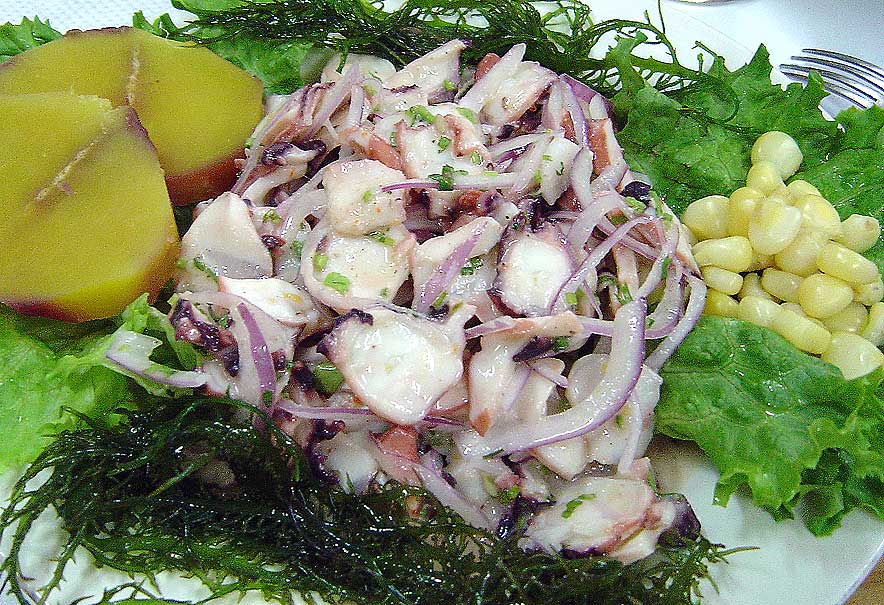
Gastronomy has been, since the days of the Spanish vice royalty, an essential aspect of life in Lima. During the last few years, the city's dining reputation has experienced a huge leap in the eyes of the world, due in part to the International Summit of Gastronomy (Madrid Fusión) in 2006, which declared Lima to be the "Gastronomy Capital of the Americas". The offerings in Lima are nowadays more varied and cover a wide range of types and cuisines, both regional and international. Despite the wide range of choice in Lima's many restaurants, ceviche is surely number one on the list of dishes you must get to know, not only because it happens to be the Peruvian national dish, but because of its unparalleled delicious taste. With the increasing interest in the Peruvian cuisine, ceviche is quickly making its way onto tables all over the world. But if you want to enjoy the real thing, don't miss it during your stay here in ceviche's mecca. There is at least one cevichería in every neighbourhood. Moreover, most criollo restaurants include ceviche on their menus; indeed the dish is so popular that it is even offered at many of the more upscale nouvelle-cuisine restaurants. In some places, Peruvian food tend to be spicy and heavy. Try it and ask if any dish is picante (spicy), which usually means it is going to be very spicy! A full meal may be really heavy even if it's perfectly nice and well-prepared with fresh ingredients. A second must goes to Chinese and Japanese cuisines, which predictably, have a strong Peruvian influence. Chifas - that is, Chinese restaurants- - which can be counted by the hundreds if not thousands, are usually down-to-earth neighbourhood eateries, offering a fare rich in seafood and chicken. Japanese restaurants, on the contrary, are less widespread, and more upscale and expensive. Their forte is, of course, a year-round supply of the freshest and most varied seafood. Travellers longing for a delicious falafel or shwarma sandwich will be pleased to learn there is an excellent café in Parque Kennedy that serves these types of Middle Eastern foods at reasonable prices. There is a heavy presence of fast-food chains such as KFC, Pizza Hut, McDonald's, Subway, Papa John's and local chain Bembos all over the city. Places such as Burger King, Chili's and TGI Friday's are scarce, but can be found around Miraflores. Also, you shouldn't miss Peruvian-style hamburgers at Bembos, and traditional Peruvian sandwiches in if you want to give your everyday fast-food a local twist.
Drink
Pisco Sour is the national drink of Peru, made with Pisco, a brandy made of grapes. It is highly recommended that all visitors to Peru try this drink at least once. Visitors might be amused to learn that Chileans claim Pisco Sour is their own, but it isn't true. There are some variations that are offered in several bars around town. Just be careful; the fresh and sweet flavour makes it very easy to drink too much, and you can so easily get drunk on it. Inca Kola is the most popular soft drink in Peru, one of few sodas that Coca Cola couldn't defeat (until they bought the company). It's a yellow-fruit flavored drink that tastes like hierba luisa. Jugos You can find great fresh fruit drinks all over Lima. Starting from S/0.50 for a fresh orange juice at the market to some more expensive ones. Surtidos, containing several different fruits, are quite tasty. Chicha Morada A refreshing, purple, non-alcoholic drink high in antioxidants. It's made by boiling purple corn with pineapple, cinnamon, clove, and sugar. Emoliente is a hot drink prepared with barley, herbs, sugar and lemon juice. It's often sold by street vendors at night for around S/1. It's especially great in winter. Starbucks Coffee is predictably widespread if you really need your daily caffeine fix.
Sleep
Surco, Miraflores, San Borja and San Isidro are some of the nicest and safest areas in the city. Although they sometimes come a bit pricier than the old city center and other parts, some budget accommodation options do exist. Keep in mind that the old city may not be safe for tourists at night.
Stay safe
If you witness a crime being committed, do not intervene unless you are really sure of what you are doing: many criminals, even pickpockets, carry guns, knives, etc., and may use them if feeling threatened. In general, a tried-and-true technique for staying safe in Lima is to maintain a low profile. Leave your fancy watch at home, don't wear a fine suit and don't carry a laptop when hailing taxis on the street, and keep a relaxed, friendly, smiling attitude. If you do need to go out dressed like a tourist, call a taxi rather than hire one in the moment - the few moments you wait and the few extra soles you pay will be worth it.
Thieves
While there is not much violent crime against tourists, opportunistic theft is rampant. Watch out for pickpockets constantly. If you carry a purse, a camera, a backpack or just a pair of sunglasses hang on to them at all times. In crowded areas, put your back pack on your front and hold shopping close to you. Just keep your eyes open and be aware of people around you. In any case, if someone extremely friendly approaches (even wanting to stretch your hand), just try not to talk that much, and they'll go away. It's normal to find polite people around trying to help tourists, but stay away from the extremely friendly ones.
Football violence
Avoid the surroundings of football (soccer) stadiums before and after big matches, since "barras bravas" (hooligans) can be very violent. Ask for advice if you plan to go there or thereabouts. Very infrequently, but occasionally even in nicer tourist areas, gangs of young supporters of rival football clubs, or strikers involved in a labor dispute may brawl. If you find yourself caught in the middle of such a confrontation, just try to move out of the way, preferably behind a closed door. These youths generally do not carry lethal weapons, and the worst that is likely to happen is that someone will get hit with a rock before the police arrive to break it up.
Go next

If you are flying out of Lima internationally, the airport tax is US$31, or US$7.40 for domestic flights, which is rolled into the purchase price of tickets at the airport. Ensure you receive a sticker on the back of each ticket from the check-in counter as proof you have already paid the tax at the security checkpoint. The surrounding residential towns of Lima in the foothills of the mountains offer spectacular views and are ideal day-trips from central Lima. If you are flying to your next destination, you can take the "Las Flores 18" (IM-18) bus to the airport (from Miraflores/Magdalena/Surco) or any micro bus that says "Todo Faucett/Aeropuerto" on its side. The trip from Miraflores takes about an hour and costs S/2 . If you wish to take a long distance bus, see the Get In section above for bus companies, the various locations of their terminals and their destinations. Some popular destinations from Lima are:
Arequipa — the "White City", in the southern highlands. Cajamarca — hosts an exciting carnaval every February. Cuzco — The center of the Inca civilization. Luxury tourist buses run twice daily with Cruz del Sur. One of South America's most iconic sights, Machu Picchu, is just a 4-hours train ride away from Cuzco. Huancayo — can be reached by taking a scenic train trip through the Andes. Huaraz — a mountaineering center. Iquitos — a northern city of the selva (jungle) Ica — a desert city with an oasis called Huacachina. Matucana — and the Antankallo waterfall. Nazca — home of the ancient and mysterious Nazca Lines. Piura — a city on the northern coast. Pucallpa — can be reached by bus or plane and is the only major river port linked by road to Lima. It's possible to travel by boat to Iquitos. Tarma — the "Pearl of the Andes". Trujillo — a beautiful city on the northern coast. Tumbes — a northern coastal city with a heavenly beach.
More pictures of Lima


From this destination's category on Wikimedia Commons. Each photograph is credited to its own author under its own licence.
The guide text on this page is from the Wikivoyage article Lima, written by Wikivoyage contributors and published under CC BY-SA 4.0. The authors are listed in the article’s edit history. It has been shortened and re-laid-out for this page; that adapted text is available under the same licence. Nothing else on this page is.
Wikivoyage is written by travellers, not by us. Opening hours, prices and whether a place still exists are exactly the details that go out of date, so check anything you are relying on.
“1,302 readers a month” and the ranking are ours, counted from Wikimedia’s published pageviews (CC0) — the median of twelve complete months. They count people reading about a place, which is not the same as people going there.