
Kraków
Kraków (IPA: [ˈkrakuf]) is the chief city of Małopolskie Province in the south of Poland and was the capital of the country during the Middle Ages. At its core is a beautifully-preserved medieval town on the banks of the River Wisła or Vistula, and it's Poland's top tourist draw. The modern city, with a population of just over 800,000 (2023), stretches way beyond, including the communist-era "new town" of Nowa Huta.
Most read about in July, least in November. That is when people look it up, which tends to run a month or two ahead of when they go.
Before you book
The Foreign, Commonwealth & Development Office publishes the UK’s official travel advice. It changes without notice and travelling against it usually invalidates your insurance, so read it at the source rather than anywhere else — including here.
FCDO travel adviceUnderstand

In English the city's name used to be spelled "Cracow". But 21st-century visitors have discovered it via budget airlines and travel booking sites that always call it "Krakow" so the older spelling isn't used here. The diacritical mark over the "o" changes the pronunciation from "o" (IPA: [ɔ]), to "u" (IPA: [u]).
History
Kraków is one of the oldest cities in Poland, with evidence showing settlements there since 20,000 BC. Legend has it that it was built on the cave of a dragon whom the mythical King Krak had slain. However, the first official mention of the name was in 966 by a Jewish merchant from Spain, who described it as an important centre of trade in Slavonic Europe. Through trade with the various rulers of Europe, it grew from a small settlement in 1000 AD to a large wealthy city, belonging to the Vistulans. However, through the 9th and 10th centuries, it fell under the influence of the Great Moravians, then the Bohemians, before being captured by the Piast Dynasty of Poland. In 1038, Kazimierz the Restorer made Kraków the capital of Poland. In 1241, the city was almost entirely destroyed by Tatars. It was rebuilt to a design that remains largely unchanged to the present day. However, after more successful attacks by the Mongols in the late 13th century, Kazimierz the Great set about defending the city. Walls, fortifications, and the original Wawel Castle were added. The University was also established. King Kazimierz established the district of Kazimierz for Jews to live in free from persecution. This area remained mainly Jewish for centuries until the Nazi occupation. The 16th century was Kraków's golden age. Under the influence of the joint Polish-Lithuanian Jagiellonian dynasty, Kraków became a centre of science and the arts. In 1569, Poland was officially united with Lithuania and as a result government activity started to move to Warsaw. King Zygmunt III officially moved the capital in 1609. However, the 17th century was a return to troubled times for Kraków and Poland. After being invaded by Russians, Prussians, Austrians, Transylvanians, Swedes, and the French, it went through a phase of various forms of political control. These included being part of the Duchy of Warsaw, established by Napoleon, and becoming an "independent city". However, it mostly fell under the sphere of influence of the Austrian Habsburg Empire, in the province of Galicia. In the First World War, Józef Piłsudski set out to liberate Poland and the Treaty of Versailles (1919) established an independent sovereign Polish state for the first time in more than 100 years. This lasted until the Second World War, when Germany and the USSR partitioned the country, with German forces entering Kraków in September 1939. Many academics were killed and historic relics and monuments were destroyed or looted. Concentration camps were established near Kraków, including Plaszow and Auschwitz; see Holocaust remembrance. After German withdrawal, the city escaped complete destruction and many buildings were saved. In the Communist period, a large steel work factory was established in the suburb of Nowa Huta. This was seen as an attempt to lessen the influence of the anti-communist intelligentsia and religious communities in Kraków; see Cold War Europe. In 1978, UNESCO placed Kraków on the World Heritage Sites list. In the same year, the Archbishop of Kraków, Karol Wojtyła, was made Pope John Paul II. The communist government collapsed in 1989 and Kraków has undergone another period of regeneration, with historic buildings being restored, but many of the dull post-war buildings still remain. In the 21st century, especially with the advent of budget airlines, Kraków has become one of the most popular destinations in Eastern Central Europe both for fans of history, culture and architecture as a party destination and as a gateway to other destinations in the region.
Climate
There are four definite seasons to Kraków - summer being hot and humid (average highs of 25°C) and winter always seeing Kraków under a blanket of snow with bitingly cold days (average lows of -3/-4°C). Due to little wind, Kraków suffers from high levels of air pollution from cars and coal stoves, which especially affects children and people with respiratory problems.
What's inside
Kraków consists of 18 districts. The historic Old City is situated in District I Stare Miasto. Even though the words Stare Miasto mean 'old town', it should not be confused with the historic old town of Kraków itself, as the medieval old town is only a small central part of District I Stare Miasto. Some of the communities around the edge of Kraków can show you real Polish life away from the tourist-focused economy of the centre. The article for Kraków is divided into districts as follows:
Getting there

By plane
1 Kraków Airport (KRK IATA, John Paul II International Airport Kraków - Balice). The city's airport is in Balice, 12 km west of the centre. Ryanair are a major operator here, with an ever-changing list of European destinations; Easyjet, Lufthansa, Wizz and Norwegian are among others. The airport often suffers from fog in winter, with cancellations and diversions. There is a single terminal, with arrivals and check-in both in the same hall at street level. The currency provider is ICE, with rates for major currencies 15-20% either side of bank rate - poor value but average for an airport. There's a ground-side cafe but much better facilities upstairs airside, after security. A litre of Polish vodka for an EU passenger might be 60 zł. For non-Schengen departures, don't go through passport control until about an hour before your flight, as there's not much in the lounge beyond. Gates 17 / 18 are always non-Schengen, while Gates 9-16 and their waiting areas are switched back and forth. A dozen car rental kiosks are in Arrivals, only needed if you're touring the region, you can't take a car into Old Town. (updated Nov 2019) To and from the city:
Trains run between the airport (Kraków Lotnisko) upstairs hall and the main railway station (Kraków Główny). They run daily every 30 min between 04:00 and 00:30, taking 20 min. A single ticket costs 20 zł, return 40 zł, concessions half-price (Jan 2025). Tickets can be purchased: using cash on board (only złoty and cards are accepted), online from the regional rail company, you receive an e-ticket by email (the airport station is called Kraków Lotnisko, the main station is Kraków Główny), ticket machines on the platform, the notoriously complicated ones have been replaced here so you should have no issue getting a ticket to Krakow Główny, the main station: choose the next train even if it's just about to depart, as your ticket will be okay on any train that day. Buy a return ticket at this occasion as only a few machines at the main station actually sell tickets to the airport; the PKP / Polregio machines cannot be used. These trains also call at the western suburban stations of Kraków Olszanica, Zakliki, Młynówka and Łobzów; change at Główny for all other destinations. Trains are sometimes replaced by buses (badged "SKA" and taking 30-40 min), which are in addition to the regular city buses. Pay as for the trains, cash on board is simplest else you have to go upstairs to the railway ticket machines then come down again.
The airport bus stop is just outside Arrivals. The downtown terminus for 208, 902 and train replacement SKA buses is the forecourt that lies between the railway and bus stations outside the big Galeria Krakowska shopping mall, not the bus station itself. A single ride (day or night) costs 6.00 zł (3.00 zł for concessions, e.g., ISIC/EURO 26 holders or age over 60). You need an "agglomeration ticket" valid for Zones I + II to cover the airport; city buses are cashless so you can't buy on boarding. Buy from a newsagent or from a ticket machine at the bus stop, and validate it immediately on boarding. For other types of tickets, see the ticket information of the operator MPK, and "Get around" below. E-hailing: — Uber and Bolt serve the airport and offer much lower rates than regular taxis: figure on 25-35 zł for a ride to the city centre. Kraków Airport Taxi is the official taxi service, tel +48 12 258 0 258 or + 48 668 307 307 (open 06:00-22:00) or just rock up. There's a fixed fare per distance, posted on the airport website, reckon 90 zł to city centre. Prebooked transfer: several internet platforms offer pre-booked cars from Kraków Airport. You know the price when you book, and often get a better vehicle.
Getting around

Kraków is compact and most sights can be covered easily on foot, with an occasional tram ride.
On foot
Depending on your level of fitness, you can see the whole of the city centre without needing any transport. There are some beautiful walking routes, try the Royal Way or the Planty park that surrounds the old city all the way from Florian's Gate to Wawel castle. It is very relaxing. There is also a well cared for river banks next to the castle just to stroll around. However, in winter, snow is sometimes not removed from the sidewalks, resulting in a mixture of snow and mud. Be sure to bring waterproof shoes if you plan to travel by foot in the winter. Most of the old town is a pedestrian-only zone. Be sure to wear sturdy shoes suitable for uneven cobblestone paths
By bus and tram
During the day, there is an excellent system of public transportation consisting of trams and buses managed by MPK (Miejskie Przedsiębiorstwo Komunikacyjne). On their website you can check routes or stops. Easyway journey planner finds the routes and schedules for a given trip. Rush hours are mostly 07:00-09:00 and 15:00-17:00 and you can spend a lot of time in traffic jams. The official phone application Jakdojade (iOS, Android) is available to route you around Krakow and other Polish cities. You can buy tickets directly on the app. You can also buy tickets online but you need to register in advance in Mobilet (iOS, Android) or Skycash (iOS, Android) mobile services and download appropriate mobile application. It's best to buy tickets before you get on board in a kiosk or ticket machine on the tram/bus stop (these are present mostly in the city centre and provide help in few languages). Some, but not all, ticketing machines accept credit cards. Those trams and buses that are equipped with ticket machines are marked with large "A" sign above the entrance. If there is no ticket machine on board you can buy the 6 zł ticket from the driver but you have to pay him with exact change (the driver will not accept a higher amount than the ticket price). If buying a ticket after mounting the vehicle try to be fast. Ticket controllers are fairly common and fines are quite high (240 zł) and a hassle. As soon as you get on, punch the ticket in the validation machine. Tickets need to be punched only the first time you get on, don't do it again after changing a tram/bus. You can use a single ticket for multiple rides as long as its time period hasn't expired. Ticket prices as of 2026: single-fare/30-minute 6 zł, 15-minute 4 zł, 60-minute 8 zł, 24-hour 20/25 zł (city/agglomeration), 48-hour 40 zł, 72-hour 55 zł, 7-day 65/80 zł (city/agglomeration), family ticket (Sa Su only, unlimited daytime traveling) 25 zł. ISIC/Euro26 student card holders qualify for a 50% discount on all tickets. When travelling to neighbouring villages or to the airport you need an agglomeration (zone) ticket. All buses that go outside the city limits have 2 or 3 at the beginning of their line number. Keep in mind that not all time passes mentioned above are valid outside the city, and you will need to purchase a zone ticket separately. Zone tickets are slightly more expensive than city ones and follow similar time system. Night bus and tram lines start with 6 (or 9 when zone) at the beginning of their line number. Ticket prices during the night are the same. 24-, 48- and 72-hour, as well as 7-day tickets are valid on night buses. Tram and bus stops show routes and most kiosks will be able to advise you on route numbers. Modern trams and most of the modern buses also display the route inside on the screens and announce each stop.
See

Individual listings can be found in Kraków's district articles 1 Wawel at the south tip of Old Town is a citadel perched on a crag. Within are the cathedral, and the Royal Castle which has several museum galleries and collections. 2 Main Market Square (Rynek Główny) is the grand centre of Old Town, with St Mary's Basilica and the Cloth Hall. The town walls have gone except for the bastions on its north flank. 3 Kazimierz was the Jewish quarter. The best of it is around Szeroka, with the Remuh synagogue and atmospheric old cemetery. Museums are run by either the National or the City museum. - The 4 National Museum main building is at the foot of Aleja 3 Maja in west Kraków, ten minutes walk from Old Town. Other branches, all within Old Town, are Sukiennice Gallery, Czapski Museum and Pavilion, Matejko House, Szolayski House, Czartoryski Museum, Czartoryski Library, Menhoffer House, Erazm Ciolek Palace, and the Europeum Centre. - The Museum of Krakow or City Museum runs Krzysztofory Palace, Old Synagogue, Oscar Schindler's Enamel Factory, Eagle Pharmacy, Pomorska Street, Hipolit House, Town Hall Tower, the walls (including Barbican, Florian Gate and Celestat), Nowa Huta, Nowa Huta underground, Zwierzyniec House, Rynek Underground, Theatre Museum, Thesaurus Crocovensis, Podgorze, KL Plaszow and Rydlowka. - These are all rich, fascinating collections. To pick one highlight from so many: the Lady with an Ermine is an authentic Leonardo da Vinci portrait (in Polish Dama z gronostajem). She's been shunted hither and yon across Europe but nowadays resides in the Princes Czartoryski Museum just inside the Old Town walls. Nowa Huta was built in Communist times for the workforce of the colossal steelworks there. It's a monument to their crass central planning, with huge buildings surrounding green parks. The Polish Aviation Museum is in this area, 5 km northeast of the centre. Auschwitz-Birkenau is a simple day-trip from Kraków - lots of tours go there, but you can easily do it independently. It had offshoots all over the region, including a concentration camp in Podgórze district.
Do

Individual listings can be found in Kraków's district articles Walk the Royal Way from St Florian's Gate down Floriańska, across the Main Market Square, then down Grodzka to Wawel. Listen to the Hejnał Mariacki while sipping a coffee in the Rynek Główny. This five-note trumpet signal is played on the hour from the tower of St Mary Church, and it's said to be an alert cut short in homage to a trumpeter slain in mid-toot by a Tatar arrow in 1241. The Tatars would have needed a high-velocity rifle to get him at that range, and the legend only developed in the 20th century. "Hajnal" is Hungarian for "dawn", and more likely it was just the signal to re-open the city gates in the morning, sounded towards each of the four gates, and never part of a longer tune. Walk around the Planty, the park that encircles Old Town. Lounge and take in the sun on the banks of the Vistula river; at the foot of Wawel, a dragon breathes fire. Cross the footbridge Kładka Bernatka between Kazimierz and Podgórze. Take a Free Walking Tour. One of the reputable group is the Walkative Tour. Cruise down the river to admire Tyniec Abbey and Bielany Priory. In summer boats sail from the wharf below Wawel, and there's also a city-owned water tram. Early on Sunday, go shopping at the open air flea markets at Plac Nowy and Hala Targowa. Participate in a Mass in St. Mary's Church. The church is impressive and the devotion of the believers will bring you inside of the real religious spirit. Learn about life in Kraków under Nazi German occupation in the original Schindler's Factory building in Podgórze district. Take part in a city game which combines sightseeing of the city with adventure, integration and fun. You'll find them advertised in hostels. Foreign visitors can find locals eager to practise speaking English and other languages at the English Language Club on the second floor at ul. Sienna 5, Wednesdays 18:00-20:00.
Events
1 Jewish Culture Festival (Festiwal Kultury Żydowskiej). A classic, one of the biggest Jewish culture festivals in the world. A week of tours, concerts, workshops on cuisine, dance, music and calligraphy topped with a huge final show on Saturday evening. June/July (updated Jul 2026) Bajit Chadasz (New Home in Hebrew). Jewish culture festival, organised by Jewish Cultural Centre in Kazimierz with concerts, exhibitions and lectures. 2 Krakow Film Festival. One of the oldest film events dedicated to documentary, animated and short fiction films in Europe. In a week over 200 films are shown in around six cinemas (10 screens) around the city and in an open air one next to Wawel castle. May (updated Jul 2026) Off Camera. International festival of independent cinema. April (updated Jul 2026) 3 Etiuda and Anima. International film festival built around animations and short films. November (updated Jul 2026) Photomonth. One month long festival with around forty different photography exhibitions around the city. May Live Music Festival. Second half of August. Typical summer open air music fest. Stars that appeared past years include: Kanye West, Muse, The Chemical Brothers, 50 Cent. Unsound. World-renowned experimental music and art event. October (updated Aug 2016) Sacrum Profanum. November. Music fest with concerts of such stars as Steve Reich, Aphex Twin or Kraftwerk taking place in unusual places like churches, museums and factories. (updated Jul 2026) Wianki. St. John's Night (Midsummer) celebration. An evening of concerts finished with a fireworks show taking place on Vistula river banks next to Wawel castle. A booze-up. June Independence Day on 11 Nov is celebrated throughout Poland, but is an especially big event here. There are grand parades, and Wawel is closed to routine visits. Christmas Market: this is the oldest such market in Poland, held from the end of November to the end of December in Main Market Square. Krakowskie Noce (Krakow Nights). Five nights (one in each month from May to September): Night of Museums (free museums), Night of Theatres (free theatres), Night of Jazz (free jazz concerts), Cracovia Sacra Night (free concerts of church music) and Night of Poetry (free poetic evenings). There are regular events at TAURON Arena (a large sports and concert arena) and ICE (a new congress centre). Krakow Rugby Festival Held annually every 3rd weekend of June. A 2-day rugby festival for amateur male and female rugby teams (senior and Vets) from all over the world. Held at the 's stadium (Polish EkstraLiga rugby team) in Na Bloniach 7 street.
Sports
Football: Cracovia, Wisła Kraków and Wieczysta Kraków all play soccer in Ekstraklasa, the top tier. Ice hockey: Cracovia play in Polska Hokej Liga the top tier. Their home rink Lodowisko Cracovii is on Michała Siedleckiego in Kazimierz district. Golf courses near the city include: Krakow Valley Golf & Country Club, Paczółtowice 328 (Krzeszowice). Also a hotel, shooting range and horse rides. Royal Kraków Golf & Country Club, Ochmanów 124 (Podłęże). Between Wieliczka and Niepołomice. Also a hotel.
Shopping
Individual listings can be found in Kraków's district articles Old Town is geared to tourists, selling clothes, jewellery and art, rather than staples though these can be found in small independent stores. The centre of it all is Rynek Główny which means "main market": the ground floor of Sukiennice (Cloth Hall) is a bazaar for art, amber, sheepskin and other craft souvenirs. Lots more on adjacent streets such as Floriańska and Grodzka. Kazimierz is less touristy, though there's a similar collection of places in the streets around Plac Nowy. The big shopping mall here is Galeria Kazimierz at ul. Podgórska 34 on the riverbank, with a gourmet supermarket. Galeria Krakowska at ul. Pawia 5 is next to the main railway and bus stations, 5 min walk north of the Old Town walls. Other big supermarkets are quite far from the centre, eg Carrefour, Biedronka, Lidl, and Bonarka at ul. Kamieńskiego 11.
Eat

Individual listings can be found in Kraków's district articles Kraków's cuisine has been influenced by the cultures that have inhabited central Europe, as well as the Austro-Hungarian empire.
Local specialties
Some well-known dishes from Kraków:
obwarzanek, a doughy ring halfway between a bagel and a pretzel, sold everywhere for 3 zł or so. zapiekanka, a toasted sandwich with many variants (the most popular ones are with mushrooms, cheese and sauces). You can buy them on Kazimierz, on a round market square called Okrąglak located in the middle of the district. maczanka pulled pork, slow-cooked and shredded, usually served on a bun with pickles. The bun itself may be dipped in the sauce for a messy taste explosion. oscypek, sheep's cheese pressed into decorative spindle shapes and smoked, typically pan-fried and served with jam. The real thing is made in the Tatra Mountains and sold only in season from late April to October; imitations made from cow's milk can be found all year round. See Poland#Eat for a full introduction to Polish cuisine.
Drink

Individual listings can be found in Kraków's district articles Bars, pubs, and cafes in Kraków are one of its biggest attractions. Not just their number or quality, but close proximity. It has been said that there are more than 300 eating and drinking establishments in the Old Town alone.
Local drinks
A tatanka is a unique (and delicious) Polish beverage made with apple juice and a special kind of vodka called żubrówka, which is flavoured with bison grass. It is also often referred to as a szarlotka, or apple cake. Tatanka is a Native American term for bison. Poland is the homeland of vodka, so you definitely should try some, both clear and flavored. The most popular clear vodka brands are Wyborowa, Soplica, Baczewski, Żubrówka. When it comes to flavored vodkas, we have a traditional, family beverage called nalewki, which is made out of clear vodka, sugar and mostly fruits - there are hundreds of different flavors. If you want to try some great vodkas but don't know where to start, there's a bunch of organized vodka tasting tours for tourists. Wódka miodowa is a honey vodka, often served chilled in shots. Some of the better Polish-themed restaurants will have house brands. Śliwowica, a plum brandy, is worth watching out for. There are two main variants: an 80-proof (40%) yellow tinged one and a 140-proof (70%) clear variety. While the 80-proof variety is often smooth and flavorful, some have compared the 140-proof to drinking gasoline. A good way to drink it is to deal with it like with an absinthe. Take a small spoon with sugar, put some Sliwowica on it and fire it. Let the sugar melt down for a while (10–30 seconds). Then, mix the flaming sugar with the rest of the drink. Let it burn for 5–10 seconds, then blow it and drink it. Watch out and don't burn your lips! You can also let it burn longer, but then use a straw to drink it to avoid burning your fingers or lips. Grzaniec, mulled wine with cloves and other spices, very popular around Christmas when sold on Market Square. Wściekły pies, a shot of plain vodka with tabasco and raspberry sauces in the bottom. Must be drunk in one gulp. The name can be translated as rabid dog. Definitely worth trying. Kamikaze, a set of several shots of vodka-based alcohol sold usually in clubs. It usually contains equal parts of vodka, blue curacao and lime juice. Should be drunk in one gulp, one shot after another. Warning: If you party with Poles you should be aware that some of them consume a higher dosage of alcohol than you're used to. Don't try to keep up with your Polish friends and make sure you have plenty of breaks when drinking.
Bars
Thanks to their proximity to each other, Kraków's watering holes are ideal for bar hopping. Many locals and tourists have spent nights partying from the Old Town all the way to Vistula River at the end of Kazimierz. Walk down ul. Szeroka or head over to Plac Nowy for streets full of bars. The newly-opened Tytano district offers a loft-style, London-like selection of cocktail-bars, restaurants and clubs. It's based in the proximity of the city centre on the corner of Dolnych Młynów and Czarnowiejska streets. If you're looking for a place to relax, there is plenty of bars to choose from there. In the warmer months, Kraków's nightlife moves outdoors into hundreds of sidewalk cafes and beer gardens. When winter comes around, it moves underground into cellars all around the city.
Sleep

Individual listings can be found in Kraków's district articles
As the number of tourists to Kraków increases rapidly, accommodation prices are rising. Try to avoid hotels and hostels located in the Nowa Huta district; most of them are former shelters for part-time industry workers and the district is quite distant from the city centre.
Campsites
There are few campsites in Kraków, most of them closed in colder months. All provide some space for tents and caravans as well.
Stay safe
Like the rest of Poland, Kraków is generally a very safe city with strong police presence. Violent behaviour is rare and if it occurs it is most likely alcohol-related. While pubs and clubs are generally very safe, the nearby streets may be scenes of brawls, especially late at night. Try to avoid confrontations. Follow standard city travel rules: don't leave valuables in the car in plain sight; don't display money or expensive things needlessly; know where you're going; be suspicious of strangers asking for money or trying to sell you something. Pickpockets operate; pay attention to your belongings in crowds, at stations, in crowded trains/buses (especially to/from the airport), and at clubs. In any case, do not be afraid to seek help or advice from the Police (Policja) or the Municipal Guard (Straż Miejska). They are generally helpful, polite and in most cases speak at least basic English.
Racism
As a result of Nazi German and Soviet terror, modern Poland is a very homogeneous society. Even though quite a few Asian and African migrants have settled in the larger cities (including Kraków) in the last couple of years, it is still quite rare to see non-Caucasians on the Polish streets. If you are a non-white traveller do not be surprised (or alarmed) if some people (especially young children) stare at you with curiosity. The overwhelming majority of Poles are warm, hospitable people who are often curious to learn more about other cultures. Racist incidents are extremely rare, but, just like anywhere else in Europe, have taken place. If you are unfortunate enough to experience racism or too much curiosity, it is important not to get yourself involved in a confrontation. Walk away instead.
Scams
As in any major tourist city, there are people trying to take advantage of travellers. Generally, use common sense and follow simple precautions. Below is a list of the most common scams:
Go next
Nearby
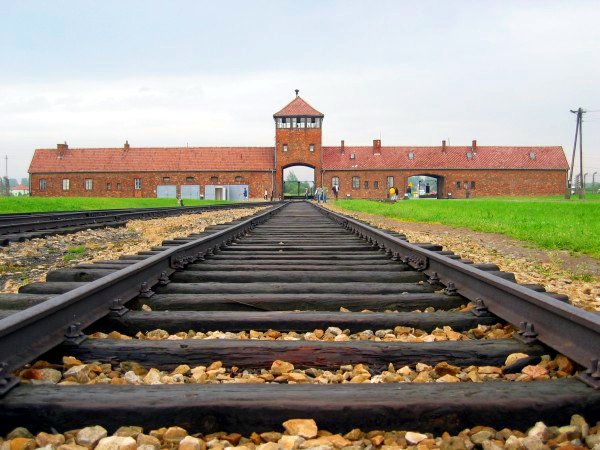
Auschwitz-Birkenau — Former German Nazi camp 2 km (1.2 mi) outside city of Oświęcim, 65 km (40 mi) from Kraków. It is better visited from Katowice instead of Krakow. Leave a whole day for this if you want to go. The Auschwitz camp and the much bigger Birkenau camp are a few kilometres apart. Wieliczka — 17 km (11 mi) from Kraków, is the location of ancient salt mines, one of the original 12 UNESCO World Heritage Sites and a definite must-see. Beautiful Renaissance castle in Niepołomice (25 km (16 mi)). Can be accessed by public transport - from Galeria Krakowska, take the 304 bus or the 3 tram, and get off at Bieżanowska stop, from where the 301 bus will take you all the way to Niepołomice Rynek stop (a zone ticket is required). Kalwaria Zebrzydowska monastery (35 km (22 mi) southwest) Bochnia — Historic salt mine, older than Wieliczka. 40 km (25 mi) from Kraków. Must see. SK-BUS minibuses from Kraków Main Railway Station (Dworzec Główny), or train (direction: Tarnów, Rzeszów, Stróże, Nowy Sącz/Krynica). Wadowice — 45 km (28 mi) southwest is the birthplace of Karol Wojtyła, John Paul II.
Further away
Tarnów (80 km (50 mi) east) — The second largest city in the region with a beautiful main market. Bielsko-Biała — 85 km (53 mi) southwest city with cosy old town and many beautiful buildings from Austro-Hunagrian times. Many buses from Kraków Bus Station (RDA). Zakopane — 105 km (65 mi) south in the Tatra Mountains is considered to be the Polish winter sport capital. Other winter sport centres near Kraków in the Beskids are Rabka-Zdrój (65 km) and Żywiec (90 km) Częstochowa — 135 km (84 mi) northwest is the most important pilgrim's place in Central Europe. In the Pauline Monastery on Jasna Góra (literally: bright hill) you can pray in front of one of the most known icon of Our Lady of Częstochowa. Warsaw — the capital city of the country. Katowice — a major city in South Poland with rich industrial heritage. Both the Czech Republic and Slovakia are just a little over 100 km from Kraków.
The guide text on this page is from the Wikivoyage article Kraków, written by Wikivoyage contributors and published under CC BY-SA 4.0. The authors are listed in the article’s edit history. It has been shortened and re-laid-out for this page; that adapted text is available under the same licence. Nothing else on this page is.
Wikivoyage is written by travellers, not by us. Opening hours, prices and whether a place still exists are exactly the details that go out of date, so check anything you are relying on.
“2,056 readers a month” and the ranking are ours, counted from Wikimedia’s published pageviews (CC0) — the median of twelve complete months. They count people reading about a place, which is not the same as people going there.