
Dubai
Dubai (Arabic: دبي Dubayy) is a cosmopolitan metropolis and global city on the Arabian Peninsula. The city is one of the ten most popular tourist destinations in the world. The city is also considered one of the most modern and progressive cities in the Middle East – certainly in the Arab world – and is also sometimes nicknamed as "City of Gold" due to historically being a hub for gold trade as well as the rapid transformation from a desert into a luxurious city.
Dubai is characterized by a vast landscape of desert which transforms into a futuristic style of skyscrapers along the coastline. The city offers both insights into the old merchant and pearl diving history of the Arabs in Deira and Bur Dubai and the new modern skyscraper business and bustling life in Jumeirah and Jebel Ali. Dubai is sometimes mistakenly thought of as a country, but it is actually one of the emirates that make up the United Arab Emirates. It is the financial centre of the United Arab Emirates. Dubai is also considered a commercial and cultural hub of the Middle East, it's a global transport hub, and has attracted world attention through many large innovative construction projects and sports events. The city is symbolised by its skyscrapers, including the world's tallest building, Burj Khalifa, in addition to ambitious development projects including man-made islands, world-class luxury hotels, and some of the largest and extraordinarily modern shopping malls in the world.
Most read about in August, least in May. That is when people look it up, which tends to run a month or two ahead of when they go.
Before you book
The Foreign, Commonwealth & Development Office publishes the UK’s official travel advice for United Arab Emirates. It changes without notice and travelling against it usually invalidates your insurance, so read it at the source rather than anywhere else — including here.
FCDO travel adviceUnderstand

History
Dubai began as a small fishing village on the coast of the eastern Arabian Peninsula. At the beginning, the town made its income as a small pearl diving town. However, as expanding trade boomed across the gulf, it became a trading hub between Iran and India and gained a lot of notoriety for its imported goods from the East. In fact, the currency of Dubai used to be the Indian rupee historically. Dubai was also used as a smuggling town to smuggle gold from Africa and elsewhere and import it to India, this made Dubai a well-known point in the map for various traders. When oil companies looked for oil around the Trucial States, Dubai was shown to not have any significant oil reserves compared to Abu Dhabi. Sheikh Rashid Al Maktoum, then the leader and Sheikh of Dubai, continued on the booming expansion of trade in Dubai instead of relying on any oil income. He welcomed Indian traders, Iranian traders, and even Western officials and travelers to his hometown. The open policy of commerce and tolerance of foreigners made Dubai a willing destination for any non-Arab or non-Muslim, in stark contrast to other cities in the Arabian Peninsula, which viewed non-Muslims with suspicion. Sheikh Rashid's son, Sheikh Mohammed, had a vision of establishing Dubai as a Middle Eastern tourist destination. In his memoir, when he met with other GCC heads of state after the British withdrawal from the Gulf and proposed on making Dubai a tourist destination, the rest of the Sheikhs laughed at him. They told him nobody would like to come and visit a barren desert. Nevertheless, Sheikh Mohammed made the effort to hire experts and change the entire infrastructure of the city to welcome tourists, established free-zones with no taxes, invested in major tourism projects and opened the city for everyone regardless of race or religion. Multiple Western companies and institutions, wanting to expand their influence in the Middle East, welcomed Dubai's tax-free open-arm invitation. Dubai was seen as the only city in the Arabian Peninsula that would allow non-Muslims to live, drink, and enjoy their lives by their own laws and Western or non-Islamic standards, though it is now rivalled by nearby Doha and Abu Dhabi in this regard.
Climate
The city of Dubai is situated on a coastal strip bordered by desert and gets very hot in the summer. It is dry on the hottest days and humid during the cooler days in the summer. Cooler, more pleasant weather lasts from the end of September to the beginning of May (although pleasant is relative, with daily temperatures from October to January and March to May still being 20–25 °C (68–77 °F), but be prepared for cold night temperatures. In winter the temperature at night is usually from 10 to 16 °C (50 to 61 °F). From May to September, the sun is intense and in August temperatures can touch 54 °C (129 °F) in the city and even higher in the desert. The heat, coupled with a humidity of 60%–70% near the coast, effectively precludes most activity outdoors for the daylight hours during summer. Summer and winter are effectively the only two noticeable seasons the city experiences.
December to April generally produces the highest precipitation, though little of it, at 100 mm (3.9 in) total per year. Some years yield no more than a few minutes of shower. Rain is celebrated in the UAE and most people take days off and some schools give rain days off to enjoy the little amount of precipitation the city experiences.
Getting there

See the Get in section for the United Arab Emirates for visa and customs regulations.
By plane
Dubai is a five-hour flight from Europe and three hours from most parts of the Middle East, the Near East, and the Indian subcontinent. Dubai's main airport is the Dubai International Airport (DXB IATA). Its eventual replacement, Al Maktoum International Airport (DWC IATA), is open to passenger flights and serves several destinations. You can also enter Dubai by using Sharjah International Airport (SHJ IATA) in the neighboring emirate of Sharjah.
Airlines often have price wars to glamorous destinations like Dubai and this can work to your advantage by careful planning and comparison of the various airlines serving Dubai. Emirates is the flag carrier of the emirate of Dubai, and connects Dubai to over 100 destinations while FlyDubai is Dubai's low-cost carrier. Etihad has shuttle services from their exclusive check-in facility in Sheikh Zayed Rd or Central Business District of Dubai to and from Abu Dhabi Int'l Airport, you can also fly with Sharjah's low-cost carrier; Air Arabia which flies to over 46 destinations within the Middle East.
Getting around

Dubai's public transport system is one of the best in the Middle East, especially after the launch of the metro, but most visitors end up taking taxis quite often. Using the public transport is a viable option during the winter months, as long as you avoid the rush hour on the red metro line. In the summer, due to the intense heat, taking a taxi is more practical, even if it's just to get to the nearest metro station. The timetables of the public transport are integrated into Google Maps. In the app, the routes of the metro and tram can be displayed permanently as a map layer. There are different types of transportation cards. In most cases the NOL Silver Card stored-value card is the right option for you. The card gives a discount on the single fares and transfers are not charged. The silver (and gold) card can also be topped up using the app called nol Pay together with an NFC capable smartphone and a credit card. Paying a single fare with the NOL Red Ticket is for passengers who want to use the public transport no more than 5 times altogether during their stay in Dubai, and don't want to transfer to another means of transport on their journey. The red ticket can only be recharged at metro stations and bigger bus stations, so have that in mind if you want to start your journey from a small local bus stop. The one-day pass, valid for unlimited rides on the metro, tram and buses, can only be bought with a red ticket. All mentioned transportation cards are available at metro stations, major bus stations and at both Dubai airports. Tap out at the end of your trip in buses - even with a day pass.
By metro
Dubai Metro has two lines which are open as of 2025: The Red Line is 52 km (32 mi) long and opened in September 2009. It's the second metro in the Arab world after Cairo. While the line does not serve the old city centre, it's handy for zipping along Dubai's long coastline and includes stops at the airport, Burj Khalifa and the Mall of the Emirates. The track 2020 expo - an extension of the Red Line - was completed in 2020. The Green Line, which burrows through the city core, opened in September 2011. You can transfer between the two lines at Union Square and Khalid Bin Al Waleed (BurJuman). There is a third metro line called the Blue line under construction with a planned opening date in 2029. In a metro station tickets can be purchased in automated machines, ticket offices or at the gate information clerk. Cash and payment cards are accepted (Visa and MasterCard). Trains run every 3–5 minutes from 05:50 to midnight every day except Thursday and Friday, when services are extended to 05:50–01:00 limited to 13:00–23:59, respectively. All stations are air-conditioned and there's a large network of feeder buses. If you plan to travel late in the evening, check station working hours as the last train may depart earlier than the official system operating hours. Be aware that the red line between Union Station in Deira and Dubai Marina is used by many passengers, so you most likely need to stand during your ride. Try to avoid the rush hour from 7–9AM and from 5–7PM in which also the Gold Class is also packed. Many metro stations are named by a company for a couple of years. So if you were staying in Dubai before, the names of some metro stations are possibly now different.
By monorail
A 5 km (3.1 mi) monorail system shuttles passengers across the Palm Jumeirah to the Atlantis hotel. It connects with the Dubai Tram. This is not a part of the rest of Transport, and therefore, you will need to buy a separate ticket (15 dirham one-way and 25 dirham return).
See

Individual listings can be found in Dubai's district articles
Dubai is a mixture of old and new, traditional and modern. From old traditional souks and historical buildings (now being preserved for cultural reasons or already part of the national heritage) to modern Dubai's overwhelming shopping malls, incredible artificial islands and giant modern skyscrapers that include the world's tallest building, Dubai is a world in itself and offers plenty of wonderful attractions. The city has numerous museums and historical buildings, but Dubai Museum is a must see for a first-time traveller to the Emirates. It provides a glimpse of the old life of Dubai, its people and their culture and heritage. A number of other museums are located in nearby Sharjah. Dubai has a justified reputation as a concrete jungle, but there are nice pockets of greenery within the city, such as Safa Park. The city parks are modern and very well-maintained, with the most popular located in Jumeirah.
Do

Individual listings can be found in Dubai's district articles
Abra ride. A boat ride is best done at night in the cool weather and to enjoy the city lights. Abras can be hired for a private tour (for a price negotiable with the driver, but usually very cheap). This is quite a popular activity at sunset on a clear day, particularly if the driver is able to enliven the tour with stories about the structures on either side of the Creek. Just make sure that the purpose of one's abra hire is made clear at the outset, otherwise, you will be in for a very expensive cross-river trip or a crowded private tour. Beaches and sea. There are endless water sports opportunities as Dubai has some of the whitest and sandiest beaches in the world. Ocean temperatures range from 22 °C (72 °F) in winter up to 35 °C (95 °F) in summer, there are few wave breaks and the strong winds can make swimming difficult. The water is also very salty so many prefer to use their hotel swimming pool. Diving activities have been severely affected by offshore construction work for the Palms and The World; consequently, long boat trips are necessary to reach wreck sites. Alternatively, one can make the 90-minute road journey to the East coast Emirate of Fujairah or the Sharjah enclave, Khor Fakkan, for top-class diving on coral reefs supporting extensive marine life. Camel race track. One of the more unusual attractions, with races being held on Thursday and Friday in the winter. You can watch the races, and you'll have the opportunity to visit the paddocks. Vendors sell everything from beads to rugs and blankets, so you can purchase souvenirs. Horse racing has a long tradition in the Arab world, and Dubai's Meydan Racecourse is one of the most famous horse racing venues in the world, holding races for both Thoroughbred and purebred Arabian horses. Gambling is illegal, so there are no on-site betting facilities, but the grandstand is a marvel of modern architecture, and particularly spectacular when lit up at night. Desert safari or dune bashing. Head out to the desert in an SUV with specialist desert drivers. The drivers will take you for a thrilling roller-coaster ride over sand dunes, show you the sunset from a strategic vantage point and then take you to a traditional Arabic Bedouin campsite where you'll be offered lavish barbecue buffet dinner with music and belly dance to complete the atmosphere. The duration of the tour is usually around five hours. You may want to stay clear of the dune bashing if you get carsick easily. A desert safari is one of the best things to do while in Dubai. Another option would be renting/buying a 4x4 and joining the many growing 4x4 clubs in the UAE, but only if you're an extremely experienced driver and hold an international driving license. Neighboring cities including Abu Dhabi also have their own, such as AD4x4. For all of the Dubai-based clubs, membership is free of charge and they conduct trips for beginners into the desert on a regular basis. Natural outdoors. Although at first glance the outdoors may seem dull and uninteresting, and even dangerous due to the desert conditions, there are actually amazing natural destinations in the Emirate of Dubai, which extends into Hatta. There are pristine waterfalls, cliffs lined with fossils, and even freshwater lakes. Yacht charter is an easy way to explore the man-made Palm Islands and coastal skyscrapers. Fleets are available for hire from Dubai Marina from many of the yacht charter agencies. Dubai Creek cruise. Dubai Creek is the foundation from which Dubai grew. It was built as a port for trading vessels plying to and from India, Africa and the Middle East. A bit of the old shipping culture remains. In and around the Creek one can see some of the original buildings that have served as customs houses and defence structures. You can book a ride (usually four hours) on the Dubai Marina cruise or rent a private boat to take you on an hour-long ride up and down the Creek. Burj Khalifa: Visit the tallest building in the world with the magnificent centrepiece of Dubai, Burj Khalifa is surrounded by hotels, must-visit shopping destinations and a world of entertainment options. Golf. It may be a desert, but a lot of money and water is spent on irrigating opulent golf courses. Alternatively, for a more local flavour, try sand golf. The Dubai International Film Festival is the city's not-for-profit cultural event. As a major festival for Arab cinema, it showcases a selection of films from the Middle East, Africa and Asia.
Shopping
Individual listings can be found in Dubai's district articles
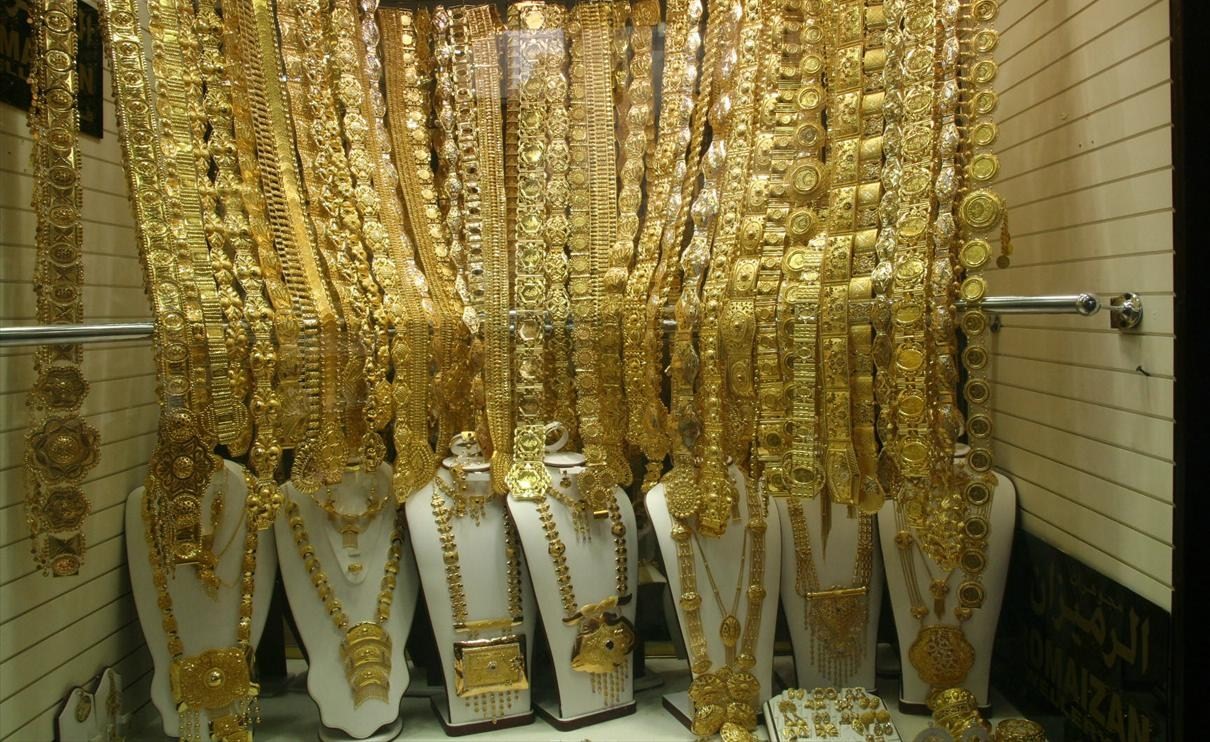
Dubai is practically synonymous with shopping and could be called "Do buy". Low tariffs and a huge amount of cargo passing through its port ensure that practically anything is available at fairly competitive rates, although the appreciation of the Dirham and the plentiful supply of shoppers means that Dubai is no longer a bargain basement shopping city. You'll also find products in Western chain stores, still with the original tags quoting euro or sterling prices, being sold with a 20–30% mark-up once converted to dirhams. The best things to buy are textiles, electronics and gold; electronics are believed to be much cheaper, while there is a wide selection of textiles and gold. Dubai shops suffer from the standard developing world shopping phenomenon of having no storeroom and no stocks in reserve, even in the mega-malls – and for clothes shopping this may mean that you struggle to find the style you want in the size you want. Shops open as early as 09:00 and stay open until 22:00, and on weekends to midnight or 01:00. Remember to haggle in the souks, as discounts are almost always available and even in situations where the item will not become much cheaper, the customer is always expected to "play the game" of haggling. A simple question of "What's your best price?" will often result in a shopkeeper going to extraordinary lengths to sell his stock. Prices in the malls and other Western shops tend not to be negotiable. Far from being a bad thing, this allows the canny visitor to work out comparative prices for common souvenirs – an invaluable aid when a shopkeeper in a souk is asking for a higher price. Dubai Shopping Festival has been the biggest shopping event in the Middle East since 1996. Almost every shop has a sale, starting in January and ending in February. The DSF is not limited to Shopping but also produces some mind-blowing stages shows and performances performed by international celebrities. There's also a very similar Dubai Summer Surprises trying to pull in punters during the summer low season.
Souvenirs
"Dubai chocolate", filled with pistachio paste and crunchy kadayif (shredded filo), was only invented in 2021 but went viral soon afterwards. The original is Fix Dessert's "Can't Get Knafeh Of It", available only by delivery and in very limited quantities, but imitators abound.
Eat

Individual listings can be found in Dubai's district articles
Shawarma is the most available food item on almost all streets (and cheap) in Dubai. It is the Arabic equivalent of the burger. It is meat that has been cooked on a skewer and then cut into thin strips and placed into a kuhbus (pita) bread with vegetables and dressing. There is the plain-jane variety and the more exotic Lebanese and Iranian varieties. The shawarma sold by Indian restaurants are arguably the cheapest. Another local snack is fala-fil (felafel, falafel), which is as cheap as shawarma.
Traditional Emirati food normally involves rice and meat/chicken cooked with different spices. As such, mandi is a very popular meal and generally affordable, except when served in high end restaurants. Emirati restaurants can be mostly found in areas with local residents, such as Deira, Bur Dubai and Jumeirah. Traditional desserts are also worth trying. Search for luqaimat, deep fried dough balls tossed with date syrup on top. You'll find it at any Emirati restaurant as well as some small cafeterias or street markets. Most of the American fast food chains have set up shop, including KFC, Chillis, TGI Fridays, Starbucks, and McDonalds. The beauty of the food in Dubai is that you will probably find cuisine for every taste. All food is halal. Dubai has a big selection of budget Indian food. Dosa, vada, idlee, samosa, chapaati/roti, with generous servings of sabji (cooked vegetable stew) are available for cheap. Bur Dubai (particularly Meena Bazaar area) and Karama are the places that abound in these restaurants. Most of them are open from 07:00 to 22:00 or 23:00 throughout the week. Pork is eaten here mostly by non-Muslim Filipinos and Europeans. Pork sections exclusive for non-Muslims are found in Spinneys (numerous branches, including ones in Jumeirah and Dubai Marina), Al Maya Lal's (generally caters to Filipinos; there's a branch in Satwa) New Westzone Supermarket (has a branch in Satwa that's bigger than nearby rival Al Maya Lal's), Choithrams and Waitrose.
Drink

Individual listings can be found in Dubai's district articles Dubai has supercharged the nightlife in the last decade and most international known brands have a sister location in town. Most 3-5 star hotels have bars and nightclubs for those interested in the nightlife. World-class DJs frequent Dubai's nightclubs, and many A-list musical celebrities are adding Dubai to their list of tour dates. There is nothing missing and during the high tides of the party time, the impression of being in Ibiza is not misleading. Most of the night life is geared at the beaches of Jumeirah or the Dubai Marina. Bur Dubai is more family-oriented (e.g. Dubai Fountain), while Deira was able in parts to maintain its more Arabic focussed style. Dubai is very popular with Arabic travellers, so an Arabic blend is added quite often. Dubai has several laws regarding alcohol which travelers should be aware of:
Alcohol is available only at licensed premises, usually attached to hotels (most nightclubs and bars are in or attached to hotels, though they may have separate entrances). As of 2023 there is one public cinema that serves alcohol (Cinema City's Azul Lounge & Theatre), as well as a few private cinemas that can be booked for groups. Alcohol is not sold on religious holidays. From 2016, it can be sold during Ramadan. It is illegal to drink alcohol in public places, and there is a zero-tolerance policy on drunk driving. Anyone involved in a collision found with alcohol in their blood will usually get a month's jail sentence and fine. Alcohol can be bought only for home consumption at certain outlets in Dubai, and an alcohol license is required. Supermarkets only stock non-alcoholic beers. Even food items containing alcohol are not sold in supermarkets. Remember to carry some sort of identification when visiting a bar if you are young, as you will not be let in otherwise. The law prohibits anyone below 21 to enter. The authorities take disruptive behavior while intoxicated very seriously, which will lead to jail time or deportation. Prostitution is illegal but can be seen in bars. Both parties act illegally, but in rather (in-)famous clubs it can be rather obvious. Keep in mind that most hotels have a strict guest policy.
Sleep
Individual listings can be found in Dubai's district articles Take care, on booking.com all dorms in Dubai are named as private rooms like "entire holiday home", "entire apartment" or "room with shared bathroom". This seems to be the case due to local laws. So check twice, if you want a private room to not end up with a dorm. Due to substantial increase in hotel rooms, only during Islamic holidays do prices rise substantially. The cheapest places, mainly catering to small-scale businessmen, can be found in near the souks of Deira. In Dubai you find a youth hostel and several backpacker hostels. See the individual listings in the districts for hotel recommendations. In general tourists tend to stay at the beach hotels in Jumeirah or Jebel Ali, while city dwellers have ample choice in Deira or Bur Dubai. Dubai is a stretch along the coastline and taxis are cheap and the metro reliable, so there are always alternative options. The only hassles are ever-new construction sites and the rush hour. During the summer heat a hotel with access to a mall or shopping complex is beneficial to have a greater area for air conditioned walking. There are luxury glamping resorts in the desert far from the city. The most well known is Terra Solis. Reservations need to be made more than a month in advance, even in summer. As of 2023, the cheapest type of accommodation (tents) cost 950 dirham per night on weeknights and 1400 dirham per night on weekends. For long trips (a month or more), the Rove hotel collection offers summer rates from 4000 dirham per month with significant discounts on F&B, laundry, and Lets work membership (co-working space). This is cheaper than the monthly rent for an unfurnished 1-bedroom apartment in a popular neighborhood, and Dubai residents will take advantage of this if they happen to be between leases or to help a friend who has newly moved to the city.
Stay safe
Dubai is one of the safest cities in the world with regard to street crime. Call 999 if you need police attention. If you heard the sound of cannon fire, don't panic! It actually marks the time to break the fasting during Ramadan. This tradition started in Dubai since 1960. This is because most mosques in the UAE did not have loudspeakers several decades ago, so they used a cannon instead - which had a loud sound - to inform local residents that the fasting time was over.
Traffic
Driving and pedestrian safety has also been an issue given the different nationalities that share the road. Do not jaywalk or cross where there are no clear pedestrian markings. Speeding is common here, and the odds of you being hit by a car are quite high unless you follow the rules. Avoid driving on the extreme left lane of highways to avoid being "flashed" and being forced to move a lane over. Road rage is also starting to become an issue given the increase in traffic jams and poor driving courtesy. Rude hand gestures (the "finger", etc.) and profanity can lead to fines and jail times if reported, so keep your cool if you are cut off or are behind an erratic driver. In general, you will find those gestures and actions that some may find only slightly offensive in your home country, or perhaps not offensive at all, can at times be extremely offensive to the Dubai locals. Therefore, err on the side of caution and keep your cool.
Islamic laws
The United Arab Emirates might seem to have more relaxed laws than their other Arab counterparts, but the laws are still very different from most Western countries, and their laws are strictly enforced. Having an alcoholic drink in the wrong place or even losing your temper could land you a month or more in prison. Exercise caution and common sense when visiting, and make sure you are aware of all their laws or expect severe consequences that could seriously ruin your visit. Dubai strictly follows Islamic laws which should be respected by all visitors. Islam is the official religion, therefore do not publicly criticize or distribute material against it. In conversations about politics and world affairs, avoid criticizing the ruling family of any of the seven Emirates or prominent business families. The United Arab Emirates has formal relations with Israel but publicly supports causes that involve the Palestinian people and Palestinian statehood. Public displays of affection are frowned upon and public sexual acts can lead to prison sentences followed by deportation. In 2008, a British couple were arrested and faced prison sentences because they had sexual contact on a beach in Dubai. If all tourists remain respectful, decent and ensure that they do not upset the local people, there should be no problems. Homosexuality is a criminal offence with possible imprisonment and deportation. Egregious public displays of affection or cross-dressing may lead to prison sentences and/or deportation. In 2013 a Norwegian woman reported she had been raped but then, following bad advice, rescinded it. She was then sentenced to 16 months in prison for extramarital sex and filing a false police report. After public pressure she was pardoned and deported. As of January 2022, extramarital sex has been decriminalized. Women should dress sensibly and avoid wearing revealing outfits when travelling to districts like Karama, Deira and Bur Dubai, where the streets are packed with men, especially on evenings and weekends. While swimsuits and bikinis are a common sight on Dubai beaches, avoid sunbathing topless —even in the private beach of a hotel. Prostitution is illegal in Dubai but still it is visible at nightclubs, bars and other places. Law enforcement ignores solicitation to a degree, but penalties are high if it is made too obvious or if the police are called. Human trafficking and forced prostitution are real issues in Dubai.
Go next
Within the United Arab Emirates:
Abu Dhabi. Capital of the UAE an 1½-hour ride away. Compared to Dubai it's more elegant, calm and traditional. Highlights are the Sheikh Zayed Grand Mosque, the Louvre Abu Dhabi and the leisure mecca of Yas Island. (updated Jan 2026) The city of Al Ain (near the border with Oman). It is surprisingly a city of lush gardens and trees - an aspect quite unusual in this region considering its desert surroundings. (updated Aug 2015) Neighbouring Sharjah. While dry (no alcohol) and mostly suburban, has a few beaches and museums of interest. (updated Aug 2015) Peaceful Umm al Quwain emirate. If you want a cosy and relaxing environment, free from city hustle and bustle. (updated Aug 2015)
Other countries
Dubai has an arrangement with Oman to allow visitors who qualify to get an Omani visa on arrival by road through Hatta. The Iranian island of Kish. A free trade zone that does not require a visa. It's best to ask a specialized travel agency about how to travel to the island. Be aware that entering Kish (Iran) makes someone ineligible to get the ESTA of the USA. (updated Jan 2026) Fjords of Musandam Peninsula (two hours' ride north to this Omani exclave). Explore beautiful caves and enjoy the awesome scenery of the desert and the mountains. to hike in the mountains or dive in the fjords. (updated Aug 2015)
More pictures of Dubai


From this destination's category on Wikimedia Commons. Each photograph is credited to its own author under its own licence.
The guide text on this page is from the Wikivoyage article Dubai, written by Wikivoyage contributors and published under CC BY-SA 4.0. The authors are listed in the article’s edit history. It has been shortened and re-laid-out for this page; that adapted text is available under the same licence. Nothing else on this page is.
Wikivoyage is written by travellers, not by us. Opening hours, prices and whether a place still exists are exactly the details that go out of date, so check anything you are relying on.
“3,121 readers a month” and the ranking are ours, counted from Wikimedia’s published pageviews (CC0) — the median of twelve complete months. They count people reading about a place, which is not the same as people going there.