
Brussels
Brussels (French: Bruxelles, Dutch: Brussel) is the capital of Belgium and one of the three administrative regions within the country, together with Flanders and Wallonia. Apart from its role within its country, it is also an internationally important city, hosting numerous international institutions, and in particular the headquarters of NATO and the core institutions of the European Union. Due to that, it is sometimes referred to informally as the capital of the EU, and even used as a metonym for the EU institutions. Brussels blends the heritage of a medieval Flemish town with the grandiose projects initiated after it became the capital of what was then a French-speaking country, as well as some impressive modern architecture erected in a large part to house the international institutions. Brussels is now bilingual, hosting and officially recognizing the Dutch- and French-speaking communities of Belgium, and has become increasingly international with the influx of people of various origin who came there to work, many of them for the European Union. This all makes Brussels a rather unique blend, sprinkled with a number of Belgian peculiarities, and for the inquisitive tourist a large treasure chest to discover.
Most read about in August, least in May. That is when people look it up, which tends to run a month or two ahead of when they go.
Before you book
The Foreign, Commonwealth & Development Office publishes the UK’s official travel advice for Belgium. It changes without notice and travelling against it usually invalidates your insurance, so read it at the source rather than anywhere else — including here.
FCDO travel adviceUnderstand
When Brussels became the capital city of a new country in the 19th century, large parts of the old town were destroyed to make way for brand new ministries, palaces, schools, army barracks and office blocks constructed between 1880 and 1980. The medieval city walls that once defended and surrounded the city were demolished. Only a small historic centre (one square and four adjacent streets) was preserved. The historic Flemish town centres are better preserved in cities like Antwerp, Bruges, Ghent, Leuven, and Mechelen. This thoughtless treatment of historic buildings has earned past city planners near-universal scorn and even given rise to the term "Brusselization" for cities that similarly tear down old buildings, replacing them with faceless concrete monstrosities.
Climate
Brussels has an oceanic climate. Although Brussels' weather has historically been famous for being awful and damp, the city has become warmer in the last decades. It features moderately cold, wet winters and warm, variable summers. Rainfall is equally distributed throughout the year, with a slight peak in the period from November to January and May to June. Day temperatures in winter revolve around 6°C and normally do not surpass 10°C. Sunshine hours are generally low, but higher than in many other Northern European locations. Snowfall is possible, although heavy snowfalls with significant accumulation are not frequent and only occur periodically. In March and April the weather generally turns milder, alternating sometimes warm, sunny days with cooler, overcast days. May is often the locals’ favourite month, as it features frequent sunny days accompanied by the first periods of truly warm weather. June shares similar characteristics, but day temperatures by then surpass 20°C almost every day, with the exception of periods of rainy weather in which they can revolve around 17-19°C. July and August are warm, and heat waves have become more and more frequent, with temperatures over 35°C being surpassed virtually every year. It is advisable to check the weather before your visit, as you are equally as likely to encounter a sunny week with day temperatures over 30°C every day as a more variable week with frequent rain and day temperatures below 24°C every day. September can either feature Indian summer conditions with warm, sunny days, or entire rainy periods with mildly cool weather. October is mild, although temperatures drop off quite quickly and sunny days start becoming rarer after October. In December 2017, Brussels shattered the European record for the least amount of sunshine in any given month.
Preparing your visit
Brussels has as many indoor as outdoor activities to offer, so even if it turns out to rain every day of your visit, you'll find more than enough to do to make the visit worthwhile. The Buienradar (literally Shower Radar) shows the real time location of rain clouds and calculates predictions of their movements. The radar can tell when it will start to rain at your position with a 10-minute accuracy, and is a great tool for planning out your day. Although Brussels is best explored by foot or by bike, the public transport network is the best option when it's raining. Museums and other attractions are rarely more than 10 minutes walking away from a metro station, so a map of the metro network in combination with the Buienradar can keep you dry through adequate planning. If you're caught by surprise, metro stations are excellent places to seek shelter from the rain, and the larger stations have facilities where you can purchase a hot beverage while waiting (De Brouckere, Central Station, Montgomery, and so on). Chains like Starbucks, Panos, McDonalds and the likes don't care if you occupy a table without making a purchase, so these are good options to sit out longer showers.
Getting there

Brussels Airport
1 Brussels Airport (BRU IATA also referred to as Brussels National or Zaventem after the municipality it is in). This is Brussels' main airport. It has good train connections with the rest of Belgium, and with many European capitals and other major cities. (updated Nov 2022) Belgium's flag carrier Brussels Airlines, which operates an extensive network of flights within Europe, also offers long-haul flights from North America and, quite uniquely for a European airline, many African destinations - especially in the former Belgian colony DR Congo. Major North American carriers also offer flights to Brussels, as do a few Asian ones. Direct connections from Asia are decent, while those from Latin America are almost non-existent, so you most likely have to change at an intermediate airport, and may want to consider using one of the Middle Eastern carriers (Emirates, Etihad and Qatar all serve Brussels) or change in one of Europe's major hubs like London Heathrow, Frankfurt, Paris Charles de Gaulle or Schiphol. The latter two have a direct train to Brussels. Turkish Airways (via Istanbul) and Finnair (via Helsinki) also have particularly developed networks of connections from the Far East, while Madrid is the best option to fly from Latin America.
Travel between Brussels Airport and Brussels City
Belgian Rail operates trains (2nd class: Single: €11.60 (May 2026); Weekend single : €10.20; 1st class: €13.40; 1st class weekend: €11.50) every 10-20 min from the airport (Level -1) to Brussels' three main train stations, with most trains continuing to other parts of Belgium (and some to the Netherlands). The journey to the and 1 5 Central Station takes 15-20 minutes. Tickets can be bought from vending machines (coins or PIN cards only) or the train ticket office (notes accepted) in the airport train station at Level -1. Trains are accessed at Level -2, you need a Brussels Airport Supplement ticket to get in, that is almost always included in your train ticket. The list of exceptions can be found on the official website. The trains are clean and well-maintained. To enter or exit the train, push the green button on the door, as the doors are not automatically opened at the stations as they are in other systems. MIVB/STIB bus 12 runs every 10-40 minutes (does not run to or from Brussels Airport from Monday to Friday during Belgian school holidays) via metro station 1 5 Schuman to the European district around Place du Luxembourg/Luxemburgplein (on the other side of the park from Gare Central) and to the 2 6 Trône metro station. The journey takes 30 minutes. When going from the airport to the city center, a special "Go2City" ticket is needed (for the journey to the airport, a regular ticket is valid). The Go2City ticket is valid for a total of 60 minutes on the trains (by SNCB), metro (by STIB), buses (by STIB, De Lijn and TEC) or trams (by STIB) from the moment it is validated. The buses depart from airport level 0. The ticket price is €7.90 when paid by contactless bank card or MOBIB card (that can be purchased for €6 at vending machines), or €8.40 for a paper ticket. Frequent travellers can buy a 10-trip ticket (€52). When boarding the bus from the city to the airport, make sure that the destination is Brussels Airport, as some buses terminate at either Gare de Bordet or a stop even further from the airport. De Lijn bus R26 run every 15-30 minutes to Brussels' North Train Station (called Noordstation/Gare du Nord within the city or Brussel-Noord/Bruxelles-Nord in other places), 2 km (1.2 mi) north of Grand-Place. Bus R59 runs to the 1 Roodebeek metro station every 15-30 minutes. Night bus N62 operates to/from the airport to the 2 4 6 10 Rogier metro and premetro station (30 minute ride), 1 km (0.62 mi) north-east of Grand-Place. The buses depart from level 0 of the airport. The ticket price is €3 on board, on the ticket machine or by getting an "SMS ticket" by sending a text message (note: may incur extra charges depending on your mobile carrier). In contrast to the tickets sold by MIVB/STIB, these tickets (sold by Flemish regional bus operator De Lijn) are not valid on other means of public transport within Brussels. Alternatively, Brussels can be reached by train much more cheaply via Zaventem village (dorp) station, within a 1 km (0.62 mi) walk from the airport. At €3.80 (May 2026), the fare is three times cheaper than the ticket from Brussels Airport Station to the city. This is because the Brussels Airport Supplement on airport trains does not apply here. Zaventem Dorp station is served by frequent local trains to all Brussels stations, taking roughly the same amount of time as the airport trains (15-20 minutes to Central Station). Taxis to the center cost around €60. Taxis bleus/blauw (blue): +32 2 268 0000, Taxis Autolux: +32 2 411 4142, Taxis verts/groen (green): +32 2 349 4949, Unitax: +32 2 725 25 25. Beware of "waiting" charges if your flight is delayed and you pre-ordered a cab, some companies charge you parking fees + €25-30/hour for waiting. Always confirm the final charge with your driver before getting in the car. It is not uncommon for drivers to rip you off and charge €120 to go to the centre, especially if they realise that it is your first time in Brussels and don't know your way around.
Left luggage facilities
Brussels Airport has a luggage locker service (Level 0) where you can leave luggage for a fixed duration. The lockers say that you will have to retrieve your bags within 72 hours or else they will be removed, but they are actually moved to the room next door and stored until you retrieve them. This is a useful facility for people wanting to stow away big suitcases somewhere safe. The rate is €10 per 24 hours for up to 3 pieces, payments by card only.
Getting around

By car
In short: try to use your car as little as possible. As with most European capitals, Brussels has taken great strides in eliminating cars, and with mostly good measures. Until the mid-2000s, Brussels had some of the worst (if not the worst) traffic jams in the western world, even rivalling cities like Los Angeles and New York City. Though Brussels is still lagging behind places like Amsterdam, the city's (overwhelmingly) left-wing government has installed bike lanes, pedestrianised streets, and somewhat invested in public transportation projects at a rate seldom seen in Europe. Though locals mostly approve of those measures, out-of-towners and people working in certain sectors have been more critical of the measures. Broadly speaking, it is strongly suggested not to drive near or within the R0. Most streets near the Grand-Place have been pedestrianised, and only taxi and delivery drivers can access that area. However, the outskirts of Brussels (especially the southern region like Ukkel) are not always served by buses or trams, so having a car might be useful there.
On foot
Most sights in Brussels are fairly close together, within reasonable walking distance of each other. The oldest part of town can have uneven cobblestone roads, but the rest of the city is fairly easy to walk. A zone of 50 hectares (120 acres) in the city centre is reserved for pedestrians, the second largest in Europe after Venice. Brussels has many wet days, and in winter small amounts of snow can make the ground slushy, so water-resistant footwear is a must if you will be out walking all day. Most of the old town is a pedestrian-only zone. Be sure to wear sturdy shoes suitable for uneven cobblestone paths
By bicycle
Bicycles are an excellent way to get from the city center to attractions outside the 'pentagone'. Although the Brussels weather isn't always equally favorable for cycling, bikes are often faster than public transport, particularly for short distances. The cycling infrastructure is fairly poorly developed in comparison to cities of similar size like Amsterdam and Bristol, and the elevation of Brussels might be challenging to inexperienced cyclists. Brussels' most valuable transport asset is, arguably, the Villo bicycle-sharing system.
See

Individual listings can be found in Brussels's district articles Brussels' rich history left it dotted with countless landmarks, some of architectural beauty, others of monumental proportions. In the medieval centre, nearly every building has its own story worth exploring! The surrounding Pentagon, roughly corresponding to the outline of Brussels in the Renaissance, adds many more attractions to the list of must-see attractions. When the weather gets unpredictable, over 80 museums in the Brussels-Capital Region offer indoor excitement when rain prevents outdoor activities.
The most iconic sight in Brussels is its central square, the 1 Grand-Place, widely regarded as the most beautiful square in the world, and Brussels' most famous UNESCO World Heritage Site. The Grand-Place and its surrounding streets are the last remains of medieval Brussels, and offer a unique insight into the look and feel of the city a millennium ago. The city hall and its tower, seen on many post cards, is a landmark and orientation point from most of the centre. Manneken Pis, Brussels most famous statue, can be encountered in one of the side streets. As one of the most overrated attractions in Belgium, this insignificant statue is easily overlooked! The Mary Magdalene Chapel and St. Nicholas Church are among the oldest churches in Belgium, and attraction poles for enthusiasts of religious architecture. A free tour starts in front of the city hall on the Grand-Place every day at 10:00, 11:00, 13:30 and 14:00, and guides visitors along the most important sights in the centre.
Over time, a flourishing commerce developed outside the first city walls, of which the Black Tower is one of the last remnants. The former docks around the Church of St. Catherine have been converted into fountains, but have kept their reputation for best fish restaurants in the city. The nearby Beguinage and its church tell the story of the development of the city up to French occupation at the end of the 18th century. The 2 cathedral dates from the same period, and as a nearly exact copy of the Notre-Dame of Paris, it is well worth a visit because, unlike its more famous Parisian counterpart, entrance here is free, and there are usually no waiting lines! The Coudenberg Museum and Bruxella 1238 take visitors underground to explore the archaeological remains of Brussels history, for those fascinated by Brussels early history. The Halle Gate, now a museum, is the last surviving gate of Brussels second city walls.
Do
Individual listings can be found in Brussels's district articles
Brussels has a large variety of activities to offer, regardless of the weather. Strolling through the medieval centre and enjoying waffles or fries on the go is a favorite for locals and tourists. When passing the 1 Stock Exchange, sit down on the stairs along with the locals and have a chat. Keep an eye out for comic book murals, of which there are 43 different ones to discover around the city! Those fascinated by comic books may consider visiting the Museum of Figurines or the Marc Sleen Museum. Brussels can also be explored from underground through the Sewer Museum, learning the history of the city while walking underneath its busy traffic.
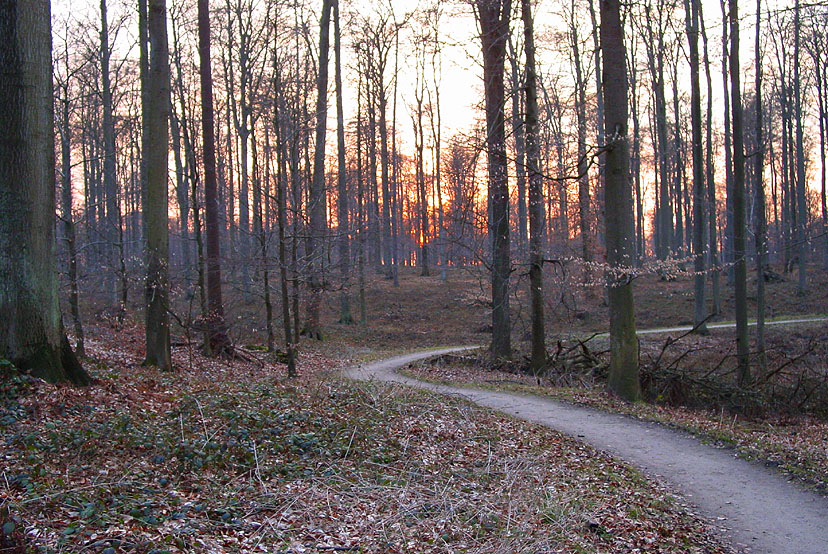
When weather permits, a walk through the 2 Ter Kameren Park or even the Sonian Forest, a UNESCO World Heritage Site, is highly recommended. The 3 Centenary Park is closer to the city centre, and climbing the countless steps towards the top of its arc (entrance through the Museum of Military History) is worth the effort for a fantastic view over the European Quarter of the city. A less physically intense alternative to exploring the monuments of Brussels is a visit to 4 Mini Europe on the Heysel plateau to the north, a park with scale models of numerous iconic European buildings and features. In summer, a zip line ride down from the top of the Atomium is an unforgettable experience for die hard thrill seekers! A confrontation with rain in Brussels humid climate is no reason for despair. If none of the 80 museums would be of interest then a visit to the 5 Planetarium or watching an action movie in 4D in the mega cinema complex 6 Kinepolis can be indoor alternatives. For more adventurous water fans, Nemo 33 offers a diving challenge in the second deepest heated indoor swimming pool in the world at 34.5 metres (113 ft) and 30°C (86°F) If you prefer to get submerged into local culture, try one of the Brussels themed room escape games of 7 Enygma near the city centre, and puzzle your way out within the hour. For fans of Brussels many culinary delicacies, following a beer brewing or waffle baking workshop are tasty activities for an afternoon, alone or in a group. To keep up to date with what's going on, pick up a copy of local free city newspaper Zone 02. Another good free listings paper is Agenda, which is distributed together with the Dutch-language weekly Brussel Deze Week and has the notable advantage of being published in three languages (English, Dutch, French). You can find them in many cafés and restaurants around the city. Football: the men's national soccer team play at King Baudouin Stadium in Heysel. Three Brussels clubs play in First Division A, the top tier: RSC Anderlecht in Anderlecht district, Union SG in Forest, and R.W.D. Molenbeek in Molenbeek-Saint-Jean.
Shopping

Individual listings can be found in Brussels's district articles Very few shops in Brussels open before 10:00, and most open 10:30–11:00. Many shops are closed on Sunday and Monday.
Beer
Beer Mania, 174-176 Chausse de Wavre-Waversesteenweg, Ixelles/Elsene. Claims to have a stock of over 400 beers, but has been overrun by beer tourists. The stock is extensive, but quite pricey in comparison to Delhaize, or Carrefour. Beer Mania is a great place to find out of the ordinary beers. Carrefour. Branches around the city carry a wide variety of beers, including almost all Trappist beer. Selection varies by store. The Carrefour near the Grand-Place has a large selection and offers prices that are approximately a third of the prices in tourist shops. Delhaize. Similar to Carrefour, but a tad more expensive. Match. Another store similar to Carrefour, but has more of the unusual Belgian beers including Delirium.
Chocolate
Leonidas (branches across the city). very popular with the locals. Inexpensive and good quality, at €6.95 for 250 g (8.8 oz). Neuhaus (branches across the city). A bit more expensive than Leonidas and a bit higher quality. Very popular with the locals as well. It is also possible to get good discounts by buying directly at the shop outlet outside of the factory (Postweg 2, 1602 Vlezenbeek, tel: +32 2 568-23-10) which is just on the outer limits of Brussels, just a short walk away from the Erasme/ Erasmus metro station. Prices can go as low as €10 per kilo, however only the products that are specifically marked as having reduced prices are worth the trip, other products have the exact same price as in local shops. Mary (branches across the city). Excellent handmade chocolates, with this store originating from 1919. Passion Chocolat, 2/4 Rue Bodenbroek, also 20 Avenue Louis Gribaumont. Delicious chocolates, and they often offer free samples of 1-2 chocolates from their collection. Marcolini, 39 Place du Grand Sablon-Grote Zavel Plein. Arguably the best Belgian chocolates and priced accordingly. The country-specific products are difficult to find and quite worth the price. Wittamer, 6-12-13 Place du Grand Sablon-Grote Zavel Plein. Another excellent chocolate maker, with also a selection of macarons and cakes. They may however insist on a minimum 100g purchase for the chocolates. Chocopolis, 81 Rue du Marché aux Herbes-Grasmarkt (Between Grand-Place and Central Station). Pick and choose your favorite type of chocolates, all at reasonable prices. Maison Renardy, 17 Rue de Dublinstraat, ☏ +32 2 514-30-17. A great boutique shop with delicious chocolate and friendly service. Stop by for a cup of tea or coffee, and get one of their chocolates free with your tea. Still peckish? You're able to bring a whole box home. Godiva (branches around the city). Not very popular and quite pricey. Chocolate bars. For the frugal, you can buy 100-200 gram gourmet bars of chocolate in grocery stores for about €1 each. Good brands to buy are Côte-d'Or and Jacques, both are Belgian.
Eat

Individual listings can be found in Brussels's district articles
There is plenty of good eating to be had in Brussels. Most people concentrate on the three classics: mussels (moules in French and mosselen in Dutch), fries (frites in French and frieten in Dutch) and chocolate. A few more adventurous Bruxellois/Brusselse dishes include anguilles au vert/paling in 't groen (river eels in green sauce), meat balls in tomato sauce, stoemp (mashed vegetables and potatoes) and turbot waterzooi (turbot fish in cream and egg sauce). For dessert, try a Belgian waffle (wafel in Dutch and gauffre in French), also available in a square Brussels version dusted with powdered sugar, and choices of bananas, whipped cream and many other toppings. Although many prefer the round, caramelized version from Liège. Many tourist shops will sell the Liège waffle (traditionally eaten plain, as it already contains pearl sugar in the dough) with toppings. Only the Brussels waffle (which has a lighter/airier dough) will have toppings such as whipped cream, fruits, etc. The matter over which establishment serves up the best frites (locally known as fritkots in Dutch and "friterie" in French) remains a matter of heated debate. Some argue that the best frites in Brussels are served at the fritkot near the Barriere de Saint-Gilles, while others defend St-Josse's Martin (Place Saint-Josse/Sint-Joostplein) as the prime purveyor of the authentic Brussels frite just as others claim Antoine (Place Jourdan/Jourdanplein) remains the king of the local french fry. No matter which fritkot you're at, try to be adventurous and have something other than ketchup or mayonnaise on your fries. Of the selection of bizarre sauces you've never seen before, "andalouse" is probably the most popular with the locals. Vegetarians can find at least one menu item at many, though not all, regular restaurants. Vegans will have a harder time, while the Veganizer BXL initiative is looking to widen their options, it’s best to head for the vegetarian-vegan restaurants. Also beware of the 'Italian Restaurant Streets' in the tourist and shopping districts. These streets are lined with small Italian restaurants, some offering "3-course meals" for €12 or €13. They are all run by just a few shop owners and serve unappetizing store purchased food. They will not 'include service' as most all restaurants in Brussels do, and many tourists have reported getting scammed here, especially when not paying with exact change. A common practice is to present you a menu where prices aren't anything near the ones advertised in the windows. Be sure you ask why there is such a price difference before ordering and do not hesitate to leave if you do not agree with the price. If you were offered a drink and already sipped from your glass before receiving the menu (as is often the case) then just pay for the drink and leave.
Brussels' tourist restaurant gauntlet can be found in Rue des Bouchers/Beenhouwerstraat, just to the north of Grand-Place. The place has a bad reputation for waiters imposing themselves on passers-by, trying to lure customers into their restaurant. The authorities are aware of this, and are trying to take measures. Some restaurants may also tempt you with cheap prices for the menus, but when seated, the item on the menu happens to be unavailable, and you're forced to accept another, noticeably more expensive dish. Often, the exaggerated price of the wines will also compensate for the attractive menu. Knowing this however, you may be able to negotiate a better deal before entering.
Drink

Individual listings can be found in Brussels's district articles Belgium is to beer what France is to wine: it is home to one of the greatest beer traditions in the world, and Brussels is a great place to sample some of the vast variety on offer. Typical beers of Brussels are gueuze (rather sour) and kriek (rather sweet, cherry based). Smoking is prohibited in all bars. It is allowed to smoke on the outdoor parts that many bars install on the street during the warmer months. A special drink only found in Brussels is the "half-en-half" ("half and half"). It's a mixture of white wine and champagne.
Sleep

Individual listings can be found in Brussels's district articles Hotel rates in Brussels can vary widely (especially at the upper end) depending on how many EU bigwigs happen to be in town. Good deals are often available on weekends and during the summer when the bureaucrats flee on vacation.
Stay safe

This might come as a shock to the uninitiated, but Brussels is increasingly dealing with the reputation of being a rather unsafe or uneasy city, at least by Western European standards. Though one can argue that it is partially bloated by the media and "word-of-mouth", Brussels has its share of safety issues. Violent crime is rather rare, however pickpocketing, vandalism and petty theft are common. Homeless encampments and drug abusers are a common sight in all of the major train and metro stations. It is safest to avoid any interaction. The universal emergency number is 112, which works from any mobile phone even without a SIM card.
Areas to watch out for
Generally speaking, tourists are unlikely to encounter many safety issues in Brussels' East (Etterbeek, Evere, most of Ixelles), South (Watermael-Boisfort, Woluwe-Saint-Lambert), and Northwest (Jette). Similarly, much of the city center is safe during the day, so long as the basic precautions are taken. On the other hand, many neighbourhoods have a reputation for crime and decay, especially at night; this is especially relevant for areas such as Saint-Gilles (especially near the Brussel-Zuid/Bruxelles-Midi station), Matongé, Anneessens (around Place Fontainas), Molenbeek (mostly areas next to the canal), Schaerbeek (the western areas within close proximity of the Brussels-North station), and the Marolles. Though most travellers are unlikely to visit them, one should always be on their guard, especially since an area's (subjective) safety can change incredibly fast in Brussels, so know where you're going when doing so. Ask a local for advice if possible. This map gives an indication of the less attractive and inviting areas (in red), although the attractiveness and subjective safety of an area can change quickly street by street. A seemingly safe street might sit right next to a rough area, and vice versa. Do keep in mind that the topic of crime in Brussels might bear racial undertones, and some locals will get feisty if you mention anything regarding the origins of people in these neighbourhoods.
Pickpocketing
Pickpocketing is by far the most likely issue you will come across in Brussels, with the city frequently ranking high by European standards. Pickpocketing has been reported in nearly every neighborhood in Brussels. This activity is mainly carried out by teams in crowded tourist areas, train and metro stations, major events, and parks (even during the daytime). Those who commit these petty crimes are really professional. Therefore, as usual, it's better not to unnecessarily show valuables publicly, especially when looking as a tourist. Some areas with particularly high risks of pickpocketing include the European Quarter, Bourse/Beurs, Forest National, and the major train stations (Zuid/Midi in particular). Police in Brussels is approachable, courteous and professional, but seriously suffers from being understaffed and overcharged. The justice system is even more clogged. It is always good to report theft, if only for the statistics, but do not expect much follow-up. Non-violent crimes such as pickpocketing and petty theft are low-priority for the prosecutors office, and it is likely no effort will be put towards catching the thieves if the stolen goods aren't worth more than a couple of laptop computers.
Go next
Visit the following Belgian towns and cities, all within a two-hour drive from Brussels.
Kraainem - Bordering Brussels to the east. Architecture from the 16th to 18th centuries, primarily interesting for history and architecture enthusiasts. Tervuren - South-east of Brussels, on the outskirts of the Sonian Forest, a UNESCO World Heritage Site. Waterloo - About 15 km (9 mi) south of Brussels. Visit where Wellington and Bluecher faced Napoleon for an ultimate battle that changed Europe's face forever. Further south, don't miss the Abbey of Villers-la-Ville. Sint-Pieters-Leeuw - About 10 km (6.2 mi) south of Brussels. Visit the nature reserve with Galloway cattle (not in winter) so near to Brussels Belgian cities, well connected with the capital:
Mechelen - About 35 km (22 mi) NE of Brussels. Leuven - About 30 km (19 mi) east of Brussels. Antwerp - About 55 km (34 mi) north of Brussels. Sint-Niklaas - About 45 km (28 mi) NW of Brussels. Bruges - About 100 km (62 mi) NW of Brussels. Charleroi - About 60 km (37 mi) south of Brussels. Ghent - About 60 km (37 mi) NW of Brussels. Namur - About 60 km (37 mi) SE of Brussels. Tournai - About 90 km (56 mi) west of Brussels. Mons - About 70 km (43 mi) south of Brussels. You can also get to any of the following 'foreign' cities from Brussels within a few hours without the use of a plane:
More pictures of Brussels


From this destination's category on Wikimedia Commons. Each photograph is credited to its own author under its own licence.
The guide text on this page is from the Wikivoyage article Brussels, written by Wikivoyage contributors and published under CC BY-SA 4.0. The authors are listed in the article’s edit history. It has been shortened and re-laid-out for this page; that adapted text is available under the same licence. Nothing else on this page is.
Wikivoyage is written by travellers, not by us. Opening hours, prices and whether a place still exists are exactly the details that go out of date, so check anything you are relying on.
“3,108 readers a month” and the ranking are ours, counted from Wikimedia’s published pageviews (CC0) — the median of twelve complete months. They count people reading about a place, which is not the same as people going there.